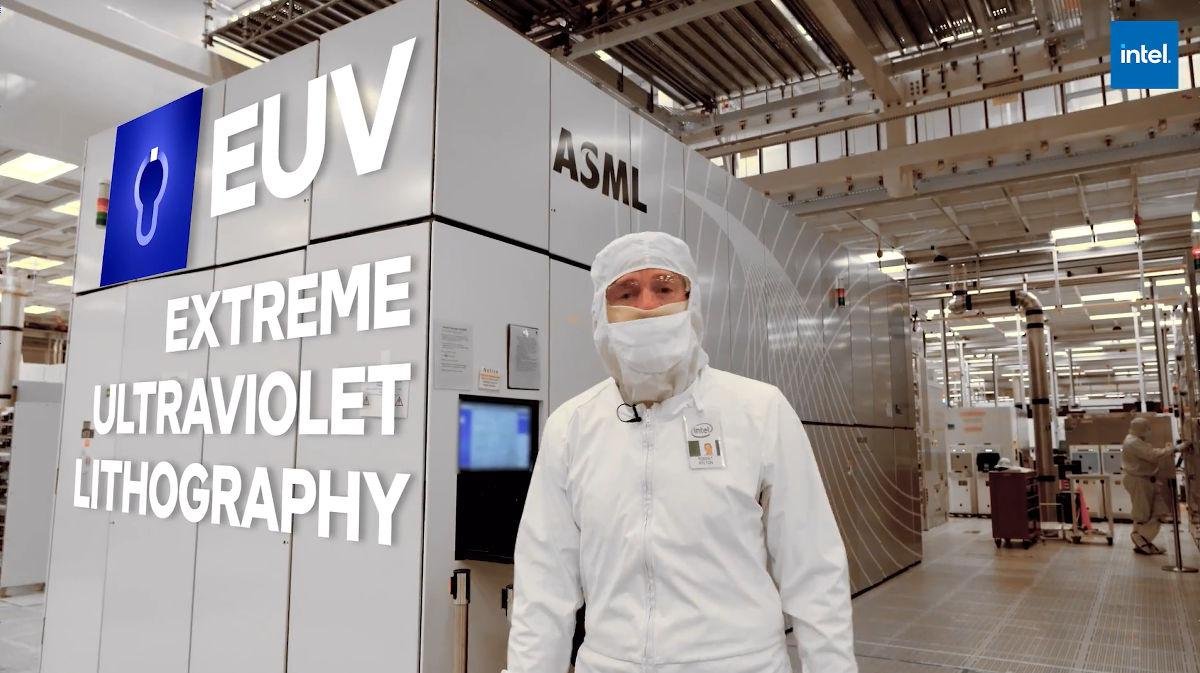
Intel is signaling that its next-generation 14A manufacturing process could be progressing significantly better than expected, with defect density falling faster than the company’s original targets and external customers beginning to show concrete interest in the technology.
The development is particularly important for Intel’s semiconductor manufacturing ambitions, as the company attempts to rebuild its position not only as a chip designer but also as a major contract manufacturer.
Intel CFO David Zinsner said the 14A process is currently performing ahead of its original defect-density target curve and compared its development trajectory with the company’s highly successful 22nm process.
What Is Intel 14A?
14A is Intel’s name for a next-generation manufacturing process in the 1.4nm-class technology range.
The “1.4nm” label should not be interpreted as a direct measurement of a single transistor dimension. Modern process names primarily identify technology generations.
What matters is the technology behind the process.
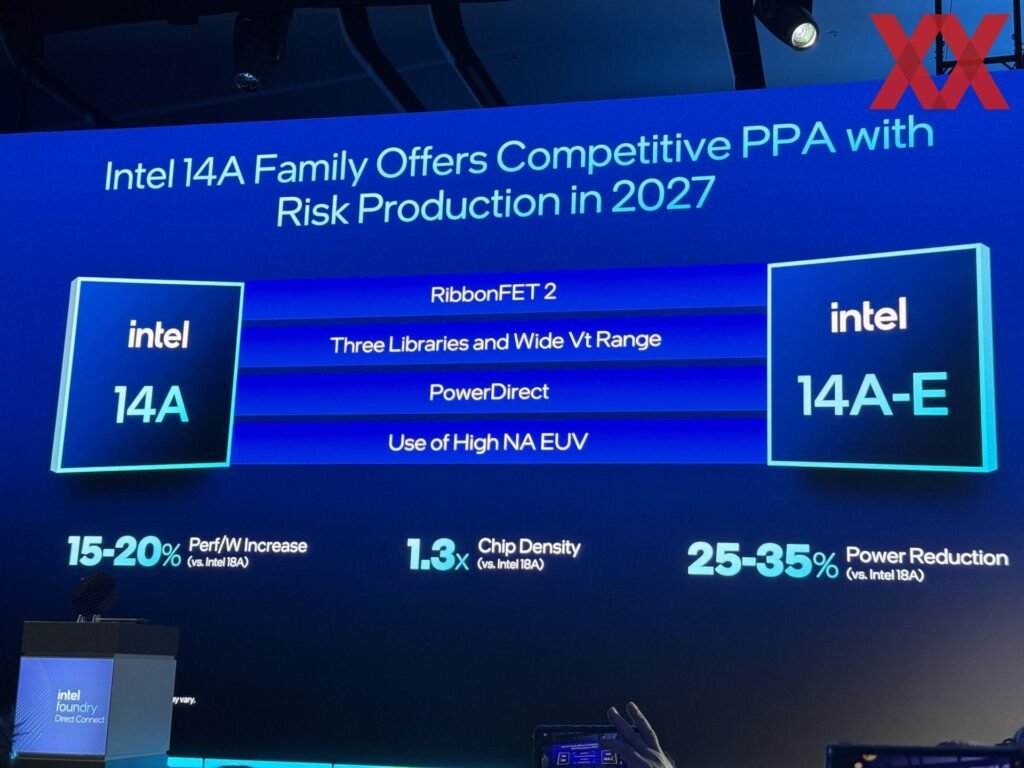
Intel’s 14A node will use second-generation RibbonFET transistors, second-generation backside power delivery known as PowerDirect, and support for High-NA EUV lithography.
Together, those technologies represent one of Intel’s biggest manufacturing bets for the coming years.
The Biggest Challenge: Defects

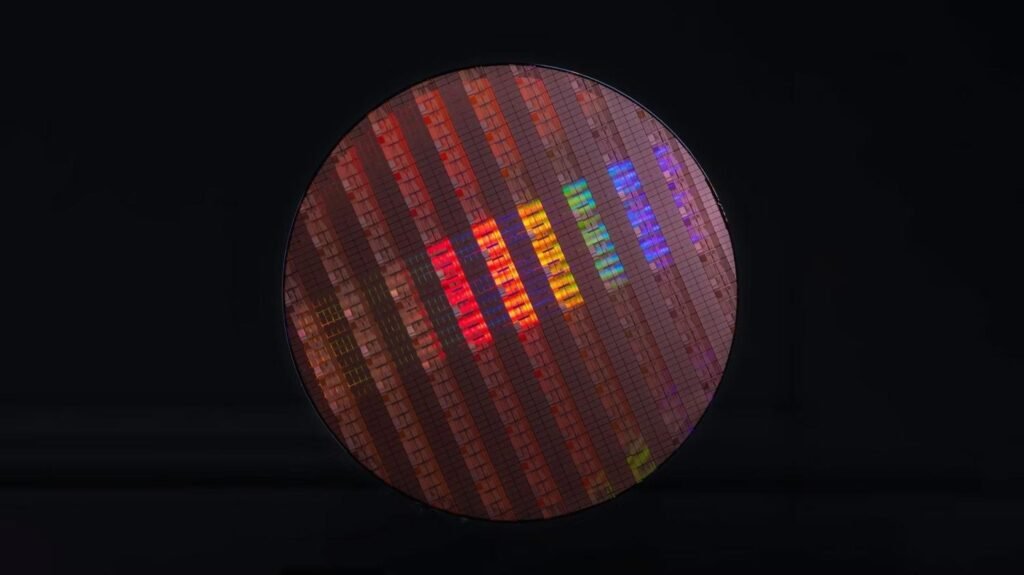
In semiconductor manufacturing, having an advanced process on paper is not enough.
Millions or billions of transistors have to be manufactured with extraordinary precision.
Even extremely small defects can reduce the number of usable chips produced from a wafer.
That is closely related to yield.
The fewer defects a process produces, the more chips can potentially be manufactured successfully from each wafer.
Intel says 14A is moving in the right direction.
According to Zinsner, defect reduction is happening faster than the company’s original expectations, and Intel has not seen comparable progress since its 22nm process.
14A Is Still Years Away From Mass Production
There is an important caveat.
This does not mean Intel will begin producing millions of 14A chips tomorrow.
The company plans to begin risk production of its own products during the second half of 2027.
High-volume manufacturing is expected to begin in 2028.
Intel therefore still has a long road ahead.
That is precisely why today’s progress matters: the company is reporting strong development indicators well before mass production begins.
External Customers Are Starting to Pay Attention
Perhaps the most important part of the announcement is not what Intel says about its own laboratories.
It is what is happening with potential customers.
Intel says external customers have begun asking specifically about the production capacity it will be able to offer through 14A.
That is crucial for Intel’s foundry strategy.
If Intel wants to compete with major contract chip manufacturers, it cannot rely solely on producing its own processors.
It needs other companies to trust Intel with the manufacturing of their products.
Intel says external customer engagement has increased significantly, with company executives holding regular meetings with prospective customers.
Why 14A Matters So Much

Intel has experienced several difficult years in semiconductor manufacturing.
The company faced delays and challenges with previous process generations.
The transition to 10nm took substantially longer than originally planned, while the 20A process was eventually canceled.
That makes the success of future nodes especially important for Intel’s long-term strategy.
14A is therefore more than another manufacturing node.
It is a test of whether Intel can regain a competitive position in advanced semiconductor manufacturing.
High-NA EUV Could Be Another Advantage
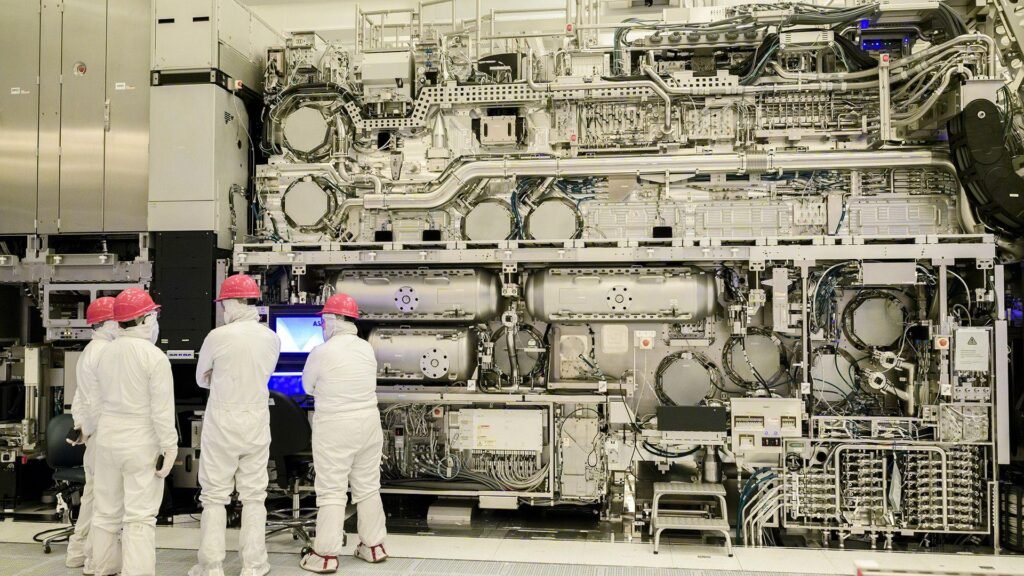
One of the most interesting aspects of 14A is its support for High-NA EUV.
Extreme ultraviolet lithography uses extremely short-wavelength light to create incredibly small structures on semiconductor wafers.
High-NA EUV is the next evolution of the technology and is designed to enable even more advanced manufacturing.
But the technology is extraordinarily complex and expensive.
Intel therefore needs not only to make it work technically, but also to make it economically viable at scale.
RibbonFET and PowerDirect
14A is not simply a lithography upgrade.
Intel is combining several major technological changes in the same generation.
RibbonFET is Intel’s transistor architecture designed to provide greater control over current flow at extremely small geometries.
PowerDirect, meanwhile, moves power delivery to the backside of the wafer.
The goal is to improve power delivery while freeing more space on the front side for signal connections.
In theory, this could improve performance, efficiency and transistor density.
The real test, however, will come when commercial products manufactured on 14A reach the market.
Can Intel Become Competitive Again?

That is the biggest question.
Intel is not only competing with AMD and NVIDIA.
In semiconductor manufacturing, it also faces major foundry competitors.
Intel therefore needs to prove two things simultaneously:
First, that it can manufacture competitive processors.
Second, that it can manufacture chips for outside customers reliably and at competitive costs.
14A could become one of the technologies that determines whether that strategy succeeds.
Defect Density Is Not the Same as Final Yield
There is also an important technical nuance.
Lower defect density is excellent news, but it does not automatically mean final product yield will be equally strong.
Modern inspection equipment is different from the equipment used decades ago, while today’s chips are vastly more complex.
That means the comparison with 22nm is encouraging, but it should not be interpreted as proof that 14A will necessarily become another 22nm-level success.
The Race for Advanced Manufacturing Is Heating Up
The semiconductor industry is entering an era in which the ability to manufacture advanced chips is becoming almost as strategically important as designing them.
Companies that control advanced manufacturing capabilities have enormous strategic leverage.
That is why Intel’s progress on 14A is attracting attention.
If Intel can move from promising development results to high-volume manufacturing with strong yields, the company could gain a real opportunity to rebuild its foundry business.
TheTechSpot: Intel Is Betting on a Comeback
For Intel, 14A is not simply another number on a technology roadmap.
It is a bet on the company’s future.
If the process reaches high-volume manufacturing in 2028 with competitive performance, efficiency and yields, Intel could have a new opportunity to challenge the industry’s leading semiconductor manufacturers.
But the road is still long.
The good news for Intel is that the process is showing strong signs of progress well ahead of mass production.
Now comes the harder test:
Can Intel turn that laboratory progress into millions of successfully manufactured chips?
If it can, 14A could become the manufacturing process that reshapes Intel’s next chapter.