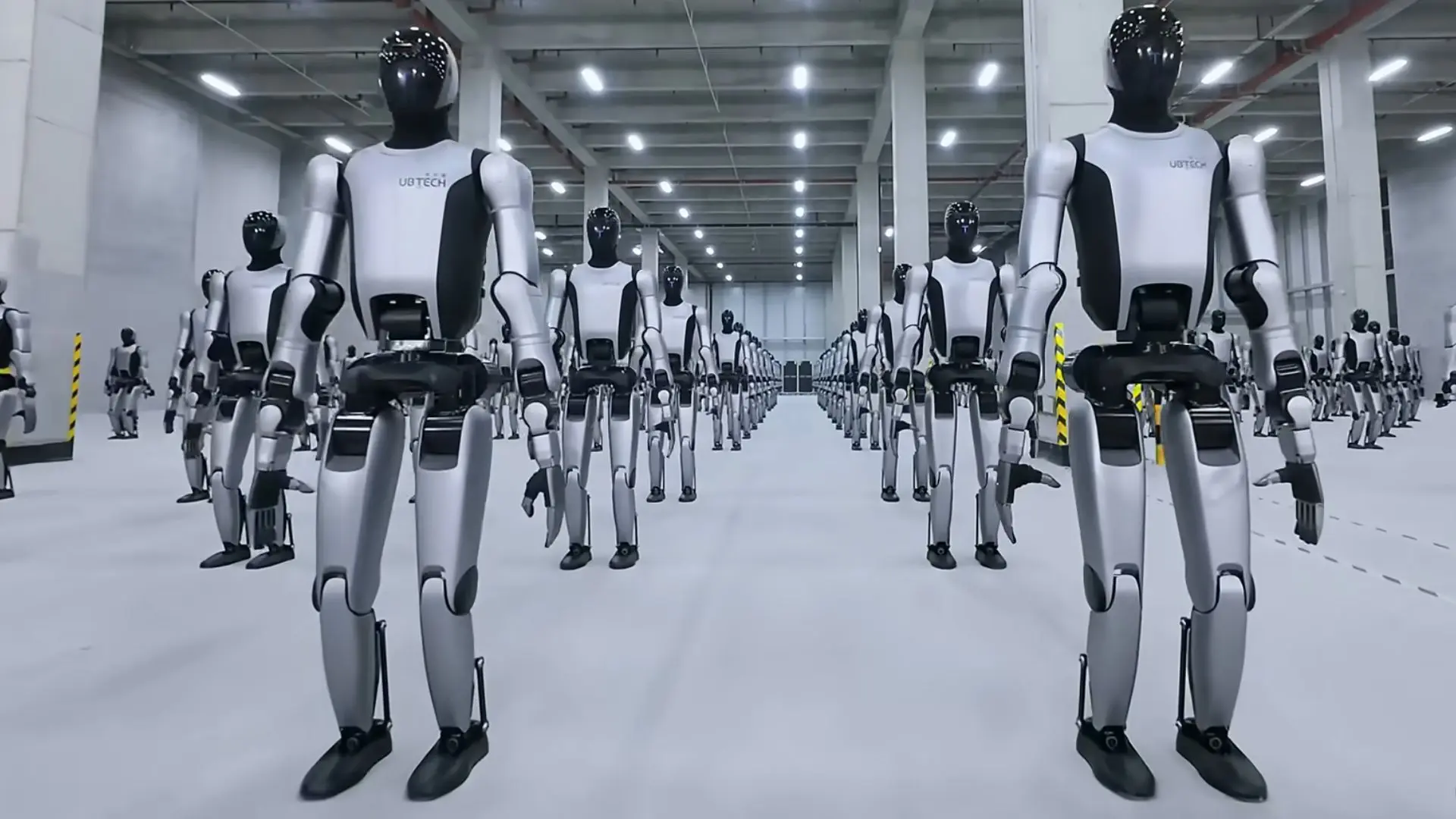
Humanoid Robot Sales Hit Just 7,000 in 2025: The Industry Is Still in Its Early Days
The numbers are much smaller than the hype
Humanoid robots have become one of the most visible technologies in the current robotics race.
Videos showing robots walking, running, manipulating objects and performing factory tasks are increasingly common. But the real sales numbers tell a more cautious story.
According to data from the International Federation of Robotics (IFR) reported by Reuters, around 7,000 humanoid robots were sold worldwide in 2025 for industrial and professional applications.
That is a very small market compared with traditional industrial robotics.
In 2024, roughly 542,000 industrial robots were installed worldwide, while about 199,000 professional service robots were sold.
In other words, humanoid robots are currently better described as an emerging market than as a mass industry.

Why are sales still so low?
Building a humanoid robot that looks impressive during a demonstration is very different from building a machine capable of working reliably for hours in a real industrial environment.
A humanoid robot must solve several problems simultaneously:
- maintaining balance;
- navigating human-designed environments;
- identifying objects;
- understanding instructions;
- manipulating objects with its hands;
- reacting to unexpected changes;
- operating safely around people;
- minimizing energy consumption;
- and providing an economically viable return for its customer.
The IFR has emphasized that many humanoid applications still need to be proven in real-world environments. Mass production is being prepared, but practical use cases and economic benefits remain areas that need further validation.
Not every humanoid sold is replacing a human worker
This is one of the most important details behind the 7,000-unit figure.
Reuters reported that some humanoid robots sold in 2025 went to research institutions and AI companies, rather than directly into large-scale industrial operations.
That means a commercial sale does not necessarily mean the robot is already performing a normal human job autonomously.
A company may purchase a humanoid to:
- collect training data;
- develop AI models;
- test sensors;
- train robotic-control systems;
- or develop new software.
So one of the most important distinctions in this market is:
Sales do not automatically equal mass automation.
Why make a robot humanoid in the first place?
If the goal is simply to move a box from point A to point B, a wheeled robot may be cheaper and more efficient.
So why are companies investing billions in human-shaped machines?
One major reason is existing infrastructure.
Factories, warehouses and other workplaces were built around human workers. They contain:
- stairs;
- doors;
- shelves;
- tables;
- tools;
- machinery;
- buttons;
- handles;
- and workstations designed around the human body.
A humanoid robot could theoretically use much of this infrastructure without requiring an entire facility to be redesigned.
The IFR identifies compatibility with human environments as one of the reasons humanoid robots are attracting industrial interest.

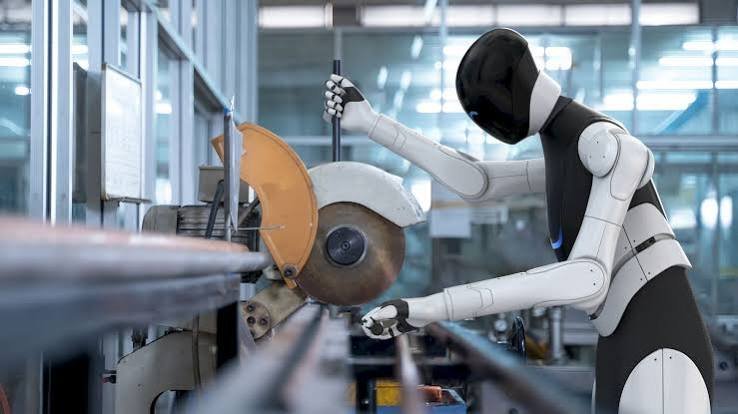
China is becoming a major center of the humanoid race
A significant portion of the development is taking place in China.
Chinese companies are investing heavily in humanoid robotics, with ambitions to develop large-scale manufacturing capabilities.
But here too, there is an important distinction between investment and commercial deployment.
Reuters reported on September 21 that Chinese authorities are taking a closer look at humanoid companies seeking stock-market listings, as investors increasingly focus on real revenue, orders and commercial applications rather than demonstrations and future promises.
That signals a broader shift in the industry:
From “Look what this robot can do”
to:
“How many companies are actually paying for it?”
AI is the brain — but hardware is still the other half of the problem
Advances in AI are changing how robots can learn and perform tasks.
Instead of manually programming every movement, modern robotic systems can increasingly use machine learning to interpret instructions, demonstrations and visual information.
The IFR identifies AI and machine learning as major technologies driving the development of humanoid robotics.
But understanding what to do does not automatically solve the problem of how to physically do it.
Take a simple instruction:
“Pick up this box and put it on the shelf.”
For a human, this is straightforward.
For a robot, the system must identify the correct box, determine where to place its hands, calculate the required grip force, maintain balance, plan a movement path, avoid obstacles and control the motion precisely.
That is why the real race is not simply about putting an AI model inside a human-shaped machine.
It is about combining:
AI + sensors + motors + batteries + control systems + safety.
How fast could the market grow?
Bank of America Global Research estimates that global humanoid shipments could reach approximately 90,000 units in 2026 and 1.2 million units by 2030. These are forecasts, not realized results.
If that happens, the industry would grow dramatically from the roughly 7,000 units reported for 2025.
But the distinction matters:
7,000 is reported historical sales.
90,000 and 1.2 million are forecasts.
They should not be treated as guaranteed outcomes.
Traditional industrial robots are still in another league
The comparison with conventional robotics shows just how early the humanoid market remains.
The IFR reported approximately 542,000 industrial robot installations worldwide in 2024. That was more than twice the level recorded a decade earlier.
These robots usually do not look anything like humans.
They are robotic arms, automated systems and specialized machines designed to perform specific tasks.
And that specialization is precisely their advantage.
A dedicated industrial robot can often be simpler, cheaper and more predictable than a humanoid machine expected to perform many different tasks.
What should we watch over the next few years?
Instead of focusing only on spectacular demonstrations, several practical indicators will matter much more.
1. How many hours can the robots actually work?
A two-minute demonstration is not the same as an eight-hour shift.
2. How much do they cost?
If the robot costs more than the labor or productivity savings it generates, the business case becomes difficult.
3. How often do they fail?
In industrial environments, a single failure can stop a production line and create significant costs.
4. How autonomous are they?
The less human intervention they require, the more valuable they become.
5. Can they perform multiple tasks?
This could become one of the biggest advantages of humanoids over specialized robots.
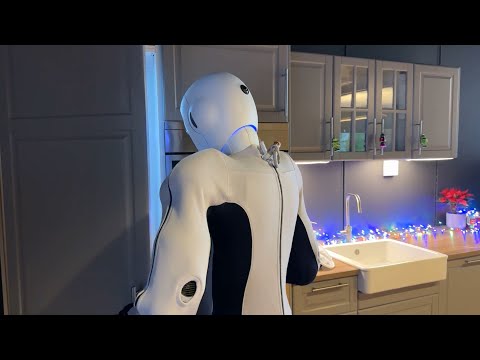
What does this mean for workers?
At this stage, it would be premature to conclude that humanoid robots are about to replace human workers on a massive scale.
The 2025 sales figures show a relatively small market, and a portion of those sales went toward research and development rather than large-scale automation.
However, the technology could have a substantial impact if manufacturing costs and reliability improve.
In a scenario where humanoids become economically viable, companies could initially use them for repetitive, dangerous or physically demanding tasks.
That could change the nature of certain jobs, but the scale and speed of that change will depend on cost, safety, regulation and real-world productivity.
The real revolution has not arrived yet
Humanoid robots may be one of the most visible technologies in the current AI and robotics race, but the numbers tell a more measured story.
Around 7,000 humanoid robots sold in 2025 represents a beginning, not a mass market. At the same time, hundreds of thousands of traditional industrial robots are being deployed every year.
That means the most important question is no longer:
“Can a humanoid robot walk?”
We already know the answer.
The bigger question is:
“Can it work every day, safely, at a reasonable cost, and create more value than it costs?”
If the answer becomes yes, then the 7,000 robots sold in 2025 could eventually be remembered as only the beginning.
Key numbers
- ~7,000: humanoid robots sold globally in 2025 for industrial/professional applications.
- 542,000: industrial robots installed worldwide in 2024.
- 199,000: professional service robots sold in 2024.
- 90,000: Bank of America Global Research forecast for humanoid shipments in 2026.
- 1.2 million: forecast for 2030.
- IFR: the organization developing dedicated global statistics for humanoid robotics.
Editorial verification note: The 7,000-unit figure refers to the humanoid category tracked by IFR for industrial and professional applications. The 2026 and 2030 figures are external forecasts from Bank of America Global Research and are not guaranteed outcomes.