The race to make nuclear fusion a practical energy technology is moving into another important phase.
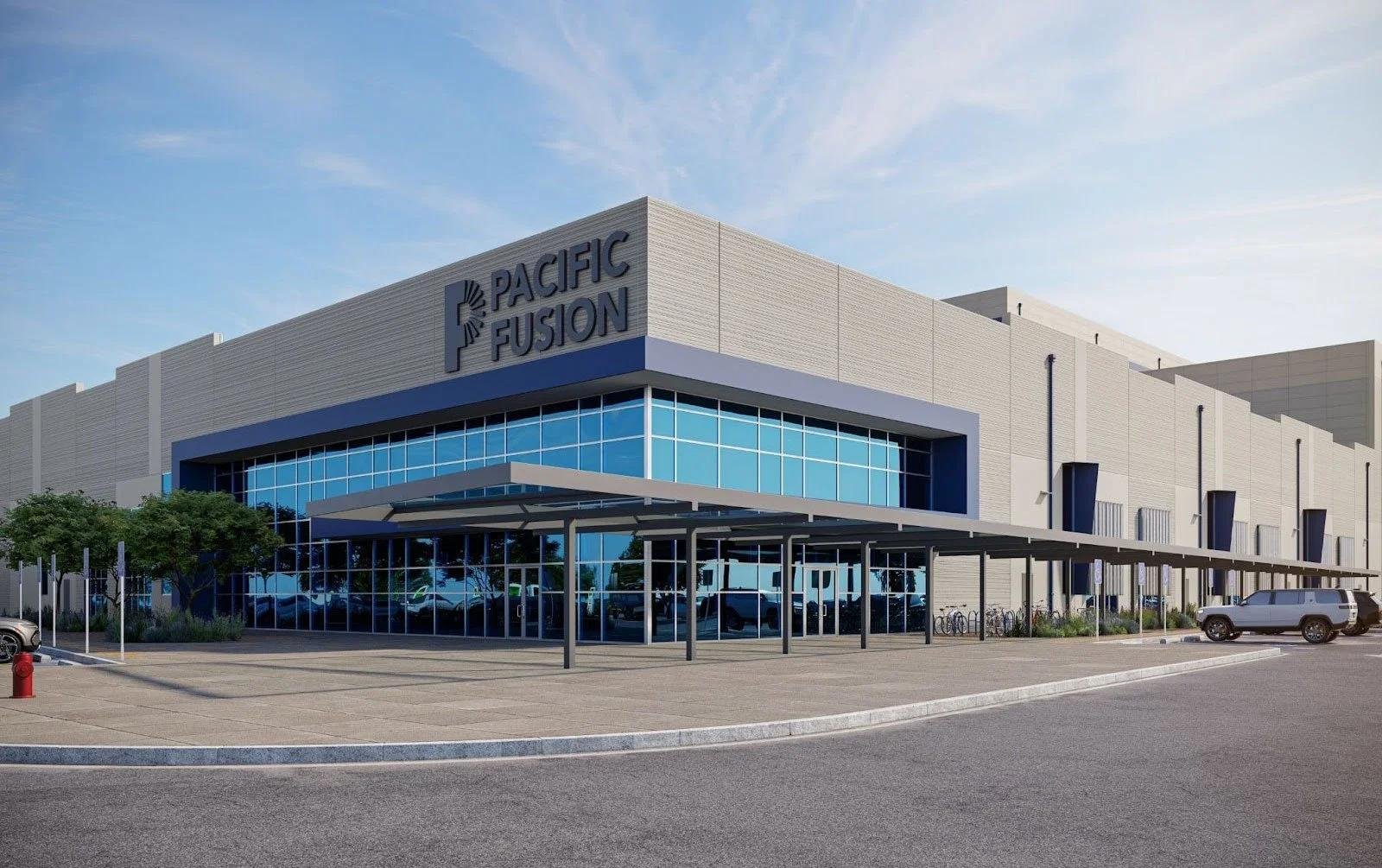
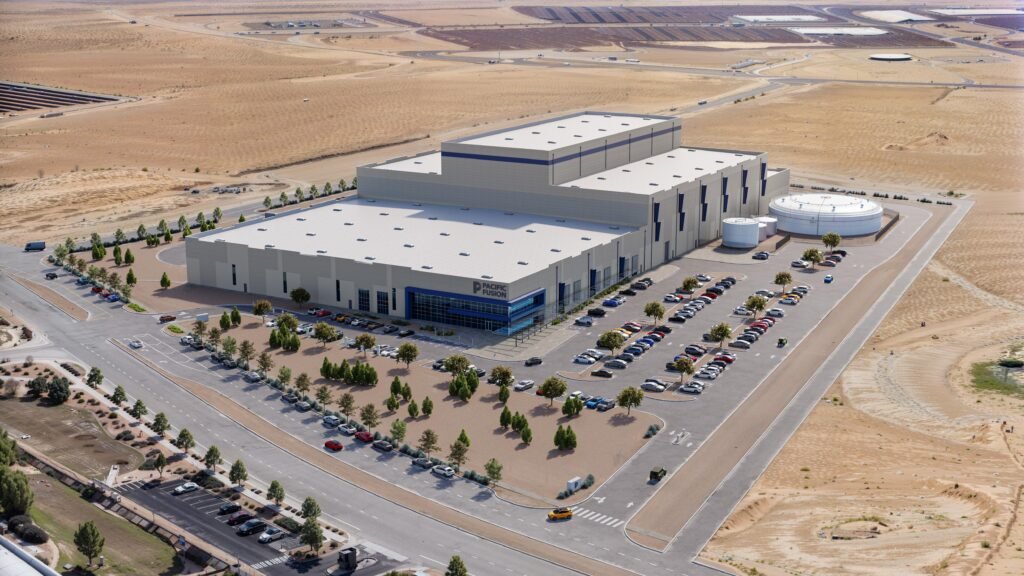
U.S. company Pacific Fusion has begun construction of a roughly $1 billion research and manufacturing campus in Albuquerque, New Mexico. The site will host the company’s first demonstration system, which is designed to pursue one of the most important milestones on the path toward commercial fusion power.
The project is not a commercial power plant, and it does not mean fusion electricity is ready for consumers.
Instead, Pacific Fusion is targeting a technical milestone known as net facility gain by 2030.
What is being built?
The Mesa del Sol campus will combine research, engineering and manufacturing activities and will host Pacific Fusion’s first Demonstration System.
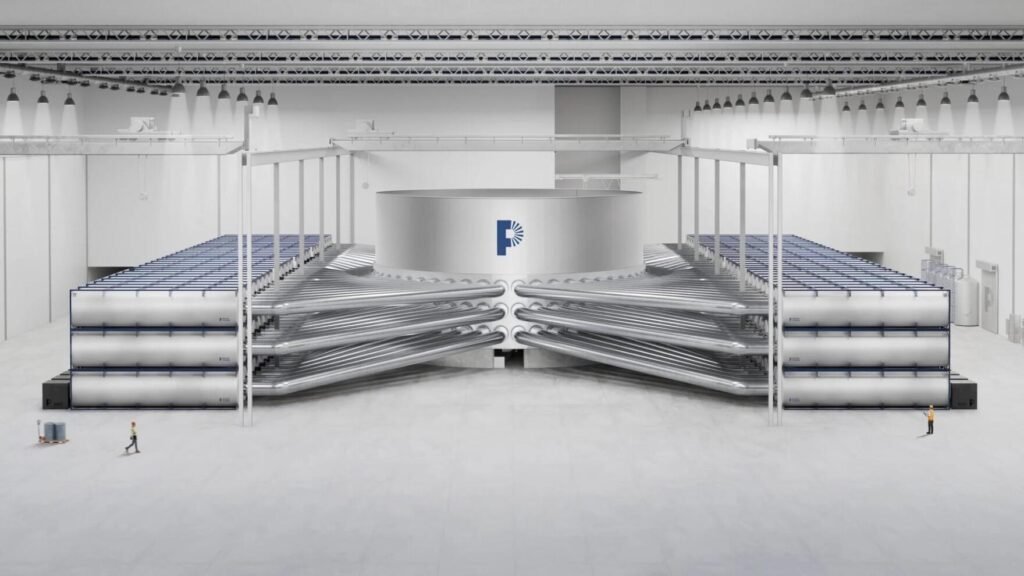
According to the company, the system is designed to demonstrate net facility gain—a point at which the energy generated by fusion exceeds the total energy consumed by the facility.
That distinction matters because producing a short burst of fusion energy is not the same as operating a complete system capable of producing more energy than it consumes.

What is nuclear fusion?
Fusion is the process that powers the Sun and other stars.
Instead of splitting a heavy atomic nucleus, as conventional nuclear fission does, fusion combines light nuclei under extreme conditions and releases energy.
The potential is enormous: a successful fusion power system could provide large amounts of low-carbon energy.
The engineering challenge, however, is equally significant.
Scientists must create and control extreme plasma conditions long enough for the fusion reaction to produce useful energy.
Why this project matters
Fusion research is increasingly moving beyond government laboratories and university experiments into privately funded industrial projects.
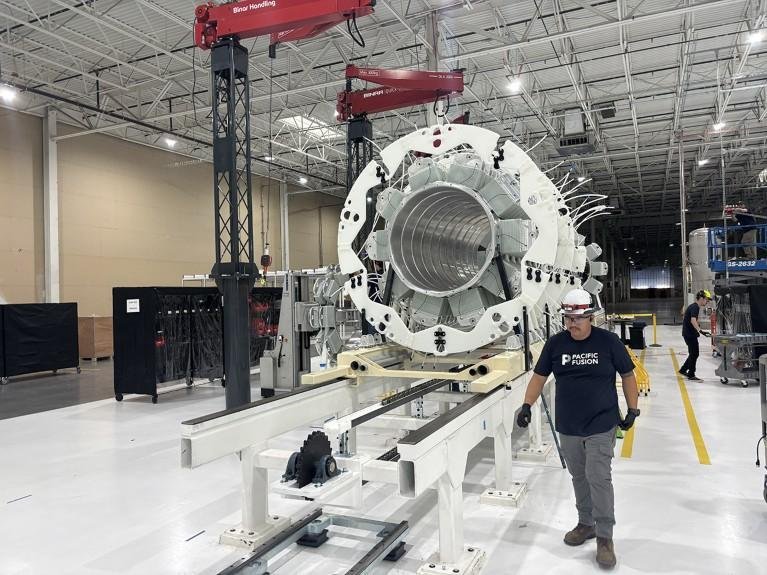
Pacific Fusion says its New Mexico campus represents roughly $1 billion in investment and is expected to support about 200 permanent jobs, in addition to construction and regional employment. The company is also expanding manufacturing operations in Los Lunas for pulsed-power components.
That means the fusion race is becoming an industrial race as well as a scientific one.
Net facility gain does not mean electricity for the grid
This is the most important distinction in the story.
Even if Pacific Fusion achieves its stated objective, it would not automatically mean that a commercial fusion power plant could supply electricity to homes.
Pacific Fusion describes the New Mexico project as a Demonstration System, rather than a commercial power plant. Its purpose is to demonstrate an important technical step toward practical fusion energy.
The broader path looks more like:
fusion reaction → system-level energy gain → repeatable operation → industrial engineering → commercial power plant → electricity for the grid.
Pacific Fusion is trying to push several of those stages forward, but it is not solving all of them at once.
Another target: high-yield fusion
Pacific Fusion says its Demonstration System is also designed to produce fusion energy bursts exceeding 100 megajoules and to demonstrate what it calls “high-yield fusion.”
The company has connected this capability to U.S. national-security research and announced a memorandum of understanding with the National Nuclear Security Administration (NNSA) covering research into high-yield fusion and high-energy-density science.
That gives the project significance beyond civilian energy research.
Why 2030?
Pacific Fusion is targeting 2030 for net facility gain in its New Mexico demonstration system.
But this is a company target, not a guaranteed outcome.
Fusion has a long history of ambitious timelines. Scientific progress has been significant, but turning experimental achievements into a repeatable, economically viable and maintainable power system is a much larger engineering challenge.
The Financial Times notes that private investment in fusion has surged, while timelines for commercialization remain heavily debated and fusion has not yet become a commercial grid power source.
Why this is also a technology story
Fusion may sound like a physics story, but it is deeply connected to the technology sector.
A future fusion system requires:
- high-power electronics;
- advanced materials;
- sensors;
- control systems;
- software;
- computational simulation;
- high-performance computing;
- precision manufacturing;
- automation;
- advanced energy infrastructure.
If fusion becomes repeatable and scalable, these supporting technologies could become industries of their own.
That is one reason private capital is increasingly interested in the sector.
Why New Mexico?
New Mexico has a unique scientific and engineering ecosystem that includes major national laboratories such as Los Alamos and Sandia.
Pacific Fusion selected Albuquerque for its research and manufacturing campus and says the project is intended to contribute to a broader fusion-industry ecosystem in the state.
The combination is unusual:
national laboratories + scientific talent + startups + manufacturing + private capital.
What could change if the project works?

The biggest impact would not necessarily be a single machine.
It would be evidence that a particular fusion approach can operate at a larger engineering scale and move closer to a repeatable technology platform.
That could support further investment and development of future low-carbon energy systems.
But that remains dependent on technical results.
What should we watch next?
Before talking about commercial fusion plants, several milestones matter.
- Completion of the infrastructure.
- Operation of the Demonstration System.
- Achievement of the net-facility-gain target.
- Evidence that the process can be repeated and eventually scaled.
If those milestones are achieved, the discussion around commercial fusion power becomes considerably more concrete.
Fusion is not yet a practical energy source for homes and businesses.
But Pacific Fusion’s $1 billion project shows that the technology is moving into a phase where experimental physics is being combined with real infrastructure, manufacturing and large-scale private investment.
The 2030 target is ambitious. The more important question will be whether the system can demonstrate the required energy gain repeatedly and at a meaningful engineering scale.
If it does, one of technology’s oldest questions—can fusion become practical power?—will move much closer to having a concrete answer.