Researchers from South Africa and France have demonstrated a new way to transmit data using light through open air, preserving more than 98% of the information even under turbulent atmospheric conditions. The breakthrough could eventually support long-distance wireless optical links, including satellite communications.
Internet communication through light is not a new idea.
Free-space optical communication, or FSO, has long promised extremely high-speed data transmission without physical fiber cables.
The biggest problem has always been the same:
the atmosphere.
Heat, wind and turbulence can distort a laser beam as it travels, damaging the information carried by the light.
Researchers from the University of the Witwatersrand in South Africa and the University of Bordeaux in France have now demonstrated an approach that could make optical communication far more resistant to those effects.
Data Was Sent Through a Beam of Light
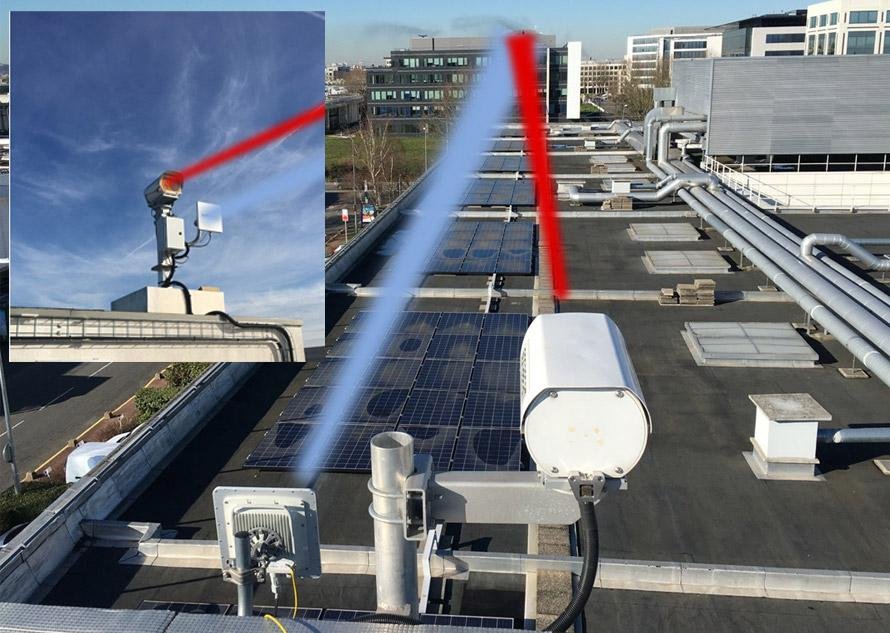
The experiment covered a distance of approximately 270 meters under real outdoor atmospheric conditions.
Instead of constantly correcting the shape of the distorted beam, the researchers took a different approach:
they encoded information into the topological structure of the light.
That allowed the key information to remain intact even as the beam was distorted by atmospheric turbulence.
What Are Optical “Skyrmions”?

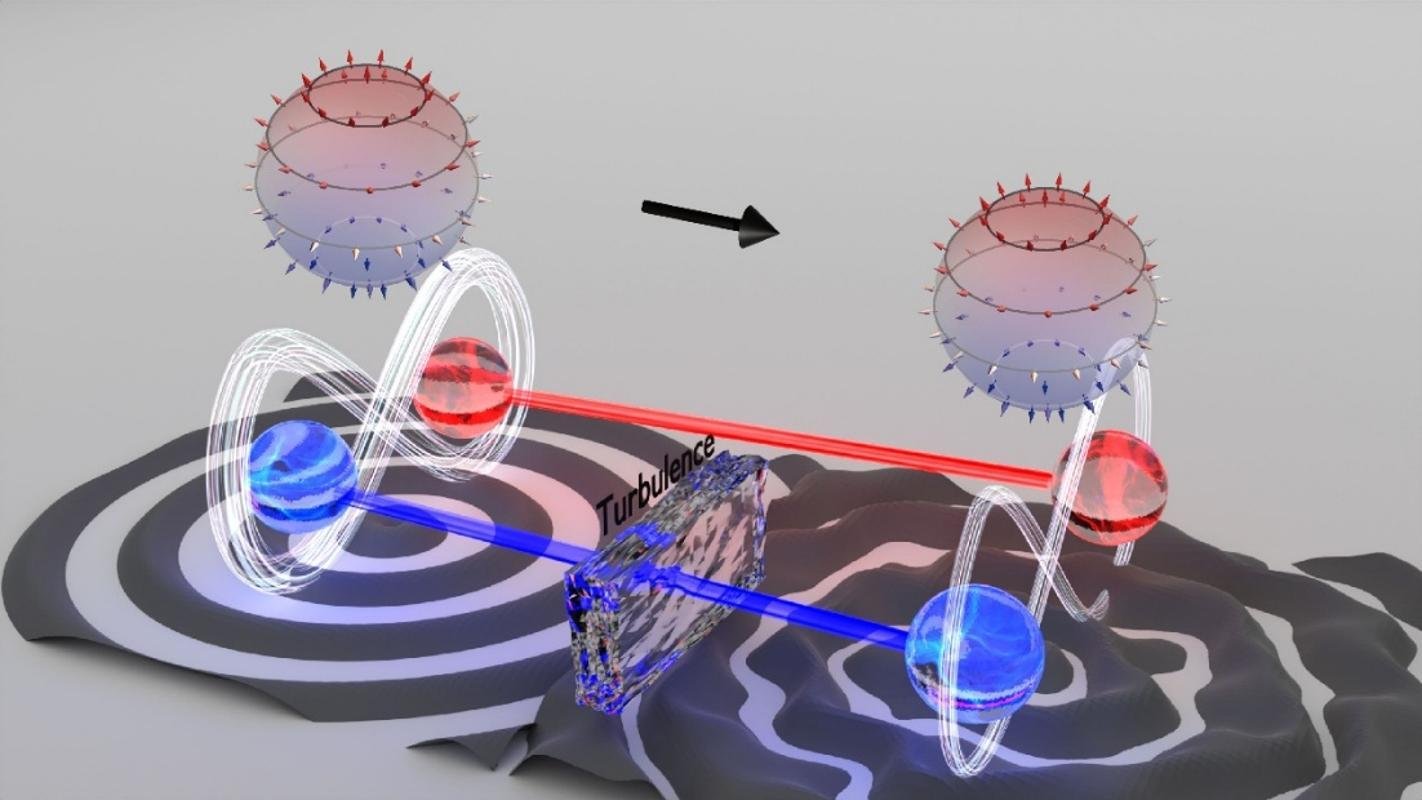
The technology relies on unusual structures of light known as optical skyrmions.
The concept sounds highly technical, but the principle is elegant.
Rather than making information depend entirely on the precise shape of a light wave, researchers encode it into a topological property — a characteristic of the structure that can remain stable even when the light itself becomes distorted.
The result acts almost like a natural shield for information against atmospheric turbulence.
98% Fidelity Under Real-World Conditions
The results are particularly interesting because the experiment was not performed inside a perfectly controlled laboratory environment.
The beam traveled through open air while exposed to heat and atmospheric turbulence.
Under most of the tested conditions, the researchers achieved more than 98% information fidelity.
Under the most severe conditions tested, fidelity fell to around 86%.
That matters because signal distortion is one of the biggest obstacles facing wireless optical communication.
Why Is Laser Internet So Difficult?

A fiber-optic cable keeps light confined inside a physical medium.
A laser link traveling through the atmosphere has no such protection.
The beam must pass through an environment that constantly changes.
Hot and cold air create variations in the refractive properties of the atmosphere, which can distort the wave and make it harder to reconstruct the original data.
The Tech Spot Editorial Team
Traditional FSO systems can use sophisticated correction techniques to compensate for those distortions.
But those systems can require expensive hardware and significant amounts of energy.
The new approach attempts to solve the problem differently:
make the information itself more resistant to distortion.
Could It Replace Fiber Optics?
Not yet.
This remains an experimental demonstration rather than a ready-made replacement for the world’s fiber-optic infrastructure.
But the potential applications are significant.
Free-space optical links could be useful in locations where installing fiber is difficult, expensive or impossible.
Potential applications include:
- building-to-building links;
- remote areas;
- drone communications;
- temporary networks;
- long-distance wireless connections;
- and space communications.
Satellites Could Be One of the Biggest Applications

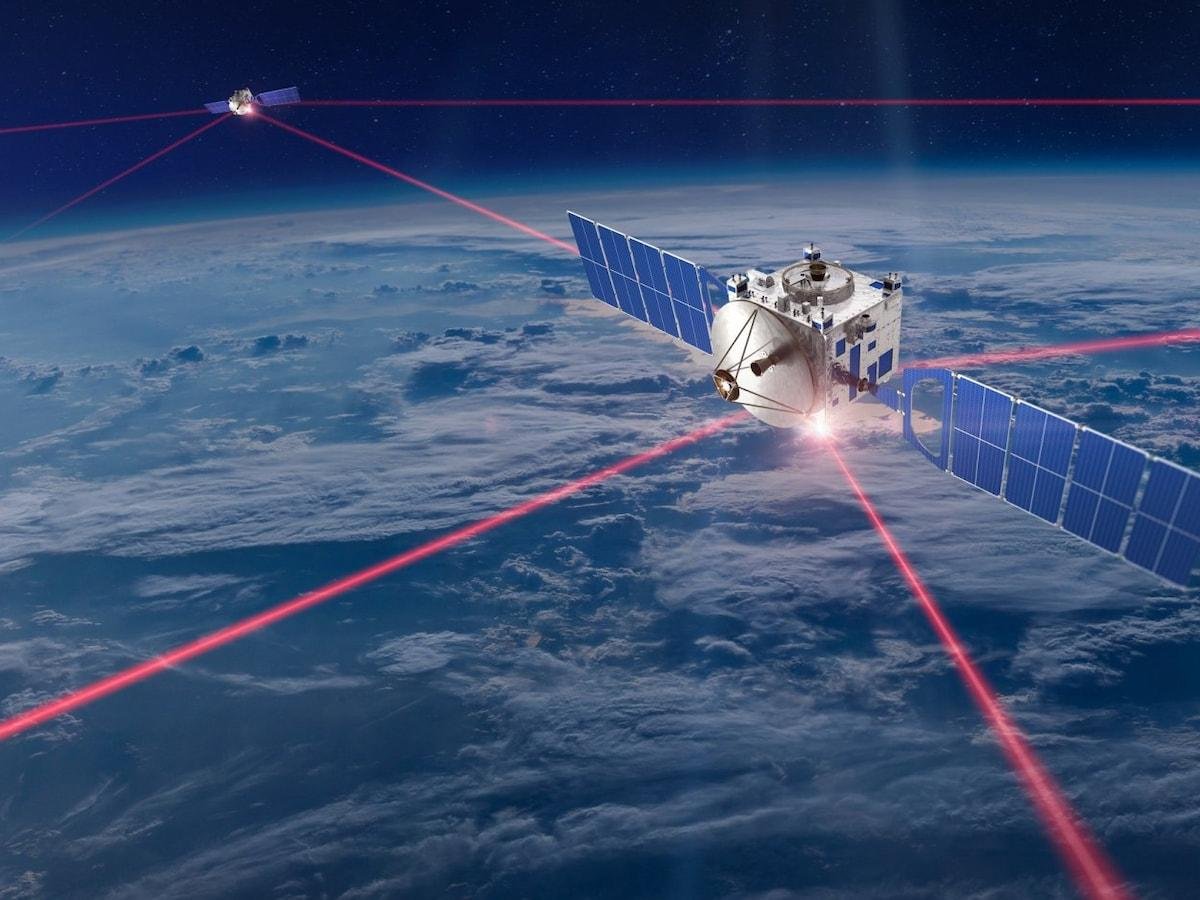
One particularly promising area is ground-to-satellite communication.
Satellites cannot rely on fiber-optic cables to communicate with Earth.
They need wireless links.
Lasers can potentially provide extremely high data rates, but Earth’s atmosphere remains a major obstacle when the signal travels into or out of the planet’s atmosphere.
If topological structures in light can preserve information despite that distortion, they could help make optical satellite links more reliable.
The Technology Still Has Major Challenges
The result is promising, but there is still a long way to go.
The experiment covered roughly 270 meters.
Real-world communications may require kilometers, hundreds of kilometers or more.
Satellite links introduce even greater challenges.
Researchers will need to test:
- longer distances;
- different weather conditions;
- rain and humidity;
- stronger turbulence;
- vibration;
- laser pointing accuracy;
- and much higher data rates.
So fiber optics are not about to disappear.
But the experiment suggests that one of the biggest problems facing free-space optical communication may have a fundamentally different solution.
A New Way to Think About Data Transmission
The most interesting part of the research is that it is not simply trying to build a more powerful laser.
It changes the way information is carried inside the light itself.
Instead of fighting atmospheric turbulence to keep the beam perfectly shaped, the researchers encode information into a structure that is harder for the atmosphere to destroy.
That could ultimately prove more important than the 270-meter demonstration itself.
What Happens Next?
The next step will be testing the technology over longer distances and under more demanding environmental conditions.
If the results scale successfully, the approach could become relevant to telecommunications, optical networks and space communications.
For now, it remains a research technology.
But 98% fidelity through open-air optical communication, without relying on conventional wavefront correction, is a result worth watching.
TheTechSpot: The Internet of the Future May Not Always Need Cables
For decades, fiber optics have been one of the foundations of the modern internet.
But bandwidth demand continues to rise as AI data centers, satellites and connected devices require more capacity.
That makes optical communication through open air increasingly attractive.
The new research will not replace fiber optics tomorrow.
But it points toward something much more interesting:
the internet of the future may travel not only through cables, but also through beams of light moving through air and space.
And if optical skyrmions can protect information from atmospheric chaos, parts of the future internet could become far less dependent on physical cables than they are today.