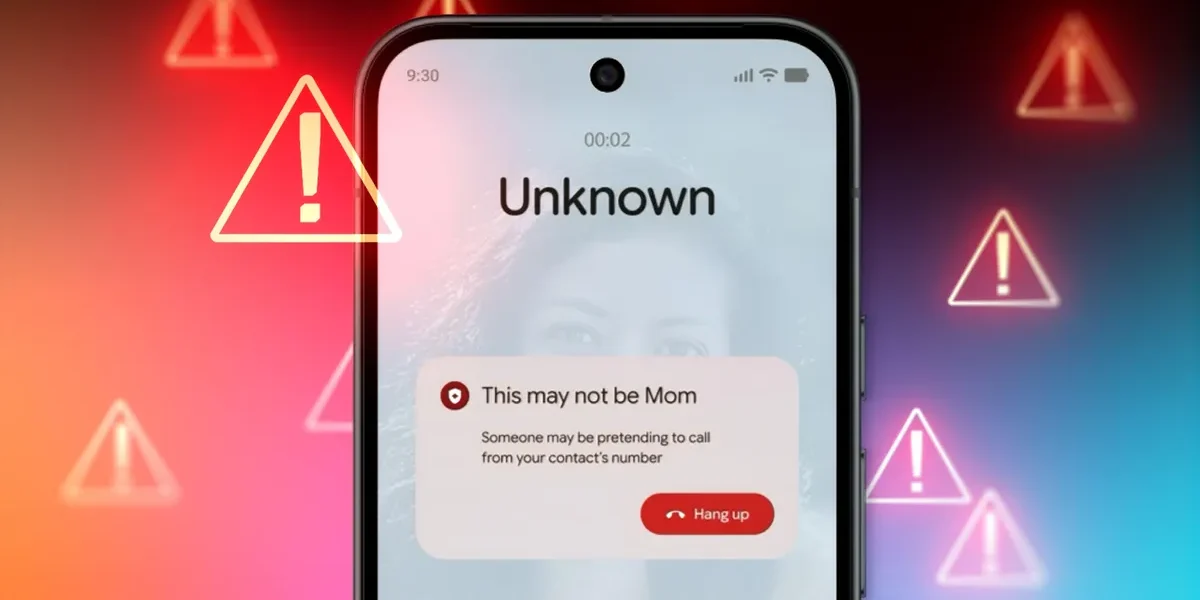
Yes, advancements in AI help people from different walks of life, but they have some cons. One of the most exploited con has been AI voice cloning. Over the years, it has reached the point where most people can no longer tell a deepfake voice from a real one.
Scammers already know this, and they’ve been spoofing users’ contacts, cloning their voice, and committing financial frauds for quite some time. Android’s new fake call detection is designed to stop that exact scenario before it costs you.
How does fake call detection actually work?

Fake call detection is an industry-first feature. It identifies when a caller is not who they claim to be, even when the caller ID looks legitimate and the caller’s voice sounds familiar.
Without any action required from you, the feature operates silently in the background. When a contact calls you, and both of you are using Google’s Phone app, the caller’s device sends an encrypted confirmation signal to your device, functioning like a digital handshake, verifying that the call is coming from that person’s phone.
This handshake is built on end-to-end encrypted RCS technology; the verification is completely private. When a scammer spoofs your contact’s number, the signal will be absent, and your device immediately pings your contact’s actual phone to check whether they are making a call.
Does the feature work for all Android phones?

When their real device confirms it is not making a call, a warning appears on your screen, telling you it’s a fake call and you should immediately hang up. The entire process happens instantly, before the scammer has had a chance to manipulate you.
Fake call detection is enabled by default. It is rolling out globally in Phone by Google this month, starting with Pixel devices, running on Android 12 and above. The only catch is that both the caller and the recipient must be using Phone app and the recipient’s device also needs RCS enabled in Google Messages.
Here’s what “fake call detection” in Android/Google’s Phone ecosystem is likely doing in practice, and where the limitations are.
What the feature is trying to solve
Modern scam calls come in two main forms:
- Caller ID spoofing
The number looks like your friend, bank, or local service—but isn’t. - Social engineering (voice + timing attacks)
Scammers try to keep you on the line long enough to manipulate you, sometimes using AI voice cloning.
The feature you described is aimed primarily at (1), not voice cloning in real time.
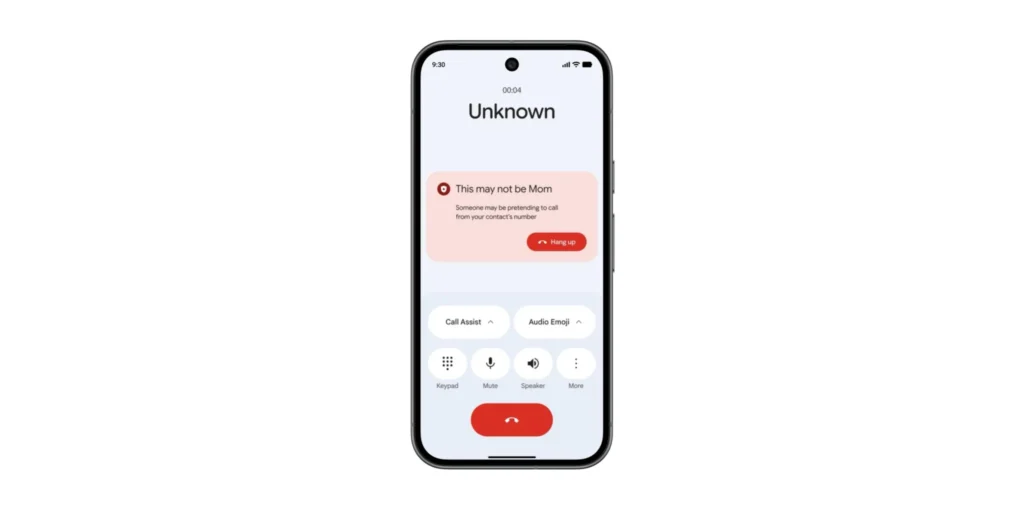
How it actually works (simplified)
The “digital handshake” idea is mostly about device authentication, not analyzing voices.
When both people are using compatible systems:
- The call is initiated through the Android Phone app
- The system can verify whether:
- The caller’s device is actually initiating the call
- The call is being routed through a verified channel (not spoofed signaling)
This is typically done using things like:
- Secure device identity keys
- Network or app-level verification signals
- Possibly RCS-related signaling in some cases
Where RCS fits in
RCS (Rich Communication Services) is a messaging/calling upgrade path over SMS/MMS.
In systems like this, RCS can provide:
- Device-level identity verification
- Encrypted session setup
- Metadata confirmation (“this device initiated a call”)