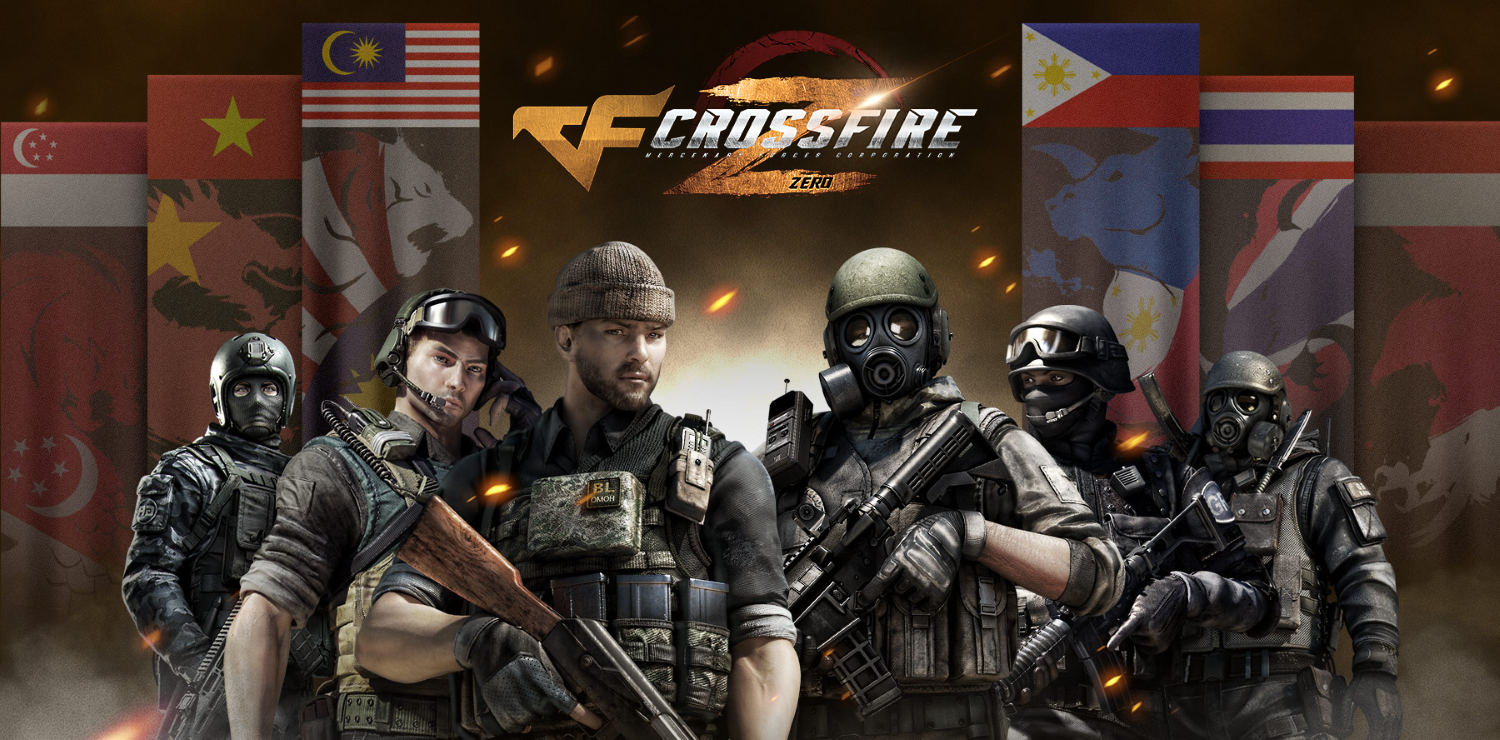
Going back to play games released decades ago is a quaint experience, looking back at simpler mechanics and level designs, marveling at how far we’ve come. If developer That’s No Moon’s ambitions prove true, its new game, Crossfire, will have us looking at old cover shooters the same way.
That’s No Moon revealed Crossfire at Summer Game Fest 2026’s trailer showcase — and yes, it is set in the same universe as the 2007 first-person shooter of the same name that was popular in South Korea and China. But the new version is a radical departure, ditching Counter-Strike-style team competition for a narrative-heavy single-player journey. Judging by the new technology the studio is debuting in the game, there’s far more than a novel story awaiting players.
I joined other media in a visit to That’s No Moon’s office just north of Los Angeles International Airport. Part desk-filled work corral for the LA-based chunk of the roughly 230-person staff, part performance-capture studio for the stars of its game, the space feels functional but beloved. Facing the desks is a wall full of caricature drawings of developers; in a corridor just behind it, signatures from voice actors and famous visitors are scrawled. Near that is the sound stage, which was previously used to record motion-capture performances for the first and second Uncharted games — and after that, for Disney’s live-action The Lion King and the TV show The Mandalorian, we were told.
All of that was part of the tour to convey the significance of That’s No Moon’s debut game, which certainly felt like a grandiose wind-up to a preview. When we were seated in a theater, the tone of auspicious advancement continued, asserting that the studio’s game would herald a new era of third-person shooter combat. But when developers showed off visualizations of the tech they’re using in the game to advance the next generation of cover shooters, I sat forward in my seat.
Think of cover shooters like Gears of War or the Uncharted series, and you’ll picture a protagonist hunkering behind a box or barrier, perfectly safe from enemy gunfire until they pop up to shoot back. How do you advance that genre? Make cover dynamic by revising the rules of visibility. The presentation showed a visualization of the studio’s new system in which light vectors stretched above a character model like webs in an oval balloon, which all signified visibility — and as the character clambered over uneven rocky terrain into the open, the green vectors turned red one by one to indicate where they’d been spotted by enemies.

This could free up both developers to create the geography they want and players to explore the way they’d prefer. Instead of a static seen-or-hidden binary of players popping up from boxes, navigating trench-like routes highlighted in yellow paint by developers, That’s No Moon’s tech empowers players to find their own routes, naturally progressing around what looks to them like cover.
Naturally, this tech will first debut in Crossfire and indeed might be one of the big things that sets the game apart from third-person shooters players know. Another big draw could end up being the story — but aside from some baseline details, That’s No Moon was extremely coy about what happens in its debut title. Here’s what we can say beyond the trailer for a game with a lot of promise but no release date yet.

How you’ll get caught up in Crossfire
Crossfire stars two mercenaries with their own agendas who are uneasy allies despite being at ideological crossroads. Layla Qassem, the player-controlled character in the game, is a spirited believer in changing the world, though that conviction could lead to chaos and anarchy. The nonplayer character Delroy Cross is a rival operator who’s forced to cooperate with Layla to combat an existential threat, while fighting for institutions and stability.
Layla is modeled after and voiced by Claudia Doumit (The Boys), while Cross takes after and is voiced by Ricky Whittle (American Gods). Eagle-eyed fans will recognize that they’ve seen these actors portray these exact roles before — in episode 7 of Amazon’s Secret Level series, titled Crossfire: Good Conflict. The episode ended with vague fates for each character, and it’s unclear if it’ll feed into the upcoming game.
From That’s No Moon’s vague descriptions, this odd couple will form the core of a rich narrative as they grow closer under duress. They’ll also shoot the hell out of enemies in third-person stealth combat, opting for subtlety over aggressive firefights to overcome the odds against a superior force. If bonding through harrowing violence sounds familiar to fans of Uncharted and The Last of Us, a number of Naughty Dog developers make up That’s No Moon’s staff, including Chief Creative Officer Taylor Kurosaki.
“We love those tentpole single-player character-driven games, and it feels like they’ve become few and farther between. We want to keep this art form relevant and active,” Kurosaki said.
While those in the studio have tried out both first- and third-person games, they found the latter more emotional.

“In terms of creating that emotional connection between the player and the character they’re playing, being able to see them on screen is a great lever you don’t have in a [first-person shooter],” Kurosaki said.
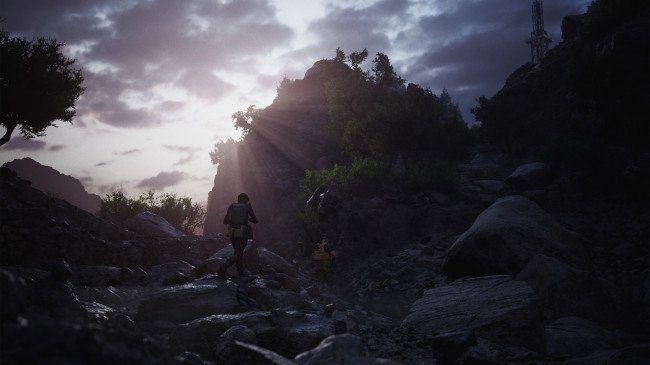
The gameplay we saw in a live demonstration looked difficult, with a strong emphasis on stealth and guerrilla combat. We saw multiple approaches to an encounter on a bridge over a rocky ravine where Layla and Cross had to take on half a dozen enemies. There was a meticulousness to the preparation, from grabbing armor plates to manually loading backup magazines to grabbing resources from downed enemies. Layla easily went down after a few seconds of sustained fire, and there was a lot of retreating to lose line of sight.
The new cover technology was evident as Layla crawled over uneven rocks and boulders, and it wasn’t clear whether she was out of sight of enemies, an uncertainty that will probably force players to make judgment calls in the moment. Without playing the scenario myself, I couldn’t tell how much it would shift my behavior — but without premade cover lanes like in most modern third-person shooters, I’d have to pay a lot more attention to the environment around me lest I get picked off.
The difficulty pushes the player as Layla relies on her AI-controlled, tenuous ally, Cross. Necessity mixed with the friction of ideological disagreement leads to deep character moments.
“Everyone is just, for the most part, doing their best job they can with the flaws and faults that they have,” Kurosaki said. “It’s not about saying you’re a bad person; it might be about, hey, we disagree and let’s really figure out a path forward.”
More details will come later, including the central existential threat that binds Layla and Cross in their uneasy alliance. What That’s No Moon does want to get across is the tech innovations that, hopefully, will immerse gamers deeper into a single-player narrative than prior games.

What it takes to reinvent the cover shooter: A new studio free from convention… and old tech
In conversation with Kurosaki and Crossfire Game Director Jacob Minkoff, they made two things clear: Their new tech will set the game apart, and it was only possible to build it from scratch within a brand-new company.
“We couldn’t have done it if we were at an existing studio with an investment in some other technology, a team that was used to building games a certain way,” Kurosaki said. “We had to relearn how to build games.”
Minkoff admitted to being “a big Siggraph nerd,” citing the annual computer science conference where technological white papers are published. He recalled seeing a paper on face-function neural networks 12 years ago, among other cool animation technologies, that could be used in third-person action-adventure games… but weren’t. Unreal Engine 5, which Crossfire uses, was a linchpin for realizing new ideas in games, especially with its Nanite tech for mass polygons on assets and Lumen tech for lighting them.
“I knew that technology existed to navigate incredibly complex organic environments, and that nobody was using it,” Minkoff said. “Teams out there who have 25 years of investment into their tech stack and have brand names that are well known … were very unlikely to take the risk to use that technology to make a new thing.”
Complex organic environments are the other central pillar of Crossfire’s design ethos. In conventional games dogma, players expect that objects in the environment can only be of certain heights: ankle-high for anything casually walked over, shin-high for things that need to be stepped over, hip-high for things to be crouched behind, and so on. Rarely are there objects in between, so as not to confuse the player or require additional functionality.
But That’s No Moon built objects in a wide range of heights and a system for characters to dynamically move and flatten themselves over when hiding, which — combined with dynamic cover — theoretically allows players to move around the environment in Crossfire in ways they’ve never done in earlier games. It’s also stripped away objective dots and other display elements that distract players. All that’s left is the route the player invents for themselves, and what they choose to take shelter behind. When the binary of cover is removed, everything is cover.
“The experience I get by playing this game that I’ve never gotten before is the way that I am fully immersed in my analysis of the space around me, the way I would do if I were in real life in this situation,” Minkoff said, “because we have fully modeled the biomechanics of how a human being moves around this environment.”
Such devotion to technical ideas is accompanied by a singular focus for the game. Crossfire is single-player, full stop, so there’s no worry about adapting this tech to multiplayer. There are no microtransactions. No other modes.
“It’s really only in a single-player-only experience where you can innovate like we have. We have to make a holistic game that has a beginning, a middle and an end, and that has good pacing, and that hangs together,” Kurosaki said. “For players, they don’t have to have the edges shaved off and just some modicum of innovation that still fits in with all of these [other game modes] in this larger universe. We can innovate to the max.