





A technology promoted as a powerful crime-fighting tool is facing increasing scrutiny over privacy, data sharing and potential misuse by law enforcement.
A technology introduced as a modern tool for fighting crime is facing a growing backlash across the United States.
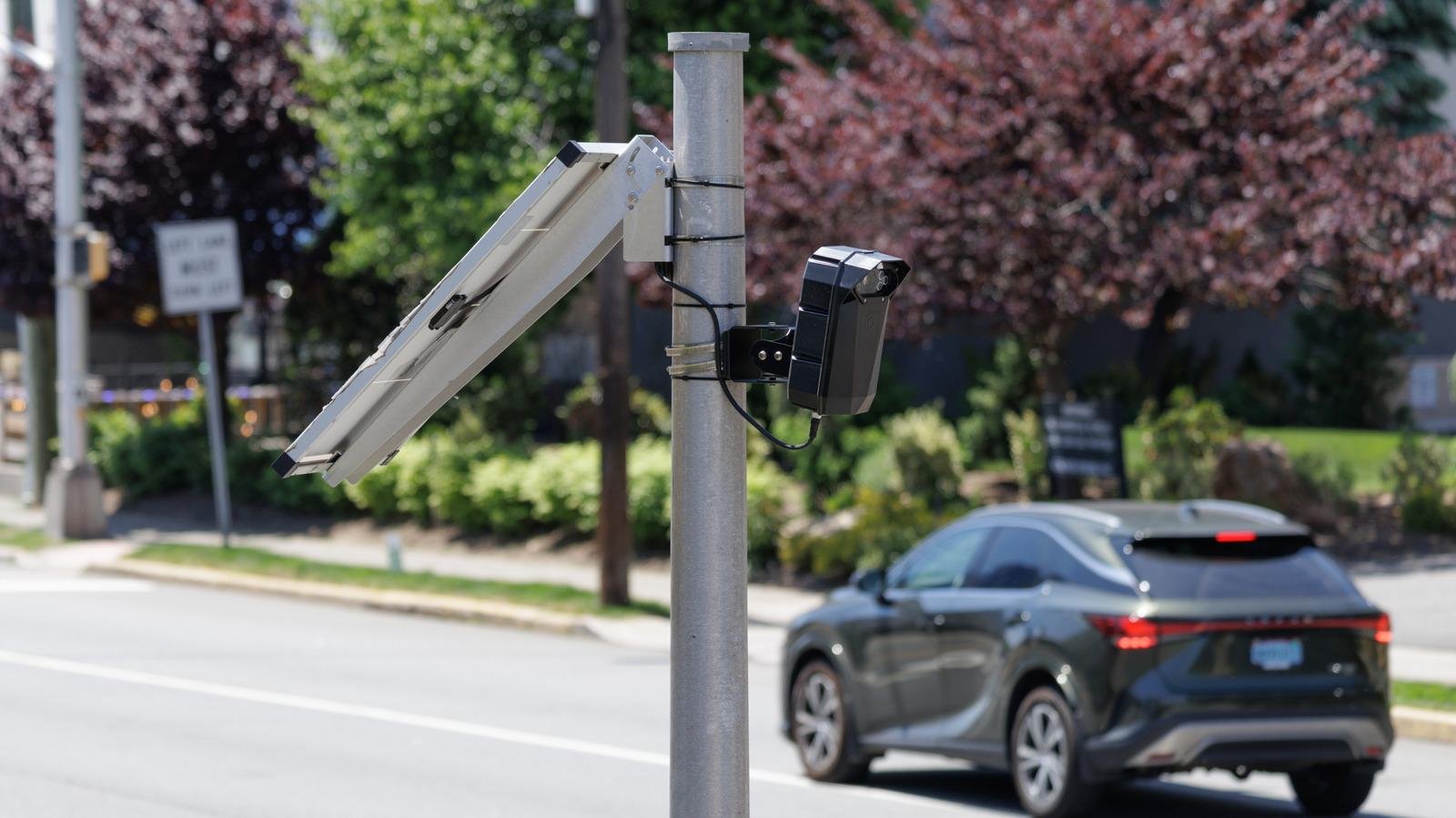
Automated license plate recognition cameras, commonly known as ALPR systems, have spread across roads, intersections and neighborhood entrances. The cameras photograph passing vehicles and record information including license plates, vehicle characteristics, time and location.
The pace of cancellations accelerated sharply in August. Recent reporting indicates that 93 jurisdictions ended or moved away from contracts with Flock Safety during the month, making August one of the strongest periods of pushback against the surveillance network.


The original pitch was straightforward.
If a stolen vehicle passes a camera, police can receive an alert and potentially locate it much faster.
There is evidence that the technology has been useful in investigations. Flock says its network supported more than one million cases in 2025.
The controversy begins with everything else the system can collect.
A network of cameras does not photograph only vehicles suspected of being involved in crimes. It records vehicles passing through monitored locations, creating a large pool of searchable information.
That has moved the conversation from public safety to privacy and control of data.
The network is larger than many residents realize
A recent investigation into Alpharetta, Georgia, found that vehicle data collected through the system was connected to a network involving more than 2,000 organizations.
The finding has intensified questions about how information moves between agencies and how much control individual communities actually have over data generated by cameras operating on their streets.
That does not mean every city automatically gives its data to anyone who asks for it. But the existence of broad sharing networks has forced local officials to take a closer look at access rules, retention policies and oversight.
In some cases, the controversy has centered on people with legitimate access to the system using it for improper reasons.
A former Georgia police officer was accused of using the system to search for the vehicle of his former partner and another person. Investigators found dozens of searches that allegedly had no legitimate law-enforcement purpose.


Those cases have changed the nature of the argument.
The question is no longer simply whether the cameras help solve crimes. It is what happens when a powerful surveillance system is misused by someone who has legitimate access to it.
Flock has responded with tighter controls. The company says searches will require a criminal case number and that its systems will automatically flag unusual activity for review.
Cities are changing their minds
Tempe, Arizona, recently decided to stop using the system, citing concerns over privacy and potential misuse.
Kendall County, Texas, also voted unanimously not to renew its contract after residents raised growing objections to the technology.
In Manvel, Texas, the mayor has now called for ending a $137,000 contract, citing privacy, data-security and financial concerns.
The growing opposition is therefore not coming exclusively from privacy activists.
In an increasing number of communities, elected officials themselves are demanding clearer answers about who can access surveillance data and how long it remains available.


The technology is not the only issue
For law enforcement, an ALPR network can be a valuable investigative tool.
A missing child, stolen vehicle or car connected to a serious crime can generate a lead that would otherwise be difficult to find.
But the same cameras also record people who are not suspected of any wrongdoing.
That is the tension at the center of the debate.
Public safety requires information. Privacy requires limits.
As AI becomes better at analyzing huge volumes of data, defining the boundary between those two interests becomes increasingly difficult.
The fight over ALPR cameras is therefore unlikely to end with a wave of canceled contracts.
It could shape how American cities deploy surveillance technology for years to come.
If the cameras remain, pressure for stronger rules, audits and transparency will continue.
If more communities remove them, the industry will have to convince the public that the security benefits justify the scale of data collection.
Either way, one thing is already clear:
The camera is no longer just a device mounted on a pole. It is part of a much larger data infrastructure — and the fight over who controls that infrastructure is only beginning.
Cities grapple with surveillance creep
About 40 miles (64km) from Longmont, Denver approved swapping out Flock’s cameras for Axon’s in March. Axon’s ALPRs in the city will store data for 21 days, which is less than the company’s default 30-day retention period. Flock also typically stored ALPR data for 30 days but reduced that to one week, as part of its sweeping operational changes last week.
The switch to Axon doesn’t seem that different for Denver resident William Beckett. “We’re still recording every single license plate that goes by – regardless of suspicion of a crime, or without a need for a warrant,” he said.
On the east coast, Syracuse, New York also replaced Flock’s ALPRs with Axon’s. Two local privacy activists tell the Guardian that they want to ban all ALPRs.
“Flock has been made to be the villain in this. It’s not just Flock: it’s the idea that there we are being over-surveilled,” said Gen Garcia,chair of Syracuse DSA’s international solidarity committee. They have filed a public records request for the new contract but haven’t yet received one.
The Syracuse activists say they don’t believe that cameras installed by private companies, such as a local Lowe’s and Home Depot, are so far affected by the city’s move away from Flock. They are trying to get elected officials to ban Flock cameras altogether, or at least force the company to make sure these cameras face away from public streets. They also point out that it took more than three months after lawmakers officially dropped Flock for the cameras on municipal land to come down; Syracuse police department officials “moved to unplug” them after a May deadline for the company to collect them passed with no action, according to local news outlet Central Current.
What’s next for the anti-surveillance movement?
The gold standard for protecting drivers’ privacy is to not use ALPRs at all, according to the ACLU. The best guardrails include warrant requirements and strict limits on how long scans of license plates can be stored, the organization said. New Hampshire caps retention at three minutes. Privacy advocates say police officers don’t need more than a few minutes to compare plates against Flock’s “hotlist” of suspects, or to find specific license plates already on their radar.
“The longer you keep data, the longer it has predictive value,” said Daniel Schwarz with the New York Civil Liberties Union. “We all move in certain patterns.”