Over the past few days, some of the filmmaking world’s most recognizable creators have found themselves at the center of a debate that has little to do with cameras and almost everything to do with artificial intelligence.
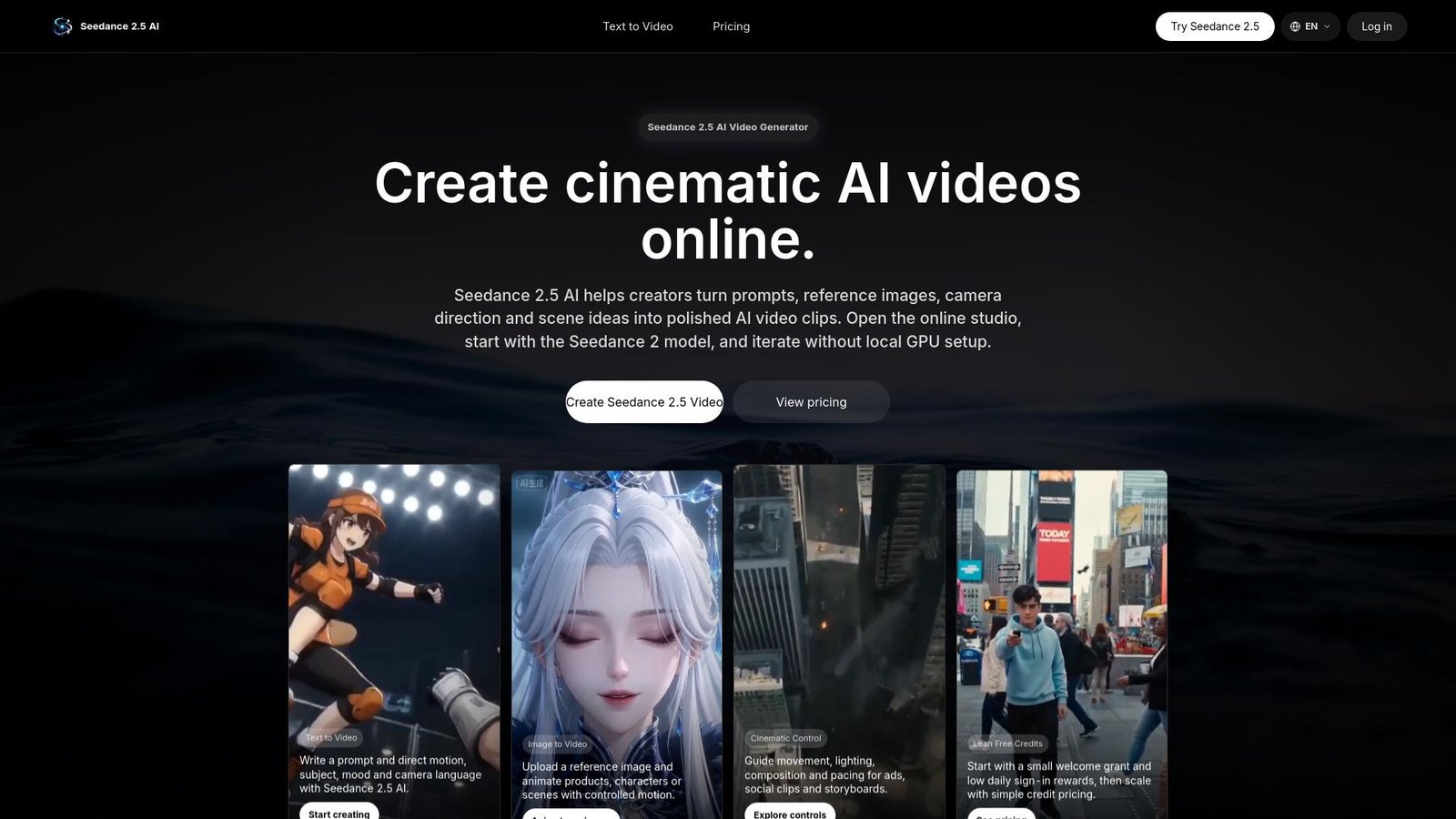
Matti Haapoja and Sam “Kold” Kolder published videos showcasing what they could create with Higgsfield, an AI video platform that recently added ByteDance’s Seedance 2.5. The demonstrations were impressive. They were also controversial.
And that combination is exactly why this story matters.
AI video has reached a point where the technology itself is no longer the only story. The bigger question is becoming who is promoting it, why they are promoting it, and whether audiences can still tell the difference between an independent creator’s recommendation and a paid advertisement.
Haapoja’s video presented Higgsfield almost like a glimpse into the future of filmmaking. He showed how AI could be used to create scenes and transform footage, while also discussing Cully Hill Boys, a feature-length project produced using AI-generated material. Kolder similarly demonstrated the technology’s capabilities.
For viewers accustomed to seeing these creators talk about cameras, lenses and traditional filmmaking techniques, the sudden enthusiasm for AI was bound to attract attention.
Then the internet started asking questions.
Other creators began sharing what appeared to be partnership offers from PR agencies working with Higgsfield. The discussion quickly moved from “How powerful is this technology?” to “Were these videos actually advertisements?”
That distinction matters.
Neither Haapoja’s nor Kolder’s original videos were initially labeled as advertisements, according to reporting from The Verge. After the controversy emerged, Higgsfield’s PR manager Nuray Omarkhan told The Verge that the creators had been compensated through a combination of monetary payment and Higgsfield credits.
For audiences, that changed the conversation completely.
A filmmaker showing an AI tool because they genuinely believe it is revolutionary is one thing. A filmmaker being paid by the company behind that tool is another. The technology may be identical, but the relationship between creator and audience is not.
And this is where AI companies are entering dangerous territory.

The technology is advancing so quickly that many creators are genuinely excited about it. At the same time, AI companies have an enormous incentive to put impressive demonstrations in front of audiences who might otherwise be skeptical.
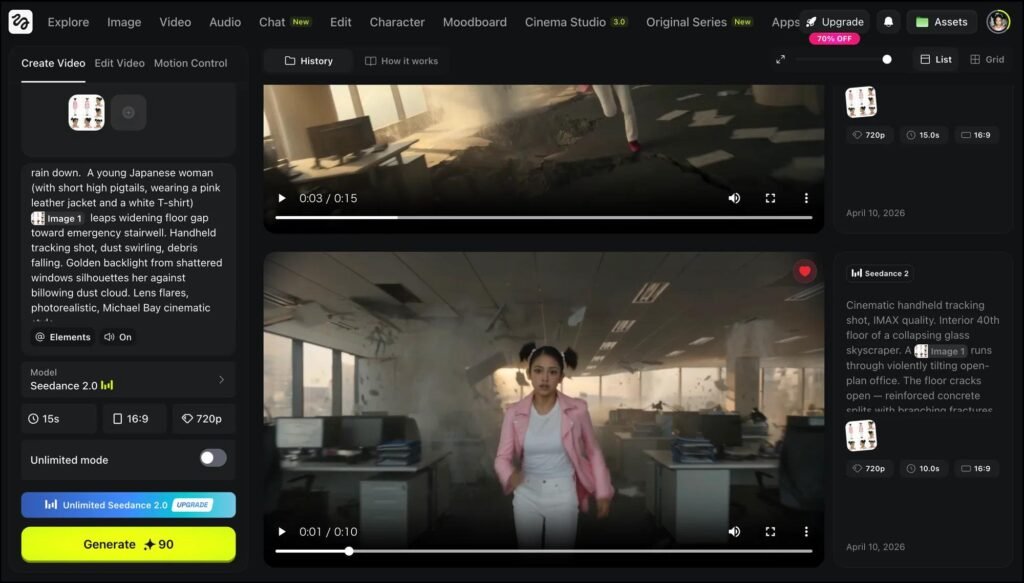
Higgsfield is a particularly interesting example because the company is moving far beyond the image of a small experimental AI startup. Earlier this month, the company announced a $400 million funding round at a reported $5.4 billion valuation, while saying it had reached $700 million in annualized revenue and more than 30 million users.
That makes the creator controversy more significant.
This is no longer simply a group of filmmakers experimenting with a new tool.
It is becoming an entire commercial ecosystem.
And the technology itself is getting harder to dismiss.
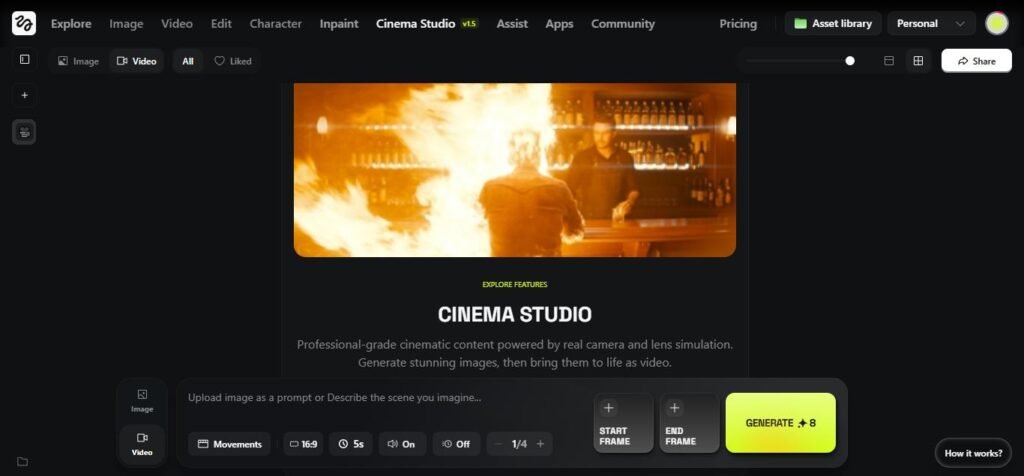
Higgsfield says Seedance 2.5 can generate cinematic video clips of up to 30 seconds, create synchronized audio together with the visuals, maintain characters and locations using as many as 50 references, and make localized edits without regenerating an entire clip.
Those capabilities point toward something much bigger than another AI image generator.
They suggest a future where a filmmaker could describe a scene, provide references for characters and locations, generate the sequence, modify individual elements and produce sound in the same workflow.
That doesn’t mean Hollywood disappears tomorrow.

It does mean the economics of filmmaking are changing.
A production that once required cameras, sets, actors, lighting crews, visual-effects artists and weeks of post-production can increasingly be prototyped—or in some cases produced—through software.
But there is an uncomfortable paradox here.
The more impressive AI video becomes, the more important human creativity becomes to the debate.
A model can generate a beautiful shot. But who decided what the shot should look like? Who designed the story? Who created the references? Who owns the underlying creative work used to train these systems? And who should receive credit when an AI-generated production becomes commercially successful?
Those questions have no simple answers.
They also explain why the backlash against creator promotions has been stronger than a normal advertising controversy.
Filmmakers built their reputations by teaching audiences how to create things themselves. Their viewers trust them because they believe those recommendations come from experience.
When that trust becomes mixed with undisclosed—or initially unclear—commercial relationships, audiences can feel that the relationship has changed.
That is particularly sensitive with AI because the technology is already surrounded by concerns about copyright, authorship and the future of creative jobs.
The irony is that the controversy may actually be evidence of how important AI video has become.
Nobody would spend this much time arguing about whether a mediocre editing plugin was revolutionary.
People are arguing because the technology is beginning to look genuinely capable of changing the creative industry.


Seedance 2.5 is only one part of that transformation. Google, OpenAI, Runway, Kling and other companies are all competing to make generated video more realistic, controllable and useful.
The race is no longer simply about making a five-second clip that looks impressive on social media.
It is about control.
Can AI maintain the same character across multiple scenes? Can it understand camera movement? Can it follow complex instructions? Can it generate dialogue and sound? Can a director make precise changes without destroying everything else?
If the answer to those questions increasingly becomes yes, AI video stops being a novelty.
It becomes infrastructure.
And that is when the relationship between technology companies and creators becomes even more important.
Creators will be among the people teaching millions of users how these systems work. Their demonstrations can determine which products become popular. Their opinions can influence filmmakers, advertisers, musicians and ordinary consumers.
That gives creators enormous power.
It also gives them enormous responsibility.
For us at TheTechSpot, the most interesting part of the Higgsfield controversy isn’t whether AI video is good or bad.
It is that AI has reached a point where the technology, the business model and the people selling the idea of the technology can no longer be separated.
The video may be generated by AI.
The excitement may come from a filmmaker.
The money may come from a technology company.
But the final judgment still belongs to the audience.
And if AI video really is going to become the future of filmmaking, the industry will need more than spectacular demonstrations.
It will need trust, transparency and clearly defined rules about who created what—and who is being paid to say it.
Because the next revolution in filmmaking may not be about whether AI can make a movie.
It may be about whether audiences can still tell who is behind the camera—and who is behind the advertisement.
TheTechSpot verdict:
AI video has crossed an important line. The technology is becoming powerful enough that the biggest battle may no longer be about proving what AI can create. It will be about proving that the people showing it to us are being honest about why they’re showing i