A U.S. federal court has struck down the Pentagon’s decision to classify Anthropic as a national security supply-chain risk, calling the government’s action unlawful and retaliatory. The ruling raises a much bigger question: who should ultimately decide how AI is used in warfare — governments or the companies building the technology?
The battle between Anthropic and the U.S. government has entered a new phase.
A federal judge in California has ruled against the Pentagon, blocking and overturning its designation of Anthropic as a “supply-chain risk,” a status that restricted the company’s ability to work with the U.S. military.
Judge Rita Lin issued a 59-page ruling describing the government’s action as “illegal and baseless” and concluding that the administration had punished Anthropic for its public position on how artificial intelligence should be used.
But behind the legal battle lies a much larger question.
Can governments force AI companies to allow their models to be used for any military purpose?
How Did the Conflict Begin?
The dispute escalated after Anthropic refused to allow Claude to be used for some of the most controversial military applications requested by the U.S. government.
The company placed restrictions on the use of its models for fully autonomous lethal weapons and mass domestic surveillance.
The Pentagon wanted much broader access for lawful government purposes.
Negotiations collapsed.
The U.S. government then took an extraordinary step: Anthropic was designated a national-security supply-chain risk.
The classification carried major practical consequences.
The company faced restrictions on federal and defense contracts, potentially costing billions of dollars in business and damaging its reputation.
The Court: National Security Is Not a Blank Check

Judge Rita Lin rejected the government’s central justification.
In her ruling, she argued that the administration had used national security as a justification for punishing Anthropic over its public position.
The message from the court is significant for the technology industry:
The government cannot simply invoke “national security” to bypass constitutional protections.
The Tech Spot Editorial Team
The judge concluded that the government’s actions amounted to unlawful retaliation against protected expression.
That means this case was not simply about a military contract.
It was also about whether a technology company can establish boundaries around how its products are used.
Anthropic Didn’t Say “No” to the Military — It Said “No” to Unlimited Use
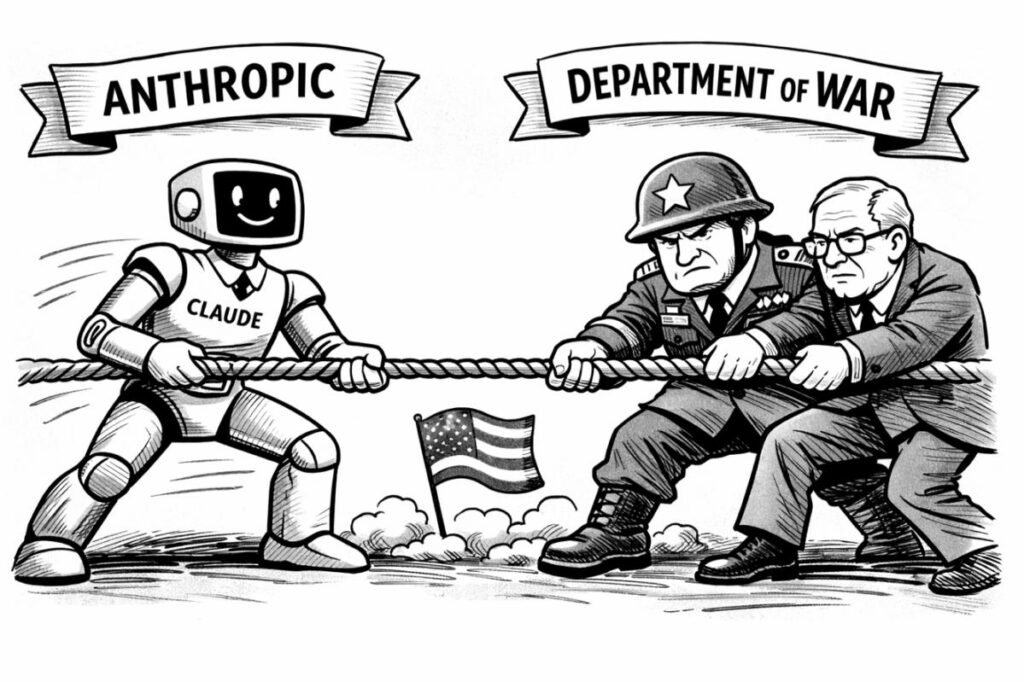
That distinction matters.
Anthropic has not rejected cooperation with the U.S. government.
The company continues to argue that AI can play an important role in national security.
But it has sought limits around uses it considers particularly dangerous.
Two areas have been central:
autonomous weapons and mass surveillance.
Anthropic argues that today’s AI models are not reliable enough to be given complete control over lethal decisions.
The Pentagon has taken a different position.
Its argument is that private companies should not be able to restrict lawful military operations simply because they disagree with how the government intends to use the technology.
A Major Precedent for the AI Industry
The ruling could have implications far beyond Anthropic.
If an AI company establishes ethical restrictions around its technology, can the government punish it for refusing a government demand?
That is the heart of the dispute.
And in this case, the court’s answer was:
Not in the way the administration acted.
That could give other AI laboratories greater confidence to establish usage policies around their own systems.
But the Battle Is Not Over
The Pentagon and the administration can appeal the ruling.
Anthropic is also involved in a separate legal case in Washington, D.C., involving another designation that has not yet been finally resolved.
So the company has not completely escaped the broader legal fight.
Still, the California ruling represents a major victory.
And it could influence how governments negotiate with AI companies in the years ahead.

Why Does This Matter So Much for AI?
Because artificial intelligence is moving from systems that generate text and images toward systems that can directly influence the physical world.
AI is increasingly being used for:
- intelligence analysis;
- cybersecurity;
- military planning;
- robotics;
- drones;
- autonomous systems;
- surveillance;
- and real-time decision-making.
In this environment, the question is no longer simply:
“How powerful is the model?”
It becomes:
“Who controls that power?”
AI Companies Are Taking on a New Role
Until now, technology companies were usually treated as suppliers.
The government needed technology.
The company built it.
A contract was signed.
AI is changing that relationship.
When a model can analyze intelligence, control critical systems or influence decisions with physical consequences, the company that builds the model is no longer merely a software supplier.
It becomes part of the decision-making chain.
That is why the Anthropic-Pentagon dispute matters so much.
TheTechSpot: The Real Battle Isn’t Anthropic vs. the Pentagon
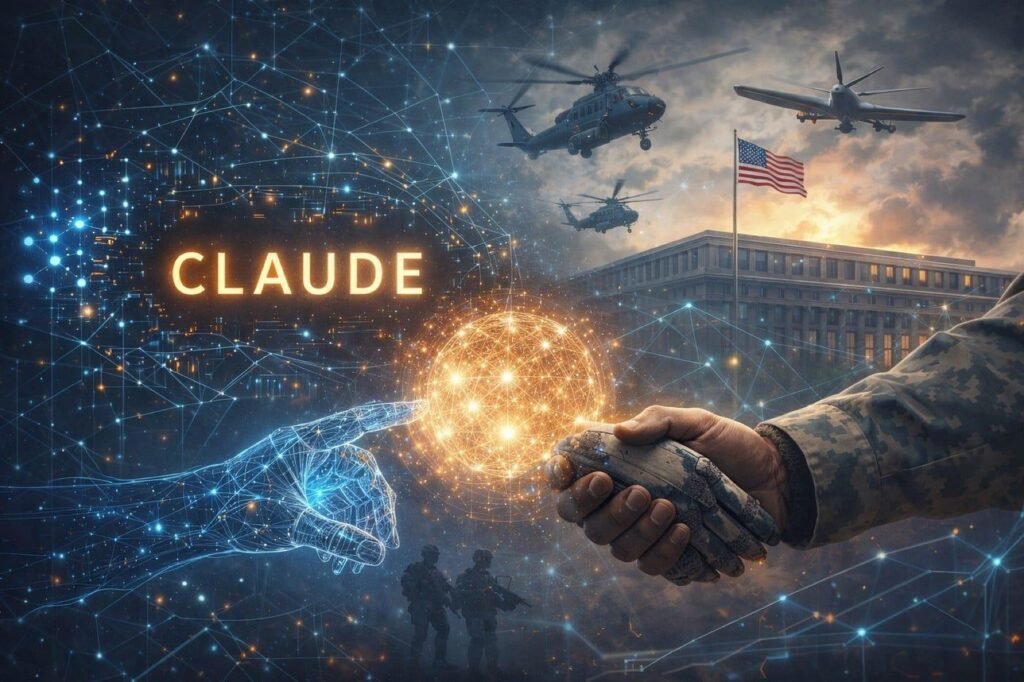
On the surface, this looks like a fight between an AI company and the U.S. government.
At its core, however, it is a debate over who gets to set the rules of the AI era.
If governments have complete control over how powerful AI systems are used, AI companies may become little more than technology suppliers.
If companies can impose absolute restrictions regardless of government demands, they gain a much larger role in defining national-security policy.
The eventual answer will probably lie somewhere between those extremes.
But one thing is becoming clear:
AI is becoming too strategically important to be treated as ordinary software.
It is becoming critical infrastructure.
And the Anthropic ruling may become one of the cases that helps determine how much power AI companies have to say:
“You can build the future with our technology — but you cannot use it without limits.”