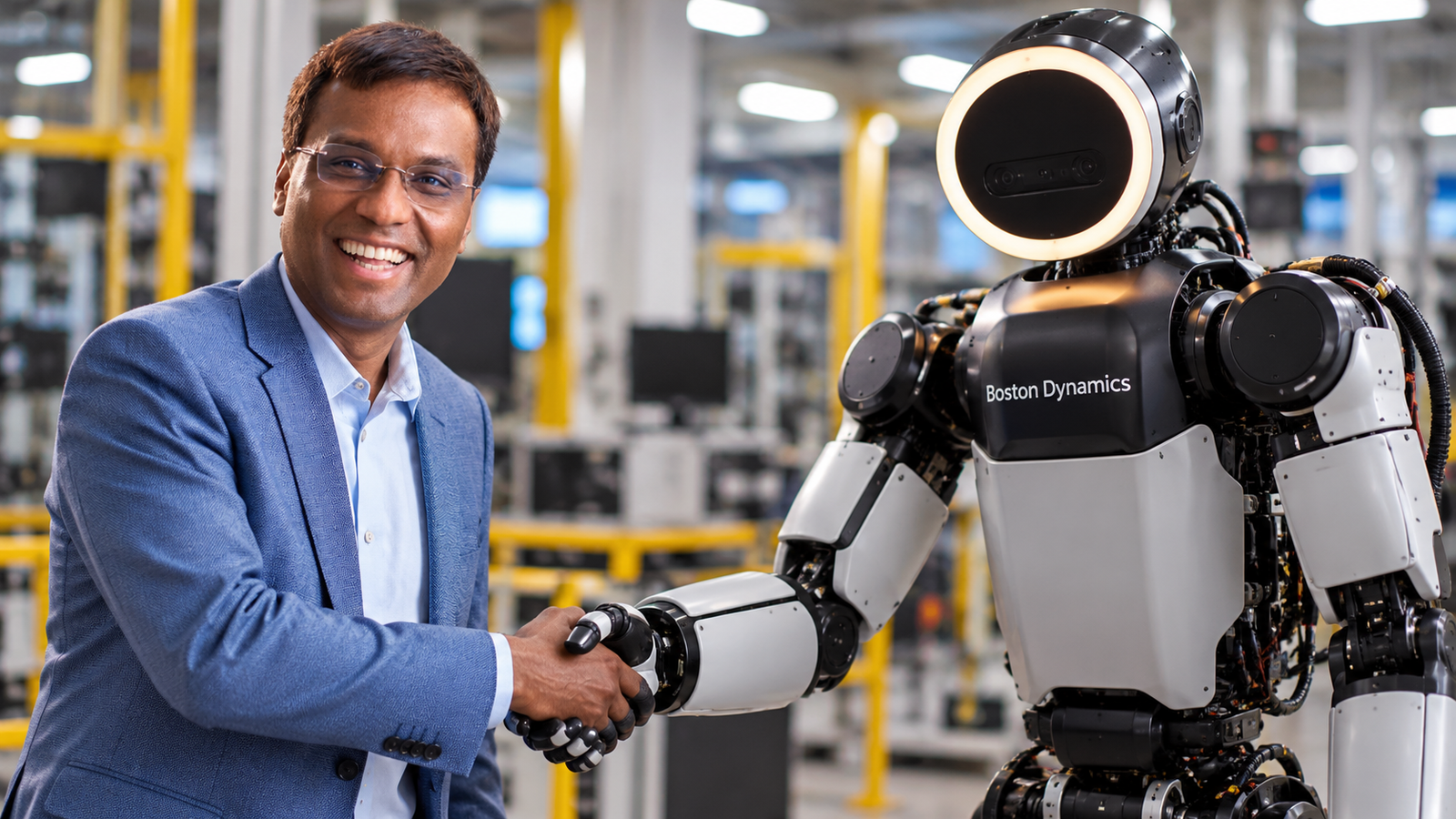
Boston Dynamics has appointed Rohit Prasad as its new Chief Executive Officer, bringing an artificial intelligence veteran into the top job at one of the world’s best-known robotics companies.
Prasad officially takes over on October 7, 2026. Boston Dynamics says his appointment is intended to accelerate its next phase of Physical AI, combining robotics with advanced artificial intelligence to build more autonomous and adaptable machines for real-world environments.
From Alexa and AI to physical machines
Before joining Boston Dynamics, Prasad held a senior AI leadership role at Amazon.
Boston Dynamics says he served as Senior Vice President and Head Scientist for Alexa and Artificial General Intelligence, and highlights his work scaling Alexa and creating the Amazon Nova family of foundation models.

Reuters likewise describes Prasad as a former Amazon executive who played an important role in the company’s AI development.
His move therefore connects two very different technology worlds.
Amazon’s AI systems operate primarily through software and cloud infrastructure. Boston Dynamics builds machines that must perceive, move and manipulate objects in the physical world.
The challenge now is to combine the two.
Physical AI becomes the central strategy
Boston Dynamics describes its next phase around the concept of Physical AI.
The idea is straightforward but technically difficult: artificial intelligence should not simply generate text or analyze images. It should help a machine understand its surroundings, make decisions and physically act on those decisions.
For a humanoid robot, that means combining:
- computer vision;
- sensors;
- motion planning;
- AI models;
- manipulation;
- navigation;
- real-time control;
- safety systems.
Boston Dynamics says Prasad’s appointment is designed to combine its robotics expertise with advanced AI capabilities and accelerate commercialization at scale.
Atlas is moving toward industrial deployment
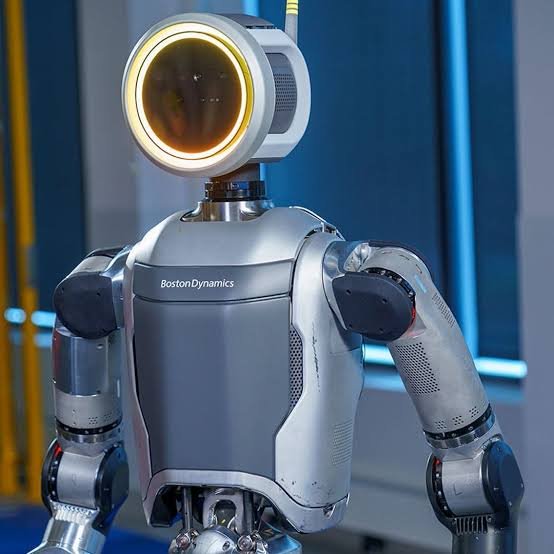
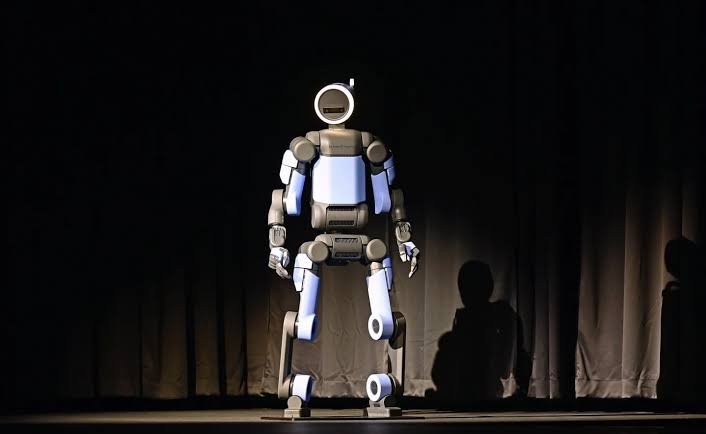
The most visible expression of this strategy is Atlas, Boston Dynamics’ humanoid robot.
Hyundai Motor Group unveiled the latest Atlas as part of its 2026 AI Robotics strategy, presenting the machine as a step toward moving humanoid robotics out of demonstrations and into industrial operations.
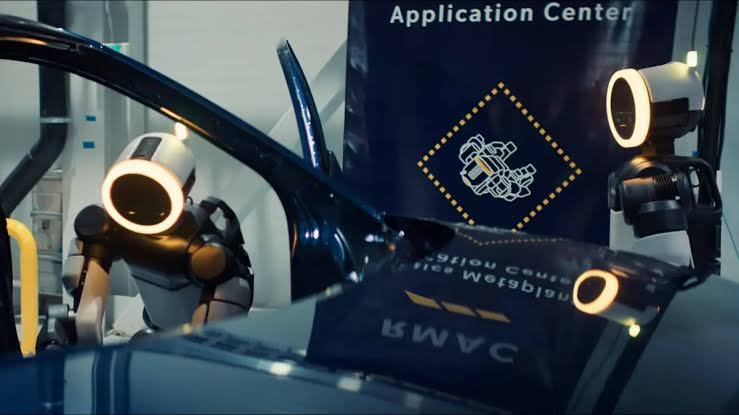
Hyundai says Atlas is expected to be deployed at its Hyundai Motor Group Metaplant America in the United States by 2028, with the possibility of broader deployment later.
Factories offer an important advantage: they are controlled environments where robots can perform clearly defined tasks repeatedly.
That makes manufacturing a logical testing ground for Physical AI.
Hyundai wants 30,000 robots a year

Hyundai’s ambitions extend far beyond a single humanoid prototype.
The company says it is targeting a production system capable of manufacturing 30,000 robots annually by 2028. Its broader robotics strategy covers manufacturing first, followed by potential applications in logistics, energy, construction and facility management.
Hyundai is also positioning Boston Dynamics within a wider technology ecosystem involving its manufacturing capabilities and partnerships with AI companies.
That gives Boston Dynamics something many robotics startups lack: access to a large industrial environment in which its robots can be tested, trained and potentially deployed at scale.
The real race is no longer about making robots walk
Humanoid robotics has already demonstrated impressive movement.
But walking is no longer the main commercial question.
The more important question is whether a robot can understand a task, adapt to changing circumstances and complete that task safely and economically.
That requires AI systems capable of connecting perception, reasoning and physical action.
A humanoid that can perform a spectacular demonstration is interesting.
A humanoid that can reliably perform thousands of repetitive industrial tasks every day is commercially transformative.
The challenges are still substantial

Prasad’s appointment should not be interpreted as proof that humanoid robots are ready to replace workers across industries.
Several major problems remain:
- battery life;
- safety around humans;
- reliability;
- hardware costs;
- maintenance;
- AI training;
- unpredictable environments;
- regulatory and operational requirements.
This is why industrial deployment is so important.
Factories can provide structured environments where companies can measure performance, identify failure modes and gradually increase autonomy.
Why the appointment matters for AI
The first major wave of generative AI focused largely on text, images, audio and code.
Physical AI takes the next step.
Instead of an AI model producing an answer on a screen, the output can become a physical action:
perception → reasoning → decision → physical action → new data → improved AI.
That creates a much harder engineering problem.
A wrong answer from a chatbot may be inconvenient. A wrong decision by a robot operating beside a human can create a physical safety risk.
Boston Dynamics therefore has to solve both intelligence and mechanical reliability at the same time.
What happens next?
Prasad’s first major challenge will be turning Boston Dynamics’ Physical AI strategy into commercially scalable products.
Atlas will be one of the most important tests.
If the robot can successfully move from demonstrations to reliable industrial work, Boston Dynamics could gain a valuable source of real-world operational data while improving the autonomy of future systems.
If Hyundai’s production ambitions also materialize, the company could become one of the first major industrial groups to combine humanoid robotics, manufacturing scale and advanced AI into one vertically integrated strategy.
Rohit Prasad’s appointment is more than a leadership change.
It is a signal that Boston Dynamics wants to merge two of the most important technology trends of the decade: advanced artificial intelligence and physical robotics.
Atlas has already demonstrated how sophisticated humanoid hardware can become.
The next challenge is harder: giving that hardware enough intelligence to understand the physical world, make decisions and perform useful work safely.
If Boston Dynamics succeeds, the next major AI battleground may not be only inside data centers.
It may be inside factories.