





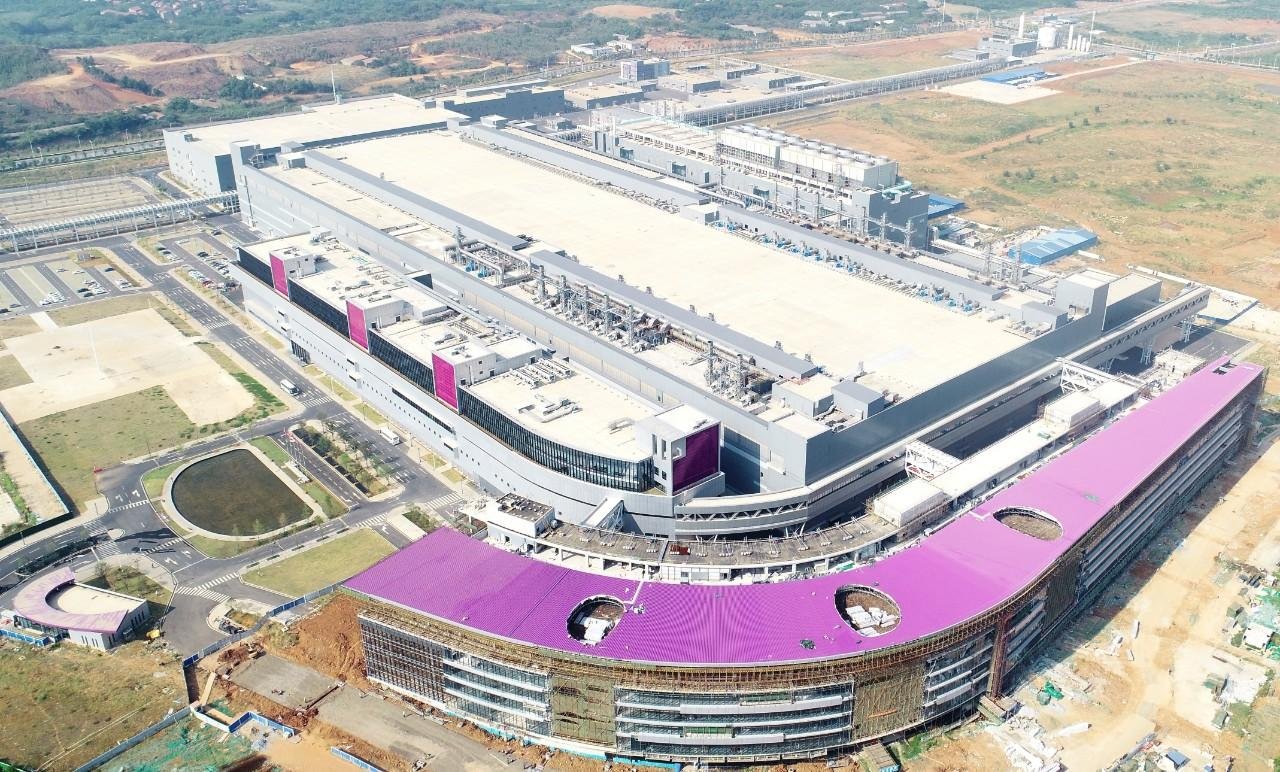
China’s Yangtze Memory Technologies is aiming to become the world’s largest NAND flash memory manufacturer by the end of 2027, setting up a major challenge to Samsung and SK hynix as demand for high-capacity storage continues to surge.
The global memory-chip industry may be heading toward one of its biggest shake-ups in years.
Chinese semiconductor manufacturer Yangtze Memory Technologies Co. (YMTC) is reportedly targeting the top position in the global NAND flash market by the end of 2027, putting Samsung Electronics and SK hynix directly in its sights.
The ambition would have sounded extremely difficult only a few years ago.
Today, however, YMTC is already a major player.
According to Counterpoint Research data covering the second quarter of 2026, YMTC reached 14% of global NAND bit shipments, moving into third place and overtaking Japan’s Kioxia. Samsung remained first with 25%, followed by SK hynix at 22%.
Now the Chinese company wants to go much further.
Reports indicate that YMTC is preparing a major expansion of production and research capabilities while its parent company seeks to raise roughly $5 billion through a Shanghai IPO.
If the plan succeeds, the consequences could extend far beyond the memory industry.
It could reshape the global semiconductor supply chain.
YMTC Has Already Made a Remarkable Climb
YMTC is not a newcomer that suddenly appeared on the semiconductor map.
But its recent growth has been remarkable.
The company has increased its presence in the NAND market while competing against some of the world’s most established memory manufacturers.
Its rise has been particularly significant because NAND flash is used in almost everything that requires high-capacity non-volatile storage.
That includes:
- SSDs
- smartphones
- laptops
- servers
- enterprise storage
- gaming consoles
- data-center infrastructure
- automotive systems
The company now holds a 14% shipment share, according to Counterpoint Research, compared with only 4.8% in 2021 according to recent industry reporting.
That means YMTC has nearly tripled its position in the global NAND shipment market in roughly five years.
And the company does not appear interested in stopping there.
Samsung Is Still the Leader
Despite YMTC’s rapid rise, Samsung remains the clear leader.
In Q2 2026, Samsung accounted for approximately 25% of global NAND bit shipments.
SK hynix followed at 22%.
YMTC was third at 14%.
Kioxia and Micron were also among the leading suppliers.
That means YMTC still has a significant gap to close.
Going from third place to first in little more than a year would require enormous production growth.
It would also require YMTC to improve its position in higher-value products, particularly enterprise storage.
That is where the competition becomes even more interesting.
The NAND Market Is Being Transformed by Data Centers

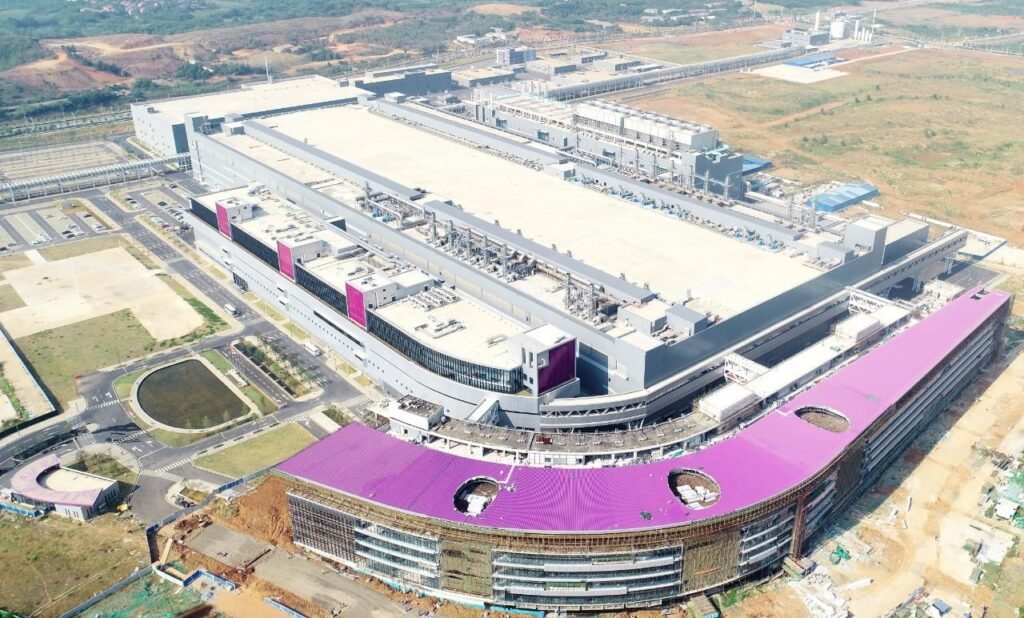
NAND flash has traditionally been closely associated with consumer products.
Your smartphone storage.
Your laptop SSD.
A game console.
An external drive.
But the market is changing.
The biggest growth is increasingly coming from data centers and enterprise SSDs.
Counterpoint Research estimates that enterprise SSDs accounted for 48% of global NAND bit shipments in Q2 2026, up dramatically from 26% a year earlier.
The reason is straightforward.
Modern data centers need enormous amounts of storage.
AI systems generate and process huge datasets.
Inference workloads require fast access to information.
Cloud providers need storage infrastructure capable of handling increasingly large databases.
As a result, NAND is becoming much more important to the infrastructure behind modern computing.
And that gives companies like YMTC a potentially enormous market to attack.
AI Is Quietly Increasing the Demand for Storage
AI is often associated with GPUs and high-bandwidth memory.
But storage is another critical part of the equation.
AI systems need to store training datasets, models, user information, application data and enormous amounts of generated content.
As AI inference becomes more widespread, companies need fast storage systems that can continuously feed information to computing infrastructure.
This is one reason enterprise SSD demand has increased so sharply.
Counterpoint’s data shows that AI inference workloads are becoming an increasingly important driver of enterprise storage demand.
That creates a major opportunity for NAND manufacturers.
But it also creates a major problem:
there may not be enough supply.
The Memory Shortage Is Changing the Market
The global memory industry is currently experiencing strong demand.
That has helped push prices higher.
Consumer SSD buyers have already felt the impact.
High-capacity drives have become considerably more expensive as manufacturers prioritize higher-margin enterprise products.
This creates a strange situation.
Consumers want cheaper and larger SSDs.
Data centers are willing to pay more for extremely high-capacity storage.
Manufacturers therefore have a strong incentive to prioritize enterprise customers.
For YMTC, this is both an opportunity and a challenge.
If the company can expand production quickly while improving its high-end product portfolio, it could capture a larger portion of the market.
YMTC Is Betting on New NAND Technology

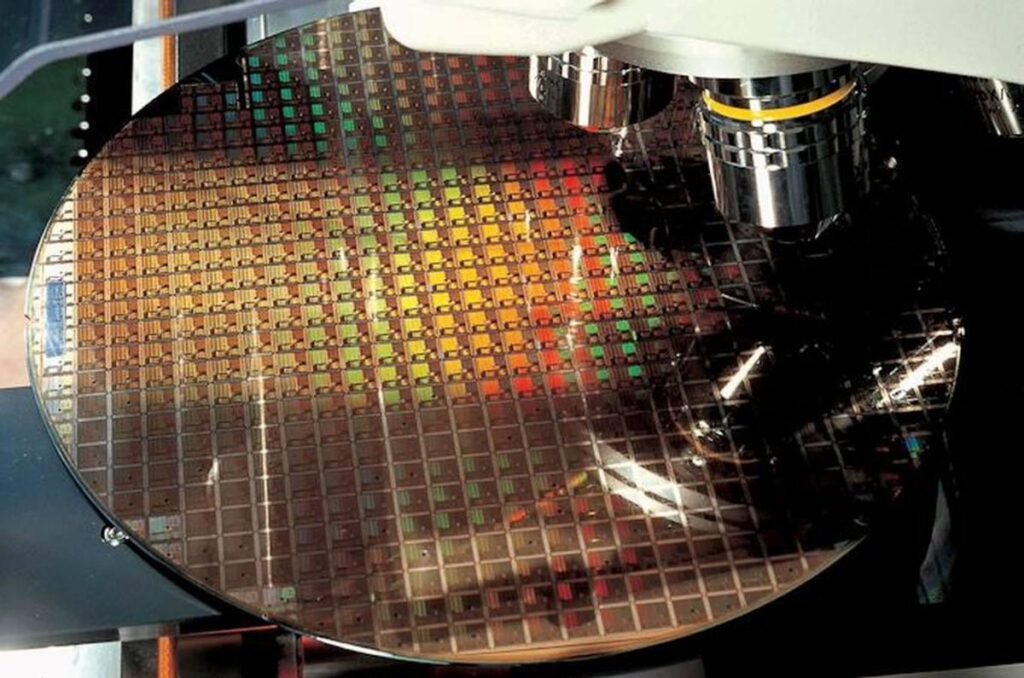
One of the most important elements of YMTC’s strategy is its NAND technology.
The company has been developing increasingly advanced 3D NAND products using its proprietary Xtacking architecture.
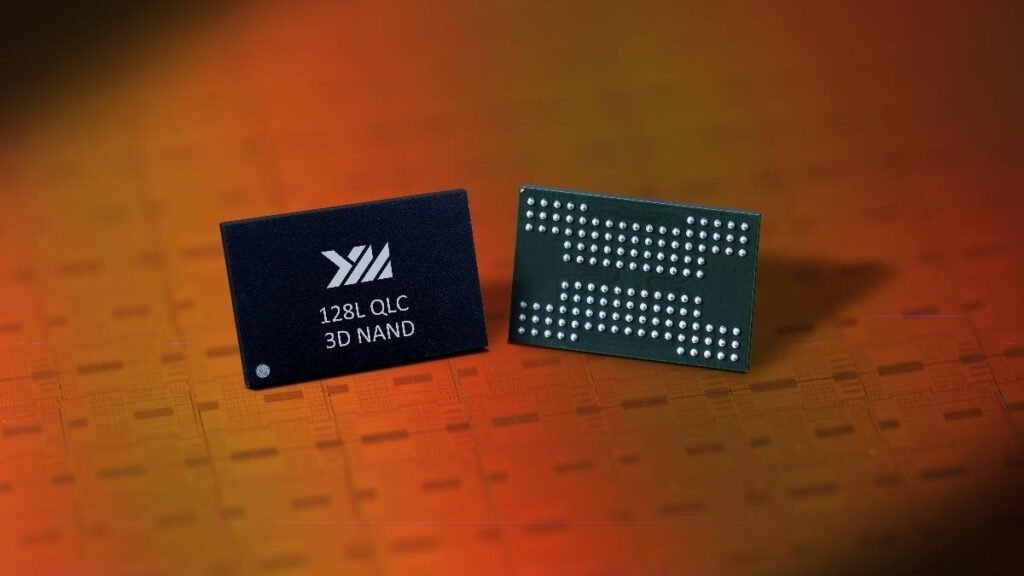
YMTC is already mass-producing 267-layer 3D NAND and is working on technologies that go beyond 300 layers.
Increasing the number of layers in 3D NAND allows manufacturers to increase storage density without simply making individual memory cells dramatically smaller.
That can improve capacity and potentially reduce manufacturing costs per bit.
The technology is therefore central to the long-term competition between NAND manufacturers.
And YMTC wants to prove that Chinese semiconductor companies can compete at the leading edge despite restrictions on access to some Western semiconductor technologies.
The U.S. Restrictions Are Still a Major Factor
YMTC’s rise is happening against the backdrop of a much larger geopolitical battle.
The United States has imposed restrictions affecting China’s access to advanced semiconductor manufacturing technologies.
YMTC itself has been subject to U.S. trade restrictions since 2022.
That makes its progress particularly significant.
The company has been forced to develop ways of reducing its dependence on restricted foreign technologies while expanding its own manufacturing capabilities.
Its progress demonstrates that restrictions do not necessarily stop technological development.
They can also encourage companies to build alternative domestic supply chains.
That does not mean the restrictions have become irrelevant.
Advanced semiconductor manufacturing remains extremely complex, and access to cutting-edge equipment remains a major competitive factor.
But YMTC’s growth shows that China has made substantial progress in building its own memory-chip ecosystem.
The $5 Billion IPO Could Accelerate the Expansion
One of the most important developments surrounding YMTC is its planned IPO.
The company is reportedly seeking to raise around 33 billion yuan, or roughly $4.9–$5 billion, through a listing on the Shanghai Stock Exchange’s STAR Market.
That would provide a huge amount of capital for expansion.
The money could be used to increase manufacturing capacity, develop new NAND generations and strengthen research and development.
In other words, YMTC is not simply saying it wants to become number one.
It is attempting to raise the money necessary to make that ambition possible.
But Becoming Number One by 2027 Is a Huge Challenge
There is an important distinction between setting a target and actually achieving it.
YMTC currently has around 14% of global NAND shipment volume.
Samsung has 25%.
SK hynix has 22%.
Closing that gap in roughly 16 months would require an extraordinary expansion.
Production capacity would need to increase substantially.
Customers would need to accept more YMTC products.
The company would need to continue improving its technology.
And, perhaps most importantly, it would need to compete more aggressively in the enterprise SSD market.
So while YMTC’s ambition is serious, becoming the world’s largest NAND supplier by the end of 2027 remains an extremely aggressive goal.
Revenue Tells a Different Story
There is another detail that is easy to miss when looking only at shipment numbers.
Being third in NAND shipments does not necessarily mean being third in revenue.
YMTC ranked third by shipment volume in Q2 2026, but its revenue position was weaker because its product mix remains more heavily focused on consumer products.
Samsung and other established manufacturers have a stronger presence in high-value enterprise storage.
That matters because enterprise SSDs can generate significantly more revenue than lower-end consumer NAND products.
For YMTC, therefore, the next phase is not simply about making more chips.
It is about making more valuable chips.
A Battle That Could Affect SSD Prices
If YMTC successfully expands production, consumers could eventually benefit.
More NAND supply could help reduce pressure on the market.
That could eventually translate into cheaper SSDs and higher storage capacities.
But there is another possibility.
If demand continues growing as quickly as production, increased capacity may simply be absorbed by data centers and AI infrastructure.
That means consumer SSD prices could remain elevated.
The outcome will depend on the balance between supply and demand.
Samsung Has More Than One Problem to Solve
Samsung is not only dealing with YMTC.
The company is also competing against SK hynix, Kioxia and Micron while trying to allocate manufacturing capacity between different types of memory.
The current market is especially complicated because AI is increasing demand for several different memory technologies at the same time.
DRAM is critical for AI computing.
High-bandwidth memory has become strategically important.
Enterprise SSDs are growing rapidly.
And NAND remains essential for storage.
Manufacturers therefore have to decide where their limited production capacity will generate the best returns.
That may explain why Samsung’s NAND shipment share has fallen even while overall memory demand remains extremely strong.
China Wants More Control Over Its Semiconductor Supply Chain
YMTC’s expansion is also part of a much larger Chinese strategy.
China has spent years trying to reduce its dependence on foreign semiconductor suppliers.
The progress of companies such as YMTC in NAND and CXMT in DRAM demonstrates that strategy is producing increasingly significant results.
YMTC’s rise is particularly important because NAND is one of the areas where Chinese manufacturers were previously far behind the world’s leading companies.
Today, China has a company inside the global top three by NAND shipments.
That would have been difficult to imagine only a few years ago.
Could YMTC Actually Overtake Samsung?
Technically, it is possible.
Practically, it is extremely difficult.
Samsung has enormous manufacturing capacity, decades of experience, global customers and a highly developed semiconductor ecosystem.
YMTC must close a significant production gap while simultaneously expanding into higher-value storage products.
It must also navigate geopolitical restrictions and ensure that its supply chain can support continued technological development.
But even if YMTC fails to become number one by the end of 2027, the attempt itself matters.
If the company reaches even 20% or more of the global NAND market, the competitive landscape could look very different.
Samsung, SK hynix and other manufacturers would have to respond.
Prices could change.
Supply chains could shift.
And customers would have another major supplier to consider.
The Bigger Story Is the Rise of Chinese Memory Technology

The most important part of this story is not whether YMTC eventually beats Samsung.
It is how quickly the company has climbed.
Going from a relatively small player to the world’s third-largest NAND supplier by shipment volume demonstrates that the semiconductor industry is changing.
China is no longer simply trying to catch up in mature chip technologies.
Its companies are increasingly targeting markets controlled for decades by Samsung, SK hynix, Micron and other established players.
That competition will likely intensify.
The next major semiconductor battle may not be fought over smartphones or processors.
It could happen inside the storage devices that most users never think about.
YMTC has already broken into the global top three in NAND shipments.
Now the Chinese memory manufacturer wants to go after Samsung and SK hynix directly, with a stated goal of becoming the world’s largest NAND supplier by the end of 2027.
The company is preparing billions of dollars in new capital, expanding production and developing increasingly advanced 3D NAND technology.
The target is extremely ambitious.
But the fact that YMTC can seriously discuss challenging Samsung at all is already significant.
The global memory industry is entering a new phase — one shaped by AI infrastructure, enormous data-center demand, geopolitical competition and China’s increasingly powerful semiconductor industry.
Samsung may still be the leader today.
But the NAND race is no longer a two-company story.
And if YMTC continues growing at its current pace, the storage market could look very different by the end of 2027.