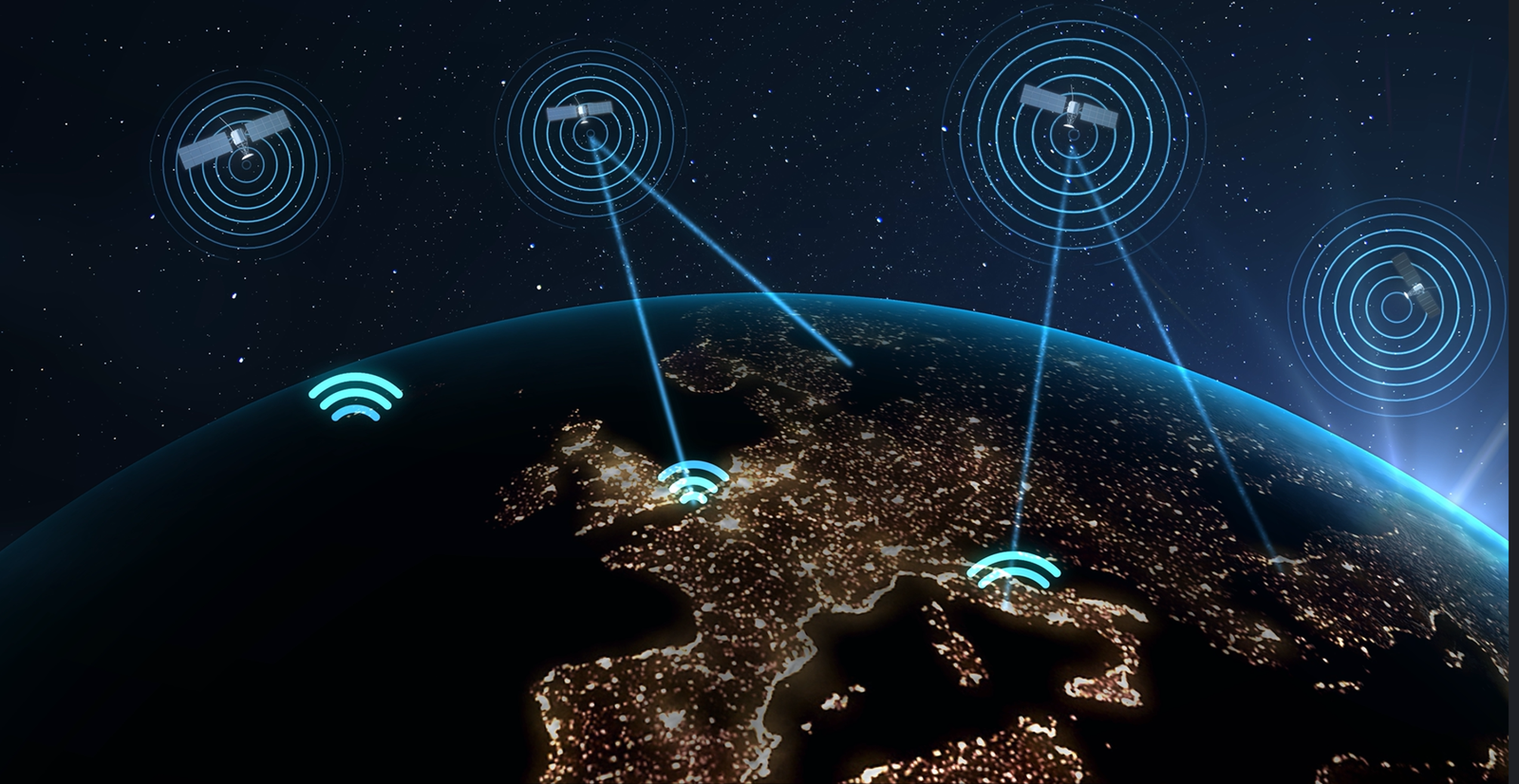
The smartphone is gaining a new potential route to the internet: direct communication with satellites without relying on a nearby cellular tower.
The U.S. Federal Communications Commission (FCC) has announced that it plans to vote on October 29, 2026 on proposals that would advance a new spectrum auction and modernize rules for direct-to-device (D2D) satellite services.
The proposal includes 25 MHz of spectrum for auction and another 482 MHz that could support Supplemental Coverage from Space and related satellite-mobile services.
The move places spectrum policy at the center of a rapidly developing contest between traditional

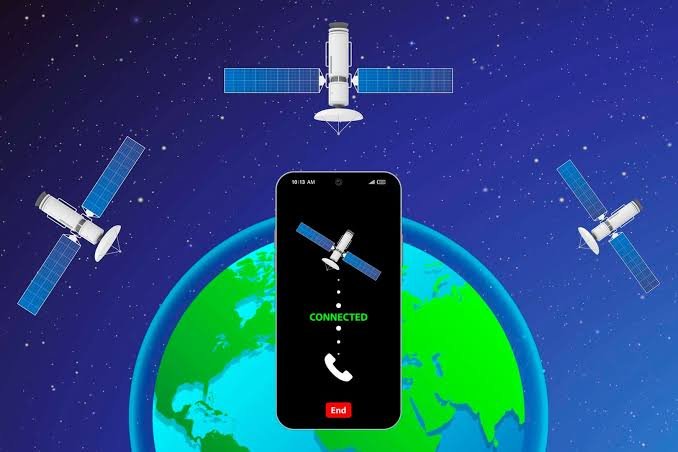
What is direct-to-device?
Traditional cellular networks rely on towers.
If a user is in a remote mountain area, at sea or in a location where terrestrial infrastructure is damaged, the absence of a tower can mean no cellular service.
Direct-to-device changes that architecture.
Instead of:
phone → cellular tower → network
the connection can become:
phone → satellite → terrestrial network/cloud → destination.
The satellite effectively becomes a cell tower in orbit.
The ITU says direct-to-device satellite systems are evolving from experimental connectivity for remote areas and emergencies into a potential new layer of global telecommunications infrastructure.
Why is it technically difficult?
A smartphone was designed to communicate with a terrestrial tower, not a spacecraft moving hundreds of kilometers overhead.
LEO satellites move rapidly relative to users on Earth.
That creates engineering problems involving:
- Doppler shift;
- signal timing;
- limited smartphone transmission power;
- small handset antennas;
- rapidly changing satellite geometry;
- satellite handovers;
- interference with terrestrial networks.
SpaceX has previously described the use of phased-array antennas, custom silicon and specialized algorithms to solve these problems.
The important point is that D2D is not simply “Wi-Fi from space.”
It is effectively a cellular network architecture extended into orbit.
What do 25 MHz and 482 MHz actually mean?
The two figures represent different regulatory concepts.
25 MHz
The FCC proposes to auction 25 MHz of spectrum for direct-to-device operations.
That would create additional spectrum resources for companies seeking to build satellite-to-device services.
482 MHz
The larger 482 MHz figure is associated with Supplemental Coverage from Space (SCS).
The objective is to make spectrum use more flexible so satellite systems can supplement terrestrial wireless networks.
It should not be interpreted as:
“The FCC is giving companies 507 MHz of free satellite internet spectrum.”
The actual framework involves licensing, auctions, interference protection, technical rules and international coordination.
SpaceX is pushing satellite connectivity into the mobile market
SpaceX is already one of the leading players in the field.
The company says its Starlink Direct to Cell network now has more than 600 dedicated satellites in orbit and is operational across multiple continents. SpaceX says the system can connect to existing LTE phones without hardware changes or special applications.
That is the key technological shift:
the phone does not have to become a satellite phone.
Most of the complexity moves into the satellite network.
SpaceX is also developing next-generation satellites designed to provide much greater capacity and eventually more advanced 5G-style connectivity directly to handsets.

SpaceX is not alone
The FCC’s regulatory push is happening in a broader competitive market.
Amazon Leo is also developing direct-to-device capabilities, while other companies are pursuing different technical and commercial models.
The emerging competition is therefore not simply:
Starlink vs. mobile carriers.
It is becoming:
satellite operators + mobile carriers + smartphone makers + spectrum holders + regulators.
The ITU describes the sector as a rapidly evolving ecosystem with different technical approaches to direct satellite-to-device connectivity.
Will satellites replace cellular towers?
No.
That is one of the most important misconceptions around D2D.
Satellites cannot economically replace the enormous capacity of terrestrial networks in dense urban areas.
The more realistic model is:
fiber + 4G/5G + Wi-Fi + satellite.
A phone in a city would continue to use terrestrial infrastructure.
A user in a remote area could switch to satellite coverage.
During an emergency, satellite connectivity could provide a backup when terrestrial infrastructure is unavailable.
The FCC itself frames D2D as a way to supplement existing terrestrial networks rather than immediately replace them.
What will smartphones actually be able to do?
Capabilities depend heavily on spectrum, satellite generation and network conditions.
Early services are best suited to:
- messaging;
- emergency communications;
- low-bandwidth data;
- basic applications;
- IoT.
As capacity grows, the target expands toward:
- faster internet;
- voice;
- video calls;
- streaming;
- conventional internet applications.
SpaceX says future generations could deliver a 5G-like experience in many environments, but that remains a company target, not a universal guarantee for every user or location.
What does this mean for mobile carriers?

This is where the business implications become especially important.
If satellites can provide coverage where building terrestrial towers is too expensive, operators could avoid some infrastructure costs in extremely remote regions.
That could matter for:
- mountains;
- islands;
- deserts;
- remote highways;
- maritime routes;
- emergency response;
- industrial IoT.
But operators also face a strategic risk:
satellite companies could evolve from partners into competitors.
Reuters reports that SpaceX is pushing toward a broader mobile service, while AT&T, T-Mobile and Verizon are also pursuing a joint satellite-enabled connectivity venture.
Is a “cellular network in space” emerging?
In a sense, yes.
But it is not a replacement for terrestrial internet.
It is better understood as a new layer of cellular infrastructure, where satellites take over some of the functions traditionally performed by towers.
That is why the FCC is treating the issue as a spectrum-policy question rather than simply as another satellite product.
What happens next?
The next major step is October 29, 2026, when the FCC is scheduled to vote on the proposals.
If they advance, additional regulatory proceedings, public comments, auction procedures and licensing steps would follow.
Meanwhile:
SpaceX is developing its next-generation Starlink Mobile constellation.
Amazon Leo is developing its own approach.
Mobile operators are trying to retain their role in the customer relationship.
And smartphone manufacturers face a new design question:
How much of the mobile network really needs to be built on Earth if part of it can be moved into orbit?
The FCC has opened one of the most interesting spectrum battles of the decade.
25 MHz for auction and 482 MHz for space-based coverage may sound like dry regulatory numbers, but behind them lies a major change: the boundary between cellular and satellite networks is disappearing.
The smartphone of the future may no longer ask:
“Which tower am I connected to?”
It may simply ask:
“Which network—terrestrial or satellite—has the best available connection?”
If the technology scales successfully, “no signal” zones could become far less common.