Google is changing how it enforces its spam policy in the European Union after regulators raised concerns that the system could unfairly hurt publishers and businesses hosting content from commercial partners. The change takes effect on August 30 and applies to users across the European Economic Area.
One of Google’s most important recent changes to Search in Europe is arriving without a new search interface or a new ranking algorithm.
This time, the change concerns how Google penalizes websites for what it considers site reputation abuse.
Alphabet confirmed on August 28 that it would change its spam policy in Europe after concerns from the European Commission raised the possibility of an antitrust investigation and fine.
What Changes on August 30?
Starting August 30, 2026, Google’s manual actions to demote websites under this policy will no longer apply to users in:
- the 27 European Union countries;
- Iceland;
- Norway;
- Liechtenstein.
Together, these countries form the European Economic Area (EEA).
Outside the EEA, Google says the policy will remain unchanged.
That is significant for European publishers because it directly affects how their content can be treated in Google Search.
The Issue Is “Site Reputation Abuse”

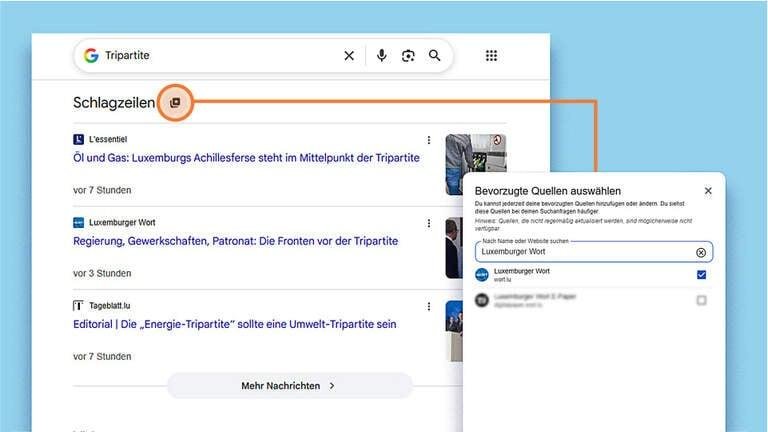
At the center of the dispute is Google’s site reputation abuse policy.
The policy was designed to fight cases where websites with strong reputations publish third-party pages primarily to take advantage of the host site’s ranking authority.
The practice is commonly known as “parasite SEO.”
In principle, the goal is straightforward.
A website should not be able to gain an unfair advantage in Google Search simply because it operates under a powerful domain.
But problems emerged when the policy began affecting legitimate publishers as well.
The EU Says Publishers Were Being Penalized
According to European Commission monitoring, Google’s policy had caused some news organizations and other publishers to be demoted in Search when their websites included content from commercial partners.
That creates a difficult situation.
A publisher may operate:
- editorial articles;
- sponsored content;
- marketplaces;
- commercial offers;
- partnerships;
- or third-party pages.
If Google’s systems interpret those elements as reputation abuse, an entire website can face Search consequences.
For an online publisher, that is not a minor issue.
Google Search can be one of the most important sources of traffic.
A ranking decline can mean fewer readers, lower advertising revenue and slower growth.
Google Is Changing the Policy Only in Europe

One of the most interesting aspects of the decision is that Google is not changing the policy globally.
The new approach applies to the EEA.
That effectively gives Google two enforcement environments:
Europe: manual demotion actions under this policy will no longer apply.
Outside Europe: the policy remains in place.
The development shows how European regulation is increasingly influencing the products and policies of major U.S. technology companies.
Why Did the European Commission Get Involved?
The European Commission opened an investigation under the Digital Markets Act (DMA).
The DMA is one of the EU’s main tools for limiting the market power of major technology companies and promoting fairer competition in digital markets.
In this case, regulators were concerned that Google Search could operate in a way that unfairly disadvantaged publishers and businesses because of how its spam policy was enforced.
The Commission welcomed Google’s change.
European Commission spokesperson Thomas Regnier said the change would prevent unfair penalties against publishers and other businesses using Google Search.
Google Is Avoiding a Potentially Huge Fine
There is another reason this matters.
Violations of the Digital Markets Act can result in fines of up to 10% of a company’s global annual turnover.
For a company the size of Alphabet, that could represent an enormous amount of money.
That makes Google’s decision look like more than a technical Search-policy adjustment.
It is also a move to reduce regulatory risk.
What Does This Mean for News Websites?

For European publishers, the change could have an important impact.
Websites using commercial partnerships or third-party content will no longer face the same manual demotion mechanism under this specific policy in the EEA.
But this does not mean every website will suddenly rank higher.
Google still operates other systems for quality, spam detection and ranking.
The change affects one specific enforcement mechanism rather than the entire Google Search algorithm.
That distinction is important.
Will “Parasite SEO” Disappear?
No.
Google is not saying that the practice has become acceptable.
Instead, the company is changing how one part of its policy is enforced in Europe.
Google will continue fighting attempts to manipulate Search results, while the European Commission will monitor whether the revised policy complies with the DMA.
So the battle against manipulative SEO is not over.
The playing field is simply changing.
A Major Development for the Media Industry
The case also highlights something much larger.
Google controls a major part of how people discover information online.
When Google changes how it ranks a website, the impact can extend far beyond technology.
It can affect:
- news organizations;
- businesses;
- advertising;
- creators;
- publishers;
- e-commerce;
- and millions of users.
That is why European regulators are increasingly focused on ensuring that decisions made by dominant platforms do not unfairly affect the businesses that depend on them.
TheTechSpot: Google Search Is Entering a New Regulatory Era
This is more than a change to an anti-spam policy.
It is another example of Europe forcing Big Tech to adapt major products and policies to European regulation.
And that is particularly significant for the media industry.
For years, Google effectively set the rules of Search while publishers adapted to them.
Now regulators are increasingly entering that relationship.
The remaining question is whether this change will create a fairer Search environment for publishers or simply produce another layer of complexity, with different rules applying to Europe and the rest of the world.
One thing is certain:
in Europe, Google Search is no longer just a technology product. It is increasingly a regulatory issue as well.