
By TheTechSpot Editorial Team
August 20, 2026
Google is trying to change the relationship between AI and publishers
For years, the basic relationship between Google and online publishers was simple.
A user searched for something.
Google displayed links.
The user clicked one of those links.
The publisher received a visitor.
That model helped create the modern web.
But artificial intelligence has changed the equation.
Instead of simply showing a list of links, search engines can now provide users with direct AI-generated answers.
That can be convenient for users.
For publishers, however, it creates a serious problem:
If users get the answer without clicking, where does the traffic go?
Google is now introducing a new feature designed to give publishers more control over that relationship.
Meet “Preferred Sources”
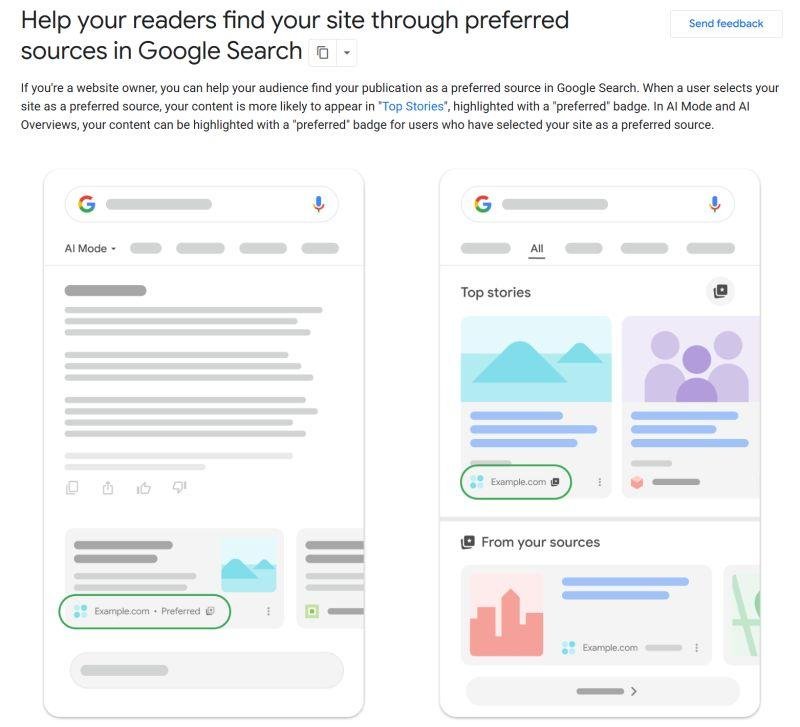
Google is allowing online publishers to add a new interactive Preferred Sources button to their websites.
The idea is straightforward.
If a reader trusts a particular publication, they can tell Google that they want that source to appear more frequently.
The preference can then influence what the user sees across:
- Google Search
- Google Discover
- Google News
- AI-powered Google experiences
Google had already introduced Preferred Sources in its AI search experiences earlier this year.
Now it is expanding the feature directly to publishers’ websites.
Why this matters for the future of news


The change may appear relatively small.
But the implications are much bigger.
AI search is changing how people discover information.
Instead of opening five different websites and comparing articles, users can increasingly ask an AI system a question and receive a synthesized response.
That means publishers have a new challenge.
They are not only competing against other publishers.
They are also competing against the interface that summarizes their content.
Google’s new feature is effectively an attempt to give users another way to say:
“I want to hear this information directly from this publisher.”
Google says preferred sources can get more clicks
According to Google, users are significantly more likely to click a publisher when that publisher is marked as a preferred source.
The company says previous studies found that people were twice as likely to click through to a preferred source when the option was available.
That could be extremely valuable for publishers.
For a small website, even a modest increase in organic traffic can make a meaningful difference.
For a large publisher receiving millions of visitors, the impact could be enormous.
The AI search problem
The rise of AI-generated search results has created a fundamental question for the internet:
Who gets the traffic?
Traditional search sends users to websites.
AI search can potentially keep users inside the search experience.
The distinction matters because websites depend on traffic for advertising, subscriptions, memberships, e-commerce and brand growth.
If fewer users click through to the original source, publishers can lose revenue even when their content is being used to answer questions.
This has become one of the biggest debates surrounding generative AI.
Google is also changing Discover


The Preferred Sources feature is not the only change.
Google says users will soon be able to customize their Discover feed using natural-language instructions.
Instead of simply tapping buttons or selecting predefined categories, users will be able to tell Google what they want to see more or less of.
For example, someone could potentially request more technology news and less sports content.
The system can then use those instructions to refine the feed.
This is another example of AI moving deeper into the way people consume information.
Android users are getting another AI-powered news feature
Google also says Android users will be able to customize their audio daily briefings in the Google News app.
That means users could increasingly receive a personalized news experience based on their interests.
Instead of everyone receiving the same general news feed, AI can increasingly determine:
what you see,
what you hear,
what sources appear first,
and potentially which stories you never encounter.
That creates both opportunities and risks.
The opportunity for publishers

For publishers, the new system could provide another way to build a direct relationship with readers.
Imagine a technology website publishing an important story about:
- AI;
- smartphones;
- cybersecurity;
- gaming;
- Apple;
- Google;
- Nvidia;
- electric vehicles.
A reader who trusts that publication could mark it as a preferred source.
Future Google searches and news recommendations could then give that publisher more visibility.
That could be particularly important for independent publishers that struggle to compete with massive media organizations.
But there is still a bigger problem
The Preferred Sources feature does not solve every problem created by AI search.
Publishers still have to produce high-quality journalism.
They still need strong headlines.
They still need original reporting.
And they still need readers to care about their content.
AI search can make information easier to consume, but it also makes originality and trust more important.
If hundreds of websites publish nearly identical AI-generated stories, users have little reason to choose one over another.
Original reporting could therefore become one of the most valuable assets on the internet.
The web is moving toward personalized information
The internet of the past was largely built around keywords.
You searched.
Google ranked.
You clicked.
The emerging internet is increasingly based on personalization.
AI can understand:
who you are,
what you are interested in,
which sources you trust,
and what type of information you want right now.
Google’s latest changes are another step toward that model.
AI may change SEO forever
Traditional SEO focused heavily on ranking.
The goal was simple:
Get to page one.
But AI search is changing the game.
The future may be less about simply ranking for a keyword and more about becoming a trusted source that AI systems and users recognize.
That means reputation could become as important as keywords.
A website that consistently produces accurate, useful and original reporting may have a stronger position in an AI-driven search ecosystem.
Google is trying to keep the web alive


There is an important strategic issue behind Google’s move.
Google needs publishers.
Search engines need high-quality information to exist.
AI systems also need information.
If publishers lose too much traffic and revenue, fewer companies may be willing to invest in professional journalism and original reporting.
That could eventually reduce the quality of information available across the internet.
Google therefore has a reason to find a balance between AI-powered answers and the websites that create the information behind those answers.
The bigger battle is just beginning
Google’s Preferred Sources feature may look like a small product update.
But it represents a much larger shift.
The battle for online attention is moving from:
Search → Click → Website
toward:
AI → Answer → Recommendation → Trusted Source
And publishers need to adapt.
The winners may not simply be the websites with the most articles.
They may be the websites with the strongest trust, authority and loyal audiences.
THE TECHSPOT ANALYSIS
Google’s new Preferred Sources feature is an important signal about where the internet is heading.
AI will continue changing search.
It will continue changing news consumption.
And it will continue challenging the traditional business model of online publishing.
But there is also an opportunity.
If users can tell Google which sources they trust, publishers have another tool for building long-term relationships with their audiences.
The future of the web may not belong to whoever produces the most content.
It may belong to whoever earns the most trust.
And in the age of AI, trust could become the most valuable SEO signal of all.