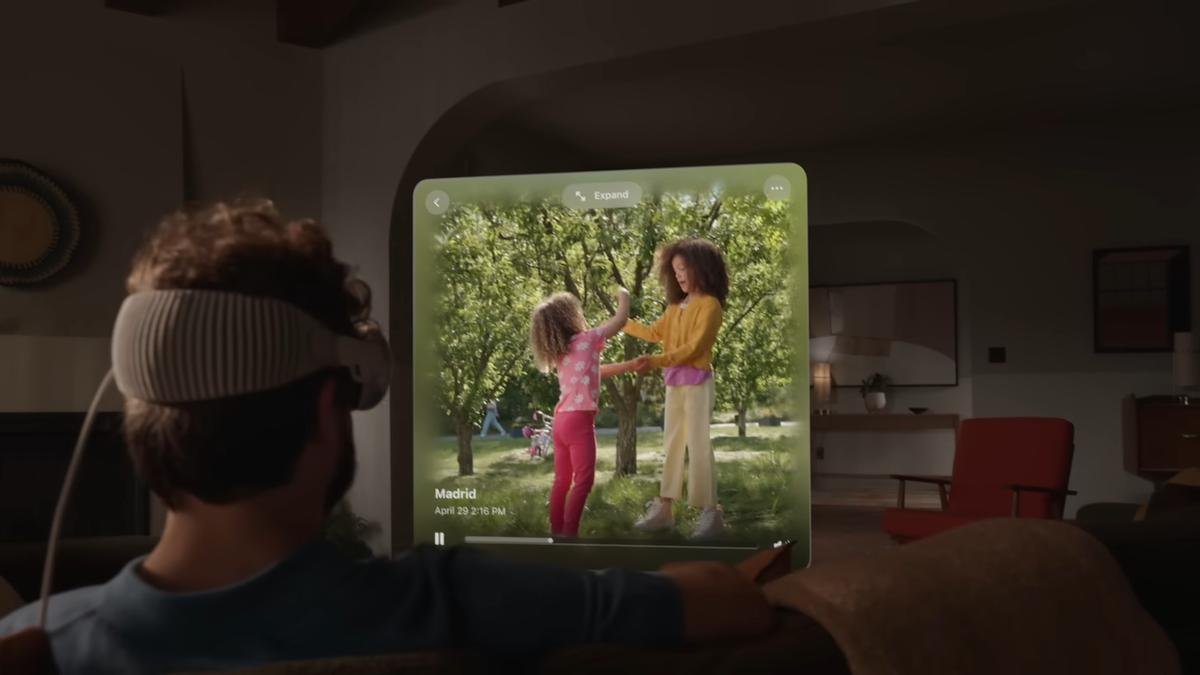
Apple Is Making a Significant Strategic Shift
Apple has spent years building its next generation of computing around spatial technology.
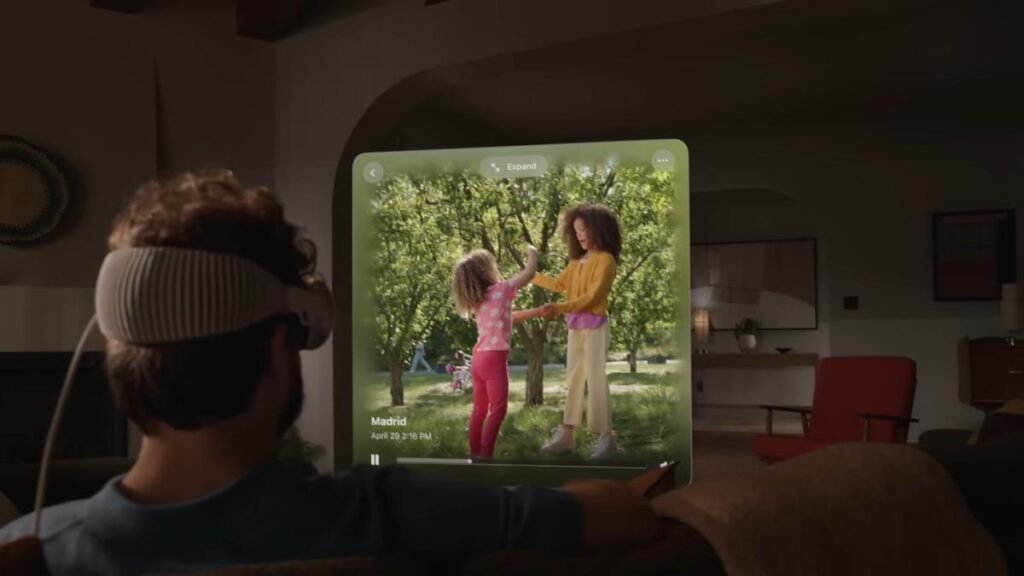
The company’s most ambitious product in this category was the Vision Pro, a $3,499 headset introduced in 2024 as Apple’s attempt to redefine personal computing.
But the market has not developed as quickly as Apple hoped.
Now, the company appears to be changing direction.
Apple is cutting more than 200 positions across teams connected to Vision Pro, Siri and software engineering while redirecting resources toward artificial intelligence and future devices.
The move is significant because it reveals something bigger than a normal corporate restructuring.
Apple may be reconsidering what the next major computing platform should look like.
And increasingly, the answer appears to be:
AI-powered devices that people can wear every day.
More Than 200 Jobs Are Being Eliminated
According to reporting based on information from people familiar with Apple’s plans, approximately 100 positions are being removed from the Vision Pro organization, while another roughly 100 positions affect Siri and software teams.
The changes also affect Apple’s Intelligent Systems Experience organization, which works on some AI-related features across Apple’s devices.
Apple has described the changes as part of an effort to better align its teams with future products and user experiences.
Importantly, the company has not abandoned Vision Pro completely.
The headset and visionOS are expected to continue.
But the scale and direction of investment appear to be changing.
That distinction matters.
Apple isn’t necessarily saying:
“Vision Pro is dead.”
Instead, the company appears to be saying:
“The future of spatial computing may look different from what we originally expected.”
The Vision Pro Gaming Push Is Being Scaled Back

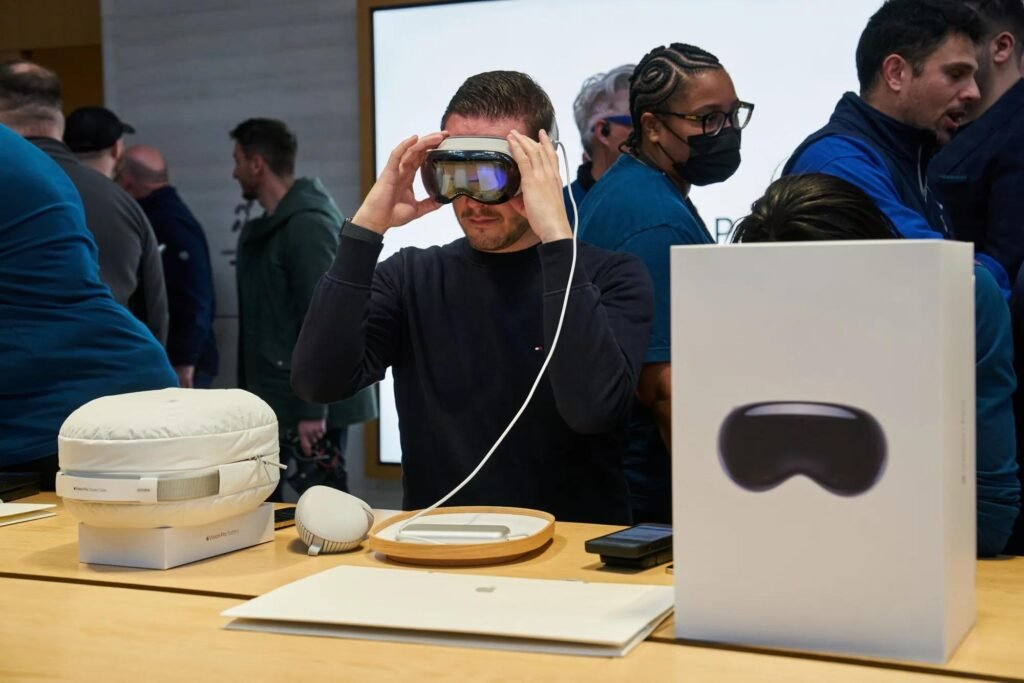
One of the clearest signals is Apple’s decision to largely shut down a team focused on gaming for Vision Pro.
The company is also reducing the team responsible for producing immersive video content.
This is particularly interesting because immersive video was one of the major selling points Apple used to demonstrate what Vision Pro could do.
The technology itself is impressive.
The headset can place digital objects into the user’s environment and provide highly immersive visual experiences.
But technology alone does not guarantee a mass-market product.
The biggest problem has always been adoption.
The $3,499 Problem
Vision Pro launched with enormous attention.
It was one of the most technologically ambitious products Apple had released in years.
But it also came with an enormous price:
$3,499.
That price put Vision Pro far outside the mainstream smartphone and laptop market.
For developers, filmmakers and technology enthusiasts, the headset could be fascinating.
For ordinary consumers, however, spending thousands of dollars on a new category of device is a much harder decision.
This created a difficult cycle.
Fewer users mean fewer developers.
Fewer developers mean fewer applications.
Fewer applications make the device less attractive to consumers.
And fewer consumers make it harder to justify the price.
Apple May Be Learning From Meta
Apple is not operating in isolation.
The wearable technology market is developing rapidly, particularly around AI-powered smart glasses.
Meta has pushed aggressively into this category, using AI assistants, cameras and voice interaction to turn ordinary-looking glasses into computing devices.
Meta and EssilorLuxottica recently introduced a more affordable generation of AI smart glasses starting at $299, highlighting the company’s strategy of bringing AI wearables to a much broader audience.
That creates an important contrast with Vision Pro.
Vision Pro puts a powerful computer over your eyes.
Smart glasses can potentially put an AI assistant in front of you without making you feel like you’re wearing a computer.
That could be a much more practical mass-market product.
The Next Apple Computer Could Be Glasses

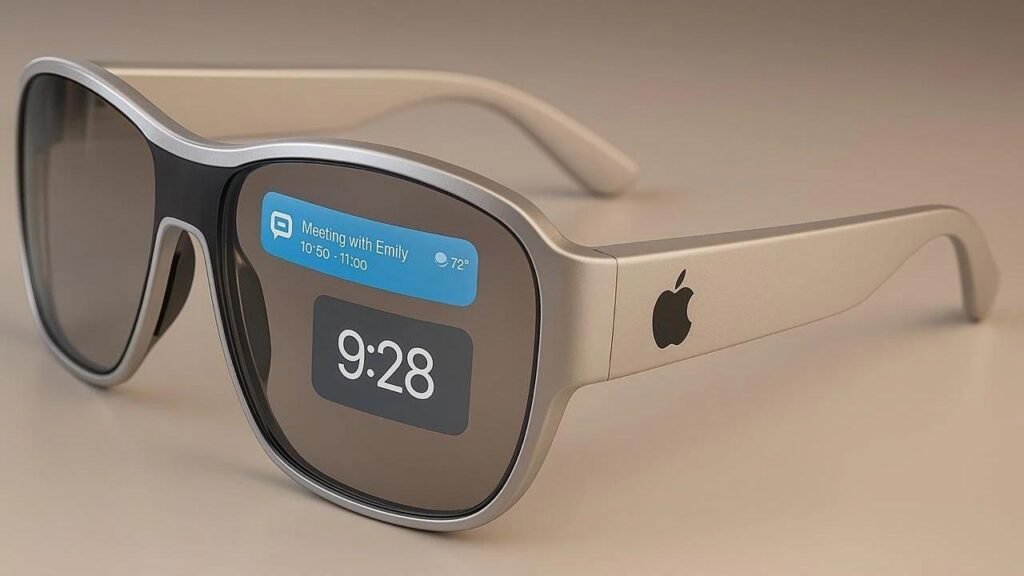
Apple has reportedly been working on smart glasses that would use AI rather than trying to replicate the full Vision Pro experience.
The company’s broader wearable strategy has also included work on AI-powered glasses, AirPods and other devices.
This is where the strategy becomes particularly interesting.
Imagine wearing normal-looking glasses that can:
- answer questions;
- recognize objects;
- translate conversations;
- provide directions;
- summarize information;
- interact with Siri;
- access your calendar;
- capture photos and video;
- provide contextual information.
The key difference is that the technology doesn’t have to completely replace your smartphone.
Instead, it could work alongside it.
Your phone becomes the central computer.
Your glasses become the interface.
And AI becomes the layer connecting everything.
Siri Becomes More Important Than Ever
This is where Apple’s restructuring of Siri becomes extremely important.
For years, Siri has been criticized for being less capable than newer AI assistants.
But a future where Apple sells AI-powered glasses would require Siri to become dramatically more intelligent.
A smart assistant on glasses cannot depend on users touching a screen.
It has to understand spoken requests.
It has to interpret context.
It needs to know what the user is looking at.
And it needs to respond quickly.
That means Apple’s AI strategy is no longer simply about improving an iPhone feature.
Siri could become the operating system for Apple’s next generation of wearable computing.
The Camera Changes Everything
AI glasses also introduce something that traditional voice assistants don’t have:
vision.
A camera-equipped device can potentially understand what is happening around the user.
Imagine asking:
“What is this building?”
The glasses could use the camera to identify it.
Or:
“Translate this sign.”
The system could recognize the text and translate it.
Or:
“Where did I park?”
The device could potentially use contextual information to help.
This is why AI glasses could become much more powerful than traditional smart glasses.
They aren’t simply displays.
They can become sensors for an AI assistant.
But Privacy Will Be a Huge Problem
There is an obvious downside.
If millions of people begin walking around wearing AI glasses with cameras, other people may not know when they’re being recorded.
That creates serious privacy questions.
Apple has traditionally positioned itself as a privacy-focused technology company.
That could become one of its biggest challenges in wearable AI.
The company will need to convince users that the glasses are useful without turning public spaces into environments where everyone feels constantly observed.
This is not a minor design problem.
It could determine whether AI glasses become mainstream.
Apple Still Has an Advantage
Despite the challenges, Apple has one enormous advantage:
its ecosystem.
An Apple AI wearable could potentially communicate with the iPhone, Apple Watch, AirPods, Mac and other Apple devices.
That means the user wouldn’t necessarily need to start from scratch.
The glasses could become another layer of an existing ecosystem.
This is very different from launching an entirely new platform.
Apple already has hundreds of millions of users who understand its software.
The challenge is convincing them that another device is worth buying.
Why Apple Is Moving Away From the Old Vision Pro Model

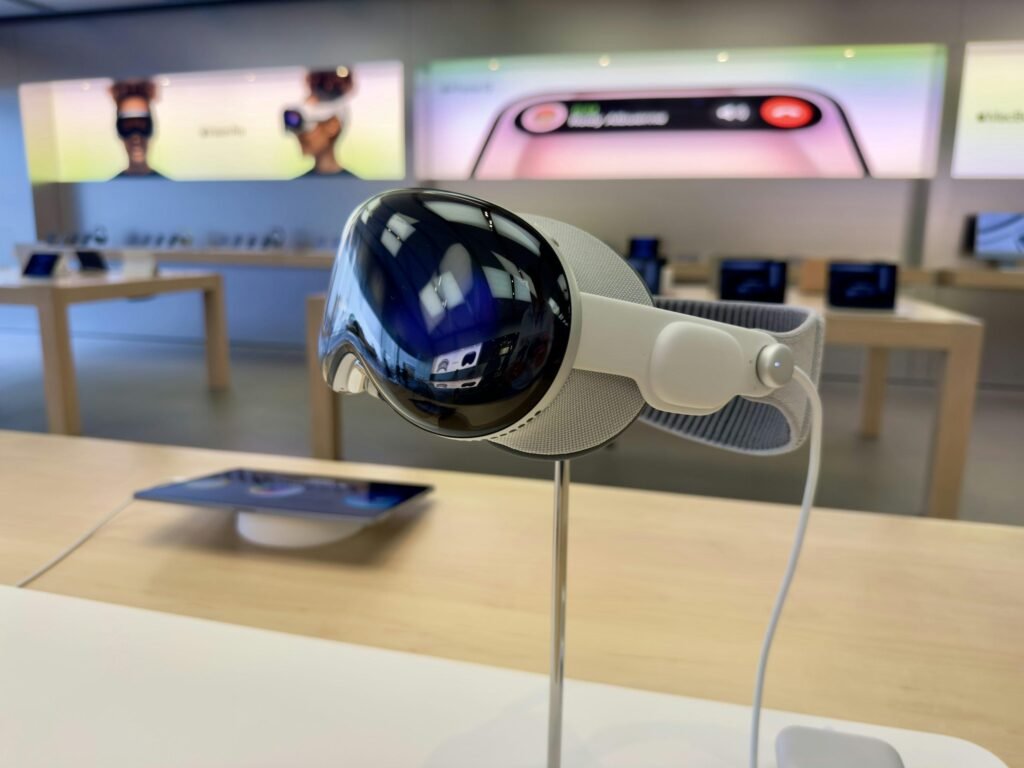
Vision Pro represents one vision of the future:
put the computer directly in front of your eyes.
Smart glasses represent another:
make the computer almost invisible.
That second approach may ultimately have greater mass-market potential.
People don’t necessarily want to wear a giant headset for hours every day.
But wearing glasses is already normal.
If technology can be integrated into something that looks and feels like ordinary eyewear, adoption could be much easier.
This may be the strategic lesson Apple is taking from the Vision Pro experience.
Vision Pro May Still Have a Future
It would be wrong to interpret the restructuring as the complete end of Vision Pro.
Apple continues to support the headset and visionOS.
The technology could also serve as a foundation for future products.
The Vision Pro may have been less about becoming Apple’s next iPhone and more about helping Apple develop the underlying technology required for spatial computing.
That includes:
- cameras;
- sensors;
- spatial audio;
- computer vision;
- eye tracking;
- gesture control;
- advanced displays;
- low-latency computing.
Those technologies could eventually appear in smaller devices.
In that sense, Vision Pro may still have a role in Apple’s long-term strategy.
Apple Is Betting on Smaller Devices
The broader trend is becoming clear.
The future of personal computing may not be about bigger screens.
It could be about smaller, more intelligent devices.
Phones became powerful computers.
Now AI could allow those computers to move into glasses, headphones and other wearable devices.
Instead of carrying a computer everywhere, people may eventually wear one.
The interface could become voice.
The intelligence could become AI.
And the hardware could almost disappear.
The Bigger Battle Is AI Hardware
Apple is not the only company moving in this direction.
Meta is investing heavily in AI glasses.
Google is pushing AI into Android and wearable technology.
OpenAI is reportedly working on new hardware.
Other companies are exploring AI-powered earbuds, pins, glasses and other devices.
This could become one of the biggest technology battles of the next decade.
The winner may not be the company that creates the most powerful device.
It may be the company that creates the device people actually want to wear every day.
What Happens to the iPhone?
Interestingly, this strategy does not necessarily make the iPhone less important.
It could make it more important.
The iPhone could become the central processing and connectivity hub for an entire ecosystem of AI devices.
The glasses could collect information.
The AirPods could provide audio.
The watch could monitor activity.
The iPhone could coordinate everything.
And Siri could become the intelligence connecting the devices.
In this scenario, Apple isn’t replacing the iPhone.
It is turning the iPhone into the invisible foundation of a much larger computing ecosystem.
The Next Big Apple Product May Not Have a Screen
This may ultimately be the most important part of Apple’s current strategy.
The company’s next major breakthrough may not look like a traditional computer.
It may not have a large display.
It may not even feel like a computer.
It could be a pair of glasses.
A pair of AirPods.
A small wearable.
Or another device that allows AI to interact with the physical world around us.
That is a completely different direction from the smartphone revolution.
And Apple’s latest restructuring suggests the company wants to be ready for it.
TheTechSpot Verdict
Apple’s decision to reduce more than 200 positions across Vision Pro, Siri and software teams is more than a workforce story.
It is a signal about where the company believes the next major opportunity is.
AI.
Smart glasses.
Wearable computing.
Personal intelligence.
Vision Pro demonstrated what Apple could do with an extremely powerful headset.
The next challenge is proving that Apple can make AI useful without requiring users to wear a $3,499 computer on their face.
That could mean smaller devices, better Siri integration and a new generation of AI-powered glasses.
Apple is still betting on spatial computing.
But the company’s definition of spatial computing may be changing.
The future may not be a giant headset.
It may be something much simpler:
a pair of glasses that knows what you’re looking at, understands what you’re asking and quietly helps you navigate the world.
If Apple can build that experience while solving the privacy problem, it could have the ingredients for its next major hardware platform.
And this time, the biggest Apple revolution may happen without a screen.
SEO PACKAGE
SEO Title: Apple Shifts From Vision Pro to AI and Smart Glasses
Focus Keyphrase: Apple AI smart glasses
Meta Description: Apple is cutting more than 200 positions across Vision Pro, Siri and software teams as it shifts resources toward AI and future wearable devices.
Slug: apple-ai-smart-glasses-vision-pro-strategy-2026
Category: AI & Future Devices
Tags: Apple, AI, Siri, Vision Pro, Smart Glasses, Apple Intelligence, Wearables, AR, VR, Artificial Intelligence, iPhone
Excerpt: Apple’s latest restructuring suggests the company is moving beyond the Vision Pro era and preparing for a future built around AI-powered glasses and wearable computing.
Primary Sources: Bloomberg reporting as republished and summarized by multiple technology outlets; Apple statements reported by The Verge and San Francisco Chronicle.