By TheTechSpot
August 19, 2026
Apple may have accidentally revealed one of its strangest products yet.
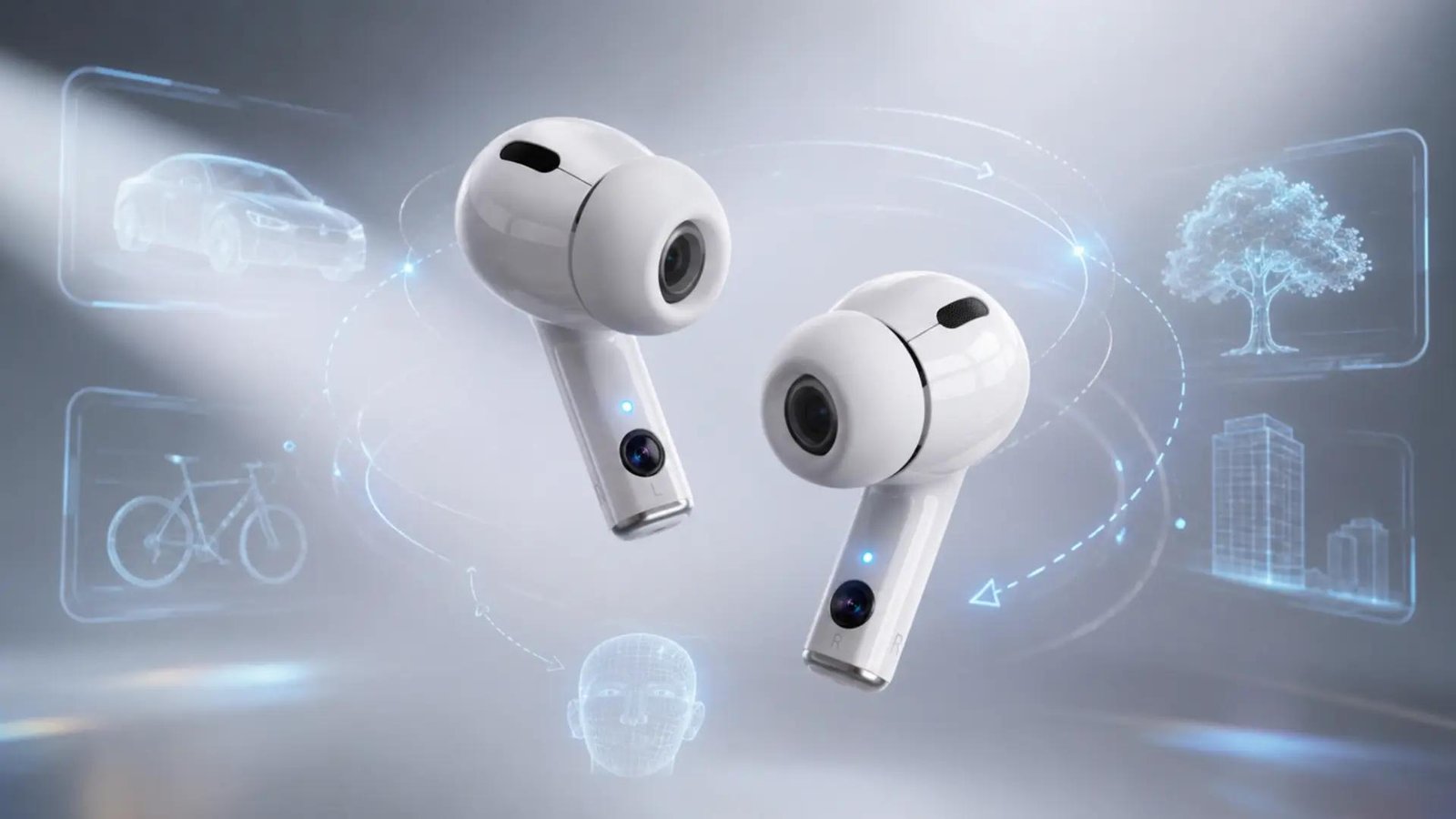
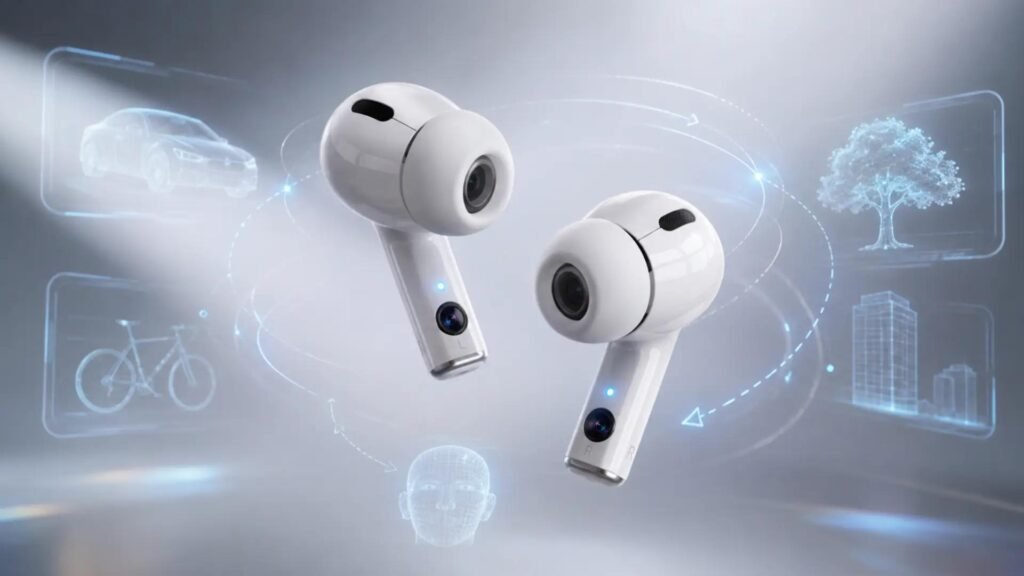
A short promotional video discovered inside a pre-release version of macOS Tahoe 26.7 appears to show Apple’s long-rumored AirPods with built-in cameras.
And within hours, the leak was everywhere.
The video appears to demonstrate a new version of Apple’s Visual Intelligence technology, allowing Siri to use visual information from the earbuds to understand what the wearer is looking at.
The idea sounds futuristic — and slightly unsettling.
Instead of taking out an iPhone, pointing its camera at an object and asking Siri what it is, the user could potentially simply look at something while wearing the AirPods and ask Siri about it.
The discovery was reported by several technology publications after the video appeared in Apple’s software release candidate.
And this could be one of Apple’s biggest steps yet into the world of AI wearables.
Your AirPods could soon “see” the world
The most important detail about Apple’s rumored new AirPods isn’t the audio.
It’s the cameras.
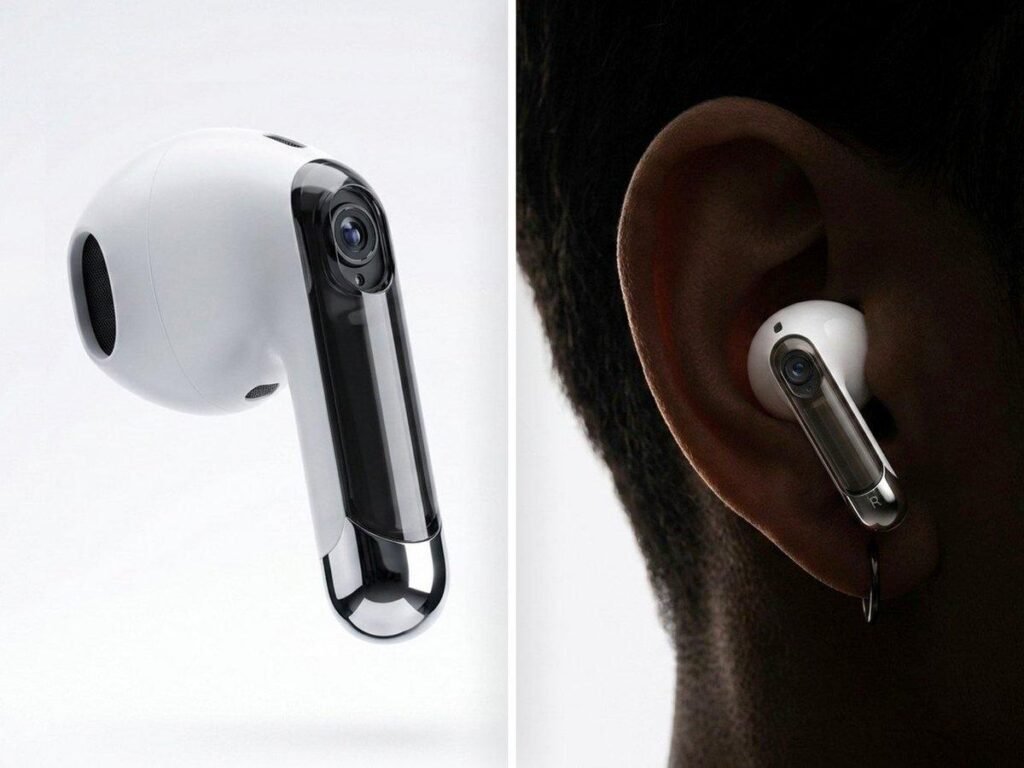
According to reports, Apple is developing AirPods capable of collecting visual information about the user’s surroundings and sending that information to Siri.
The leaked video appears to show a user interacting with a physical object while Siri provides information based on what the AirPods can see.
The technology is connected to Apple’s Visual Intelligence system.
That could potentially allow the earbuds to understand things such as:
- objects in front of the user;
- signs;
- books;
- surroundings;
- locations;
- visual information;
- contextual information relevant to a conversation.
In other words, Apple appears to be trying to turn AirPods from simple wireless headphones into an AI assistant that can understand the user’s environment.
6
Why would AirPods need cameras?
At first glance, the idea seems unnecessary.


Your iPhone already has multiple cameras.
So why put another camera on a pair of earbuds?
Apple’s apparent answer is context.
The phone may be in your pocket.
The AirPods are already in your ears.
That means an AI assistant could potentially understand what you’re looking at without requiring you to constantly pull out your phone.
Imagine walking through a city.
You see a building.
Instead of stopping and taking out your phone, you could ask:
“What is that building?”
The AI could use the visual information from the AirPods and answer.
Or imagine you’re shopping.
You pick up a product and ask Siri about it.
The earbuds could potentially identify the object and provide information.
That is the vision behind Apple’s move into visual AI wearables.
Apple is trying to make AI more invisible
The bigger story here isn’t really the AirPods.

It’s Apple’s attempt to make artificial intelligence less dependent on screens.
Today, most AI assistants require a phone, computer or smart speaker.
You type something.
You press a button.
You look at a screen.
Apple appears to be exploring a different approach.
The AI could simply be around you.
Your earbuds hear you.
The cameras see what you see.
Siri processes the information.
And the answer comes through your ears.
That could eventually create a much more natural form of human-computer interaction.
Instead of interacting with technology through a screen, you could interact with it through your environment.
But the privacy problem is huge
There is one major problem.
Cameras.
People are already uncomfortable with wearable devices that can potentially record their surroundings.
Meta’s camera-equipped smart glasses have already sparked debates about privacy and covert recording.
Now imagine cameras built into something that looks almost identical to normal AirPods.
Someone standing next to you may not immediately know whether your earbuds have cameras.
That creates an obvious question:
How will people know when the AirPods are looking at them?
The leaked demonstration reportedly does not provide a definitive answer to every privacy question.
Apple has previously been reported to consider visual indicators that would alert people when the cameras are being used.
But the issue is likely to become one of the biggest challenges for the product.
Apple cannot afford another privacy controversy


A leaked Apple video appears to reveal AirPods with built-in cameras and Visual Intelligence, potentially allowing Siri to understand what users are seeing.
Privacy has become one of Apple’s biggest marketing advantages.
The company regularly positions itself as more privacy-focused than many of its competitors.
That makes camera-equipped AirPods particularly sensitive.
Apple will have to convince consumers that these cameras are not simply tiny surveillance devices attached to people’s ears.
The company appears to be taking a different approach from conventional cameras.
The reported purpose is not traditional photography.
Instead, the sensors would provide visual information to Siri.
That distinction could be crucial.
But consumers may still ask:
Where does the visual data go?
Is it processed on the device?
Is it sent to Apple’s servers?
How long is it stored?
Can other people tell when the camera is active?
Those questions could determine whether the product becomes a hit or a privacy nightmare.
The leaked video makes the idea feel real
For months, camera-equipped AirPods have existed largely as rumors.
Apple has reportedly been developing the technology for years.
But the appearance of an apparent Apple promotional video inside a software release candidate changes the story.
This isn’t simply a blurry photograph of a prototype.
The leaked clip appears to demonstrate how the product could actually work.
That makes the leak particularly significant.
It suggests Apple has already developed software experiences around the hardware.
And that is exactly the kind of evidence that makes a rumored product feel much closer to reality.
Siri could become much smarter
Apple has been working to significantly upgrade Siri’s AI capabilities.
The company’s next-generation Siri is expected to become much more capable of understanding context and interacting with information across Apple’s ecosystem.
Camera-equipped AirPods could become another piece of that strategy.
Instead of Siri knowing only what you say, it could potentially understand what you are seeing.
That changes the relationship completely.
For example:
You: “What is this?”
Siri: identifies the object.
You: “How much does it cost?”
Siri: searches for information.
You: “Is there one nearby?”
Siri: helps with navigation.
The AI would no longer operate only from spoken instructions.
It would have additional context from the physical world.
Apple may be preparing for smart glasses
The AirPods project also appears to fit into a much larger Apple strategy.
Apple is reportedly working on AI-powered glasses.
That would put the company directly into competition with products such as Meta’s Ray-Ban smart glasses.
But glasses are a much more complicated product category.
They have to look good.
They need comfortable batteries.
They need cameras.
They need microphones.
They need AI.
And users have to be comfortable wearing them in public.
AirPods could therefore represent a simpler first step.
Apple could introduce visual AI through a familiar product category before eventually expanding the technology into glasses.
Battery life could become another problem

There’s also a technical challenge.
AirPods are tiny.
That means there is very little room for batteries, processors and sensors.
Adding cameras could consume additional power.
Running AI features could require even more energy.
Apple therefore has to solve a difficult engineering problem:
How do you make an extremely small device powerful enough to understand the world without constantly needing to be charged?
This may be one reason why Apple has reportedly been working on the project for years.
Miniaturizing cameras is relatively easy.
Making everything work together efficiently inside a tiny earbud is much harder.
Apple isn’t alone
Apple isn’t entering an empty market.
Google, Meta and several Chinese technology companies are also working on AI-powered wearable technology.
Meta has already pushed aggressively into smart glasses.
Google is investing heavily in Gemini-powered wearable experiences.
Chinese companies are experimenting with AI glasses, AI phones and other devices capable of interacting with the physical world.
Apple’s advantage is its enormous ecosystem.
If camera-equipped AirPods eventually connect seamlessly with iPhone, Siri, Apple Intelligence and other Apple services, the company could have a significant distribution advantage.
Could your AirPods replace your phone camera?
Probably not.
At least not initially.
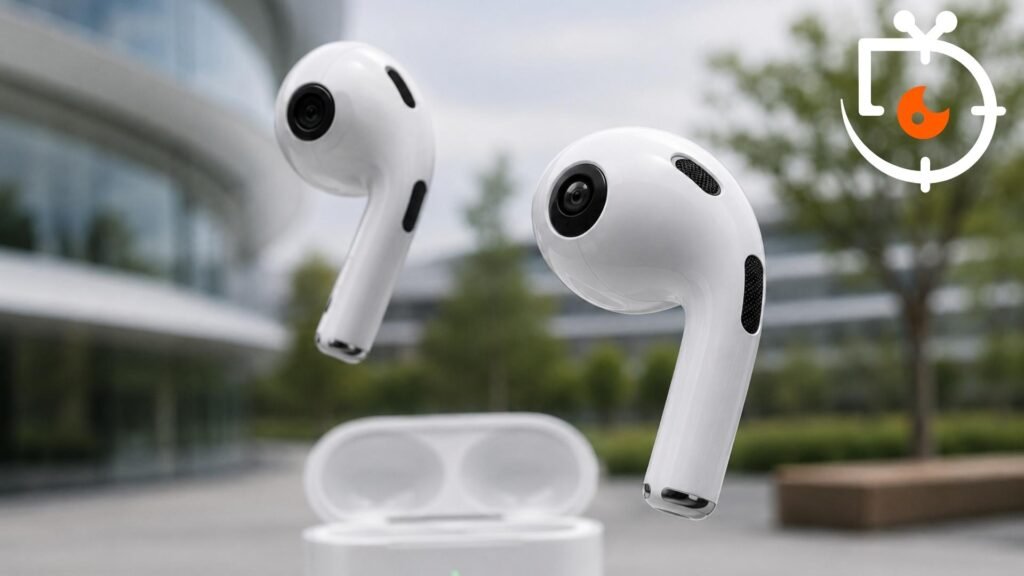
The reported purpose of the cameras is not to compete with the iPhone’s photography system.
Instead, the cameras appear designed for AI perception.
That distinction is important.
The camera doesn’t necessarily need to take beautiful photographs.
It needs to understand what’s in front of you.
That means the priority could be:
recognition > image quality
The camera only needs enough information for AI to understand an object, sign, location or environment.
This is a very different philosophy from smartphone photography.
Why the internet is already obsessed
The leak combines almost everything that makes a technology story go viral:
Apple.
AirPods.
AI.
Cameras.
Privacy.
A leaked video.
And a product that looks like something from a science-fiction movie.
Social media reactions have already highlighted the privacy implications, with some users questioning whether people will be comfortable wearing earbuds that can see their surroundings.
That controversy may actually increase attention.
And Apple knows better than almost anyone that curiosity can become powerful marketing.
When could Apple launch them?
This is where things become less certain.
Earlier reports suggested different timelines for Apple’s camera-equipped AirPods.
Some reports have pointed toward a possible 2026 release, while others have suggested a more advanced version could arrive later.
MacRumors reported that Apple has been developing multiple camera-equipped AirPods projects, with different internal code names and different potential timelines.
The leaked video does not automatically confirm a launch date.
Apple has not officially announced the product.
So for now, it is important to treat the hardware and launch timing as reported or leaked information rather than an official product announcement.
Apple’s accidental leak may have revealed its next big idea
Apple has spent years transforming ordinary products into platforms.
The iPhone became a computer.
The Apple Watch became a health and communication device.
AirPods became more than wireless headphones.
Now Apple appears to be asking another question:
What if your earbuds could understand the world around you?
That is a much bigger idea than simply adding a camera.
It could be the beginning of a new generation of wearable AI.
But Apple has one enormous challenge ahead.
It must make the technology useful enough that people want it — while making it private enough that people feel comfortable wearing it.
TheTechSpot Verdict
Apple’s leaked camera-equipped AirPods could become one of the most controversial products the company has introduced in years.
The technology is fascinating.
The potential is enormous.
But the privacy questions are equally enormous.
If Apple gets the balance right, your AirPods could eventually become an AI assistant that sees what you see, understands your surroundings and talks to you without requiring a screen.
If Apple gets it wrong, consumers may simply ask one question:
“Why are my headphones watching me?”
Either way, Apple has once again managed to make a tiny piece of hardware the center of a huge technology conversation.
And this time, the AirPods may actually be looking back.