Stripe Buys OpenRouter in Major AI Deal as the Battle for AI Infrastructure Intensifies
By TheTechSpot
SAN FRANCISCO — Stripe is making one of its biggest bets yet on artificial intelligence, agreeing to acquire OpenRouter, an AI platform that has rapidly become an important gateway between developers and the growing number of AI models available on the market.
The deal, announced Wednesday, gives Stripe control of a company that sits at a strategically important point in the AI ecosystem.
OpenRouter does not build the world’s biggest AI models.
Instead, it helps developers choose, access, compare and route requests between different models through a single interface.
That position could become increasingly valuable as companies use more AI systems and face a growing problem: deciding which model should handle each task, at what price and with what level of performance. Reuters reported that Stripe did not disclose the acquisition price. The Financial Times reported the transaction at approximately $8 billion, making it Stripe’s largest acquisition to date.
OpenRouter is becoming the traffic controller for AI
The easiest way to understand OpenRouter is to imagine an internet gateway for artificial intelligence.
Instead of building a product around a single AI provider, developers can use OpenRouter to connect to a wide range of models. That can include models from different companies, allowing developers to choose between performance, speed, availability and cost.
This becomes increasingly important as the AI market fragments.
A company may use one model for reasoning, another for coding, another for image-related tasks and another for inexpensive everyday requests. Without a routing layer, developers have to build and maintain separate integrations.
OpenRouter simplifies that process.
According to Reuters, the company currently has more than 10 million users and processes over 10 trillion tokens every day.
That scale helps explain why Stripe sees the platform as strategically important.
Why would Stripe want an AI company?

At first glance, the acquisition may look unusual.
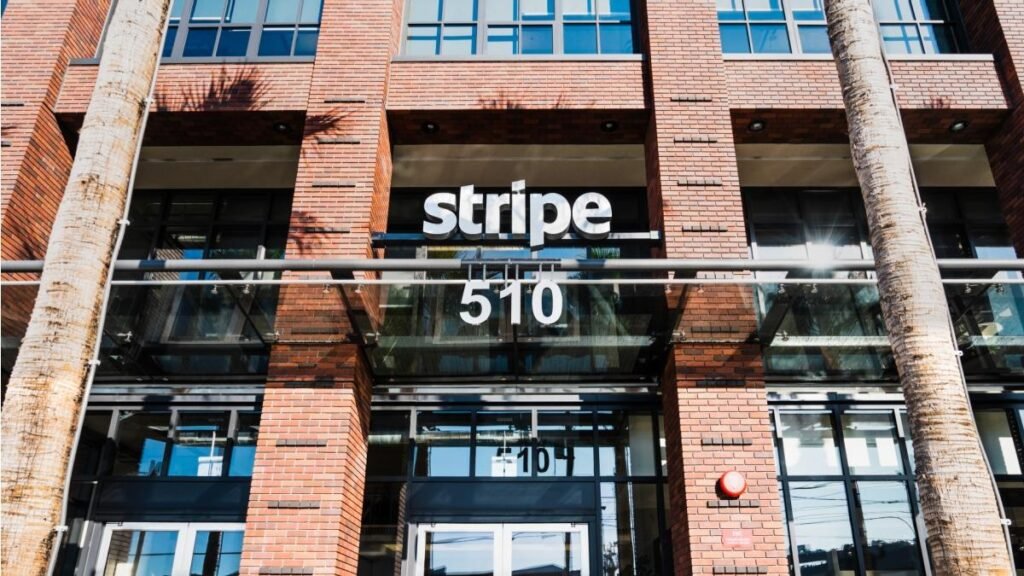
Stripe is best known as a payments company.
OpenRouter is an AI infrastructure platform.
But the two businesses are increasingly connected by one fundamental concept:
Consumption.
Traditional software companies often charge customers a monthly subscription.
AI applications are different.
Their costs can increase every time a user sends a prompt, generates an answer or asks an AI agent to perform a task.
Those interactions consume tokens — units of data used by AI models to process and generate information.
The more sophisticated the AI becomes, the more important it becomes for businesses to understand exactly how much each interaction costs.
That creates an enormous opportunity for companies that can monitor, route and bill AI usage.
Stripe has already been moving in that direction with tools designed to help businesses track AI model consumption. Reuters says the OpenRouter deal deepens that broader AI strategy.
The AI economy is creating a new infrastructure layer
The first phase of generative AI was dominated by the companies building the models. OpenAI, Google, Anthropic, Meta and other major technology companies competed to create increasingly capable systems.
Then another layer began to emerge.
Companies started building products on top of those models.
Now an additional infrastructure layer is becoming increasingly important:
the systems that connect applications to AI models.
That is where OpenRouter operates.
The company can help developers decide which model should receive a request and manage the technical complexity of working with multiple providers. As businesses increasingly use dozens of AI models rather than one, this middle layer could become extremely valuable.
Stripe’s acquisition suggests the company believes that AI infrastructure will eventually become as important as the applications built on top of it.
The cost of AI is becoming a bigger problem

The AI industry has spent enormous amounts of money building data centers and buying computing capacity.
For businesses using AI, however, the problem looks different.
They need to make AI economically viable.
Imagine an online company with millions of users. If every customer interacts with an AI assistant, the company could face enormous computing bills.
A model that costs a fraction of a cent per request can become extremely expensive when multiplied by millions or billions of interactions.
That is why model routing matters. A business might not need its most powerful and expensive model for every question. A cheaper model could handle simple requests, while a more advanced model handles difficult tasks.
The ability to automatically make those decisions can significantly influence the economics of an AI product.
OpenRouter grew incredibly quickly
The speed of OpenRouter’s rise is another reason the acquisition has attracted attention.
The company was founded in 2023.
Only three years later, it has become a major platform in the AI developer ecosystem. Reuters reports that OpenRouter has more than 10 million users and processes more than 10 trillion tokens daily. The company has also attracted major investors, including Menlo Ventures, Andreessen Horowitz and CapitalG.
The Financial Times reported that the acquisition is worth around $8 billion.
If that figure is accurate, it represents a remarkable increase from OpenRouter’s previous valuation.
The company had raised funding at a valuation of approximately $1.3 billion earlier this year, according to reports.
Stripe is becoming much more than a payments company

The OpenRouter acquisition also reveals something bigger about Stripe itself.
For years, Stripe was primarily associated with online payments.
But the company has increasingly expanded into infrastructure for the digital economy.
It has moved into areas such as billing, financial services, stablecoins and developer infrastructure.
AI could become another major pillar.
Stripe’s logic is relatively straightforward.
If AI becomes a fundamental part of online businesses, then companies will need systems for:
- paying AI providers;
- measuring token consumption;
- managing AI costs;
- billing customers for AI usage;
- preventing fraud;
- handling subscriptions;
- supporting AI agents;
- and potentially allowing autonomous software to conduct transactions.
OpenRouter could give Stripe a much stronger position in the middle of that ecosystem.
AI agents could make the deal even more important
The next major stage of AI may not be chatbots.
It may be AI agents.
Agents are designed to perform tasks rather than simply answer questions.
They could search for information, write software, manage workflows, communicate with other systems and eventually make purchases.
That creates an entirely new financial infrastructure problem.
If an AI agent can make decisions and execute transactions, someone needs to manage how those transactions are authorized, measured and paid for.
Stripe is already deeply involved in online payments.
OpenRouter is deeply involved in AI model usage.
Combining the two could put Stripe closer to the center of an economy in which software itself becomes a customer.
That may be one of the most important implications of the acquisition.
The deal could reshape the AI developer market
The acquisition also raises questions for developers.
OpenRouter’s value comes partly from its ability to give users flexibility across many AI models. That flexibility is particularly attractive in a market where models change quickly.
A model that is considered the best today might be overtaken by another tomorrow. Developers therefore increasingly want the ability to switch providers without rebuilding their entire applications.
OpenRouter provides that flexibility.
The challenge for Stripe will be maintaining that developer appeal while integrating the platform into a much larger commercial ecosystem.
If Stripe succeeds, OpenRouter could become a major piece of the infrastructure used by businesses building AI applications.
The bigger race is no longer just about AI models


For years, the technology industry’s biggest AI question was:
Who has the smartest model?
That question remains important.
But a second question is emerging:
Who controls the infrastructure around those models?
The companies that provide chips, data centers, cloud platforms, model APIs, routing, billing and developer tools could all capture enormous value from the AI boom.
That means the AI industry is becoming less like a single competition and more like an entire technology stack.
At the bottom are chips and electricity.
Above them are data centers and cloud infrastructure.
Then come AI models.
Then routing and developer platforms.
And finally, millions of applications used by consumers and businesses.
Stripe is now trying to move deeper into that stack.
Stripe has not disclosed the financial terms of the transaction.
The company will also need to demonstrate that combining payments infrastructure with AI model routing creates more value than either business could generate independently. For OpenRouter, the challenge will be preserving the platform’s appeal to developers while becoming part of a much larger financial-technology company.
For the wider AI industry, however, the message is already clear.
The infrastructure surrounding AI is becoming a business in its own right.
And Stripe wants a major position in it.
The OpenRouter acquisition is important because it shows how quickly the AI economy is evolving.
The biggest opportunities may no longer belong exclusively to companies building the most powerful AI models. They may also belong to companies that help businesses use those models efficiently, pay for them and turn them into profitable products.
Stripe appears to believe that AI will eventually become deeply embedded in almost every digital business. If that prediction proves correct, controlling the infrastructure through which AI models are selected, routed and paid for could become extremely valuable.
The acquisition therefore represents more than a fintech company buying an AI startup.
It is a bet that AI itself is becoming an economic infrastructure layer.
And Stripe wants to be one of the companies controlling the pipes.