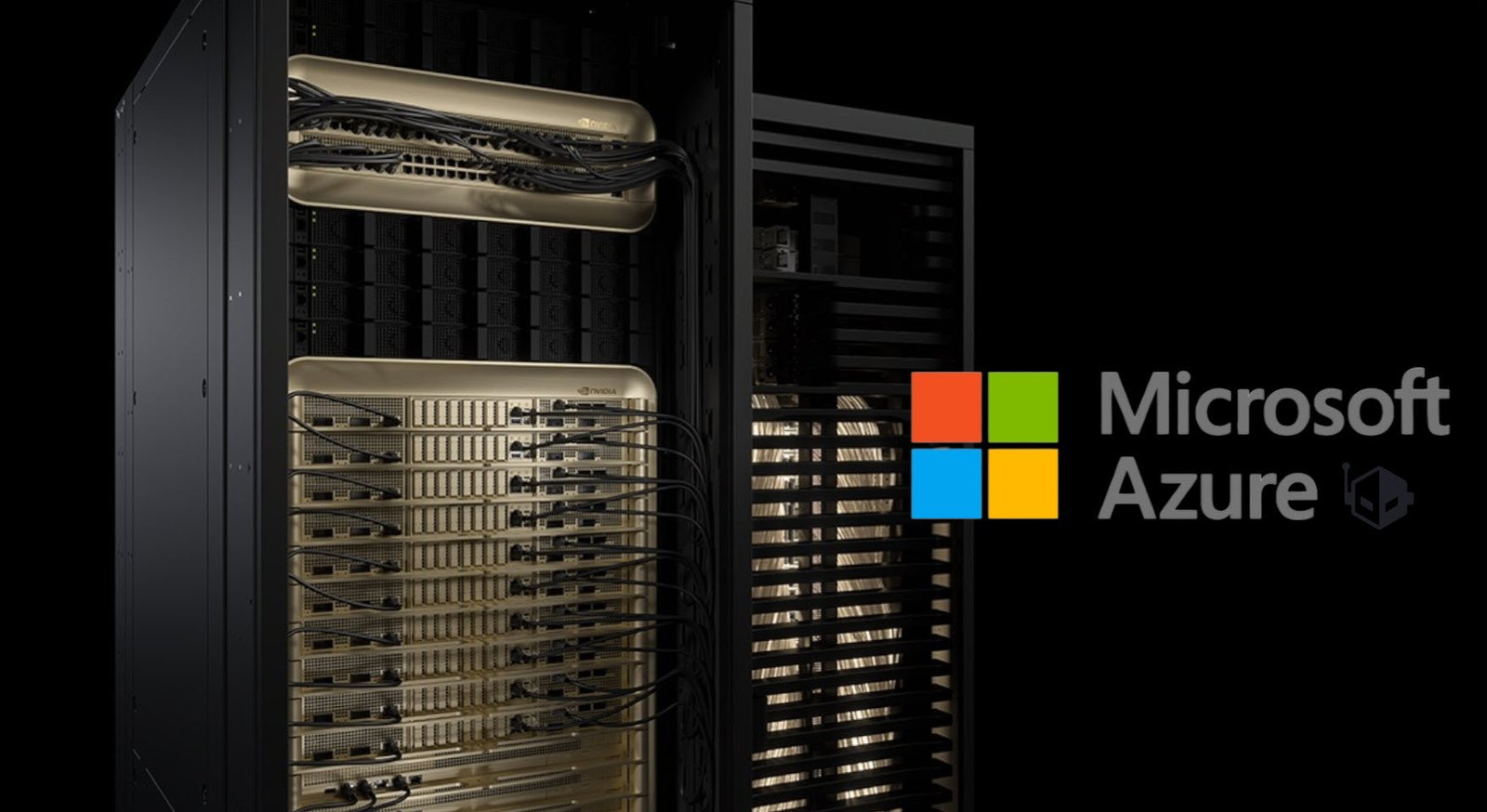
Microsoft has invested hundreds of billions of dollars in artificial intelligence infrastructure, but a new investigation is raising questions about whether the company has been able to deploy enough AI computing capacity to match its ambitious plans. The problem may not be a shortage of chips — it could be the physical infrastructure needed to run them.
By TheTechSpot Digital | August 17, 2026
Microsoft has spent years positioning itself at the center of the artificial intelligence revolution.
Through its partnership with OpenAI, massive investments in data centers and the integration of AI throughout Windows, Microsoft 365 and Azure, the company has committed enormous resources to becoming one of the world’s most important AI infrastructure providers.
But a new investigation is raising an important question:
Does Microsoft actually have enough working AI infrastructure to support the scale of its ambitions?
According to an investigation published by The Guardian, there may be a significant gap between Microsoft’s planned AI infrastructure and the amount of computing capacity that is actually operational.
Microsoft disputes the analysis and argues that the methodology used to estimate its infrastructure is inaccurate.
The debate highlights a problem that is becoming increasingly important across the entire technology industry.
Building AI infrastructure is not simply about buying chips.
Companies also need buildings, electricity, cooling systems, networking equipment and completed data centers capable of putting those chips to work.
And all of those things take time.
Microsoft Has Bet Big on AI

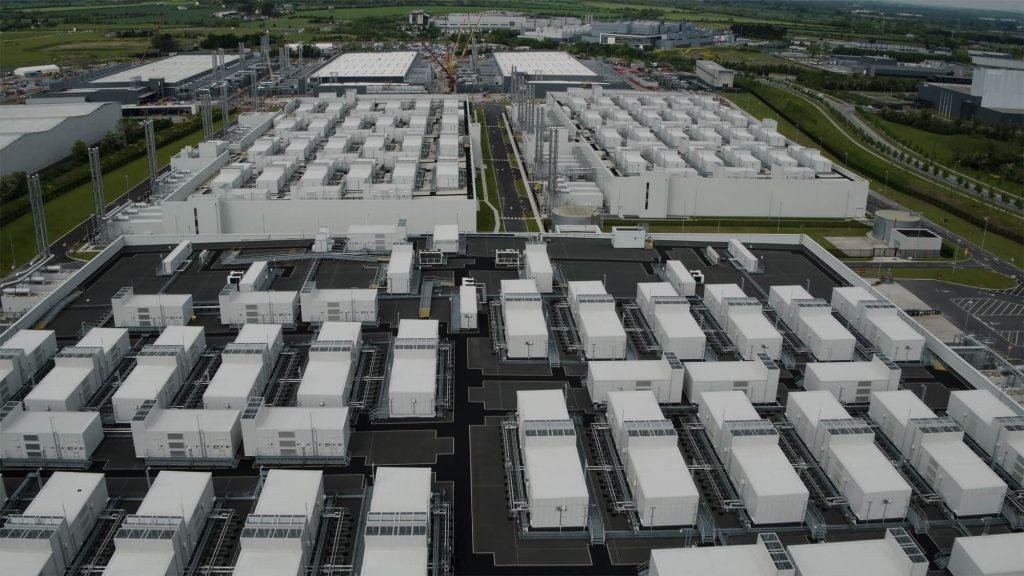
Microsoft has emerged as one of the biggest financial supporters of the AI revolution.
The company has invested enormous amounts of money into data centers and computing infrastructure while simultaneously integrating AI into its cloud business and consumer products.
Azure has become a critical platform for AI workloads, while Microsoft’s partnership with OpenAI has created one of the most important relationships in the technology industry.
Microsoft’s AI strategy depends heavily on having enough computing capacity available to customers.
That includes the infrastructure required to train large AI models as well as the enormous amount of computing power required to serve millions of AI requests every day.
The challenge is that demand has grown extremely quickly.
AI applications are no longer limited to experimental research.
Businesses are deploying AI assistants, coding tools, enterprise agents, search systems and automated workflows at increasingly large scale.
This means that computing demand continues to rise.
The Problem May Be Bigger Than GPUs
One of the most interesting conclusions from the recent investigation is that the AI infrastructure bottleneck may not necessarily be caused by a shortage of chips.
Instead, the problem could be where those chips are installed and whether the necessary infrastructure is ready to operate them.
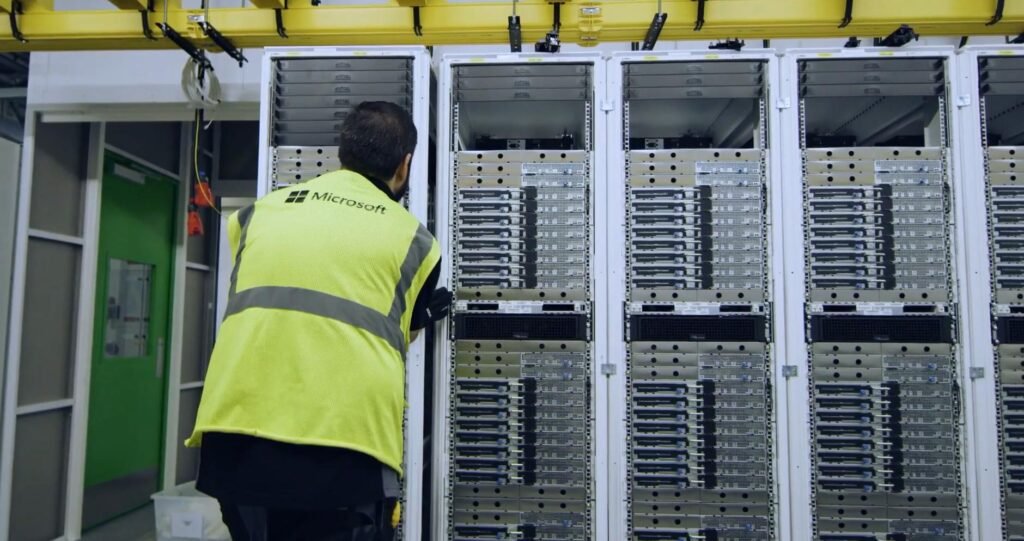
A modern AI data center is an extremely complex facility.
It requires enormous amounts of electricity, advanced cooling systems, high-speed networking and specialized power infrastructure.
Even if a company has purchased thousands of advanced AI processors, those chips are not useful if the building that is supposed to house them is not finished.
This creates a major difference between planned capacity and operational capacity.
A company can announce a huge data center project years before the facility actually begins running at full capacity.
For AI companies, that difference can be critical.

Microsoft’s Infrastructure Expansion
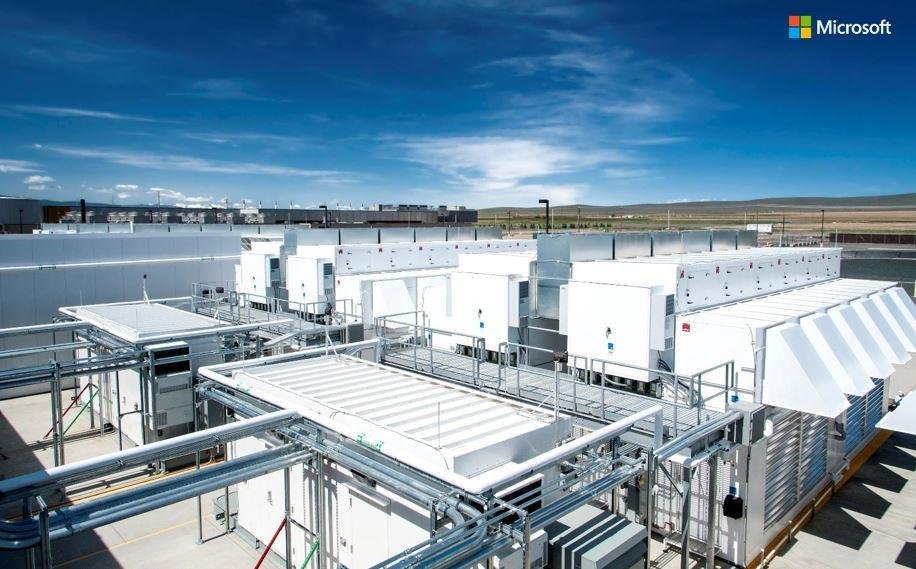
Microsoft has announced and invested in numerous large-scale data center projects around the world.
The company has added multiple gigawatts of data center capacity and has committed hundreds of billions of dollars to AI infrastructure since 2022.
However, the Guardian investigation suggests that some of Microsoft’s projects have experienced delays and infrastructure constraints.
According to the report, external estimates indicate that Microsoft’s operational power capacity could be significantly lower than the amount implied by the company’s broader infrastructure plans.
Microsoft disputes these estimates and argues that the analysis does not accurately reflect its actual infrastructure.
That disagreement is important because Microsoft does not publicly disclose every detail about its AI hardware deployments.
The company therefore has more information about its infrastructure than outside analysts do.
Why Data Centers Are Becoming the New Bottleneck
The situation illustrates a major shift in the AI industry.
In the early stages of the AI boom, the biggest concern was access to advanced processors.
NVIDIA became one of the world’s most valuable technology companies largely because its GPUs became essential for training and operating AI models.
But the industry is now discovering that GPUs alone are not enough.
The next bottleneck is infrastructure.
Companies need enormous facilities capable of operating tens or hundreds of thousands of AI processors simultaneously.
They need reliable power supplies.
They need specialized cooling.
They need high-speed networking.
They need transformers, transmission infrastructure and completed buildings.
And they need all of this at a time when demand for data centers is exploding.
Electricity Is Becoming a Technology Issue
One of the biggest challenges is energy.

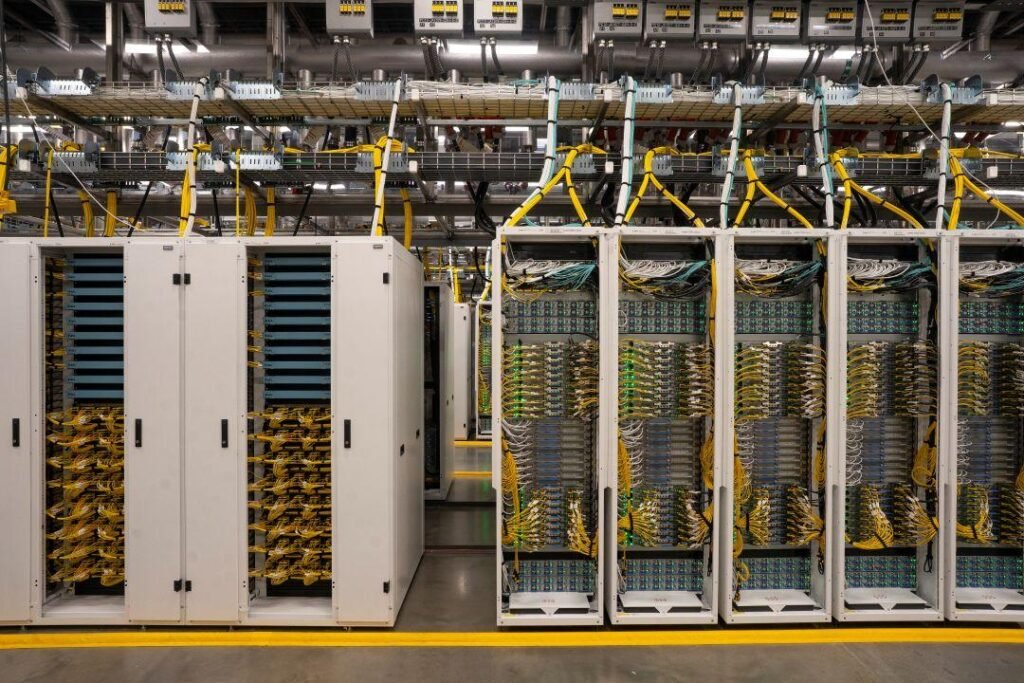
AI data centers consume enormous quantities of electricity.
As companies deploy increasingly powerful AI processors, the amount of energy required per facility continues to increase.
This has created an unexpected connection between the technology industry and the energy sector.
Microsoft, Google, Amazon, Meta and other technology companies are now competing not only for chips but also for electricity.
Locations with access to large amounts of reliable power are becoming strategically important.
In some regions, technology companies are effectively competing with traditional industries for electricity capacity.
This could become one of the biggest limitations on the growth of AI.
Construction Takes Time
Another challenge is the physical construction of data centers.
Unlike software, data centers cannot be created overnight.
Planning, permits, land acquisition, electrical infrastructure and construction can take years.
Even after a building is completed, companies still need to install networking systems, cooling equipment and computing hardware.
This creates a difficult situation for technology companies.
Demand for AI services can increase dramatically within months.
Infrastructure cannot necessarily respond that quickly.
A company may therefore have customers waiting for computing capacity while its next major data center is still under construction.
Microsoft Is Not Alone
The infrastructure challenge is not unique to Microsoft.
Google, Amazon, Meta and OpenAI are all investing billions of dollars into AI computing capacity.
NVIDIA is also becoming increasingly involved in infrastructure financing.
Earlier today, NVIDIA announced a major agreement involving OpenAI and SB Energy for an Ohio data center campus that could eventually reach approximately 8 gigawatts of computing capacity. The project is expected to begin with around 800 megawatts in 2028 and scale over time.
That project demonstrates the scale of infrastructure now required to support next-generation AI.
The industry is effectively entering a period of massive data center construction.
The OpenAI Factor

Microsoft’s relationship with OpenAI makes the infrastructure question even more important.
OpenAI requires enormous amounts of computing power to train and operate its models.
Microsoft has historically been one of OpenAI’s most important infrastructure partners through Azure.
As OpenAI’s products grow, the amount of computing power required to support them also increases.
This creates additional pressure on Microsoft’s data center network.
The challenge is not simply supporting today’s AI workloads.
Microsoft needs to anticipate what demand will look like several years from now.
That is extremely difficult because AI adoption is developing faster than many previous technology cycles.
Could AI Demand Outrun Infrastructure?
This is perhaps the biggest question facing the industry.
AI companies are developing increasingly powerful models.
Those models require more computing.
Businesses are adopting AI faster.
Consumers are using AI assistants more frequently.
AI agents are beginning to perform longer and more complicated tasks.
All of this increases demand for infrastructure.
If data center construction cannot keep pace, companies could face a serious bottleneck.
This could affect everything from AI application performance to cloud pricing.
It could also slow the deployment of new AI services.
In other words, the future of artificial intelligence may depend partly on something that sounds surprisingly ordinary:
Buildings and electricity.
The Economics Are Getting Complicated
There is also a financial dimension.
AI infrastructure requires enormous capital investment.
Companies are spending billions of dollars before many of these facilities generate revenue.
The economic model depends on continued growth in AI demand.
If demand continues increasing, the investment could produce enormous returns.
But if AI adoption slows, companies could find themselves with expensive infrastructure that is underutilized.
This creates a delicate balance.
Technology companies must build enough infrastructure to meet future demand without building so much that they create excess capacity.
The uncertainty makes long-term planning extremely difficult.
What This Means for AI Users
For consumers, the infrastructure race may seem distant.
But it could eventually affect everyday AI services.
More infrastructure generally means more capacity for AI applications. If demand grows faster than infrastructure, users could experience higher costs, slower service or limitations on certain AI features.
For businesses, the impact could be even greater.
Companies increasingly rely on cloud AI services for software development, customer support, data analysis and automation.
Any limitation in cloud computing capacity could therefore have consequences far beyond the technology sector.
A New Phase of the AI Revolution
The AI industry is moving into a new phase.
The first stage was largely about creating better algorithms.
The second stage was about building increasingly powerful foundation models.
The current stage is increasingly about infrastructure.
Who can build the largest data centers?
Who can secure the most electricity?
Who can obtain the most advanced AI processors?
Who can deploy those processors fastest?
And who can afford to keep expanding infrastructure for years?
These questions could determine which companies dominate the next decade of artificial intelligence.
Microsoft’s Challenge
Microsoft remains one of the most powerful companies in the AI industry.
Its Azure cloud platform, OpenAI partnership and global infrastructure give it enormous advantages. But the scale of the AI revolution means even Microsoft faces difficult constraints. The company must transform enormous financial investments into operational computing capacity.
That requires coordinating chips, construction, electricity, networking and software at unprecedented scale. The recent investigation does not prove that Microsoft lacks the infrastructure it needs.
The company strongly disputes the external estimates.
But the debate itself demonstrates how difficult it has become to measure the real scale of AI infrastructure.
The Bottom Line
Microsoft’s AI ambitions are enormous, but the company faces a challenge shared by the entire technology industry: AI infrastructure cannot be built as quickly as AI demand can grow. The latest investigation raises questions about whether Microsoft’s planned computing expansion has translated into enough operational capacity.
Microsoft rejects the analysis, arguing that the methodology behind the estimates is flawed. Regardless of which side is ultimately correct, one thing is becoming increasingly clear. The AI revolution is no longer just a competition between software companies.
It is becoming a competition for chips, electricity, land, data centers and physical infrastructure.
The winners of the next stage of AI may therefore not simply be the companies with the smartest models. They may be the companies capable of building the infrastructure needed to run those models at global scale.
And for Microsoft, the race to build that infrastructure has only just begun.