By TheTechSpot Editorial Team
August 19, 2026
ZAGREB — The self-driving car era has officially arrived in Europe.
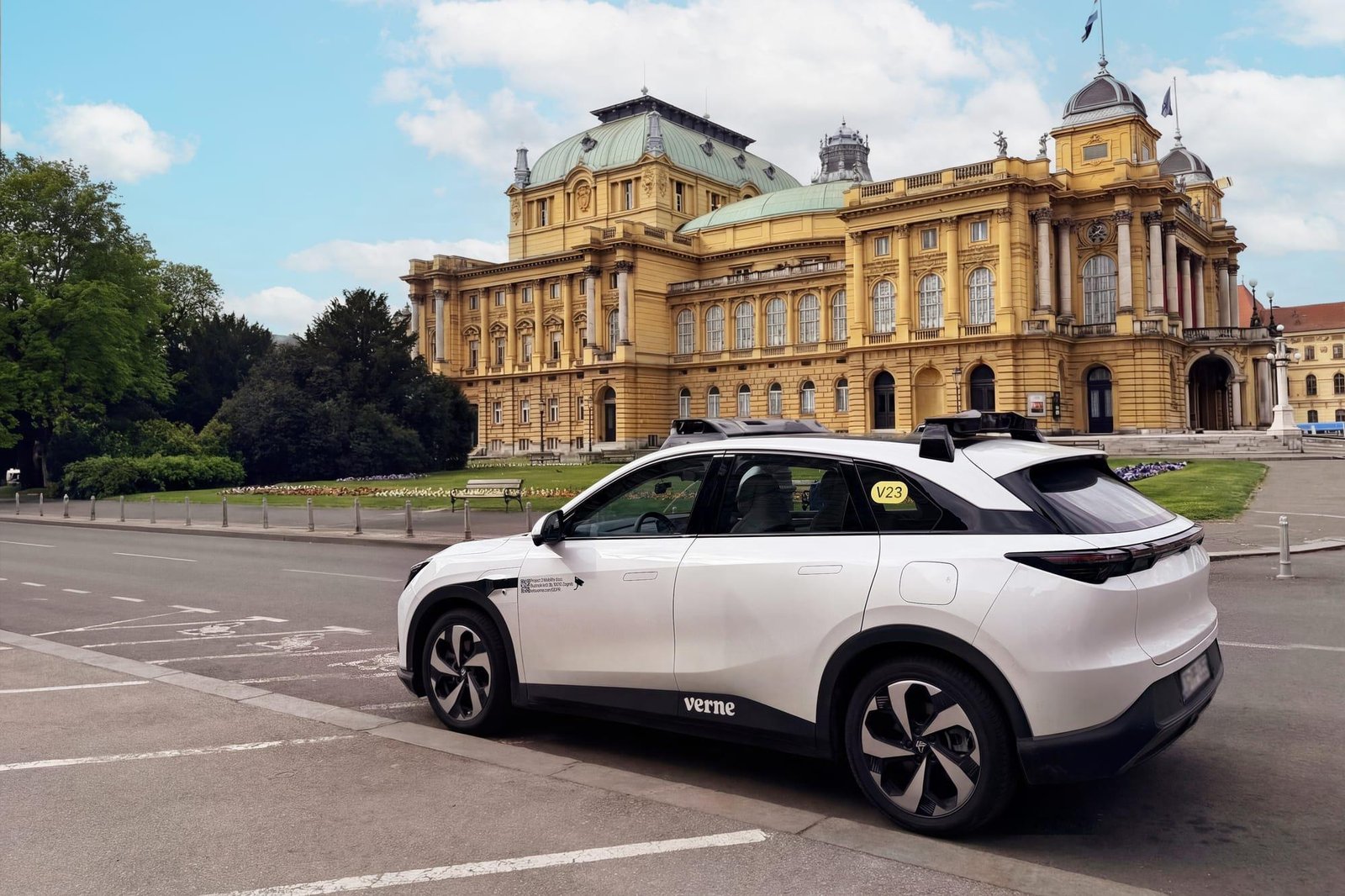
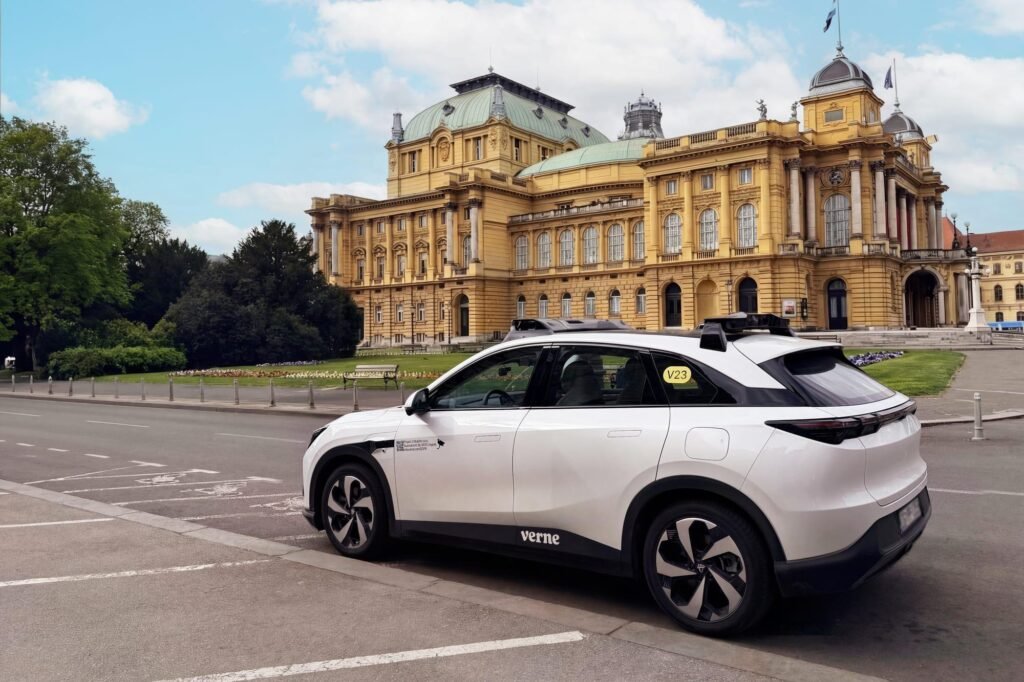
Uber, autonomous-driving company Pony.ai and Croatian mobility company Verne have launched autonomous rides in Zagreb, giving European passengers the ability to request a self-driving vehicle through the Uber app.
The launch marks an important milestone for the European transportation industry.
For the first time, a passenger using Uber in Europe can open the same app used to order a conventional ride and potentially receive a vehicle capable of navigating city streets using autonomous-driving technology.
The service initially operates within selected areas of Zagreb and represents a phased introduction rather than an immediate transition to completely driverless transportation.
A licensed operator is currently inside the vehicle to monitor the journey and intervene if necessary.
But the direction is clear.
Europe is entering the robotaxi era.
Your next Uber ride could have no driver

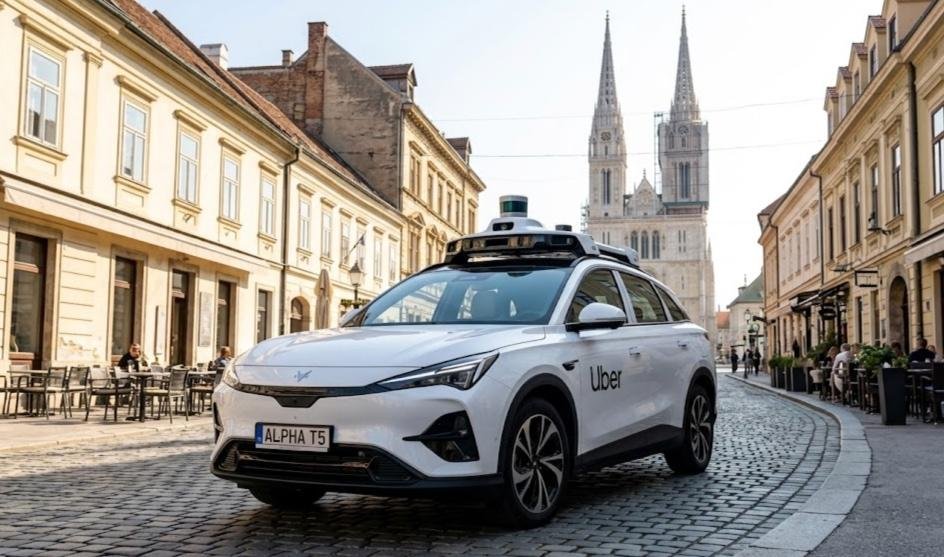
The concept sounds futuristic, but the technology is already being deployed commercially.
Instead of a human driver controlling the vehicle, the autonomous-driving system uses cameras, sensors, mapping technology and artificial intelligence to understand the surrounding environment.
The system has to recognize:
- pedestrians;
- cyclists;
- traffic lights;
- road signs;
- other vehicles;
- lane markings;
- intersections;
- parked cars;
- unexpected obstacles.
It then continuously calculates what the vehicle should do next.
In theory, the passenger simply enters a destination in the Uber application and the vehicle handles the rest.
That is the vision behind robotaxis.
And Zagreb is now one of the places where that vision is becoming a commercial reality.
Why Zagreb?
The choice of Zagreb is particularly interesting.
European autonomous-driving development has often faced strict regulations, complicated road environments and lengthy approval processes.
Croatia has positioned itself as a more welcoming environment for testing and deploying autonomous mobility.
Verne, a Croatian mobility company associated with the Rimac Group, is responsible for the local operational side of the service, while Pony.ai supplies the autonomous-driving technology.
Uber provides the customer-facing platform.
That creates a three-part system:
Pony.ai → autonomous technology
Verne → vehicles and operations
Uber → customers, booking and payments
The companies announced the partnership earlier this year, with Zagreb selected as the starting point for Europe’s commercial robotaxi rollout.
UBER’S DRIVERLESS FUTURE IS HERE
Europe’s first Uber autonomous rides launch in Zagreb
The technology behind the robotaxi

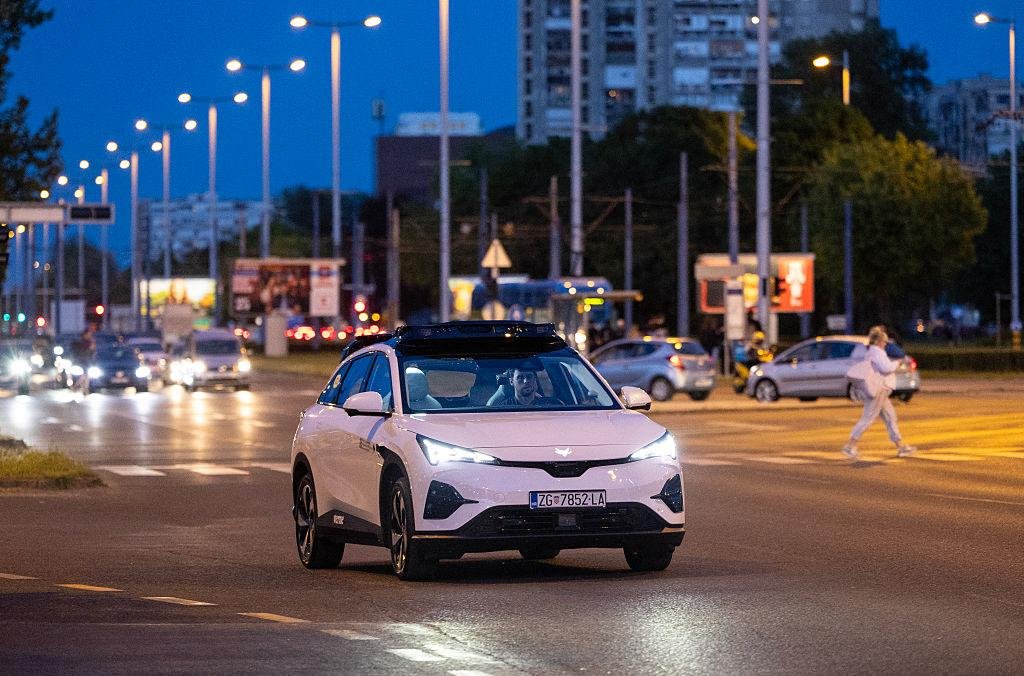
Pony.ai is one of China’s best-known autonomous-driving companies.
Its technology has already been tested and deployed in several markets.
The company is attempting to build a global autonomous-driving business rather than limiting its operations to China.
That international strategy is now becoming much more aggressive.
Earlier this month, Pony.ai and Uber announced plans to deploy more than 2,000 robotaxis across Europe, expanding beyond Zagreb into four additional European cities.
The companies have not yet announced all of the cities or a complete rollout schedule.
The partnership is also expected to expand into the Middle East.
That means Zagreb may only be the beginning.
Europe could soon have thousands of robotaxis
The 2,000-vehicle target is significant because it represents a move away from small-scale testing.
For years, autonomous vehicles were primarily demonstrated in controlled environments.
Companies would show prototype vehicles navigating roads while engineers monitored the system.
The next challenge is commercialization.
Can autonomous cars actually operate as a business?
Can passengers trust them?
Can companies make money from them?
Can regulators approve them?
And perhaps most importantly:
Can an autonomous vehicle be safer than a human driver?
Those questions will determine whether robotaxis become a mainstream form of transportation.
- Uber has launched autonomous rides in Zagreb, Croatia, marking its first European rollout of self-driving rides through the Uber app.
- The service combines Uber’s platform with autonomous-driving technology from Pony.ai and operations from Croatian mobility company Verne.
- Riders can book an autonomous vehicle through Uber in selected areas of Zagreb.
- A trained safety operator is initially present inside the vehicle as the service moves toward fully driverless operation.
- Uber and Pony.ai have already announced plans to deploy more than 2,000 robotaxis across Europe through an expanded partnership.
But there is still a human inside
Despite the futuristic appearance, Zagreb’s current service is not yet a completely driverless experience.
A licensed operator is initially present inside the vehicle.
The operator monitors the journey and can intervene if necessary.
This is an important detail.
When people hear the words “self-driving taxi,” they may imagine entering a vehicle with absolutely nobody behind the wheel.
That is not yet the complete reality of this launch.
The companies are using a phased approach.
The goal is to eventually move toward fully driverless operation once the technology, regulatory framework and operational procedures are ready.
So this launch is better understood as a bridge between traditional taxis and truly autonomous transportation.
Booking the robotaxi through Uber

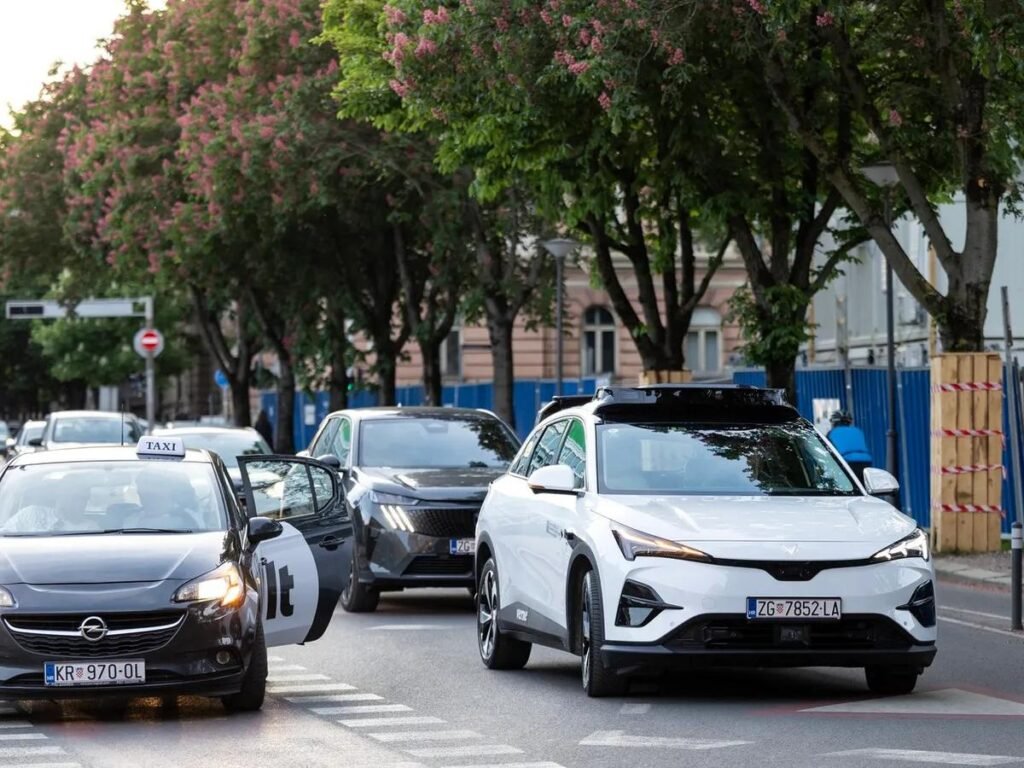
Perhaps the most important part of the announcement is not the car itself.
It is the Uber app.
Millions of people already understand how Uber works.
You select your destination.
You request a ride.
You see the vehicle approaching.
You get inside.
You arrive at your destination.
The robotaxi concept fits directly into that existing behavior.
The customer does not necessarily need to understand how the autonomous-driving system works.
They simply need to know that the vehicle can take them where they want to go.
That makes Uber an extremely powerful distribution platform for autonomous vehicles.
Why Uber wants robotaxis
There is an obvious economic reason behind Uber’s interest.
Drivers are one of the largest components of ride-hailing costs.
A robotaxi does not require a human driver to sit behind the wheel for every trip.
If autonomous vehicles can eventually operate safely without human intervention, the economics of ride-hailing could change dramatically.
Instead of paying a driver for every journey, companies could operate fleets of autonomous vehicles.
The vehicles could potentially work for much longer periods of the day.
That could lower operating costs.
But there is an enormous amount of uncertainty around this model.
Autonomous vehicles are expensive.
They require sophisticated sensors, computing hardware, maintenance and specialized software.
Regulation is another major challenge.
So robotaxis may not immediately become cheaper than conventional taxis.
What happens to taxi drivers?
This is perhaps the most controversial question surrounding the technology.
If autonomous vehicles become widespread, millions of professional drivers around the world could eventually face competition from machines.
Uber’s strategy is not necessarily to eliminate human drivers overnight.
The company has repeatedly described a future in which human-driven and autonomous vehicles operate alongside each other.
But the balance could change over time.
Some journeys might be handled by human drivers.
Others could be assigned to autonomous vehicles.
The decision could depend on location, cost, traffic conditions and vehicle availability.
AI is becoming the driver

The bigger technological story is that autonomous vehicles represent one of the most important real-world applications of artificial intelligence.
A chatbot can generate text.
An image model can create pictures.
An AI coding system can write software.
But an autonomous vehicle has to make decisions in the physical world.
It must understand what is happening around it in real time.
A mistake can have immediate physical consequences.
That makes autonomous driving one of the hardest AI problems in the technology industry.
Why this matters for the rest of Europe
If Zagreb’s rollout succeeds, other European cities could follow.
Uber and Pony.ai have already announced plans for more than 2,000 robotaxis across Europe.
That means the technology could eventually reach major cities beyond Croatia.
Potential future markets could include densely populated European capitals and major tourist destinations.
But each country has its own regulations.
A system approved in Croatia may not automatically receive approval elsewhere.
European policymakers will therefore have to decide how quickly autonomous transportation should be allowed to expand.
China is becoming a major force in autonomous driving
Another fascinating aspect of the Zagreb launch is the international nature of the technology.
Uber is an American company.
Verne is Croatian.
Pony.ai is Chinese.
Together, they are launching a new transportation model in Europe.
That demonstrates how global the autonomous-driving race has become.
Chinese companies have been particularly aggressive in developing and deploying robotaxis.
Pony.ai is now attempting to take that technology into international markets.
Reuters reported this week that Pony.ai plans to deploy more than 4,000 robotaxis internationally, with Europe, Asia and the Middle East among its target regions.
Safety will decide everything
Technology alone will not determine whether robotaxis succeed.
Public trust will be equally important.
Passengers need to believe that an autonomous vehicle can react correctly when something unexpected happens.
What happens if a pedestrian suddenly crosses the road?
What if another driver runs a red light?
What if a cyclist moves unexpectedly into the vehicle’s path?
What if the sensors are affected by heavy rain or fog?
These are the situations that autonomous-driving systems must handle reliably.
A robotaxi could complete thousands of normal journeys without incident, but a single serious accident could dramatically change public perception.
The road ahead
The Zagreb launch is unlikely to transform European transportation overnight.
There will still be millions of conventional taxis and ride-hailing drivers.
Autonomous fleets will initially be small.
Human operators will remain part of early deployments.
Regulators will continue to evaluate safety.
But something important has changed.
Passengers can now access an autonomous ride through a mainstream ride-hailing platform in a European capital.
That makes the technology much more real than a laboratory demonstration.
And the next few years could determine whether robotaxis become a normal part of everyday life.
Uber and Pony.ai are preparing to expand their partnership beyond Zagreb. More than 2,000 robotaxis are planned across five European cities, although four of the additional cities have not yet been publicly identified.
The companies are also planning expansion into the Middle East.
If the Zagreb operation performs well, the expansion could accelerate. If passengers embrace the technology and regulators approve wider deployments, autonomous vehicles could begin appearing on European streets at a much faster pace.
The biggest question is no longer whether robotaxis can drive.
They can.
The question is whether people are ready to trust them with their lives.
The robotaxi revolution has officially reached Europe.
Zagreb is now the starting point for a potentially much larger transformation in urban transportation.
Uber brings the customers.
Verne brings the local fleet and operations.
Pony.ai brings the autonomous-driving technology.
Together, they are testing a future in which ordering a taxi may eventually mean ordering a car with no driver at all.
And if the planned European expansion succeeds, the strange-looking autonomous vehicles appearing today in Zagreb could become a familiar sight across European cities tomorrow.