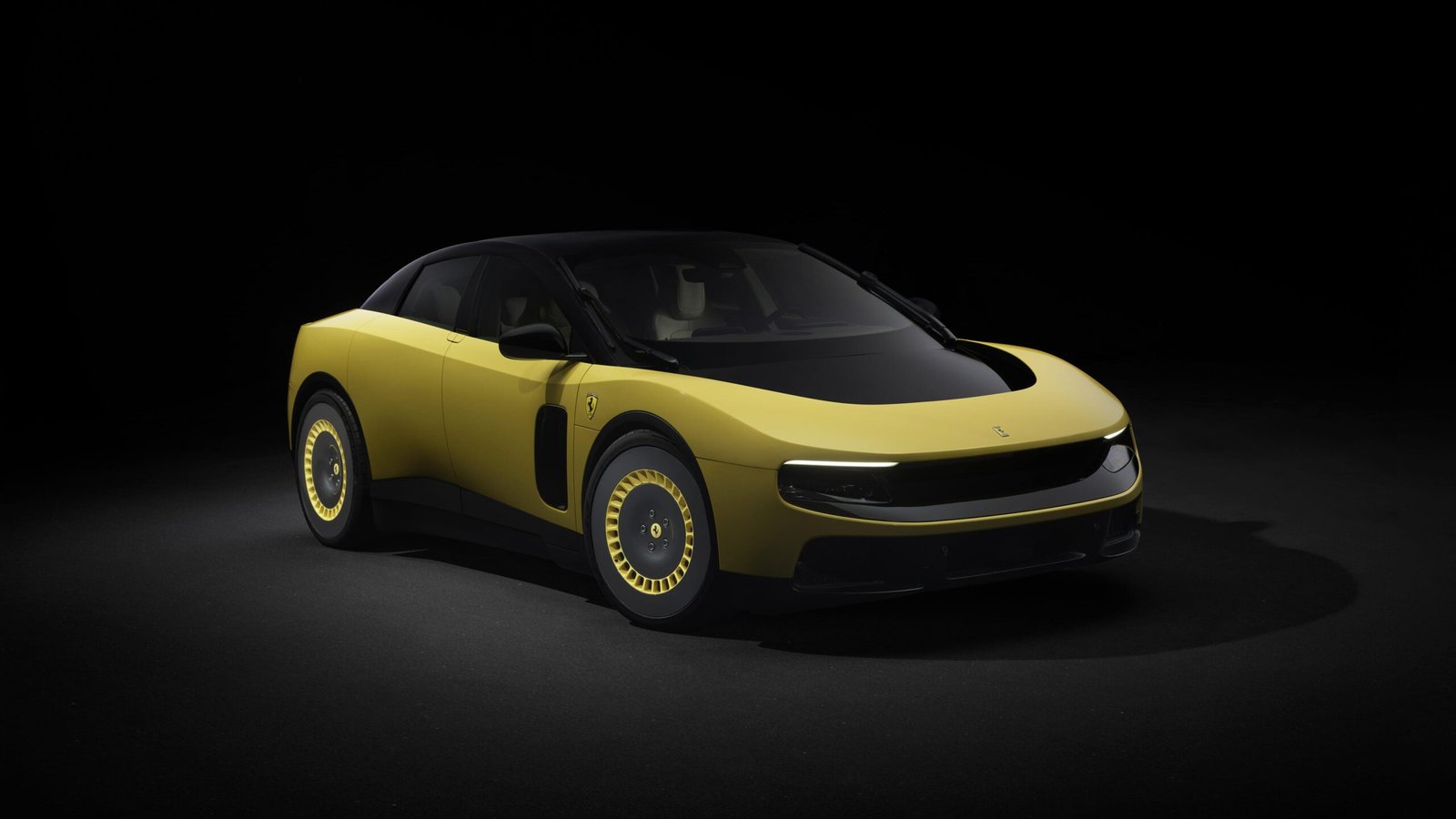
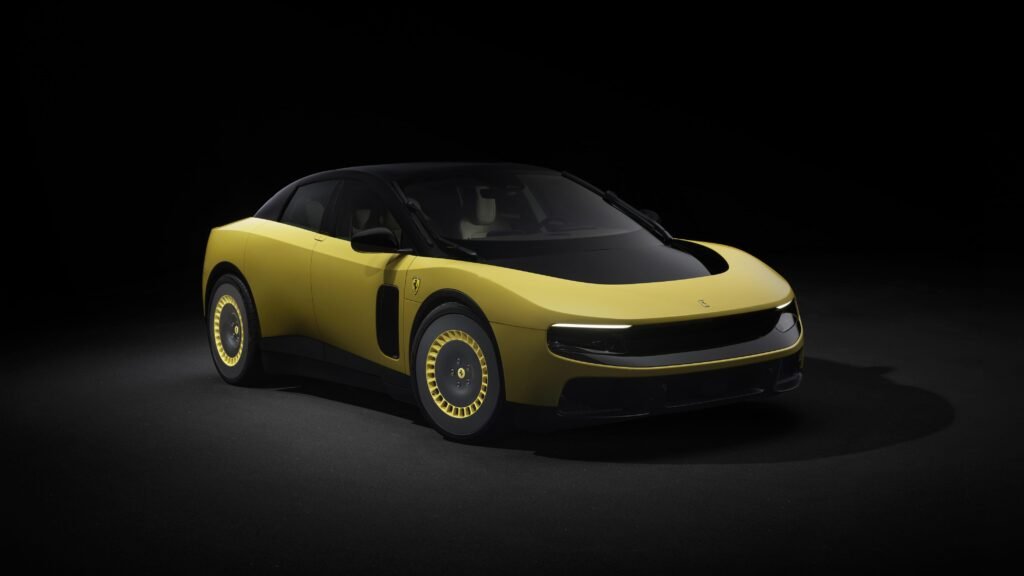
Ferrari has entered the electric era with the Luce, and its first fully electric car has already made history. A unique version of the new EV has sold for an astonishing $40 million at auction, becoming one of the most expensive new cars ever sold at auction.
By TheTechSpot Digital | August 17, 2026
Ferrari has officially entered a new chapter.
For decades, the Italian manufacturer has built its reputation around screaming V8 and V12 engines, breathtaking design and some of the world’s most desirable performance cars.
Now Ferrari is entering the electric era.
And it is doing so in spectacular fashion.
The company’s first fully electric vehicle, the Ferrari Luce, has already generated enormous attention before its wider arrival on the road.
But this week, the Luce made history for another reason.
A unique, bespoke version of the electric Ferrari was sold at auction for $40 million, according to Reuters. The sale took place during Monterey Car Week and was organized as a charity auction.
The price is extraordinary.
It is also a sign of just how powerful the Ferrari brand remains as the automotive industry moves toward electrification.
A $40 Million Electric Ferrari
The auctioned Luce was not an ordinary production car.
It was a unique, heavily customized example created specifically for Ferrari’s charitable foundation.
The car was designed with input from Sir Jony Ive, the legendary former Apple design chief, making the project particularly interesting for technology enthusiasts.
The one-off vehicle sold for $40 million, far exceeding its original auction estimate of approximately $1.1 million.
That makes the sale extraordinary even by Ferrari standards.
It also demonstrates that electric vehicles are increasingly entering the world of ultra-luxury collectibles.
Ferrari’s Electric Future Begins

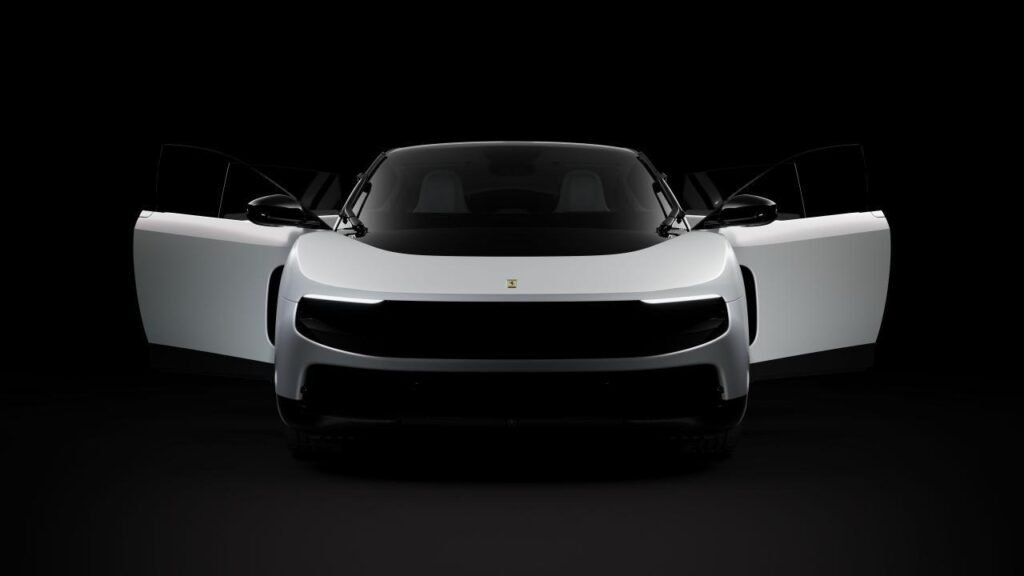
The Luce represents something much bigger than one expensive car.
Ferrari has spent decades building an identity around combustion engines.
The sound of a Ferrari engine is almost as recognizable as the company’s famous logo.
Moving into electric vehicles therefore creates a significant challenge.
Ferrari needs to embrace new technology without losing the emotional character that made the brand famous.
The Luce is Ferrari’s answer.
Instead of treating electrification simply as a regulatory requirement, Ferrari is presenting its first EV as a new interpretation of performance and luxury.
Electric Doesn’t Have to Mean Boring
One of the biggest misconceptions surrounding electric cars is that they are primarily about efficiency.
Modern EVs can also deliver extraordinary performance.
Electric motors provide instant torque.
They can deliver enormous acceleration.
They allow engineers to distribute power precisely between wheels.
And they open up new possibilities for vehicle control systems.
For a company like Ferrari, these characteristics could become extremely important.
The challenge is not making an electric Ferrari fast.
The challenge is making it feel like a Ferrari.
That is much harder.
The Jony Ive Connection
The involvement of Jony Ive adds another layer to the story.
Ive became internationally famous for his work at Apple, where he played a major role in the design of products including the iMac, iPod, iPhone and iPad.
His design philosophy emphasized simplicity, materials, proportions and the relationship between technology and the user.
Those principles translate naturally into automotive design.
Modern cars are becoming increasingly software-driven.
Screens, sensors, connectivity and digital interfaces are becoming as important as mechanical components.
That makes the automotive industry increasingly similar to consumer technology.
The Luce sits directly at that intersection.
Ferrari Meets the Technology Industry
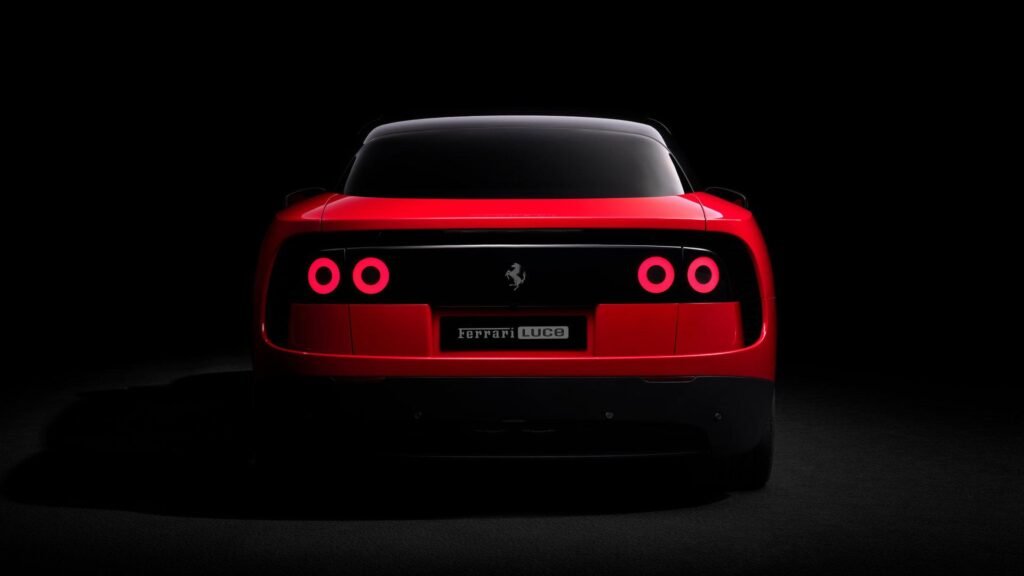
The relationship between Ferrari and technology is becoming increasingly important.
Modern supercars are effectively computers on wheels.
They contain advanced electronic control systems, sophisticated driver assistance technologies, complex software and enormous amounts of data.
Electric vehicles take this even further.
The absence of a traditional combustion powertrain allows manufacturers to rethink vehicle architecture.
Software becomes a more important part of the driving experience.
Battery management becomes critical.
Thermal management becomes essential.
Electric motors can be precisely controlled through software.
For Ferrari, this creates an entirely new technological playground.
The EV Market Is Exploding
Ferrari is entering the electric market at a time when global EV adoption is accelerating.
BloombergNEF expects global passenger EV sales to reach approximately 23.3 million vehicles in 2026, representing an 11% increase from 2025. China remains the largest market, while Europe and other regions are also expanding.
That means Ferrari is entering a market that is no longer experimental.
Electric vehicles are becoming mainstream.
But Ferrari operates in a completely different segment.
The company is not trying to sell millions of EVs.
It is trying to create an electric car that feels desirable enough to justify Ferrari’s extraordinary prices.
The Luxury EV Market Is Changing

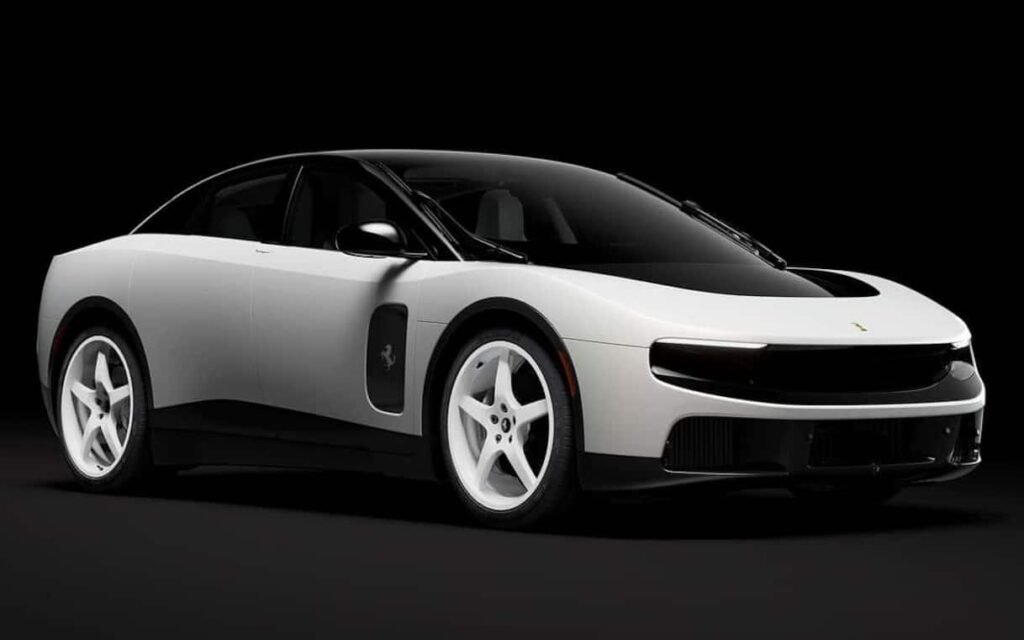
Ferrari is also entering an increasingly competitive luxury EV market.
Porsche, Mercedes-Benz, BMW, Lotus, Lucid and other manufacturers are developing high-performance electric vehicles.
But Ferrari has something many competitors cannot easily reproduce:
heritage.
The Ferrari badge carries decades of motorsport history.
Collectors are willing to pay enormous amounts for rare Ferrari models.
That brand value can potentially make the transition to electric technology easier.
The $40 million Luce auction is a powerful example.
A New Kind of Ferrari Collector
Electric cars may also attract a different generation of collectors.
Traditional Ferrari collectors often value engine configuration, racing history and mechanical rarity.
Future collectors may also value software, battery technology and innovative design.
The first Ferrari EV could eventually become historically significant simply because it represents the beginning of a new era for the company.
That makes early examples potentially very desirable.
The Design Debate
Not everyone is automatically enthusiastic about Ferrari’s electric transition.
The company has faced criticism from some enthusiasts who believe the Luce’s design moves too far away from traditional Ferrari styling. Reuters reported that the EV’s design has generated debate among critics, even as demand remained strong.
This is a difficult balance.
Ferrari cannot simply reproduce the past.
An electric Ferrari needs to look forward.
But it also needs to remain instantly recognizable as a Ferrari.
That tension is likely to continue throughout the company’s transition to electric vehicles.
Performance Will Be Everything
For Ferrari, the ultimate test will be performance.
Customers paying hundreds of thousands of euros for a Ferrari will expect extraordinary acceleration, handling and driver engagement.
Range alone will not sell the car.
Charging speed alone will not sell it.
Technology alone will not sell it.
The vehicle needs to deliver an emotional experience.
That is where Ferrari has an opportunity.
The company can combine electric propulsion with advanced chassis technology, sophisticated software and decades of experience in high-performance vehicle dynamics.
The Future Ferrari May Be Software-Defined
The Luce also points toward a broader transformation in Ferrari’s business.
Future Ferrari vehicles will increasingly depend on software.
Vehicle performance can be modified through software.
Battery systems can be optimized digitally.
Driving modes can be updated.
Connected services can expand after the car leaves the factory.
This creates a completely different relationship between Ferrari and its customers.
A modern Ferrari may not simply be a finished mechanical product.
It could become an evolving technology platform.
That is a major shift for a company whose identity has traditionally been based on mechanical engineering.
Why the $40 Million Sale Matters
The $40 million auction result is important because it demonstrates that electrification has entered even the highest level of automotive collecting.
A one-off electric Ferrari has achieved a price normally associated with extremely rare historical automobiles. The car’s uniqueness and charitable purpose played major roles in the result, so the sale should not be interpreted as the market price of a normal Ferrari Luce.
Nevertheless, it is a remarkable statement. Electric technology is no longer something that belongs only to affordable city cars and mass-market vehicles.
It is now part of the world of ultra-exclusive hyper-luxury automobiles.
Ferrari’s Biggest Challenge
Ferrari now has to answer one fundamental question:
Can an electric Ferrari create the same emotional connection as a V12 Ferrari?
That may take years to answer.
The sound of a naturally aspirated Ferrari engine is part of the brand’s DNA.
Electric cars are almost silent by comparison.
Ferrari therefore needs to create emotion through acceleration, steering, handling, design and technology.
The driving experience itself must become the new soundtrack.
What Comes Next?
The Luce is only the beginning.
Ferrari is expected to continue expanding its electrified lineup over the coming years.
The company will likely combine fully electric vehicles with hybrid powertrains as it transitions gradually rather than abandoning combustion engines overnight. That strategy could allow Ferrari to serve traditional enthusiasts while attracting customers interested in new technology. The result could be a Ferrari lineup unlike anything the company has produced before.
Some models may continue using sophisticated hybrid powertrains.
Others will become fully electric. And eventually, Ferrari’s customers may stop thinking of electric propulsion as something unusual.
It will simply be another way to build a Ferrari.
Ferrari’s first electric vehicle is more than a new model.
It represents a historic transformation for one of the world’s most recognizable performance-car manufacturers. The $40 million auction result shows that the transition to electric technology can exist alongside extreme luxury, exclusivity and collectability.
The Luce may not sound like a traditional Ferrari.
It may not even look exactly like one.
But it represents a new chapter.
The automotive industry is moving toward electric power, and even Ferrari cannot remain outside that transformation forever.
The real question is no longer whether Ferrari will go electric.
It is whether Ferrari can make the electric era feel unmistakably Ferrari.
And if the $40 million auction is any indication, the world is already watching very closely.