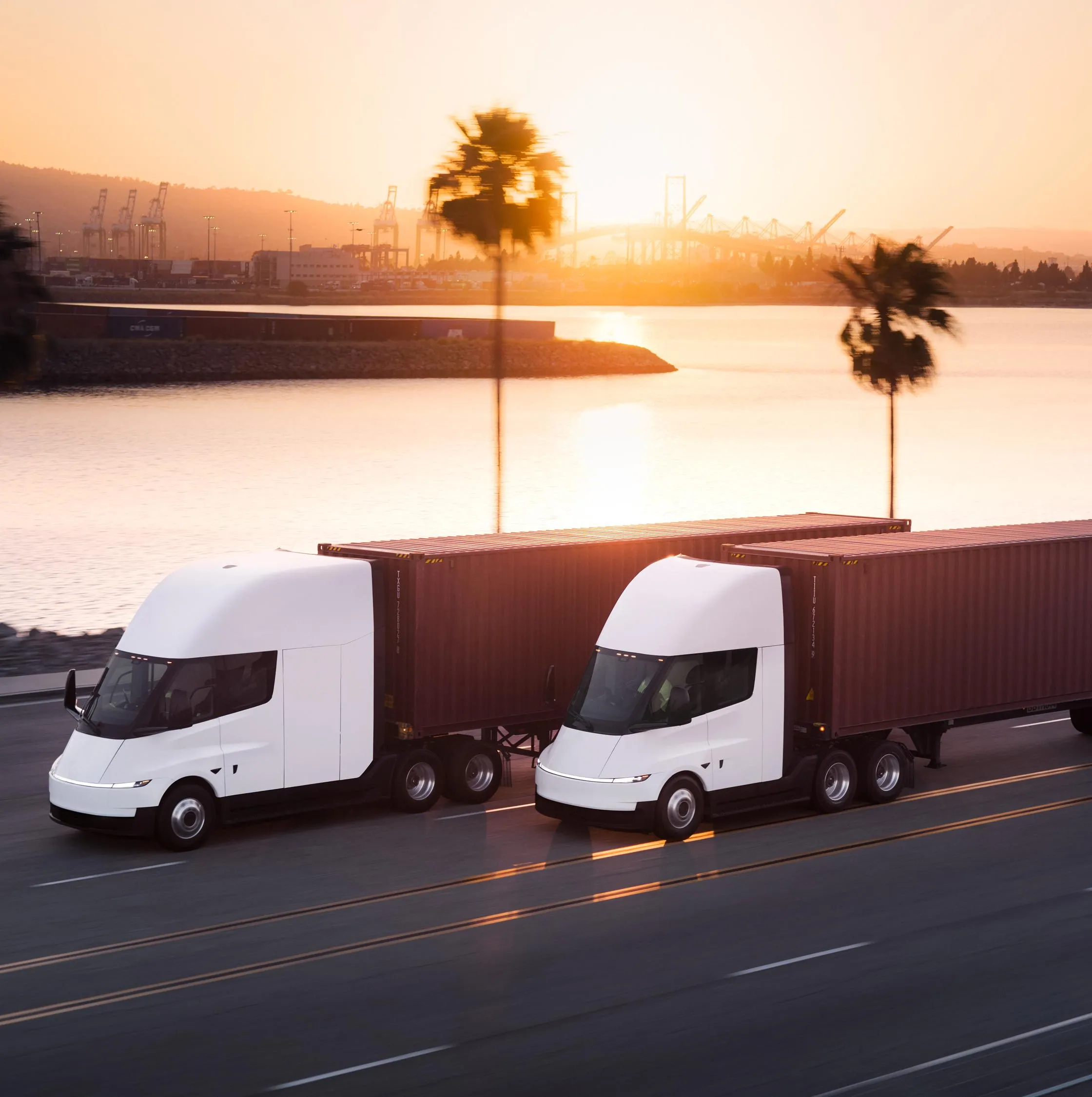
After almost nine years, Tesla Semi is finally moving into commercial deployment
Tesla has begun delivering its first Semi electric trucks, marking a major milestone for a program first unveiled in 2017.
The first deliveries are starting from Tesla’s Sparks, Nevada operation. Customers including PepsiCo, DHL and US Foods were represented at the company’s rollout event. Tesla did not disclose final pricing or a detailed production schedule, but it has reiterated a target of up to 50,000 Semis per year from its Nevada facility.
The significance is straightforward: Semi is moving beyond prototypes and development work into real commercial operations.
What is the Tesla Semi?

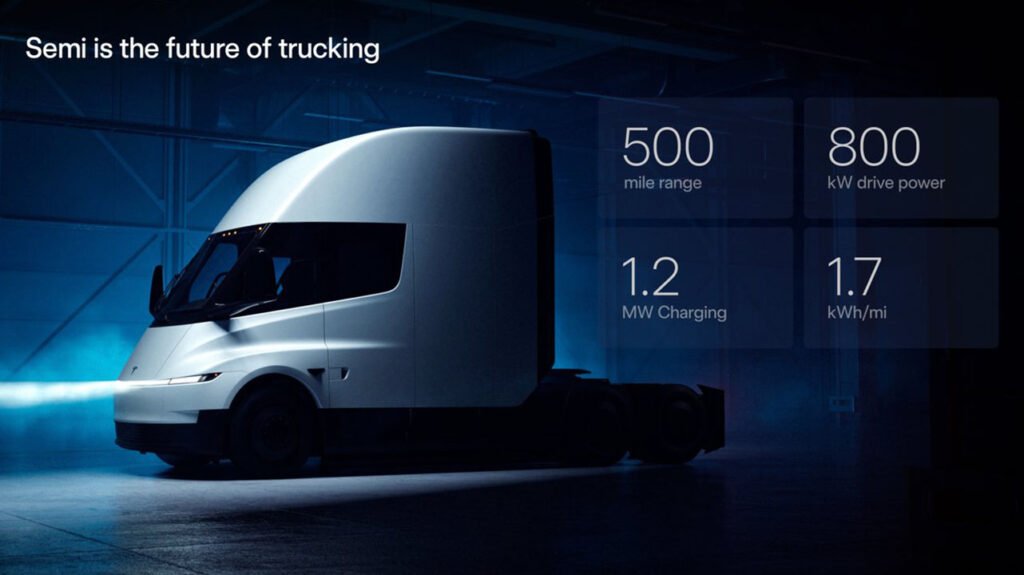
The Semi is a Class 8 battery-electric truck designed for heavy freight and long-distance transportation.
Tesla currently lists two estimated range configurations:
- 325 miles of range;
- 500 miles of range;
- approximately 1.7 kWh per mile energy consumption;
- charging capability of up to 1.2 MW;
- up to 60% range recovery in about 30 minutes under the company’s stated Long Range charging conditions;
- and gross combination weight capability of up to 82,000 pounds.
Tesla notes that the figures are estimates and depend on variables such as payload, temperature, terrain and trailer configuration.
Why this matters
Heavy-duty trucking is one of the hardest transportation segments to electrify.
A passenger EV can often charge overnight.
A freight truck has to operate for long periods, carry heavy loads and minimize downtime.
That means the challenge is not simply building a large battery.
The full system must work:
truck + battery + high-power charging + electricity infrastructure + maintenance + fleet scheduling.
Tesla is attempting to build those pieces into one commercial ecosystem.
Megacharging is central to the strategy
Tesla says the Semi can use Megachargers with power of up to 1.2 MW.
The company says the Long Range version can recover up to 60% of its range in roughly 30 minutes under specified conditions.
For fleet operators, that matters because charging time directly affects vehicle utilization.
If charging can be coordinated with driver breaks, loading and unloading, or scheduled stops, the impact on productivity can be reduced.
But this depends on real-world charging infrastructure.
TechCrunch reported that charging infrastructure remains a major hurdle for long-haul Semi operations.
A 2,500-truck order adds another dimension
The commercial rollout comes alongside a major development in U.S. electric trucking.
ZET SCALE, an alliance operated by Catalyst Mobility and Smart Freight Centre, announced an order covering 2,500 battery-electric Class 8 trucks.
The organizations described it as the largest electric Class 8 truck order in the United States and said it would nearly double the existing U.S. electric Class 8 fleet.
Tesla was selected as the primary supplier, while Kenworth, Volvo and RIDE were named secondary manufacturers.
However, an important distinction remains:
the 2,500-truck order does not mean all 2,500 vehicles are Tesla Semis. The organizers have not published the exact allocation by manufacturer.
Microsoft and PepsiCo are among the alliance’s members

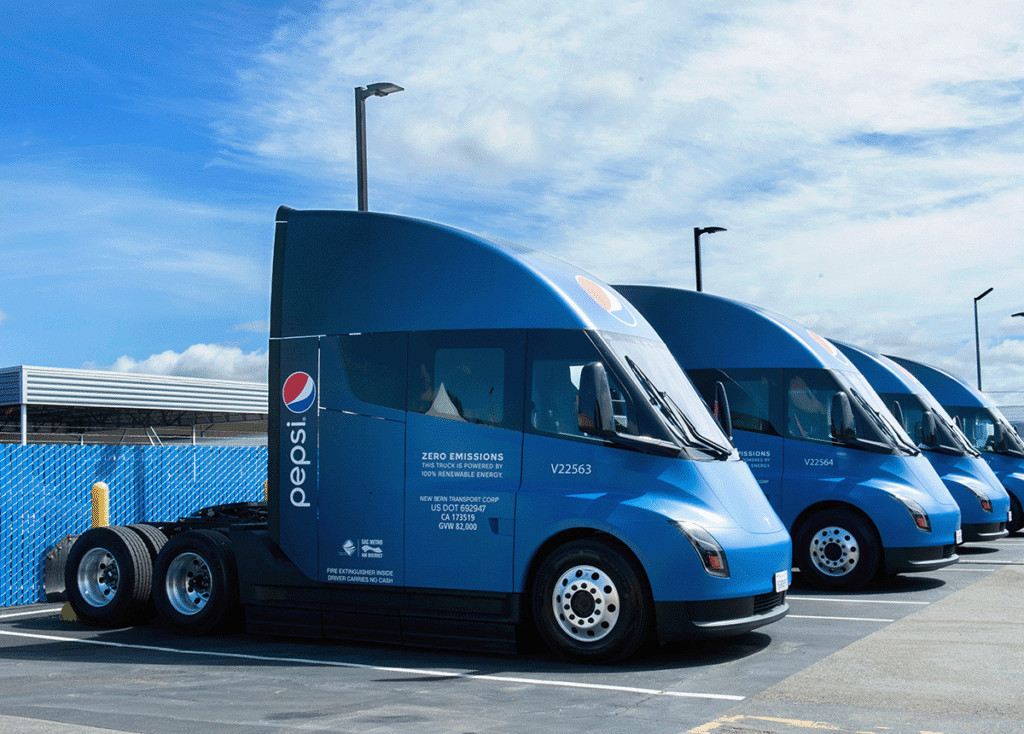
ZET SCALE brings together freight demand from major shippers.
Founding members include Microsoft and PepsiCo.
The strategy is to aggregate demand before negotiating purchases, potentially allowing manufacturers to produce and price electric trucks at greater scale.
That procurement model could be as important as the vehicle technology itself.
What is the business case for electric trucks?
Tesla argues that the Semi can reduce operating costs compared with diesel trucks.
The company points to:
- fewer mechanical components;
- no diesel engine;
- no conventional transmission;
- potentially lower energy costs;
- reduced maintenance;
- and software-based fleet management.
But the real economics are broader than electricity consumption.
Fleet operators have to consider:
vehicle price + battery + electricity + charging infrastructure + maintenance + downtime + battery life.
The real test will therefore be the truck’s total cost of ownership under commercial conditions.
The biggest challenge may not be the battery
A fleet of dozens or hundreds of electric trucks can require enormous amounts of electricity.
A logistics depot charging many vehicles simultaneously at hundreds of kilowatts—or more—can create a substantial grid demand.
That requires:
- new electrical connections;
- transformers;
- energy-management systems;
- high-power chargers;
- dedicated space;
- and charging schedules.
Electrifying heavy transportation is therefore also an energy-infrastructure project.
Tesla is entering a competitive market
Tesla is not entering an empty field.
Manufacturers including Volvo, Mercedes-Benz, Freightliner and others are already developing and deploying electric heavy trucks in North America and Europe.
Reuters reported earlier this month that Tesla is also preparing to expand the Semi into Europe, where competing battery-electric heavy trucks are already available.
Tesla’s strategy therefore depends on combining:
production scale + batteries + software + charging + fleet management.
What about Europe?

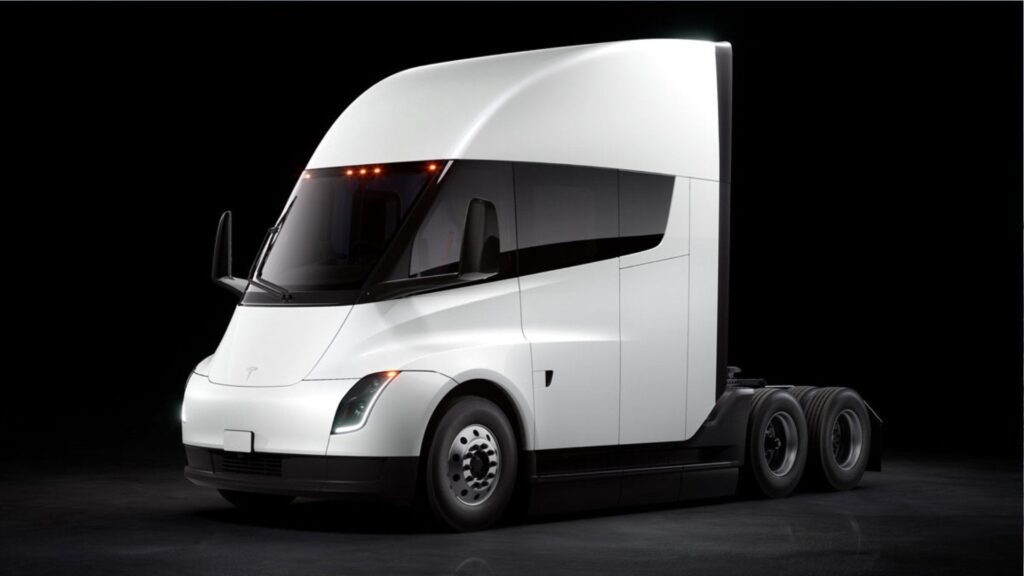
Tesla has announced plans for a European version of the Semi.
Reuters reported that the European model is expected to be adapted to European market requirements and has been described with a range of up to roughly 550 km at a 40-tonne gross combination weight. Tesla has also highlighted rapid charging and route-based energy management.
Europe is an important market because freight operators face increasing pressure to reduce emissions.
But European weight, size and infrastructure requirements mean the European Semi is not simply a direct copy of the U.S. configuration.
What changes for drivers?
The Semi uses a different cabin layout from traditional trucks, including a central driving position designed to improve visibility.
Tesla also highlights electric motors, over-the-air software updates and fleet-management functions.
Real-world operations will matter more than specifications alone.
Drivers and fleet managers will ultimately care about:
- comfort on long routes;
- charging time;
- loaded range;
- performance in extreme temperatures;
- service availability;
- and integration with existing logistics routes.
What does this mean for the trucking industry?
If electric heavy trucks prove economically viable in everyday freight operations, the impact could extend far beyond Tesla.
Electric trucks will not immediately replace diesel fleets.
But wider deployment will produce real-world data on:
- cost per mile;
- maintenance;
- battery durability;
- charging time;
- productivity;
- and emissions.
Those measurements will shape the pace of electrification far more than launch-event claims.
What happens next?
Tesla now needs to move from starting production to sustained volume production.
The company says the Nevada operation is designed for up to 50,000 Semi trucks per year.
But stated capacity is not the same as actual output.
The key indicators to watch are:
- First-year deliveries.
- Production ramp-up.
- Customer pricing.
- Charging-infrastructure costs.
- Loaded real-world range.
- Maintenance frequency.
- Megacharger network expansion.
- Timing and specifications of the European rollout.
Conclusion
Tesla Semi is finally entering commercial service at a time when the freight industry is looking for alternatives to diesel.
The first deliveries, the planned 50,000-unit annual capacity and the large ZET SCALE procurement program show that electric heavy trucking is moving beyond small pilot projects toward larger commercial deployments.
But the central test is no longer whether Tesla can build an electric truck.
The test is whether it can produce the truck at scale, charge it efficiently and make it economically practical for real fleets.
That will determine how significant the Semi becomes in the heavy-duty transportation market.