
Starbucks Is Building a Technology Hub in India: 800 Jobs and a Bigger Shift in How the Coffee Giant Operates
Starbucks is becoming more than a coffee company
When people think of Starbucks, they usually think about coffee shops, baristas and cups.
Behind that global retail network, however, sits an increasingly complex technology infrastructure:
mobile apps, digital payments, online ordering, store-management systems, customer data, logistics and internal software platforms.
Now Starbucks is expanding that technology operation in India.
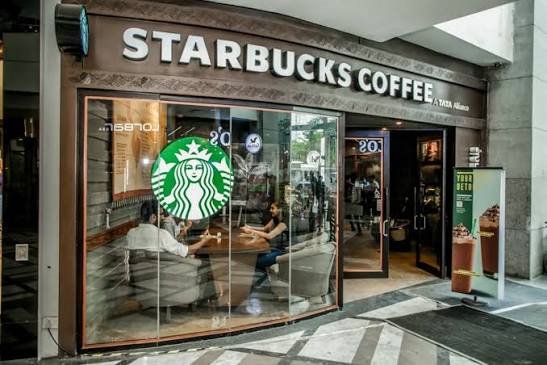
The company has selected Chennai, in the Indian state of Tamil Nadu, for its first Global Capability Centre in India and plans to hire roughly 800 technology professionals.

What is a Global Capability Centre?
A Global Capability Centre, or GCC, is a company-owned center designed to perform specialized functions for a multinational business.
Historically, such centers were often associated with:
- administrative work;
- document processing;
- financial support;
- back-office operations.
That model has changed.
Modern GCCs can include:
- software engineering;
- research and development;
- data analytics;
- cybersecurity;
- product management;
- finance;
- automation;
- cloud computing.
Reuters reported that India’s GCC sector has moved increasingly beyond lower-cost support toward higher-value work such as software development and R&D.
Why Chennai?
Starbucks said the decision was influenced by several factors, including:
technology talent,
employee retention,
infrastructure,
and the city’s ability to support the company’s long-term needs.
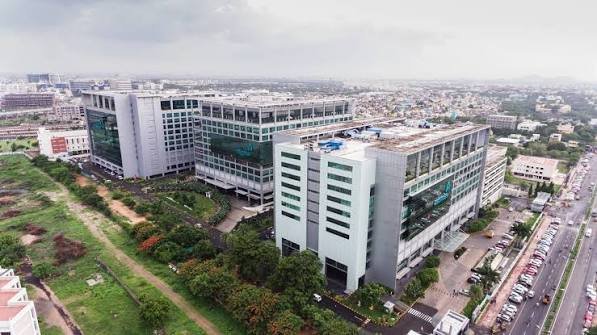
Chennai is already one of India’s major technology and global-services hubs.
Reuters reported that the city accounts for roughly a tenth of India’s GCC base.
Starbucks is therefore not building a technology operation in an undeveloped ecosystem.
It is entering a city where major international companies already maintain technology teams.
How large is India’s GCC ecosystem?
According to figures cited by Reuters from the 2026 Nasscom-Zinnov report, India had more than 2,100 GCCs, employing around 2.36 million people and generating nearly $100 billion in revenue.
That represents a major change in India’s technology economy.
India is no longer simply a place where multinational companies send routine work.
Increasingly, it is becoming a place where companies build products, systems and capabilities used around the world.
Starbucks is bringing more work in-house
There is another important detail in Starbucks’ announcement.
The company says the new hub will allow it over time to bring some work currently performed by third-party service providers in-house.
That is often described as insourcing.
The model is the opposite of outsourcing:
Outsourcing: another company performs the work.
Insourcing: the company builds the capability itself.
For a global company, this can provide greater control over products, processes, data and how technology teams collaborate.
Technology has become part of the product
That is why this story is bigger than “Starbucks creates 800 jobs.”
In a modern coffee business, technology touches almost every stage:
Customer → app → order → payment → store → inventory → supply chain → analytics.
A mobile order is not simply an app feature.
It has to communicate with store systems.
The payment has to be verified.
The order has to reach the correct location.
Inventory has to be updated.
And ultimately, the customer has to receive the product at the right time.
Technology has therefore become part of the operating chain itself.
This is happening beyond Starbucks
Starbucks is not the only major U.S. company expanding technology operations in Chennai.
Reuters reported that Walgreens had announced a GCC agreement in the same city only days earlier.
That can create a broader ecosystem effect.
As more multinational companies establish these centers:
- demand for engineers rises;
- specialized teams develop;
- local suppliers grow;
- competition for talent increases;
- local experience with global technology operations expands.

What could 800 technology professionals actually do?
Starbucks has not yet published a final list of every role.
But the company describes the center as part of its global technology organization and says it will work with teams in the United States and elsewhere.
Potential areas could include:
- software engineering;
- data;
- financial technology;
- product;
- research and development;
- systems supporting global operations.
These should not be presented as confirmed vacancies.
Starbucks says recruiting is expected to begin in the first quarter, with more details to follow as plans are finalized.
The hub will not operate as a technology island
Starbucks says Chennai will not be a disconnected technology operation.
It will become part of the company’s global technology network, which includes teams in Seattle, Nashville, London and Hong Kong.
That matters because a modern GCC is not simply “the India office.”
It is a node in a global network.
An engineer in Chennai could work on systems ultimately used by customers in New York, London or Tokyo.
Why this matters for retail technology
Retail is increasingly becoming a technology industry.
Companies no longer compete only through:
- locations;
- prices;
- products;
- advertising.
They also compete through:
- mobile experiences;
- payment speed;
- personalization;
- logistics;
- inventory management;
- customer loyalty;
- data.
Starbucks is therefore one example of a broader trend:
traditional consumer companies are building technology infrastructure as part of their core business.
What we still do not know
There are several details Starbucks has not yet disclosed.
Financial investment: the amount has not been disclosed.
Full role structure: the company has not yet published the complete job mix.
Operational opening date: the project remains in its early planning stages.
Final headcount: 800 is the planned initial figure, not necessarily the eventual size of the center.
What happens next?
Starbucks says the coming months will focus on:
- recruitment planning;
- office readiness;
- team organization;
- coordination with existing technology centers.
Recruitment is expected to begin in Q1, according to the company’s announcement.
If the operation expands over time, Chennai could become a more significant part of Starbucks’ global technology infrastructure. Starbucks is building a technology hub in a city that has already become one of India’s major centers for global technology and business services.
Around 800 technology professionals are part of the initial plan.
But the significance of the story is not only the number of jobs.
It is the changing structure of major consumer companies.
Coffee may be the product customers see.
Behind it increasingly sits software, cloud infrastructure, data, digital payments and global technology operations.
Editorial verification
Fact: Starbucks selected Chennai for its first Global Capability Centre in India.
Fact: The company plans around 800 technology professionals and expects recruitment to begin in Q1.
Fact: Starbucks has not disclosed the financial investment amount.
Analysis: The relationship between technology, retail and the global GCC model is editorial context explaining the significance of the development.