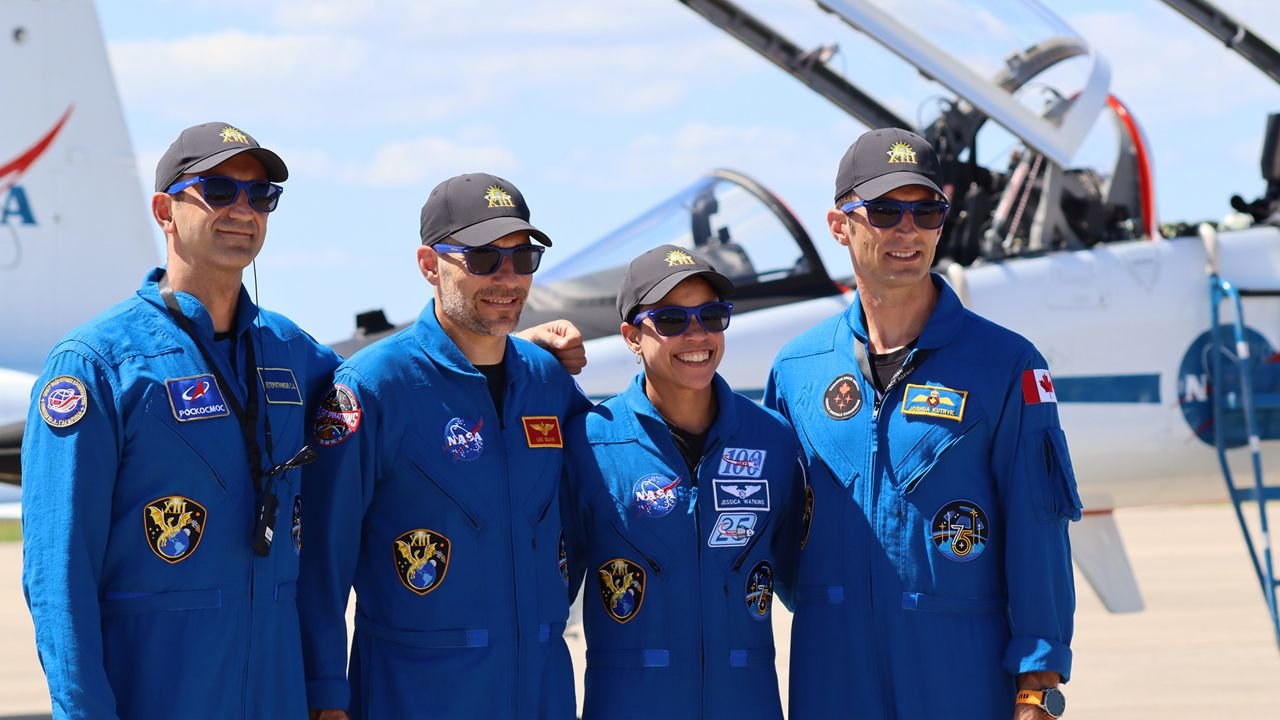
The four-member international crew has entered the final stage before its journey to the International Space Station
CAPE CANAVERAL, Fla. — NASA’s four-member Crew-13 team arrived at Kennedy Space Center on September 26, entering the final preparation phase for a journey to the International Space Station (ISS).
NASA says the mission is currently targeted to launch no earlier than October 1, 2026, at 11:10 a.m. EDT, aboard a SpaceX Falcon 9 rocket from Space Launch Complex 40 at Cape Canaveral Space Force Station.
The crew consists of NASA astronauts Jessica Watkins and Luke Delaney, Canadian Space Agency astronaut Joshua Kutryk, and Roscosmos cosmonaut Sergey Teteryatnikov. Watkins will command the mission, while Delaney will serve as pilot.
A multinational mission to the ISS
After reaching orbit, the crew is expected to become part of Expedition 75, joining the astronauts and cosmonauts already aboard the station.
NASA expects Crew-13 to reach the ISS less than nine hours after launch, with docking planned for around 8 p.m. EDT on October 1.
The schedule remains subject to technical readiness and weather conditions.

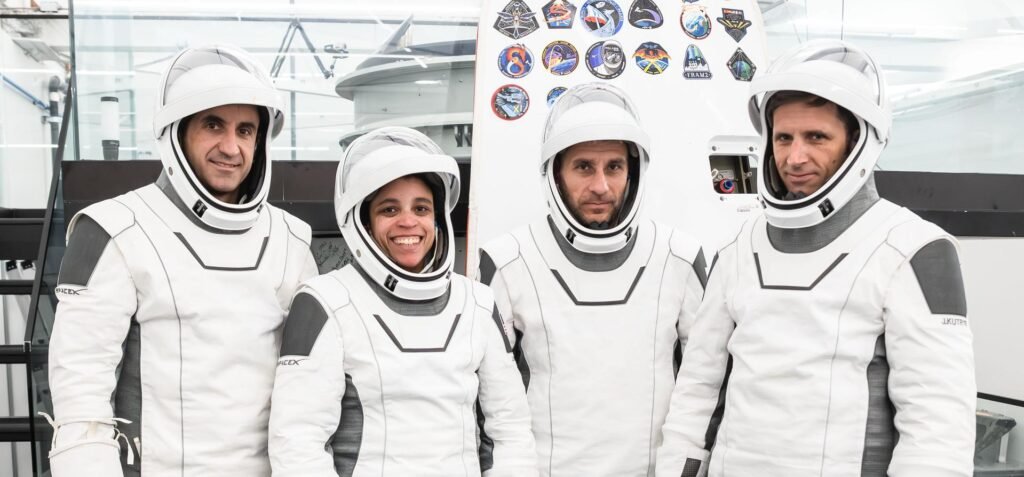
Ekuipazhi i Crew-13 në përgatitjet për misionin e NASA-s drejt ISSFinal preparations
The arrival at Kennedy Space Center marks the beginning of the final launch preparations.
NASA says the crew has already completed quarantine procedures at Johnson Space Center in Houston and is now moving through final suit checks, equipment reviews and mission briefings in Florida.
NASA, SpaceX and international partners also completed the Flight Readiness Review and agreed to continue preparations toward the planned launch date.
Falcon 9 and Dragon
Crew-13 will fly on SpaceX’s Falcon 9 rocket and Dragon spacecraft.
The system forms a central part of NASA’s commercial crew program, providing a reusable launch-and-return capability for astronauts traveling to the ISS.
Regular crewed missions also allow NASA and its international partners to maintain continuous human operations in low Earth orbit while testing systems and procedures for future missions.
What will Crew-13 do in orbit?

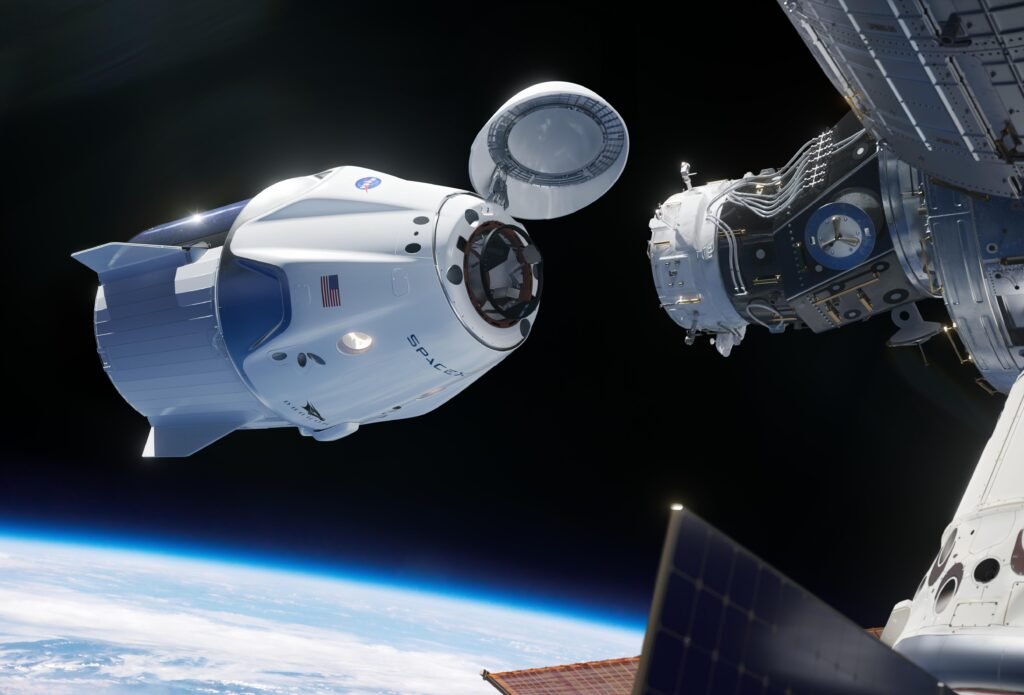
Ekuipazhi i NASA SpaceX Crew-13 gjatë përgatitjeve për misionin drejt Stacionit Ndërkombëtar të Hapësirës.Once aboard the station, the crew will participate in scientific research, station maintenance, operational activities and preparations for future crew rotations.
The ISS provides a microgravity laboratory where researchers can conduct experiments that are difficult or impossible to reproduce under Earth’s normal gravitational conditions.
Why the mission matters
Crew-13 is part of a broader shift toward more frequent and routine human access to low Earth orbit.
For the space industry, repeated crewed missions provide operational experience with reusable launch systems, commercial spacecraft and international coordination.
That experience is also relevant to longer-term ambitions involving more complex human missions beyond low Earth orbit.
What happens next?
The immediate milestone is the planned October 1 launch.
NASA currently targets liftoff for no earlier than 11:10 a.m. EDT from Florida. If the schedule holds, Crew-13 will travel to the ISS and dock later that day.
The date is not a guarantee. As with all human spaceflight missions, technical issues, weather or safety concerns can lead to delays.
NASA will continue publishing updates throughout launch week.
Crew-13 has entered its final preparation phase.
The four astronauts are now at Kennedy Space Center, while NASA and SpaceX prepare for the planned October 1 launch toward the International Space Station.
If the schedule remains unchanged, the mission will deliver another international crew to orbit and begin a new phase of Expedition 75 operations.
For now, the key point is simple: Crew-13 is readying for launch, but the actual liftoff remains dependent on technical readiness and launch-day conditions.