Roblox Is Changing How Games Are Distributed: From a Platform to an Ecosystem That Can Go Everywhere
Roblox does not want its games to stay inside Roblox
For years, Roblox has operated as a relatively self-contained ecosystem: users opened Roblox and then discovered games created by its community.
The company is now trying to change that model.
At RDC 2026, Roblox announced plans that will allow creators to make their games available as standalone applications across mobile, PC and consoles, while Roblox continues to provide technology and services underneath those experiences.
In practice, this could change the relationship between the game, the platform and the creator.

What does “standalone” mean?
A traditional Roblox game is closely tied to the Roblox ecosystem.
The new model is designed to allow creators to turn their games into standalone applications.
According to the company, those applications can target:
- smartphones;
- PCs;
- consoles.
Roblox would continue to provide the infrastructure and services behind them.
That creates an interesting model:
the game can look like the creator’s own product while the underlying infrastructure can still be powered by Roblox.
The browser is becoming part of the strategy
Roblox also plans to let users launch games directly in Chrome from an Experience page by the end of 2026, without installing the Roblox app.
The company says additional browsers will follow.
The idea is simple:
click → game.
Instead of installing an app first, a user could follow a link from the web, social media or a friend and start playing.
Roblox is also bringing gaming offline
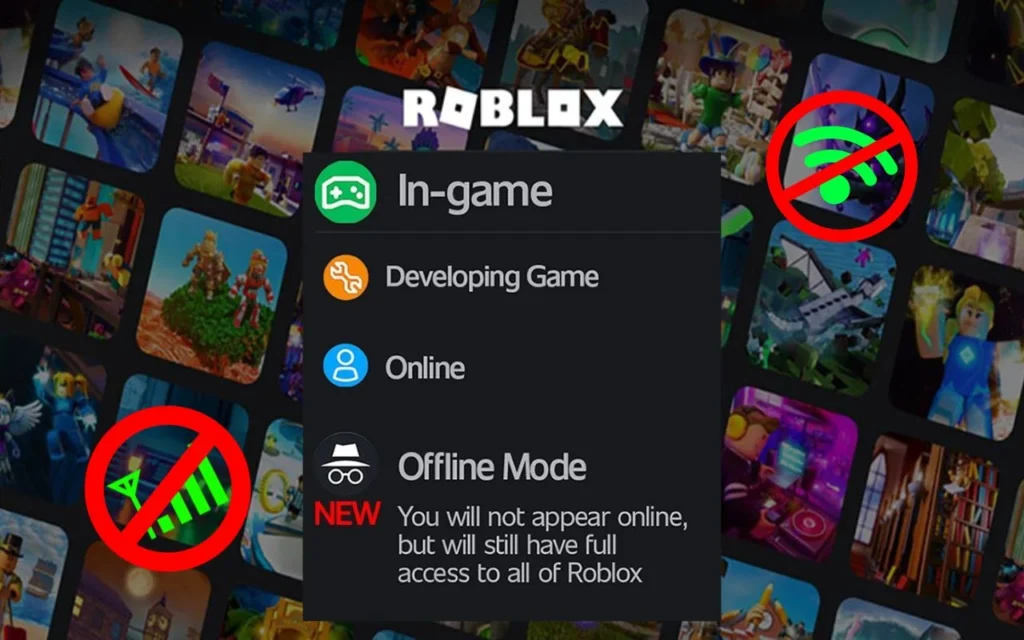
Another major change is offline play.
Roblox says creators will be able to build experiences that combine online multiplayer with offline gameplay.
A game could include a solo mode that works without an internet connection while its multiplayer experience remains online. Full offline availability is planned for mid-2027, with early access expected sooner.
That could make Roblox more practical in situations where connectivity is limited:
- airplanes;
- subways;
- travel;
- areas with unreliable internet;
- devices that cannot remain connected.

The bigger change is happening for creators
Roblox is not only changing how people play.
It is also changing how people can build games.
The company says players spent about 29 billion hours on Roblox in the latest quarter, across more than 180 countries.
That makes Roblox a huge potential market for creators.
The easier it becomes to build and distribute a game, the more people can experiment with game development.
From an idea to a game with a prompt
Roblox has also expanded AI-assisted creation tools.
One of them, Build, lets creators describe an idea and generate a playable game.
Roblox says users have published approximately 9,000 games through Build and that 71% of creators who used it had never previously used Roblox Studio.
That represents an important shift:
programming ability is no longer the only way to begin building a game.
But that does not mean AI replaces game developers.
A strong game still requires design, mechanics, testing, balancing, art, audio, performance and a reason for players to keep coming back.
Scene Generator goes another step
Roblox is also developing Scene Generator, which is designed to create functional game layouts from text prompts and reference images.
The company is also developing NPCs that can help test games.
This could create a faster development loop:
idea → prototype → testing → correction → release.
The faster that loop becomes, the more experiments creators can run.
Roblox is expanding beyond 3D
Roblox has historically been strongly associated with 3D multiplayer worlds.
The company is now expanding its engine to better support:
- 2D games;
- puzzle games;
- orthographic cameras;
- sprite sheets;
- asynchronous multiplayer;
- turn-based games.
Some of these features are planned to reach developers during late 2026.
That broadens the types of games that can be built on Roblox.
What changes for players?
For an ordinary player, the change may appear gradual.
But if the plan works, the same game could become accessible through several routes:
Roblox app → browser → standalone app → console.
That makes Roblox less like a single gaming application and more like infrastructure for distributing games.
What changes for the gaming industry?
This is where things become particularly interesting.
Traditionally, a game company has to think about:
- graphics technology;
- servers;
- matchmaking;
- payments;
- distribution;
- updates;
- player identity;
- community management.
A platform such as Roblox can handle much of that infrastructure.
If games can increasingly exist outside the Roblox application, the company becomes more like a technology layer behind games, rather than simply the destination where players go.
But major questions remain
The new model also raises several questions.
Platform control
How much control will Roblox retain over games distributed as standalone applications?
Revenue
How will revenue be divided between creators, Roblox and the platform hosting the game?
Moderation
More distribution channels can also mean more complexity around moderation and safety.
Quality
If AI makes game creation much easier, the number of low-quality games could also increase.
So more games does not automatically mean more good games.
What happens next?
Roblox is building a model in which:
creators build → Roblox provides infrastructure → games reach more devices → players access them more easily.
Standalone apps, browser gaming, offline play and AI-assisted creation are parts of the same broader strategy.
If these features scale successfully, the boundary between a gaming platform and a game-distribution infrastructure layer becomes increasingly blurred.
Roblox is not simply trying to add more games.
It is trying to change where games are created, published and played.
Standalone applications, browser access, offline gaming and new creator tools point in the same direction: Roblox wants its infrastructure to become less visible to players while the games built on top of it become easier to access.
If that model expands, a Roblox game may no longer feel like “a game inside Roblox.”
It may simply feel like a game.
Editorial verification
Fact: Roblox announced plans for standalone apps across mobile, PC and consoles, browser access without installation and offline gameplay support.
Fact: Roblox reports approximately 29 billion hours of play in the latest quarter and around 9,000 games published through its Build tool.
Analysis: The potential impact on gaming economics, platform control and content quality is editorial analysis rather than a confirmed outcome.