By TheTechSpot Editorial Team
August 20, 2026
Tesla is taking another major step toward driverless transportation
The idea of getting into a car with no driver behind the wheel is moving closer to becoming an everyday reality.
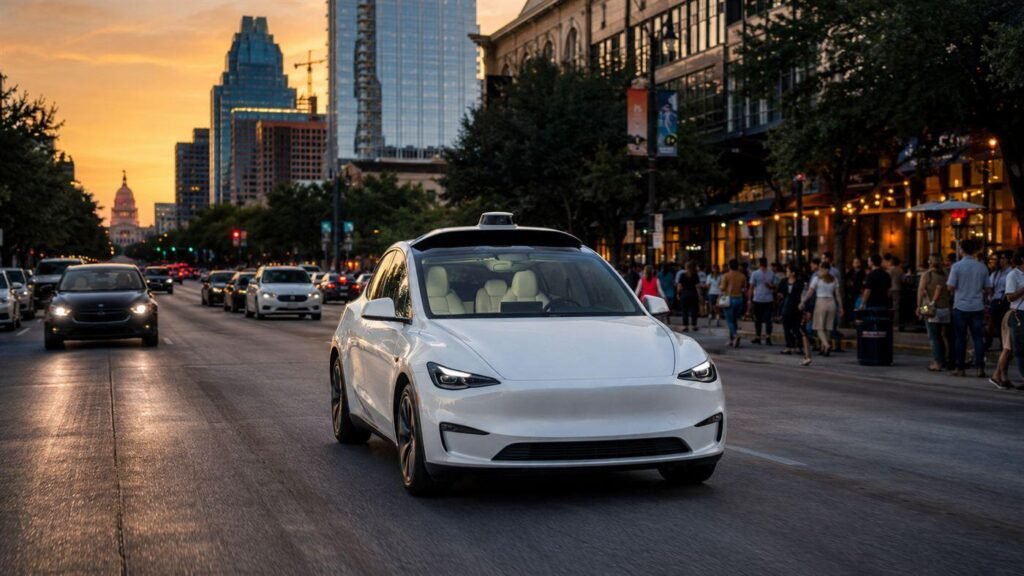
Tesla’s Robotaxi operation in Austin, Texas, appears to have entered a new stage, with tracking data indicating that recent rides have been completed without a human safety monitor inside the vehicle.
According to The Verge, all 170 tracked Tesla Robotaxi rides in Austin over a recent two-week period were operating unsupervised. The development comes as Tesla prepares for the expected launch of its dedicated Cybercab, a vehicle designed specifically for autonomous transportation.
For Tesla, this is much more than another software update.
It is a test of whether the company’s long-promised autonomous-driving strategy can finally scale.
The Cybercab could change Tesla’s business
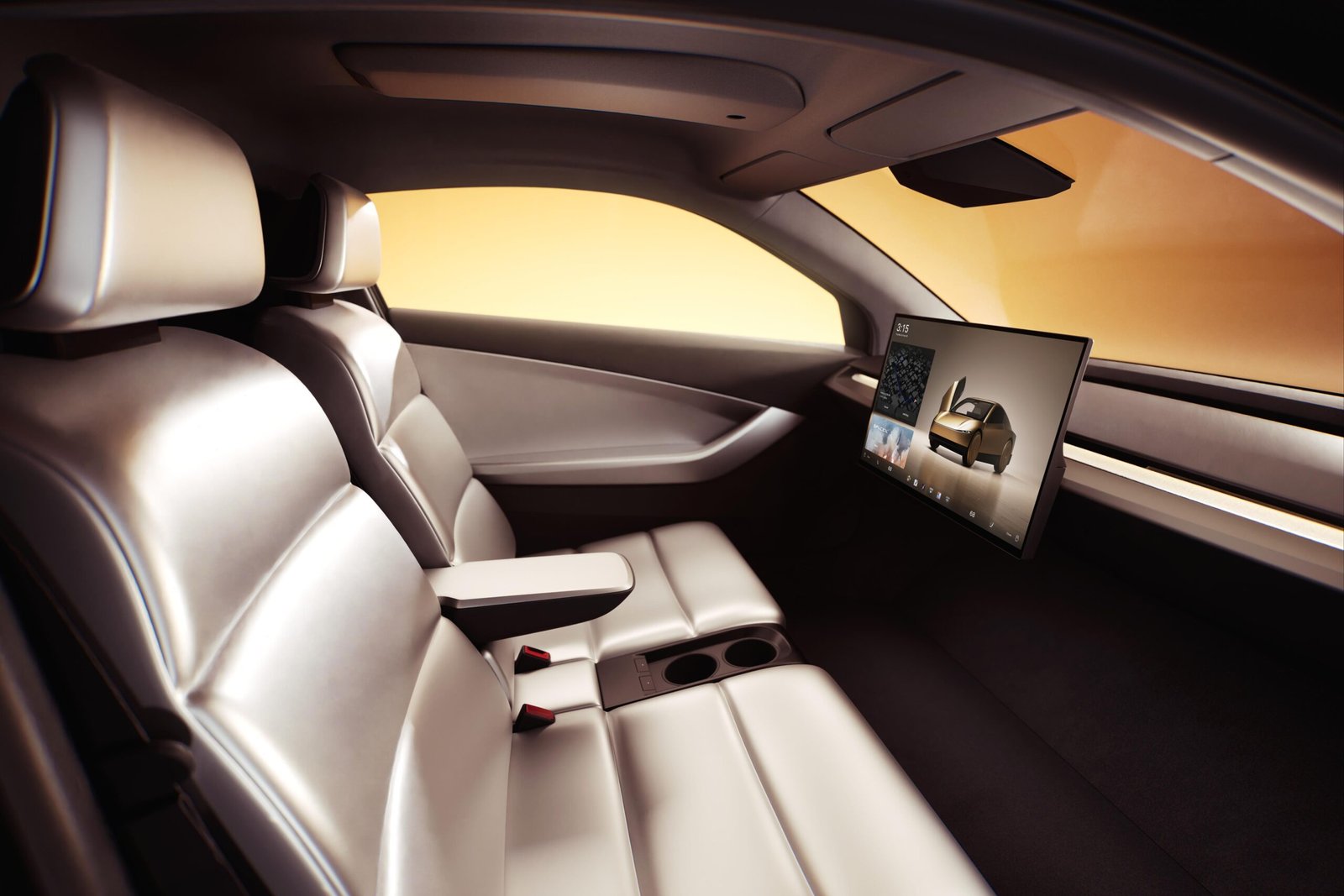
Tesla’s upcoming Cybercab is different from the Model Y vehicles that have been used in its Robotaxi service.
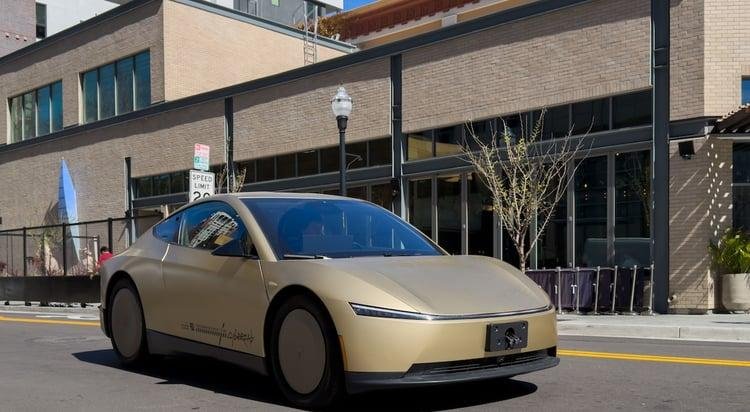
The Cybercab is designed specifically for autonomous transportation.
It has no traditional steering wheel and no pedals, meaning the vehicle is built around the assumption that the computer—not a human driver—will control the journey.
Reuters reported earlier this week that Tesla was preparing to begin Cybercab test rides for employees in Austin before a broader launch.
That makes Austin one of the most important cities in Tesla’s autonomy strategy.
If the system works reliably there, Tesla could use the city as a foundation for a much larger network.
Tesla is competing against Waymo

Tesla is not entering an empty market.
Alphabet’s Waymo has already built a significant driverless ride-hailing operation.
The Verge reported that Waymo operates more than 300 driverless vehicles in Austin and roughly 4,000 vehicles across 10 other cities, giving it a substantial operational lead.
That creates a fascinating competition.
Tesla has enormous manufacturing capacity and a huge global vehicle fleet.
Waymo has years of experience operating fully autonomous vehicles commercially.
The question is which model can scale faster and more economically.
Tesla’s approach is different
One of the biggest differences between Tesla and several competitors is the technology used to understand the road.
Tesla has largely pursued a camera-based approach, using cameras and artificial intelligence to interpret the environment.
Waymo, by contrast, uses a combination of sensors that includes lidar.
Tesla’s philosophy is that advanced computer vision and neural networks can eventually achieve autonomous driving without relying on lidar.
That strategy has been one of the most debated issues in the autonomous-driving industry.
Why Austin matters so much

Austin has become an important testing ground for autonomous vehicles.
Tesla already launched Robotaxi operations there and has gradually expanded the service.
Reuters previously reported that Tesla’s robotaxi rollout faced significant availability and wait-time issues during its earlier stages. In an April tracking exercise, Reuters found waits longer than 15 minutes about half the time, while in more than a quarter of checks no Robotaxi was available at all.
The latest development suggests Tesla is now concentrating not only on increasing the number of vehicles, but also on increasing the level of autonomy.
The big difference: nobody is watching from the passenger seat
Earlier Robotaxi deployments involved a Tesla employee acting as a safety monitor.
That arrangement provided an additional layer of human oversight.
But removing that person changes the equation.
A fully autonomous vehicle must make every driving decision itself.
It has to:
- recognize pedestrians;
- understand traffic signals;
- predict the behavior of other drivers;
- react to unexpected obstacles;
- navigate complex intersections;
- handle construction zones;
- and safely complete the trip.
A human passenger can no longer intervene simply because something looks unusual.
That creates a huge safety challenge
Autonomous driving is not difficult because cars cannot drive on ordinary roads.
The hardest situations are the unusual ones.
A construction worker standing in an unexpected location.
A temporary road closure.
A cyclist moving unpredictably.
A police officer directing traffic.
An object falling onto the road.
A vehicle behaving irrationally.
Humans are remarkably good at using context to interpret these situations.
An AI system has to learn how to do the same.
That is one reason autonomous driving remains one of the most difficult challenges in consumer technology.
Tesla has already faced criticism
Tesla’s autonomous-driving ambitions have been accompanied by scrutiny from regulators, safety experts and competitors.
The company has made aggressive claims about the future of autonomous transportation, while critics have argued that real-world performance and regulatory approval remain significant obstacles.
Reuters reported in July that Tesla had adopted a more cautious tone around its Robotaxi expansion compared with the company’s earlier predictions of extremely rapid growth.
That makes the Cybercab launch particularly important.
Tesla now needs to demonstrate not just that the technology works—but that it can work reliably at scale.
Regulators will have the final say

Technology alone is not enough.
Autonomous vehicles must also satisfy regulators.
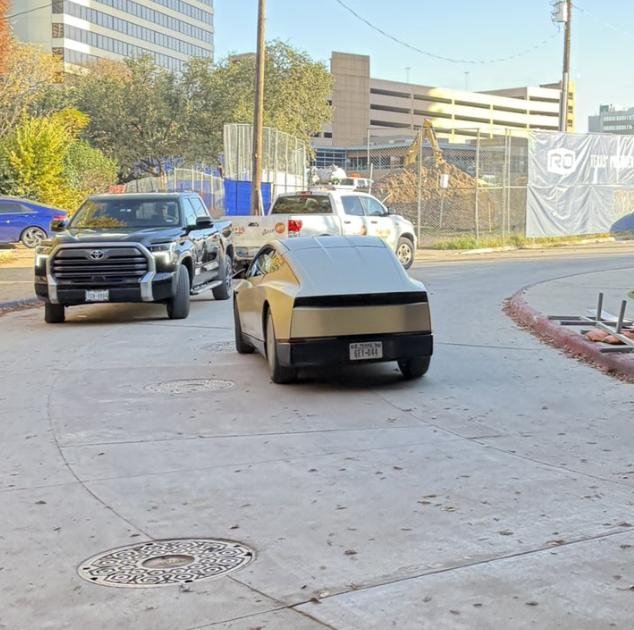
Tesla’s Cybercab is especially interesting because its design eliminates conventional driving controls.
That creates additional regulatory questions because existing vehicle safety rules were largely developed around cars operated by humans.
Tesla therefore faces a complicated challenge:
Build the technology.
Prove its safety.
Obtain regulatory approval.
Then scale the service.
Each step could slow down the rollout.
What happens to Uber and traditional taxis?
If autonomous vehicles eventually become reliable and affordable, the impact could extend far beyond Tesla.
Traditional ride-hailing companies such as Uber and Lyft could face major changes.
A robotaxi does not need to be paid a driver’s wage.
That could potentially reduce the cost of each ride.
It could also allow vehicles to operate for longer periods during the day.
For consumers, that could mean cheaper transportation.
For drivers, however, the long-term implications could be much more complicated.
Robotaxis could change cities
Imagine a city where autonomous taxis operate continuously.
A person could summon a vehicle from a smartphone.
The car arrives without a driver.
The passenger enters.
The vehicle takes them to their destination.
Then it immediately goes to pick up another passenger.
Such a system could transform transportation.
It could reduce the need for personal car ownership.
It could change parking demand.
It could alter public transportation.
And it could create completely new business models.
Tesla’s biggest advantage may be scale

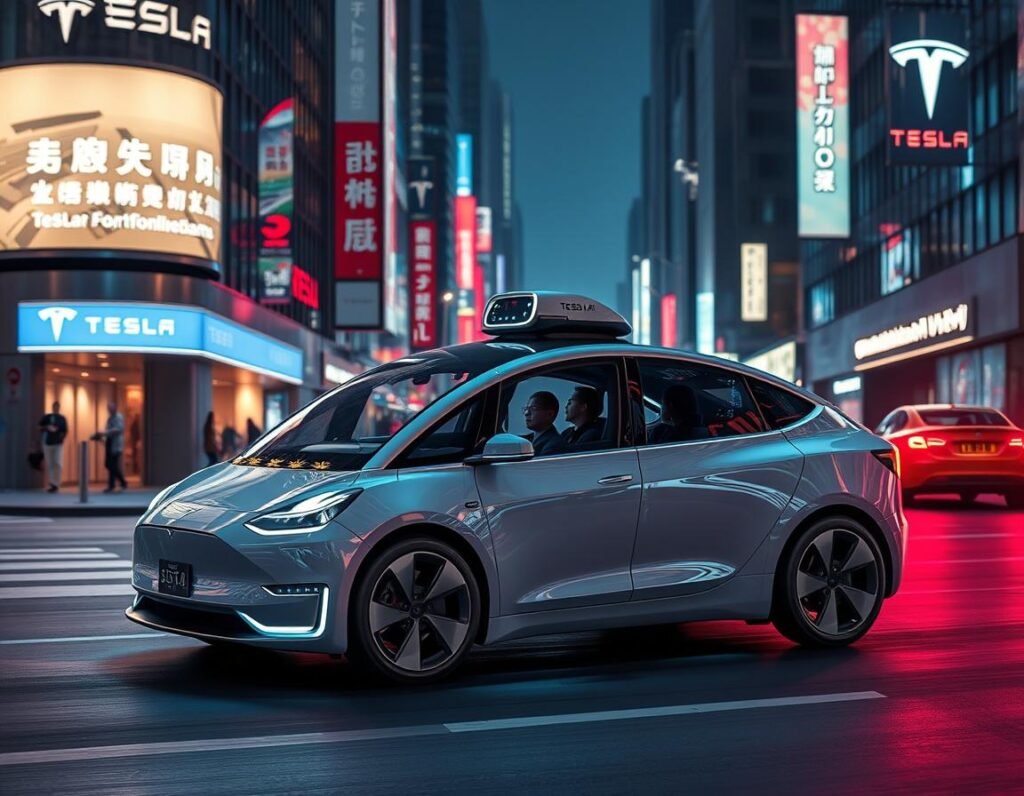
Tesla already has a massive installed base of vehicles and a large software ecosystem.
If the company can demonstrate that its autonomous technology works reliably, it could potentially expand faster than companies that operate smaller dedicated fleets.
The upcoming Cybercab is designed specifically for this future.
Instead of adapting a conventional vehicle, Tesla is attempting to create a car whose entire purpose is autonomous transportation.
That could make it cheaper and more efficient to operate if the technology succeeds.
But Waymo has an important advantage
Waymo has something Tesla desperately needs:
operational experience.
Waymo has already spent years operating autonomous vehicles with real passengers.
That means the company has accumulated enormous amounts of data about real-world situations.
Tesla’s advantage is scale.
Waymo’s advantage is experience.
The competition between the two could define the next generation of autonomous transportation.
The road ahead
Tesla’s Robotaxi expansion in Austin is an important milestone, but it is not the final test.
The real challenge will be scaling the system to thousands—or eventually millions—of vehicles.
That requires solving several problems simultaneously:
Safety.
Regulation.
Reliability.
Cost.
Vehicle production.
Charging infrastructure.
Customer trust.
If Tesla can solve those problems, Robotaxi could become one of the company’s most important businesses.
THE TECHSPOT ANALYSIS
The autonomous-car race has reached a fascinating point.
For years, robotaxis were presented as something that would happen someday.
Now they are operating commercially in multiple American cities.
Tesla’s latest move in Austin suggests that the company wants to accelerate the transition from supervised testing to genuinely driverless transportation.
But Tesla is entering a competitive market.
Waymo already has a substantial operational fleet, while regulators remain cautious about autonomous vehicles.
The arrival of the Cybercab could therefore become a defining moment for Tesla.
If it works, Tesla could transform transportation.
If it doesn’t, the company’s ambitious autonomy strategy could face another major setback.
Either way, one thing is becoming clear:
The era of the driverless taxi is no longer science fiction.
It is becoming a real technology business—and Austin may be one of the places where the future of transportation is being decided.