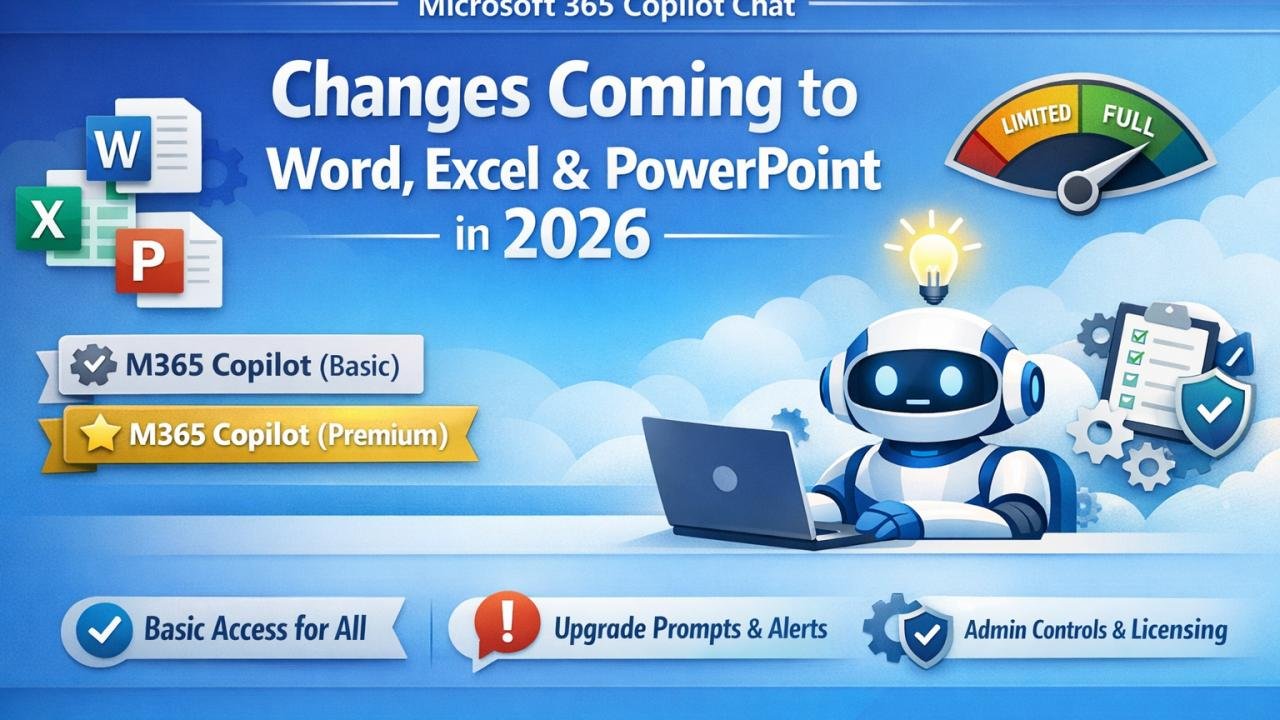
Microsoft is expanding Copilot with Grok models from xAI, making them available inside Word, Excel and PowerPoint through its Frontier early-access program. The rollout is limited, requires administrator approval and currently excludes Frontier customers in the EU, EFTA and UK. The bigger shift is strategic: Microsoft is increasingly positioning Copilot as a gateway to multiple AI providers, rather than a product tied to one model family.
Grok is moving from chatbot territory into workplace software

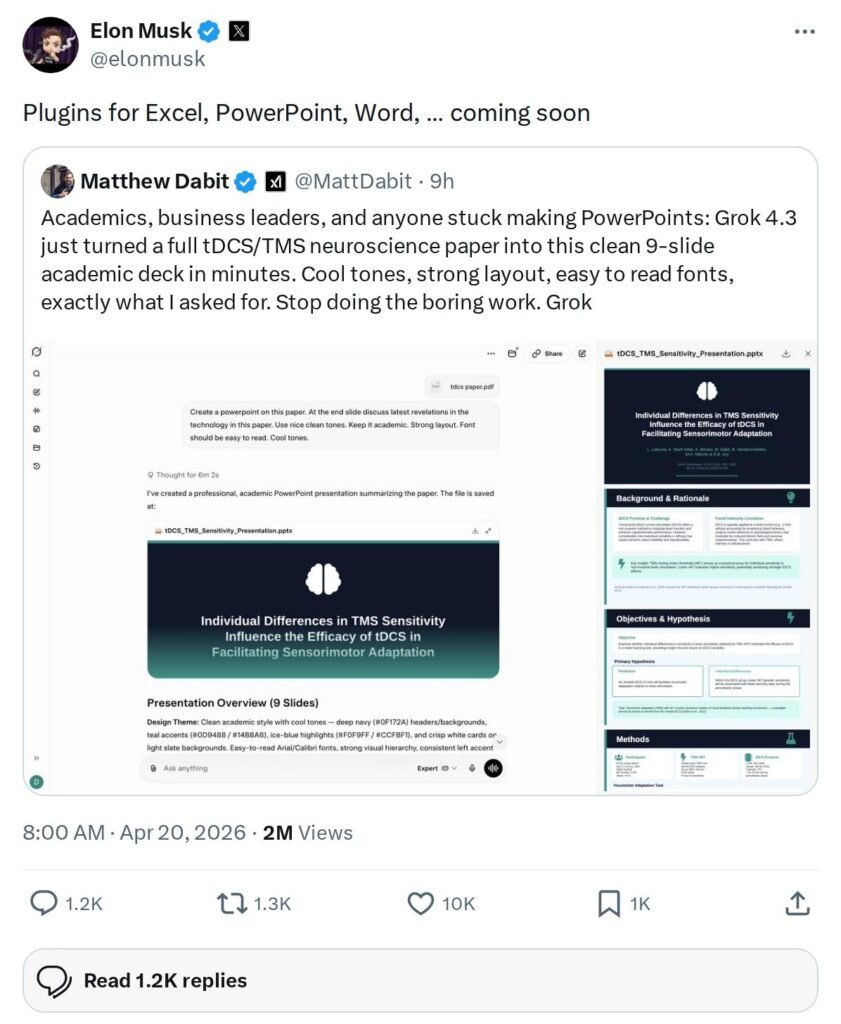
Elon Musk’s AI company is getting a new distribution channel that could matter far more than another chatbot launch.
Microsoft is bringing xAI’s Grok models into Microsoft 365 Copilot, initially across Word, Excel and PowerPoint for customers participating in the Frontier program. The rollout covers both web and desktop experiences, although access remains tightly controlled during the preview.
For xAI, that puts Grok directly inside applications people already use for documents, financial analysis and presentations.
For Microsoft, it is another step away from the idea that Copilot must be powered by a single AI provider.
The model behind Copilot is becoming a choice
Microsoft has been steadily broadening the range of AI models available across its ecosystem.
The company has already integrated Anthropic technology into parts of its Copilot platform. Adding Grok pushes the strategy further: Copilot can increasingly become the interface, while different companies supply the intelligence underneath it.
That could eventually change how companies buy AI.
Instead of choosing one model for every department, businesses could compare models for different jobs while keeping employees inside the same Microsoft environment.
The spreadsheet analyst, marketing team and legal department would not necessarily have to use the same model.
Word, Excel and PowerPoint are the perfect test

The choice of applications is significant.
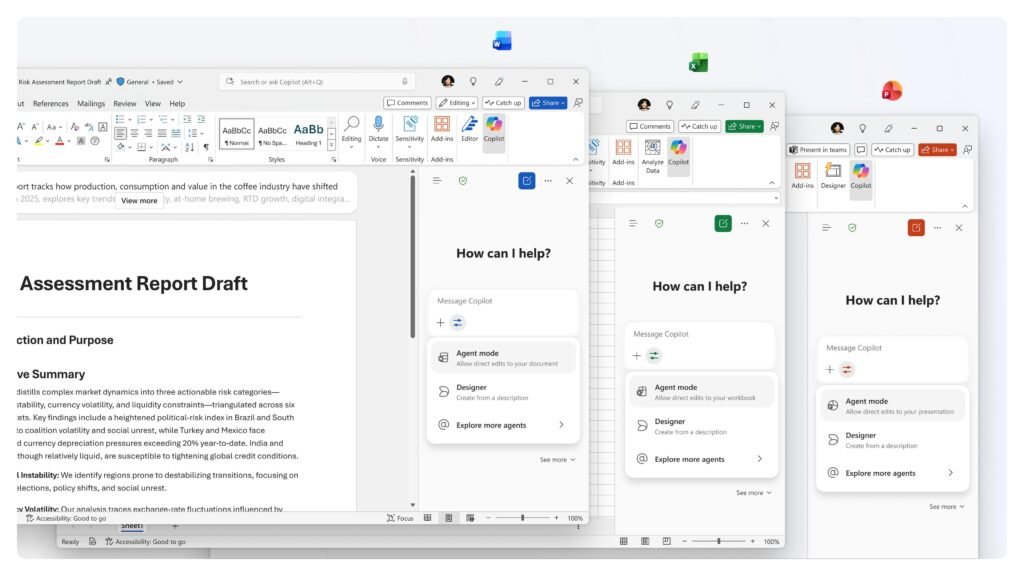
Word gives Grok access to writing and document workflows. Excel brings a much more demanding environment involving calculations, structured data and analysis. PowerPoint adds presentations, summaries and visual storytelling.
Microsoft has already been turning Copilot into a more active participant inside these applications. Its agentic capabilities can make changes directly within documents, workbooks and presentations instead of limiting the assistant to a separate chat window.
Grok is therefore arriving at a moment when Microsoft is redesigning what an AI assistant can actually do inside Office.
Businesses still have the final say
This is not a consumer-wide rollout.
Microsoft’s initial Grok integration is aimed at Frontier customers, and the feature has to be enabled by an organisation’s administrator. The dedicated setting is disabled by default.
That gives companies a degree of control over whether employees can use a third-party model inside their productivity environment.
It also means the launch is better understood as a controlled experiment than as a full Copilot transformation.
Microsoft wants to see how customers use Grok before deciding how broadly it should go.
Europe is missing from the first phase
There is another important restriction.
During the preview, Microsoft Frontier customers in the European Union, EFTA and the United Kingdom are excluded from the Grok rollout.
That makes the European market an important part of the story even though European users cannot initially access the feature.
AI deployments inside workplace software increasingly have to account for regional rules, data handling and compliance requirements. Microsoft’s decision shows that technical availability and commercial availability are not always the same thing.
The data question gets more complicated
Adding an external model provider to workplace software inevitably raises questions about data processing.
Microsoft has added xAI to its Online Services Subprocessor framework, with administrative controls around access to Grok in supported Copilot experiences.
For a consumer asking Grok to rewrite a paragraph, that may sound like a minor technical detail.
For a company handling contracts, financial records, customer information or internal strategy documents, it can be decisive.
The more models Copilot supports, the more important it becomes for IT departments to understand which model is processing which information.
This could change the AI business model
The first phase of generative AI was dominated by model makers.
OpenAI, Anthropic, xAI and Google competed to produce systems that were smarter, faster and cheaper.
The next phase may be about something else: distribution.
Microsoft owns the applications where millions of people already work. If it becomes the place where those users select between competing AI models, the value of Copilot could rise even if Microsoft does not build every model itself.
That is a very different position from simply selling another chatbot.
OpenAI still matters — but it no longer has the whole stage
None of this means Microsoft is abandoning OpenAI.
OpenAI remains deeply embedded in Microsoft’s AI ecosystem.
But Microsoft’s strategy is becoming more resilient to changes in the model market. If another provider produces a better model for a particular task, Microsoft can potentially make it available through the same interface rather than rebuilding its entire product around that provider.
That gives Microsoft an unusual kind of leverage.
The model can change. The workplace stays the same.
Copilot is becoming the operating layer for AI at work

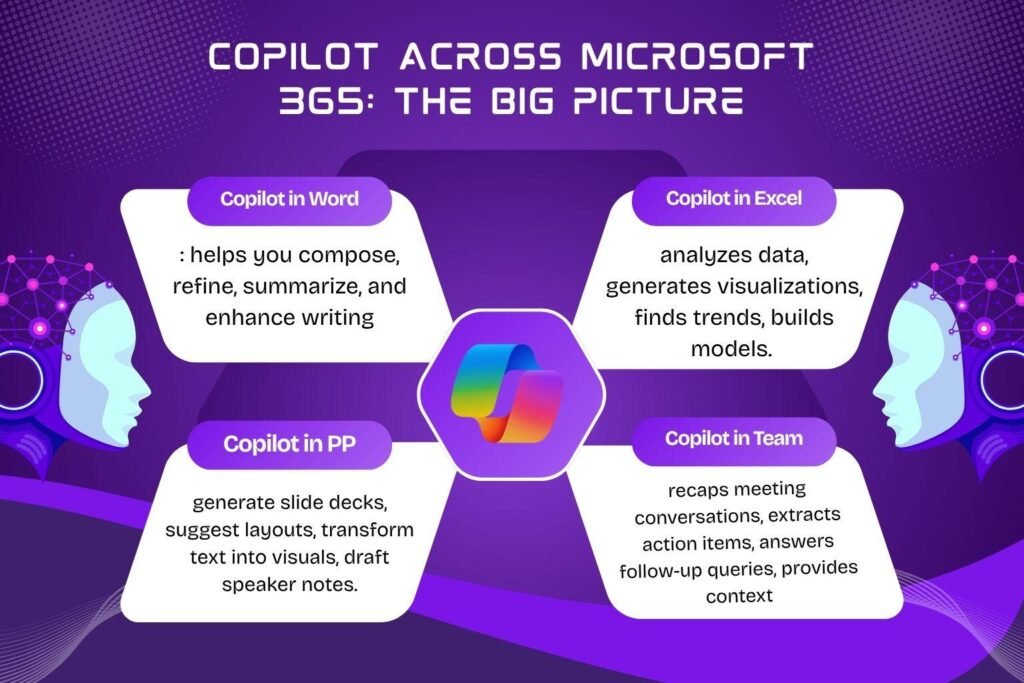
Microsoft’s broader product direction points in the same direction.
Its Word, Excel and PowerPoint agents can already create files from natural-language instructions, work with data and modify documents while respecting enterprise access policies.
Microsoft has also introduced more autonomous Copilot experiences capable of working across documents, files, email and other tasks, with approval required for sensitive actions.
Grok therefore isn’t arriving as an isolated feature.
It is becoming part of a much larger experiment in which AI models become interchangeable components inside software that can act on the user’s behalf.
The real competition may no longer be the chatbot
That is why this relatively small preview could become an important development.
If Copilot eventually lets users switch between multiple leading models without leaving Word, Excel or PowerPoint, the central question will no longer be simply which chatbot has the best benchmark scores.
It will be:
Which AI can do the best job inside the software where people already work?
For Microsoft, that could be an extremely powerful position.
For OpenAI, Anthropic and xAI, it creates another battle beyond model quality: getting their technology in front of users at the moment when work actually happens.
Grok has now entered that race — directly inside Microsoft’s most important productivity apps.