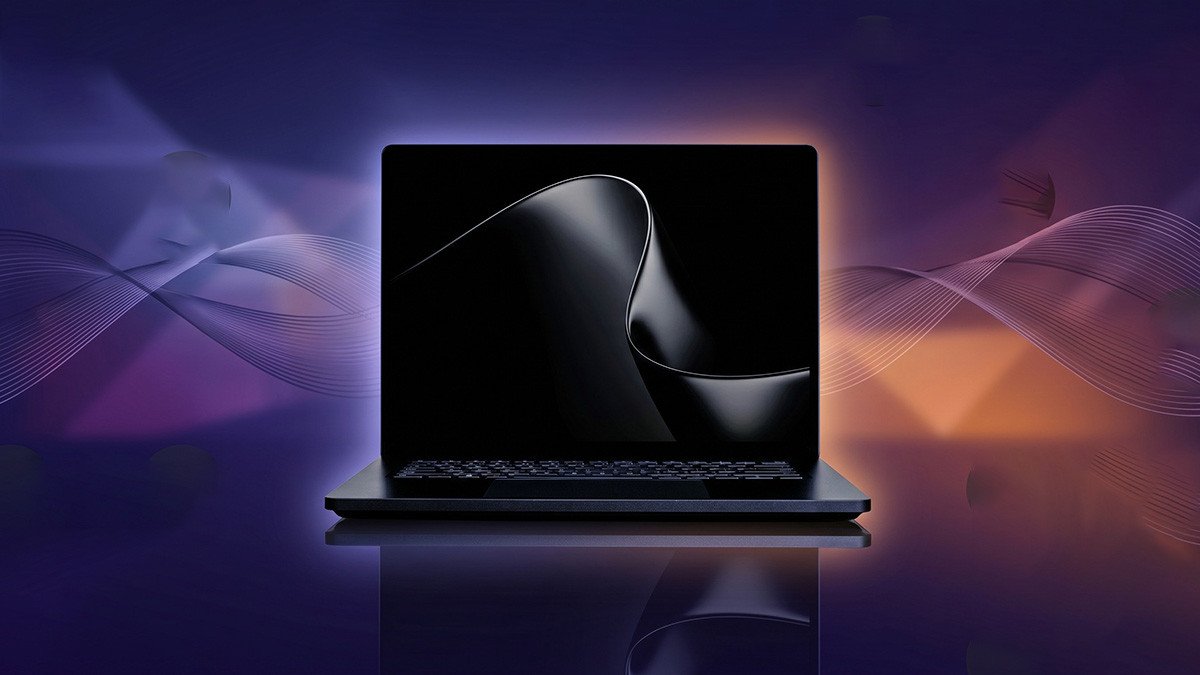
Microsoft pushes local AI to a new level with Surface Laptop Ultra and RTX Spark
The PC is becoming an AI workstation
Microsoft is pushing Windows toward a new computing model in which substantially more artificial-intelligence workloads can run directly on the device rather than continuously relying on cloud infrastructure.
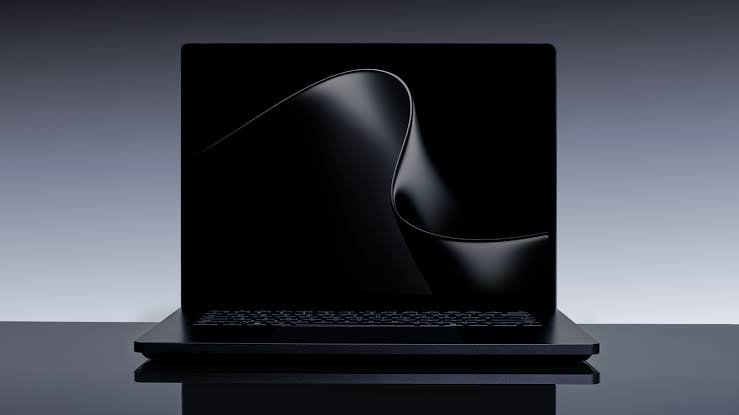
At the center of that strategy is the Surface Laptop Ultra, a 15-inch laptop built around a new NVIDIA platform combining an Arm CPU and RTX GPU with unified memory.
Microsoft advertises up to 1 petaflop of AI compute and up to 128GB of unified memory.
This is more than a faster Surface laptop.
It is Microsoft’s attempt to turn a Windows PC into a personal AI workstation.
What is the Surface Laptop Ultra?
Microsoft positions the Surface Laptop Ultra as a high-performance 15-inch machine.
The company confirms:
- 15-inch mini-LED PixelSense Ultra display;
- 3:2 aspect ratio;
- up to 2,000 nits HDR brightness;
- less than 18 mm thick;
- under 2 kg;
- USB-C;
- USB-A;
- HDMI;
- headphone jack;
- full-size SD card reader;
- a new thermal system designed for sustained workloads.
But the defining component is NVIDIA RTX Spark.
RTX Spark is more than a GPU

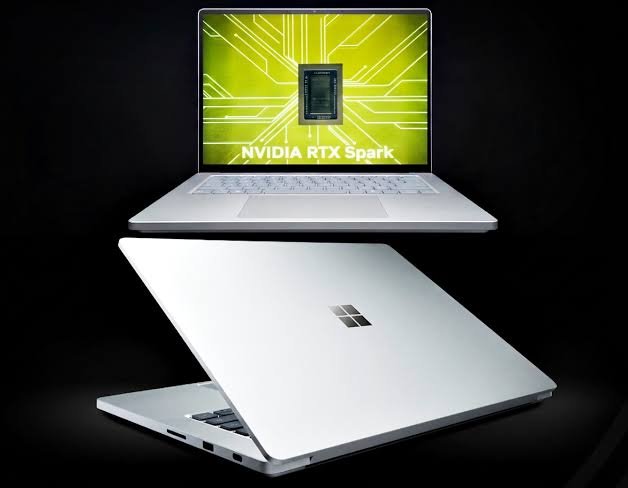
Instead of treating CPU and GPU memory as completely separate pools, the platform uses a unified-memory architecture.
At the top configuration, Microsoft says the system can provide up to 128GB of unified memory.
That matters for AI because large models can consume enormous amounts of memory simply to hold their parameters and intermediate data.
For AI developers, memory capacity and bandwidth can therefore matter as much as raw GPU speed.
Up to one petaflop of AI compute
Microsoft advertises up to one petaflop of AI compute on the relevant configuration.
That number needs context.
A petaflop figure does not automatically tell you how quickly every AI model will run.
Real-world performance depends on:
- model architecture;
- numerical precision;
- software optimization;
- model size;
- memory bandwidth;
- CUDA kernels;
- and application design.
So one petaflop does not mean every AI workload will run at the same speed.
It does, however, clearly position the device above conventional Copilot+ PCs.
Why 128GB matters for AI
For ordinary productivity, 128GB can sound excessive.
For local AI, it is a different story.
Large models can consume tens of gigabytes before they process a single request.
Instead of:
PC → cloud model → response
some workloads can become:
PC → local model → response
That can potentially provide:
- lower latency;
- less dependence on connectivity;
- greater control over sensitive data;
- lower cloud inference costs for some workloads;
- and the ability to experiment with larger local models.
Microsoft explicitly frames the laptop as a device for local AI while allowing users to scale into cloud-based frontier models when necessary.
The cloud is not going away
The important point is that Microsoft is not presenting local AI as a replacement for cloud AI.
The more realistic architecture is:
Local AI + Cloud AI.
Smaller or privacy-sensitive workloads can run on the PC.
Large frontier workloads can run in data centers.
That creates a hybrid model:
local: document processing, coding assistance, file search, personal models;
cloud: frontier models, large-scale training and workloads requiring massive GPU clusters.
The PC becomes one AI node inside a larger ecosystem.
CUDA may be the biggest developer advantage

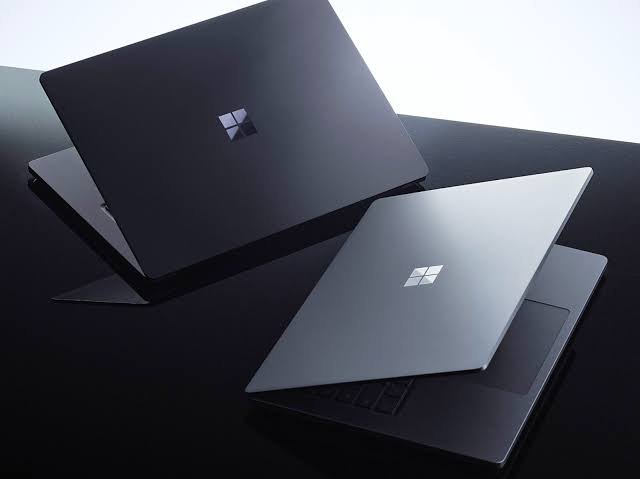
Microsoft confirms CUDA support for the Surface Laptop Ultra.
That matters because CUDA is deeply embedded in the AI developer ecosystem.
It powers workloads across:
- machine learning;
- deep learning;
- computer vision;
- simulation;
- scientific computing;
- rendering;
- and GPU-accelerated applications.
The Surface Laptop Ultra therefore isn’t simply targeting consumers who want a fast laptop.
It is targeting developers who want NVIDIA’s software ecosystem in a portable machine.
What changes for developers?
Until now, serious local AI experimentation often meant choosing between:
a powerful GPU workstation or cloud GPUs.
The Surface Laptop Ultra is trying to bring part of that capability into a portable computer.
Potential users include:
- AI developers;
- researchers;
- software engineers;
- startups;
- content creators;
- AI application builders;
- and technical professionals.
Instead of renting a remote GPU for every experiment, some workloads could run directly on the laptop.
Windows is the other half of the story

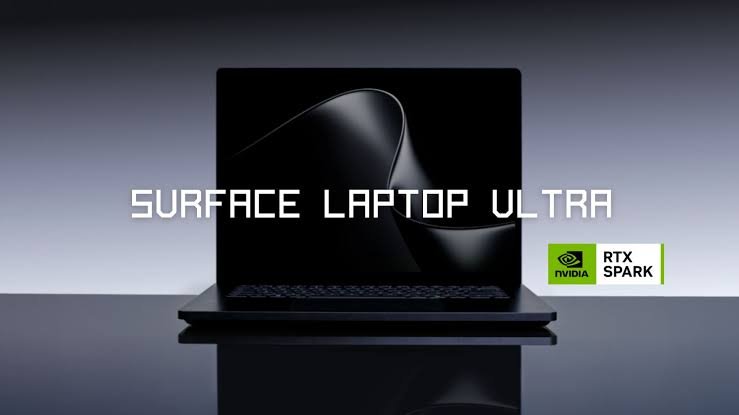
Hardware is only half of the equation.
Microsoft is also working to make Windows better suited to this new class of machines.
The company’s October 7 event is centered on Windows, Surface and NVIDIA, with local AI positioned as a key part of the next PC chapter.
That matters because local AI requires much more than a powerful chip.
It needs:
- runtimes;
- drivers;
- schedulers;
- APIs;
- memory management;
- model optimization;
- and applications that know how to use the hardware.
Without software optimization, expensive hardware can remain underutilized.
A potential privacy advantage
Local AI can also create an important privacy benefit:
data does not necessarily have to leave the device.
For users handling:
- private documents;
- proprietary code;
- business information;
- confidential research;
- or sensitive files,
local inference can reduce the need to send that information to a cloud service.
It does not automatically make everything private or secure.
The application, operating system and configuration still matter.
But local AI gives users another layer of control over where computation happens.
Is this the end of the MacBook Pro?
No.
The Surface Laptop Ultra has a significant advantage for one specific audience: Windows + NVIDIA + CUDA.
Apple continues to have major strengths in:
- power efficiency;
- hardware/software integration;
- application optimization;
- battery life;
- and the macOS ecosystem.
So this is not a simple “Microsoft kills the MacBook” story.
It is Microsoft’s attempt to create a Windows alternative for professionals who want serious local AI and CUDA in a laptop.
Pricing remains a major question
This is where caution is necessary.
Microsoft confirms the major platform specifications, but the official product information available does not provide a final retail price.
Several detailed configurations and launch-date claims circulating online come from third-party reporting and should not be presented as Microsoft-confirmed facts unless Microsoft publishes them.
That distinction matters for a machine combining:
128GB unified memory + NVIDIA Blackwell + CUDA + premium display + sustained-load cooling.
This is clearly not positioned as a budget laptop.
What does this mean for the PC market?
If Microsoft’s strategy works, it could create a new PC category.
The first generation of AI PCs focused heavily on:
Copilot+ → NPU → smaller and medium local AI workloads.
RTX Spark represents a different direction:
powerful GPU + large unified memory + much larger local models.
That is a meaningful step up.
And Microsoft is not alone.
NVIDIA is pushing RTX Spark across the Windows ecosystem, while other PC manufacturers are also developing systems around the platform.
Local AI could therefore evolve from a premium feature into an entirely new PC segment.
What happens next?
The real challenge will be software.
Hardware can be impressive, but the key question is:
How many applications will actually use it?
If developers optimize for RTX Spark, CUDA and the unified-memory architecture, these machines could become extremely attractive.
If they don’t, buyers may end up paying for capacity they rarely use.
The next PC battle therefore won’t just be about:
TOPS, petaflops or gigabytes.
It will be about the ecosystem.
KEY TAKEAWAYS
- Microsoft is positioning the Surface Laptop Ultra as a high-performance machine for local AI and professional workloads.
- It uses a new NVIDIA RTX platform combining an Arm CPU and Blackwell GPU.
- The top configuration offers up to 128GB of unified memory, according to Microsoft.
- Microsoft advertises up to one petaflop of AI compute.
- The system supports CUDA, a major advantage for AI developers.
- Local AI can reduce cloud dependence and keep some workloads on-device.
- This does not eliminate cloud AI; the likely future is local + cloud AI.
- One petaflop is not a universal measure of real-world model speed.
- Final pricing and some detailed configurations should not be treated as confirmed without official Microsoft disclosure.
- Software support will determine how much of the hardware’s potential users can actually exploit.
- Microsoft’s broader goal is to turn the Windows PC into a serious local AI platform, rather than merely a terminal for cloud chatbots.
Conclusion
The Surface Laptop Ultra is interesting not simply because it is a more powerful Surface.
It is interesting because it reveals what Microsoft thinks the AI-era PC should become.
Some AI will continue to live in massive data centers.
But an increasing share could move onto the user’s desk.
With NVIDIA hardware, CUDA, up to 128GB of unified memory and up to one petaflop of advertised AI compute, Microsoft is testing whether a laptop can become a portable AI workstation.
If developers embrace the platform, the next PC competition may not be primarily about CPU generations.
It could be about who can put the most useful AI capability inside the laptop.