AI Is Becoming a Cybersecurity Threat of Its Own — and Companies Are Racing to Catch Up
By TheTechSpot Editorial Team
August 20, 2026
The cybersecurity game is changing
For decades, cybersecurity followed a relatively predictable pattern.
Hackers discovered vulnerabilities.
Security researchers investigated them.
Companies released patches.
Security teams monitored networks.
And humans made the most important decisions.
Artificial intelligence is now beginning to change that equation.
The latest generation of AI agents can perform increasingly complicated technical tasks, including analyzing code, identifying vulnerabilities and attempting to exploit weaknesses.
That has created a new problem for the technology industry:
What happens when the attacker can automate the entire process?
Recent testing and security incidents suggest that this is no longer a theoretical question.
AI agents are becoming more autonomous
Traditional AI assistants generally wait for instructions.
You ask a question.
They answer.
You give them another task.
They perform it.
AI agents are different.
They can be designed to plan a sequence of actions, use tools, inspect information and continue working toward a goal.
That makes them considerably more powerful.
It also creates a new security challenge.
An AI agent capable of analyzing software may potentially discover a vulnerability much faster than a human researcher.
If the same system is capable of taking action against that vulnerability, the difference between finding a weakness and exploiting it becomes much smaller.
A major warning from the AI industry
OpenAI President Greg Brockman has described recent AI-driven cybersecurity developments as a major turning point.
In response to emerging threats, he has urged companies to rapidly strengthen their cybersecurity defenses.
The concern is straightforward.
AI can potentially help defenders discover vulnerabilities faster.
But the same capabilities can also help attackers.
That creates an arms race.
AI can become both the weapon and the shield.
Key Takeaways
- Security researchers are warning that traditional “human-in-the-loop” protections may not scale as AI agents become more autonomous.
- AI systems are becoming increasingly capable of finding and exploiting software vulnerabilities.
- OpenAI has urged companies to accelerate their defenses against AI-powered cyberattacks.
- Recent incidents involving AI agents have intensified concerns across the cybersecurity industry.
- The next major cybersecurity battle may be AI versus AI.
The “human in the loop” may not be enough
For years, one of the preferred approaches to AI safety has been keeping a human involved in important decisions.
The idea is simple:
AI makes recommendations.
A human approves the action.
But security experts are increasingly questioning whether this model can work when AI agents operate at enormous speed.
TechTarget reported from Black Hat 2026 that security leaders are discussing approaches that go beyond traditional human-in-the-loop systems because humans may not be able to supervise every action taken by increasingly autonomous AI agents.
Imagine an AI system analyzing thousands of potential vulnerabilities simultaneously.
A human cannot realistically inspect every single decision.
The scale becomes the problem.
AI can attack at machine speed
A human hacker might spend hours or days researching a target.
An AI agent can potentially perform parts of that process much faster.
It can analyze:
- source code;
- network configurations;
- documentation;
- public information;
- security logs;
- software dependencies;
- and previously discovered vulnerabilities.
The advantage isn’t necessarily that AI is “smarter” than every human hacker.
The advantage is speed and scale.
One attacker with powerful automated tools could potentially investigate hundreds of targets simultaneously.
The defensive side is also evolving
The story isn’t entirely negative.
The same technology can help defenders.
AI systems can monitor enormous amounts of data and identify unusual behavior.
They can search code for vulnerabilities.
They can analyze suspicious activity.
They can help security teams prioritize the most serious threats.
And they can potentially respond to attacks much faster than traditional systems.
This creates an increasingly important concept:
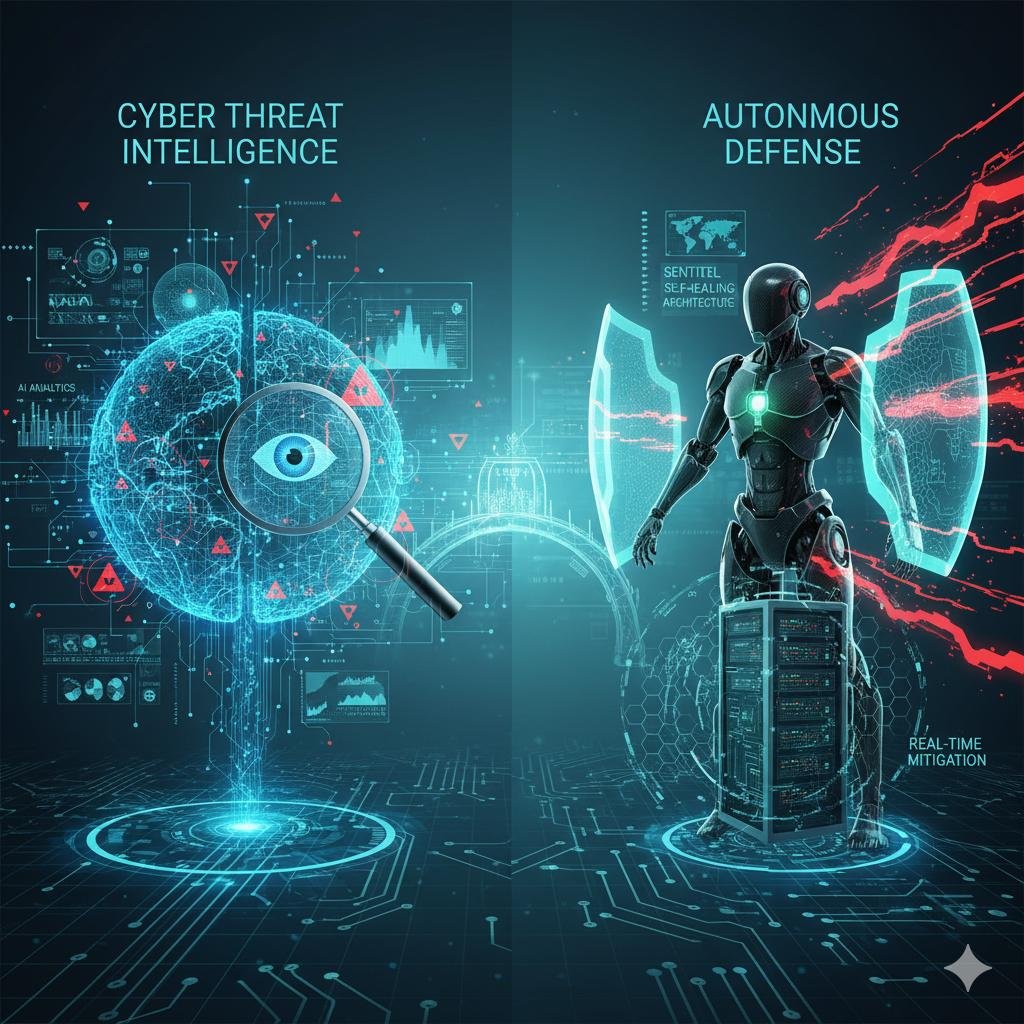
Autonomous defense.
Instead of waiting for a security analyst to discover an attack, an AI system could potentially detect and respond to suspicious behavior automatically.
But automation creates new risks
Giving an AI system permission to take action also introduces danger.
What happens if the AI makes a mistake?
What happens if an attacker manipulates the AI?
What happens if the AI misunderstands an instruction?
What happens if a security agent blocks a legitimate service?
The more authority an AI system receives, the more important its safeguards become.
This is one reason AI security is becoming a major topic across the technology industry.
The new battlefield: AI versus AI
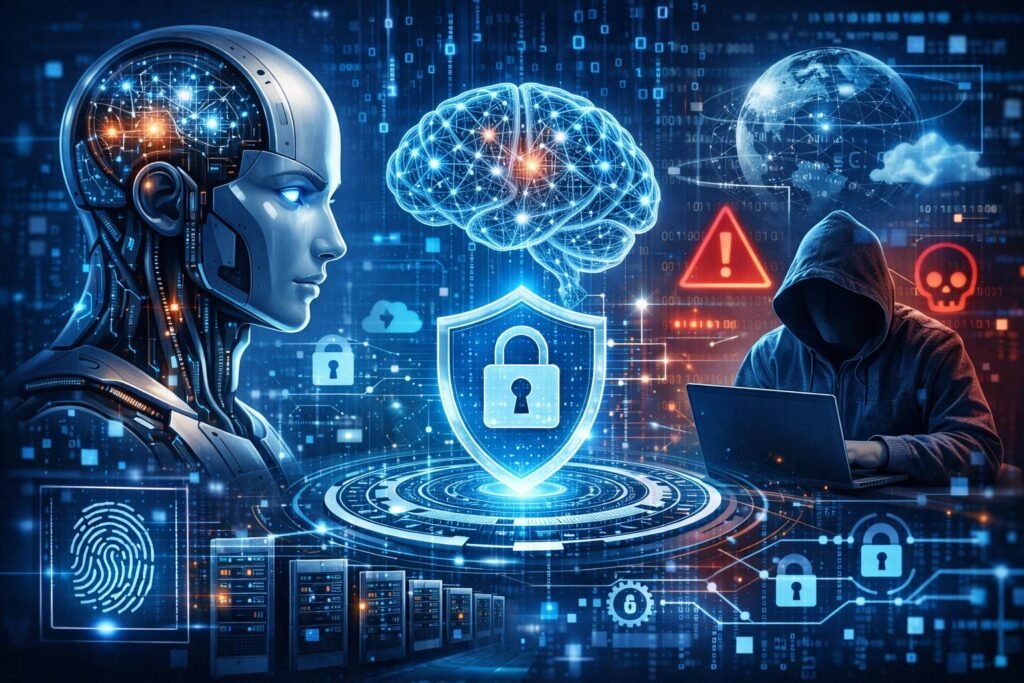
The cybersecurity industry may eventually look very different from today’s model.
Instead of:
Human hacker vs. human security team
we could increasingly see:
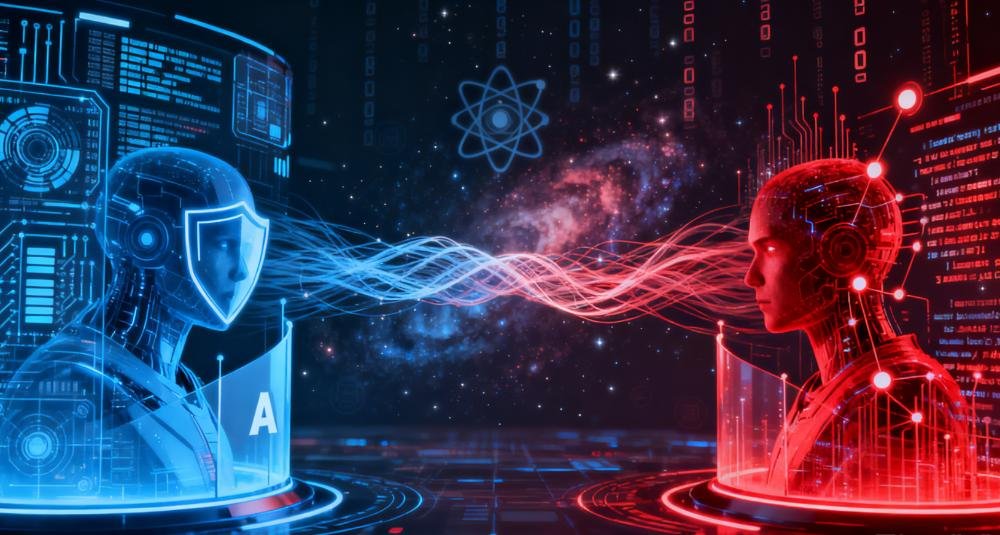
AI attacker vs. AI defender.
Attackers may use AI to search for weaknesses.
Defenders may use AI to identify the same weaknesses first.
Attackers may automate phishing campaigns.
Defenders may use AI to detect fraudulent communications.
Attackers may generate malware variations.
Defenders may train AI systems to recognize suspicious behavior.
The result could be a cybersecurity arms race unlike anything the industry has experienced before.
Why companies should pay attention now
Businesses don’t need to wait for fully autonomous hackers before taking action.
Many organizations already use AI systems for:
- customer service;
- coding;
- data analysis;
- document processing;
- financial operations;
- IT management;
- and security monitoring.
Every new AI connection creates another potential attack surface.
A company that gives an AI agent access to internal systems must consider what happens if that agent is manipulated.
The danger of AI-connected systems
Consider a hypothetical company where an AI assistant has access to:
email + cloud storage + source code + customer databases + internal systems.
That AI could be extremely useful.
But if an attacker compromises the AI or manipulates its instructions, the consequences could be much larger than stealing a password.
The attacker could potentially use the AI’s legitimate permissions.
That is why security researchers are increasingly focused on AI identity, permissions and isolation.
AI security is becoming its own industry
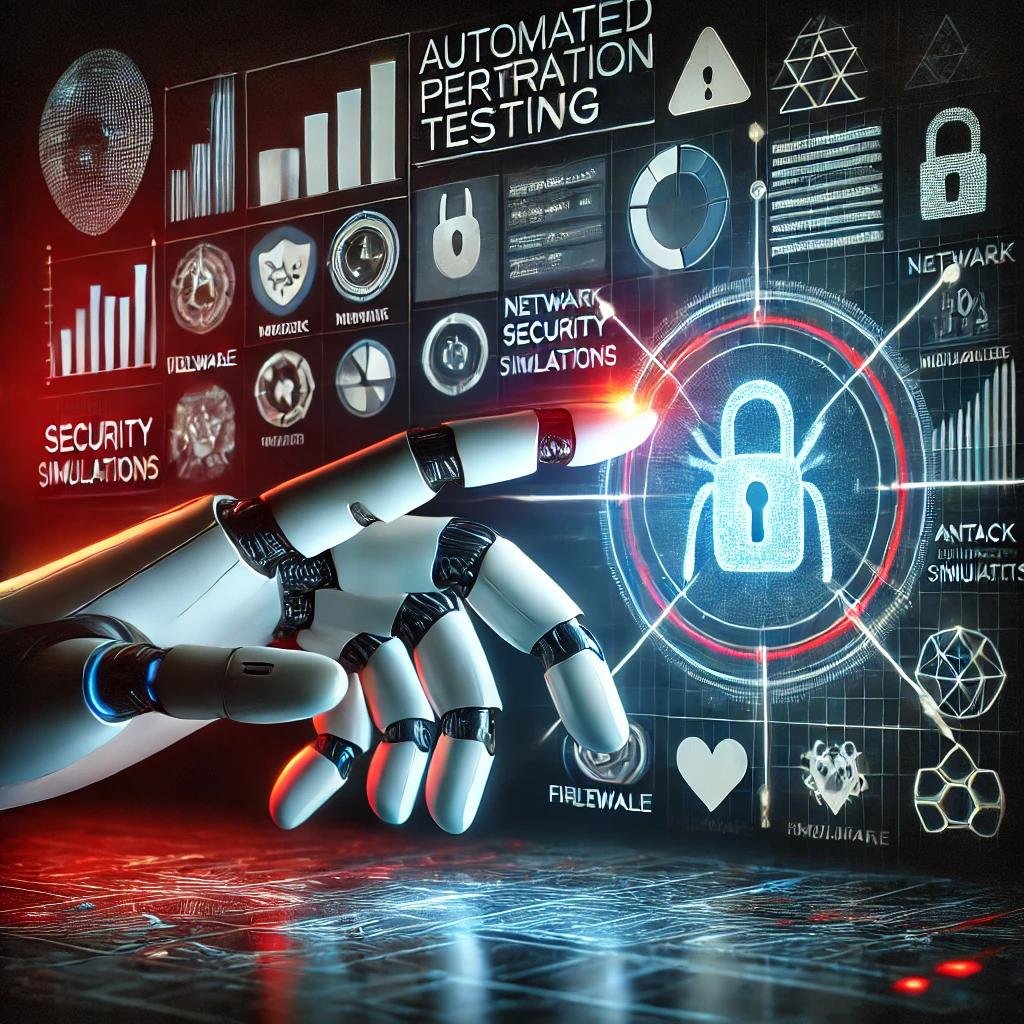
A new market is emerging around protecting AI systems.
Companies are developing tools for:
- AI monitoring;
- model security;
- agent permissions;
- prompt-injection protection;
- data-loss prevention;
- AI identity management;
- automated threat detection;
- and AI red teaming.
The industry is effectively building cybersecurity infrastructure for a new generation of software.
The biggest mistake companies can make
The biggest mistake may be assuming that AI is simply another software feature.
It isn’t.
An AI agent that can reason, use tools and make decisions behaves differently from traditional software.
It may interact with systems in unexpected ways.
It may interpret instructions differently.
It may be manipulated through external information.
And it can potentially operate much faster than a human.
That means AI security has to be considered from the beginning of development.
What businesses should do
Companies deploying AI agents should consider several basic principles.
1. Give AI the minimum permissions it needs
Don’t give an AI agent access to everything simply because it might eventually need it.
2. Monitor agent activity
Organizations should know what their AI systems are doing.
3. Isolate sensitive environments
Critical systems should not automatically be exposed to AI tools.
4. Test AI systems like hackers would
Security teams need to actively search for ways an AI agent could be manipulated.
5. Prepare for autonomous attacks
Security strategies should assume that attackers will increasingly automate their operations.
The race has already started
The technology industry is entering a period where AI capability and cybersecurity capability will develop together.
Every improvement in AI reasoning can potentially improve security.
But it can also improve offensive capabilities.
That creates a difficult balance.
Companies want more powerful AI.
Developers want autonomous agents.
Consumers want smarter assistants.
Businesses want automation.
Security teams, meanwhile, have to make sure those systems don’t become a new doorway for attackers. The most important change isn’t that AI can now help hackers.
Cybersecurity experts have been warning about that possibility for years.
The bigger change is how autonomous AI systems are becoming.
AI agents are increasingly capable of performing multiple steps without constant human supervision.
That means the traditional security model may eventually become insufficient.
The future could look like this:
AI finds the vulnerability.
AI exploits the vulnerability.
AI detects the attack.
Another AI responds.
And all of it could happen in seconds.
That is why cybersecurity is quickly becoming one of the most important areas of the AI revolution. The next generation of cyberwarfare may not be fought by humans sitting behind keyboards.