The PC industry is facing an unusual contradiction in 2026.
On one side, manufacturers continue to introduce faster processors, more efficient storage, new laptop designs and increasingly sophisticated components. On the other, shortages and rising prices are making some upgrades harder to justify for consumers.
That tension is at the center of this year’s Tom’s Hardware Innovation Awards, which highlight products that the publication considers significant advances in computing hardware.
The awards cover a broad range of products, from processors and SSDs to laptops, motherboards, monitors and gaming peripherals. But the bigger story is not simply which products won.
It is what the list says about the state of the PC industry.
There is still plenty of innovation.
The problem is that getting access to it is becoming more expensive.
CPUs Continue to Push Performance Forward

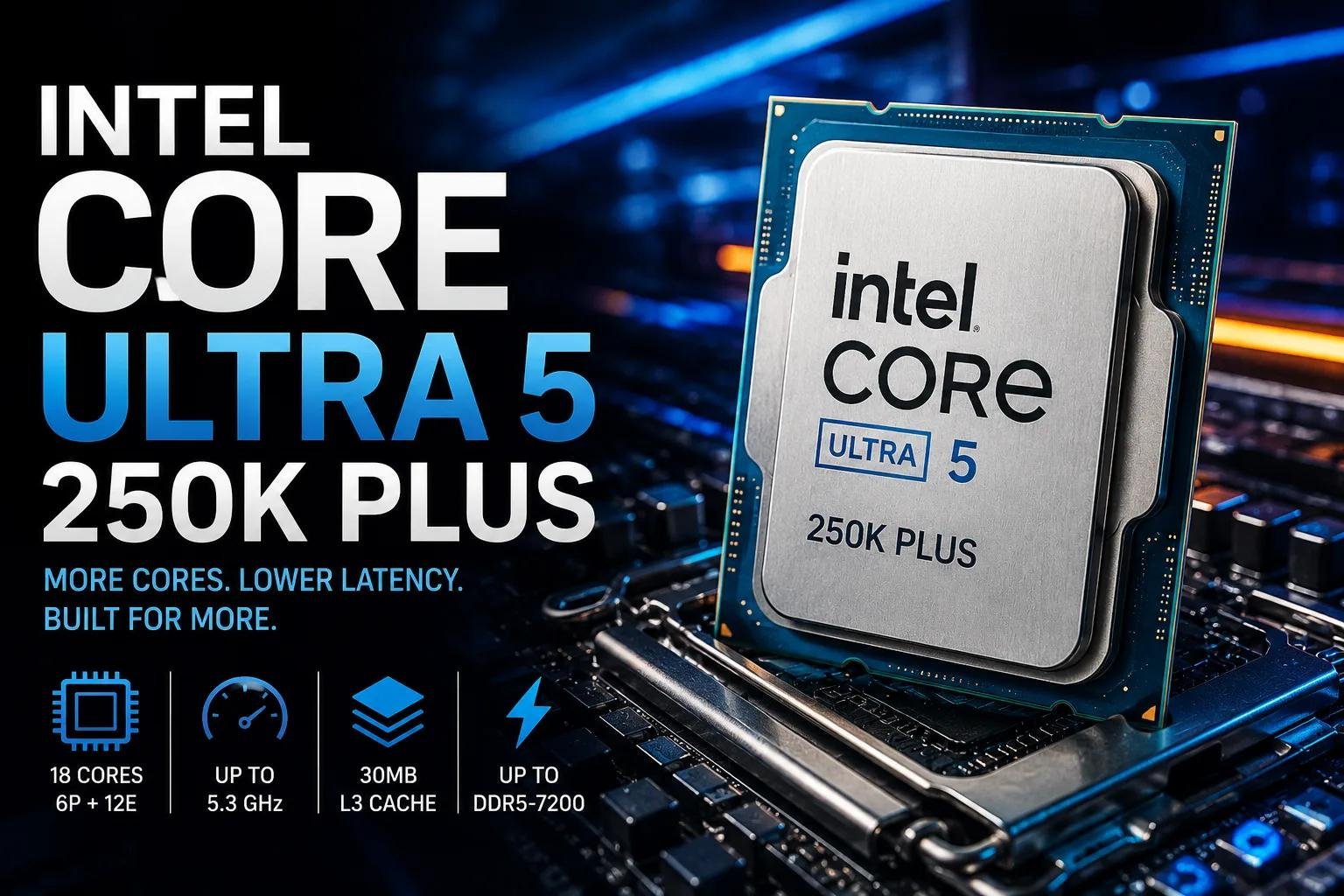
Among the products recognized this year is Intel’s Core Ultra 5 250K Plus, which Tom’s Hardware selected as its CPU winner.
AMD’s Ryzen 9 9950X3D2 was also highlighted for its performance-oriented design, particularly in workloads that can benefit from additional cache.
These processors represent two different approaches to improving PC performance.
Intel is competing heavily on value and mainstream performance, while AMD continues to use its large-cache X3D strategy to target demanding gaming and specialized workloads.
For consumers, the important development is that CPU improvements are no longer limited to simply increasing clock speeds.
Modern processors are increasingly being designed around efficiency, cache architecture, workload-specific performance and the ability to handle increasingly diverse applications.
That is particularly important as PCs are being asked to perform everything from conventional productivity tasks to demanding gaming, video production and increasingly sophisticated local computing workloads.
Storage Is Getting Faster — But More Expensive
Storage is another area where the technology is moving forward rapidly.
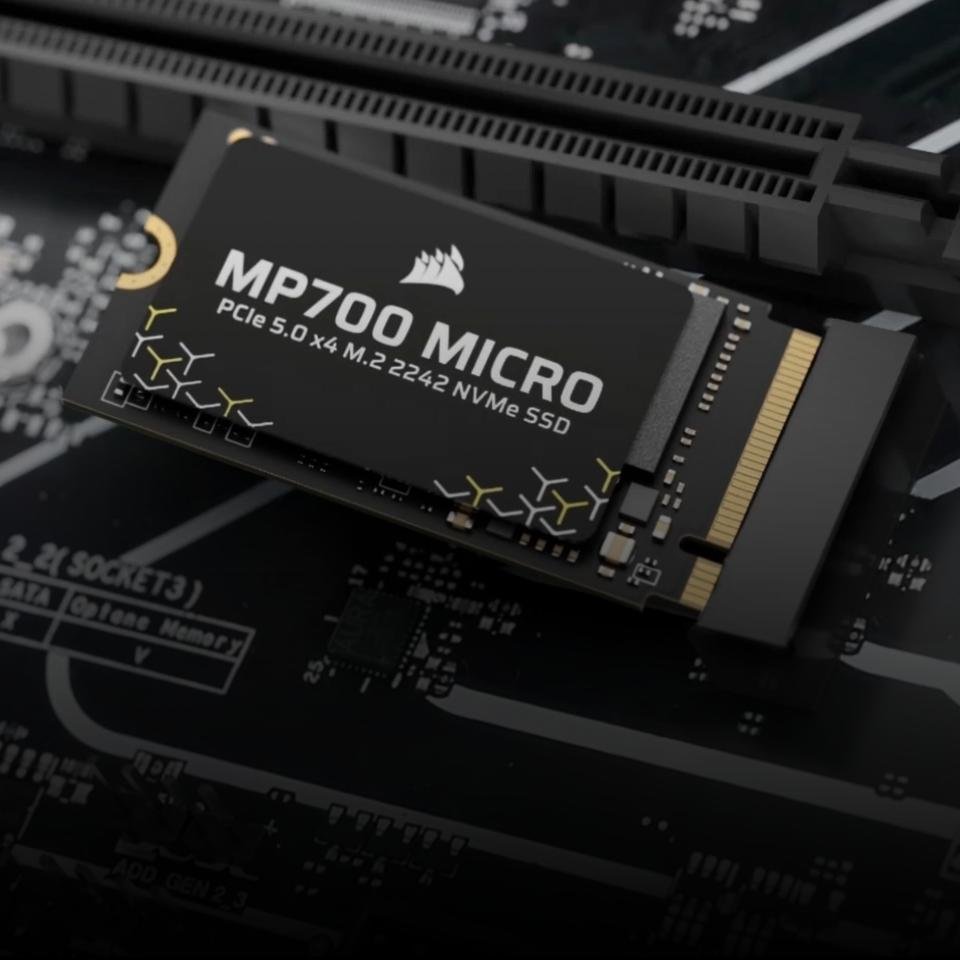
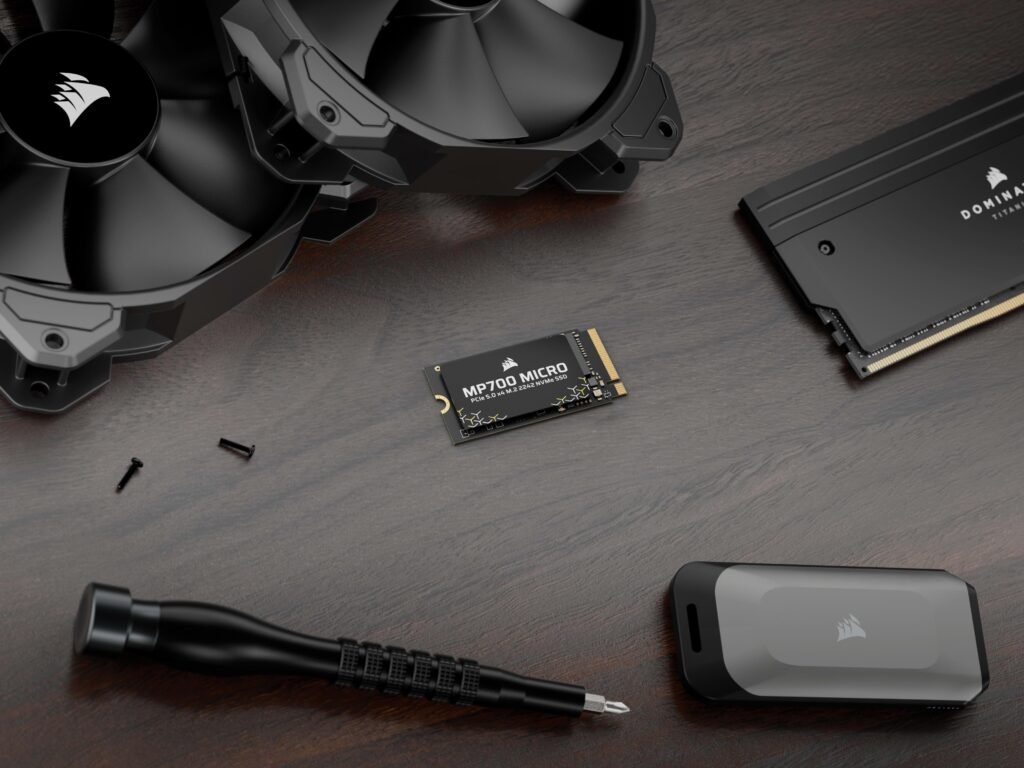
Tom’s Hardware selected Corsair’s MP700 Micro 4TB SSD as its SSD innovation winner.
The drive uses a compact M.2 2242 form factor while offering PCIe 5.0 performance. The company claims sequential read speeds of up to 10,000 MB/s and sequential write speeds of up to 8,500 MB/s.
That combination is particularly interesting for compact computers and handheld gaming devices, where physical space and power efficiency are important.
But there is a catch.
The broader SSD market has been dealing with significant price pressure.
According to Tom’s Hardware, AI-related demand and shortages have contributed to dramatically higher storage prices. That means consumers may see impressive new products arriving at exactly the moment when upgrading storage becomes less affordable.
It is a familiar problem in technology.
The hardware becomes better.
The economics become worse.
Gaming Hardware Faces a Similar Problem
The gaming PC market is also experiencing this tension.
Intel’s Arc G3 Extreme platform was recognized for its contribution to the handheld gaming segment, while other products on the awards list target enthusiasts looking for better displays, cooling and peripherals.
But graphics hardware remains one of the more difficult areas of the PC market.
Tom’s Hardware points to stagnation in discrete GPU development as one of the less positive trends of the year, while memory shortages are creating additional pressure across the market.
For gamers, that creates a difficult situation.
A new generation of games continues to demand more powerful hardware, but the cost of building or upgrading a gaming PC can rise at the same time.
That could encourage more consumers to delay upgrades or look toward alternative platforms.
Apple Is Also Finding a Place in the PC Conversation
One of the more notable products recognized this year is Apple’s MacBook Neo.
Apple’s presence on a PC hardware awards list is hardly surprising, but the significance of the MacBook Neo is its positioning.
Apple has increasingly used its control over both hardware and software to create laptops that emphasize efficiency and battery life rather than competing solely on traditional specifications.
The result is a broader shift in the laptop market.
Consumers are paying more attention to how long a computer can run, how quietly it operates and how effectively it performs everyday tasks.
Raw processor specifications remain important.
But they are no longer the entire story.
Motherboards Are Quietly Becoming More Important
Motherboards rarely receive the same attention as CPUs and graphics cards, but they are becoming increasingly important as new memory technologies arrive.
Gigabyte’s Z890 Aorus Elite Duo was recognized for its support for CQDIMM-compatible memory.
This may sound like a niche technical improvement, but motherboard technology determines how quickly new standards can make their way into mainstream PCs.
The transition to new memory architectures is particularly relevant at a time when the industry is dealing with shortages and pricing pressure.
In other words, the motherboard is becoming part of the bottleneck — and part of the solution.
Displays Are Getting More Sophisticated
Displays are another area where innovation continues despite broader market problems.
Alienware’s AW3426DW was recognized for its Penta Tandem OLED technology.
OLED panels have already transformed the premium monitor market by offering deep blacks, strong contrast and extremely fast response times.
The next challenge is efficiency.
Advanced display technologies have to deliver better image quality without creating unacceptable power consumption, heat or manufacturing costs.
That is particularly important as high-refresh-rate gaming monitors become more common.
The future of PC displays will therefore not simply be about resolution.
It will be about balancing brightness, contrast, refresh rate, efficiency and durability.
The PC Industry Has Not Stopped Innovating

The most interesting conclusion from this year’s awards is that the PC industry is not experiencing a technological slowdown.
Quite the opposite.
There are meaningful improvements across almost every part of the computer.
Processors are becoming more specialized.
SSDs are becoming dramatically faster.
Laptops are becoming more efficient.
Displays are improving.
Motherboards are adapting to new memory technologies.
Gaming devices are becoming increasingly portable.
But consumers are confronting a different problem.
The technology is improving faster than the economics are.
The continuing shortage of certain components has made pricing one of the biggest challenges facing PC manufacturers and buyers. Tom’s Hardware specifically identifies AI-driven demand and component shortages as major forces affecting the market.
That means the best product of 2026 is not necessarily the product everyone should buy.
For someone with a relatively modern PC, replacing a perfectly functional system simply because a newer processor or SSD exists may make little financial sense.
For someone using an older machine, however, a carefully selected upgrade could provide a substantial improvement without requiring an entirely new system.
The Upgrade Question Is Changing
The traditional PC upgrade cycle has always been straightforward: new hardware arrives, performance improves and consumers upgrade.
In 2026, that equation is becoming more complicated.
Higher component prices mean buyers have to consider longevity as carefully as performance.
A computer that is slightly slower today but significantly cheaper may be a better investment than an expensive flagship component.
This could ultimately push manufacturers toward more efficient and affordable products rather than simply chasing maximum performance.
And that may be good for the industry in the long term.
The PC industry is not running out of ideas.
It is running into a different problem: how to make innovation affordable.
The products recognized in the 2026 Tom’s Hardware Innovation Awards show that manufacturers continue to find new ways to improve processors, storage, displays, laptops and gaming hardware.
But shortages and pricing pressures are changing the way consumers respond to those improvements.
For PC builders and gamers, the smartest strategy may therefore be patience.
Not every new generation requires an immediate upgrade.
The hardware market is moving forward — but in 2026, knowing when not to upgrade can be just as important as knowing which component is the fastest.
The PC isn’t standing still. The real question is whether consumers can afford to keep up.