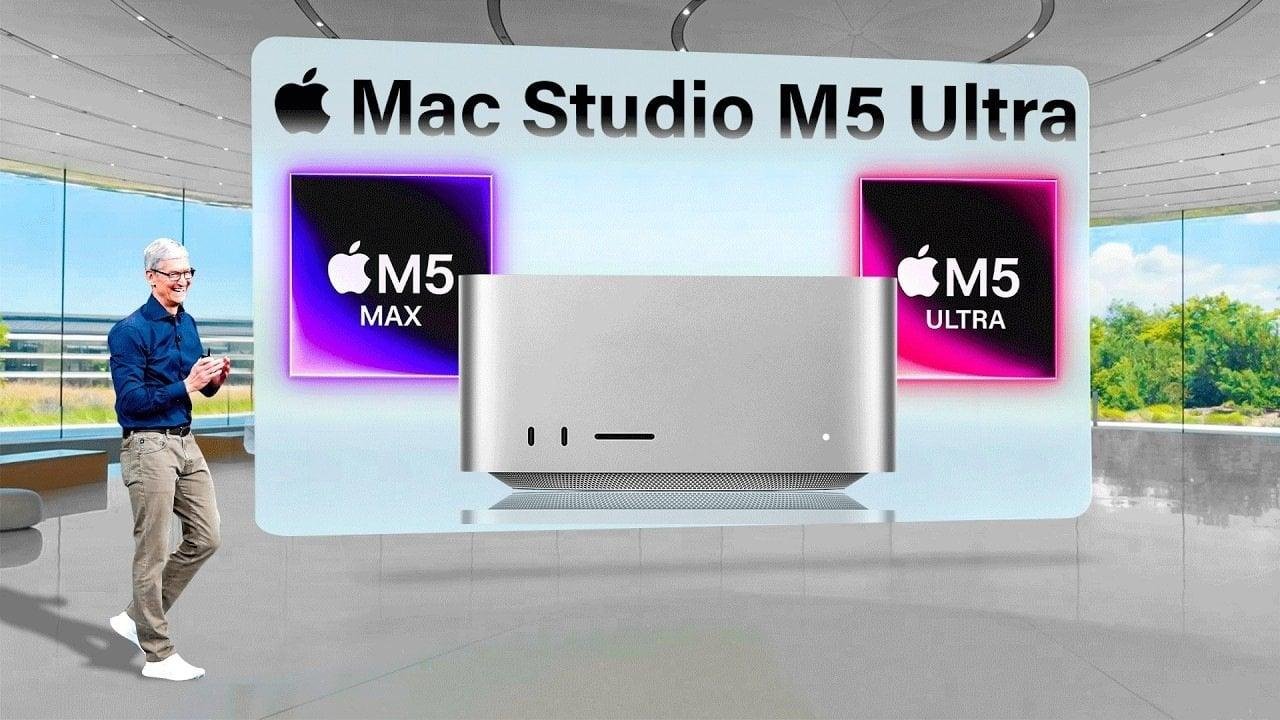
Apple has introduced two new pieces of silicon that could shape the next phase of its Mac strategy: the M6, its first processor built using a 2-nanometer manufacturing process, and the new M5 Ultra, the company’s most powerful M-series chip to date.
The processors arrive inside refreshed versions of the Mac mini and Mac Studio, announced Tuesday. Preorders are now open, with the new machines scheduled to begin reaching customers on September 22.
On paper, the announcement is another annual Mac hardware update.
But the more important story is what Apple is emphasizing.
The company is increasingly positioning its desktop computers as machines capable of handling demanding AI workloads locally, rather than relying entirely on cloud-based computing.
That strategy is reflected in both the architecture of the new chips and the unusually large memory configurations available on the high-end Mac Studio.
M6 Marks Apple’s Move to 2nm
The M6 is the headline change for the Mac mini.
Apple says its new chip delivers up to 40 percent faster CPU performance, up to twice the graphics performance and up to four times the AI performance compared with a previous-generation M4 configuration under Apple’s stated testing conditions.
The chip contains a 12-core CPU and 12-core GPU, along with a dual Neural Engine designed to accelerate machine-learning workloads.
The move to a 2nm manufacturing process is significant in its own right.
Smaller process technologies can allow chip designers to fit more transistors into a given area and potentially improve performance and power efficiency. But the manufacturing process alone does not guarantee a proportional real-world improvement.
That is why the more important question will be how the M6 performs in applications outside Apple’s own benchmarks.
For everyday users, however, the new Mac mini should have more than enough power for productivity, photo editing, software development and other mainstream workloads.
The Mac Mini Looks Familiar

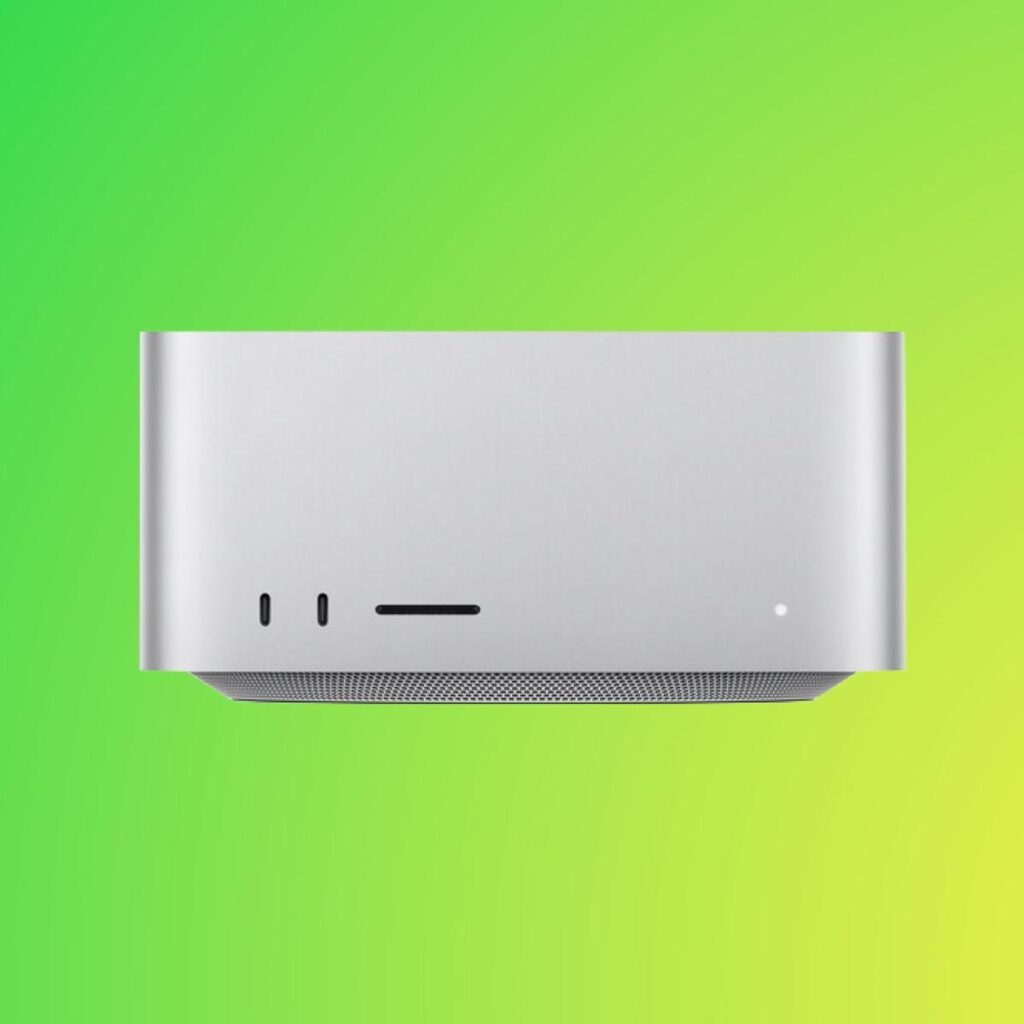
One of the interesting aspects of the launch is what Apple didn’t change.
The new Mac mini retains the compact design introduced with the previous generation.
Instead of redesigning the enclosure, Apple has concentrated on the components inside it.
That approach makes sense for a product that has already become one of Apple’s smallest and most flexible desktop computers.
But it also means that owners of a recent Mac mini will need to look at performance and connectivity rather than design to find a reason to upgrade.
The new models also offer faster connectivity options, including Thunderbolt 5 and configurations with 10Gb Ethernet, giving professionals more bandwidth for external storage and high-speed networks.
The Price Has Gone Up
The biggest challenge for the new Mac mini may not be performance.
It is price.
The M6 Mac mini starts at $899 in the United States, while the M5 Pro version starts at $1,699.
That represents a substantial increase compared with the original launch price of the M4 Mac mini.
Apple’s pricing comes at a time when memory and storage components are under pressure from strong demand across the technology industry, particularly from AI infrastructure.
For consumers, however, the reason behind higher component costs does not change the basic equation.
The entry price is higher.
That makes the Mac mini less of an obvious bargain than it was when Apple positioned the machine as an unusually affordable way into the Mac ecosystem.
M5 Ultra Is Built for a Different Class of User

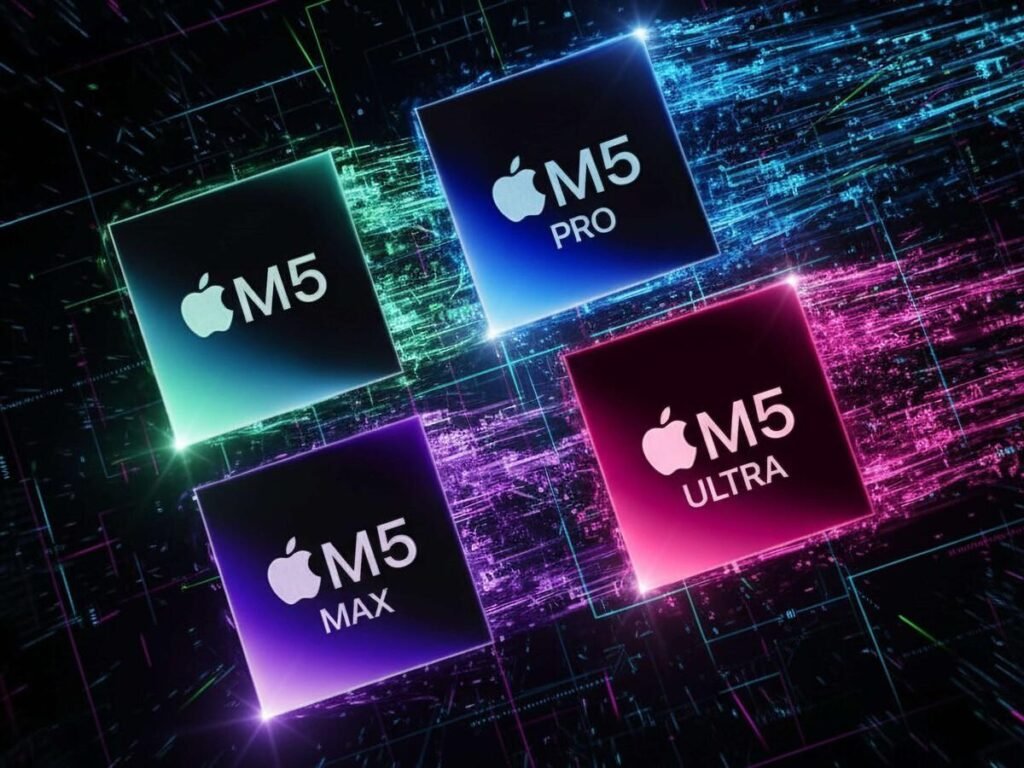
The new Mac Studio targets a completely different market.
Apple’s M5 Ultra is designed for professional workloads that require enormous amounts of computing power and memory.
The processor combines multiple M5 Max dies using Apple’s UltraFusion interconnect technology, creating a system with up to 36 CPU cores and 80 GPU cores. The chip can also be configured with up to 512GB of unified memory.
That memory capacity is particularly important for AI.
Large language models and other machine-learning workloads can require enormous amounts of memory. Traditionally, much of this work has been associated with high-end GPU servers equipped with large pools of dedicated memory.
Apple’s approach is different.
Because the Mac Studio uses unified memory, the CPU and GPU can access the same memory pool.
For certain local AI workloads, that can make extremely large models possible on a desktop workstation.
Apple Is Targeting Local AI
This may be the most important part of the announcement.
Apple is not simply making the Mac faster.
It is positioning the Mac as a serious platform for local AI computing.
Apple says the M5 Ultra’s memory capacity and bandwidth can allow users to work with large AI models locally, including models with hundreds of billions of parameters.
That matters because local processing offers several potential advantages.
Data does not necessarily need to leave the computer.
Latency can be reduced.
Users can potentially avoid recurring cloud-computing costs.
And developers can experiment with models without renting expensive remote infrastructure for every task.
There are still obvious limitations.
A desktop workstation is not equivalent to a massive AI data center.
Training the largest models requires enormous distributed computing resources.
But inference — running an already-trained model — is increasingly becoming practical on powerful consumer and professional hardware.
Apple clearly wants to be part of that shift.
The Mac Studio Starts at $2,499
The new Mac Studio with M5 Max starts at $2,499, while the M5 Ultra configuration starts at $5,499.
Those prices put the machines firmly into professional territory.
The M5 Ultra is not intended to replace a mainstream desktop.
It is aimed at filmmakers, developers, engineers, researchers, 3D artists and AI professionals who can justify the hardware through demanding workloads.
Apple says the M5 Ultra can provide major improvements in AI and graphics performance, while its expanded memory allows workloads that would otherwise require significantly more specialized hardware.
The question for professionals will therefore be less about whether the Mac Studio is powerful.
It is whether the performance justifies the price compared with Windows workstations and dedicated AI hardware.
Apple Is Playing a Different AI Game
There is a larger strategic point here.
Nvidia has built its AI business around enormous data-center accelerators.
Apple is taking a different route.
Its advantage is the combination of custom silicon, unified memory, software integration and power efficiency.
That does not make Apple a direct replacement for Nvidia in AI data centers.
It does, however, give developers another option for running AI workloads closer to the user.
The M6 Mac mini represents the consumer end of that strategy.
The M5 Ultra Mac Studio represents the professional end.
Together, they show how Apple is trying to turn its silicon architecture into a broader computing platform for the AI era.
Apple’s latest Mac announcement is not really about a new box.

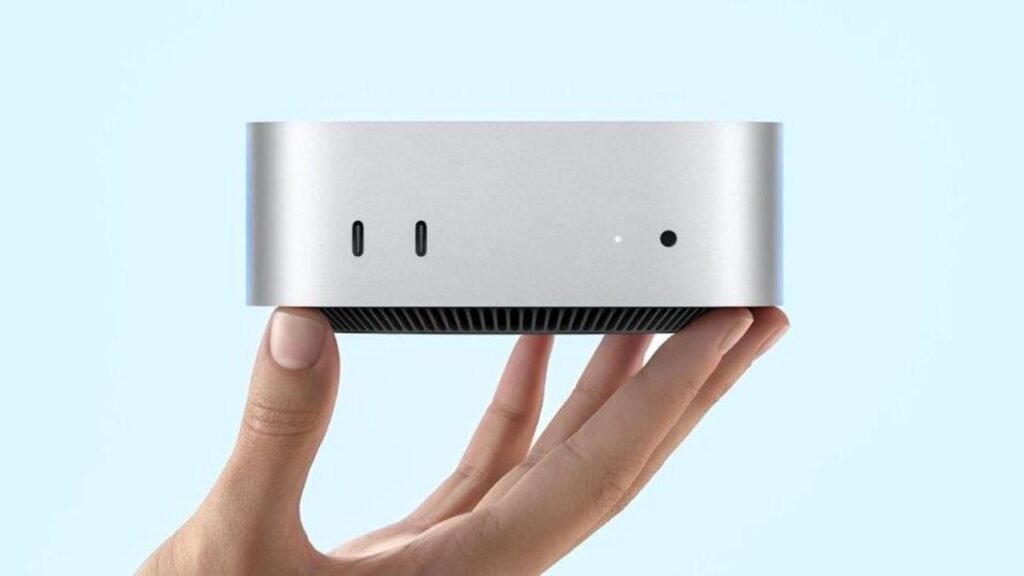
The physical designs have changed very little.
The important developments are inside.
The M6 brings Apple’s 2nm silicon to the Mac, while the M5 Ultra pushes unified-memory computing to an extraordinary level. At the same time, Apple is making local AI processing a central part of its pitch for high-performance Macs.
But there is a clear trade-off.
The technology is impressive, yet prices have risen significantly.
For ordinary Mac users, the M6 Mac mini could be more performance than they need.
For professionals working with video, 3D, software development or large AI models, the M5 Ultra Mac Studio is a much more interesting proposition.
Truth Mode: Apple has not suddenly replaced the AI data center with a desktop computer.
What it has done is make local AI computing substantially more capable.
And that may be the more important trend to watch.
The next phase of computing may not be about choosing between cloud AI and personal computers.
It may be about deciding which AI workloads belong in the cloud — and which ones should run right on your desk.