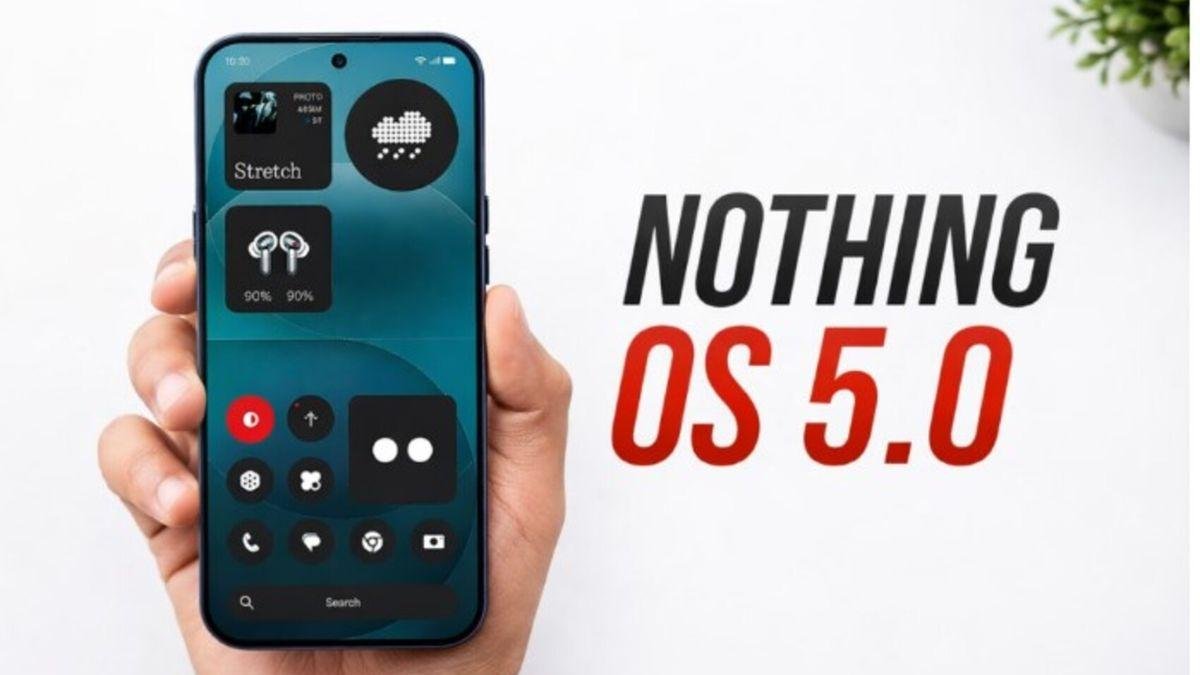
Nothing is preparing one of the biggest software updates in the company’s history, with Nothing OS 5.0 bringing Android 17, a redesigned interface, deeper customization and a new generation of tools designed to make the smartphone more personal.
The company says the Open Beta begins August 26 at 11:00 BST, giving users an early opportunity to test the new software before its wider release.
While smartphone manufacturers frequently release Android updates with new features, Nothing is taking a more distinctive approach.
Rather than simply changing the underlying operating system, Nothing OS 5.0 attempts to rethink how users interact with their home screen, notifications, widgets and the company’s distinctive Glyph hardware.
The result is an update that combines Google’s latest Android platform with several features unique to Nothing’s ecosystem.
Android 17 Is at the Core
The biggest technical foundation of Nothing OS 5.0 is Android 17.
Google introduced Android 17 with improvements to multitasking, security, privacy and device performance. The operating system includes features such as floating Bubbles, improved screen recording, stronger protection against suspicious applications and more granular controls over location and contacts.
Nothing is incorporating those capabilities into its own interface while maintaining the visual identity that has become associated with the brand.
That means Nothing users will receive Google’s latest Android functionality without giving up the company’s customized software experience.
For users, the important point is that Nothing OS 5.0 is not simply a visual redesign.
It is built on a newer Android generation with meaningful changes underneath the interface.
A Major Home Screen Redesign
Nothing says the new operating system is designed around a cleaner interface and deeper personalization.
The homescreen receives new app icons, wallpaper-aware system colors and transparent widgets.
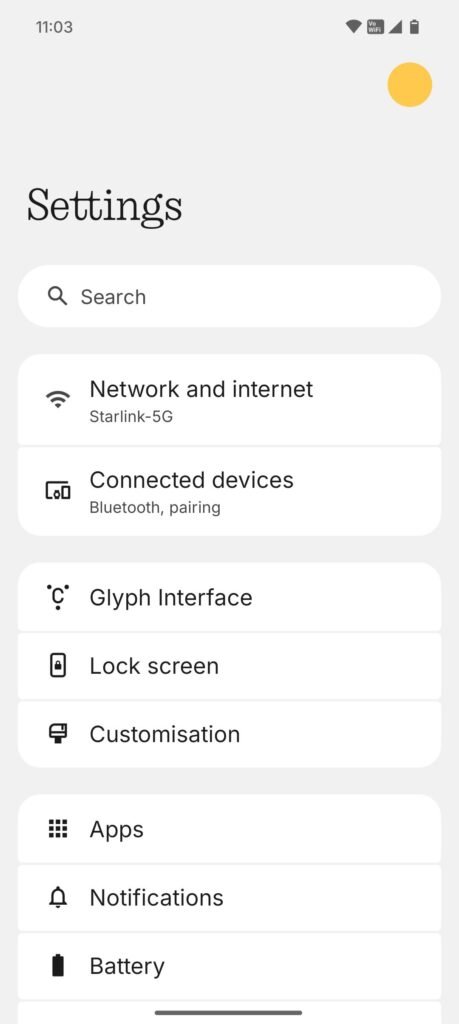
The company is also introducing a new typeface called Geist, alongside redesigned icons and refined layouts across areas such as Settings, Camera, Gallery and the status bar.
That may sound like a relatively minor change, but interface consistency can have a major effect on how a phone feels.
Nothing has always tried to differentiate itself through design.
Its black-and-white visual language, dot-matrix-inspired typography and Glyph lighting system have given the company a recognizable identity in a market where many Android phones increasingly look similar.
Nothing OS 5.0 continues that strategy rather than moving toward a generic Android appearance.
New Clockfaces and More Personalization
The update also introduces new clockface designs.
Nothing highlights two new styles, Gooey and Micrographics, alongside additional color options.
These changes fit into the company’s broader effort to make the homescreen feel more customizable without turning the interface into an overly complicated collection of controls.
The goal appears to be personalization with restraint.
Instead of giving users hundreds of options that can make an interface confusing, Nothing is focusing on a smaller set of visual elements that can significantly change the appearance of the phone.
The Glyph Interface Gets More Useful
Nothing’s Glyph Interface has been one of the company’s most recognizable hardware features.
With Nothing OS 5.0, the company is expanding what users can do with it.
A new Glyph Timer allows users to start countdowns directly from the homescreen.
Nothing is also introducing a Glyph App that brings the system’s Glyph controls together in one place.
That could make the Glyph system more practical for everyday use.
The biggest challenge for hardware features that look unusual is always the same: do people actually use them after the novelty wears off?
By integrating more functions directly into the operating system, Nothing is attempting to turn the Glyph Interface from a design signature into a more useful part of the phone.
Essential Apps Take a More Interesting Direction

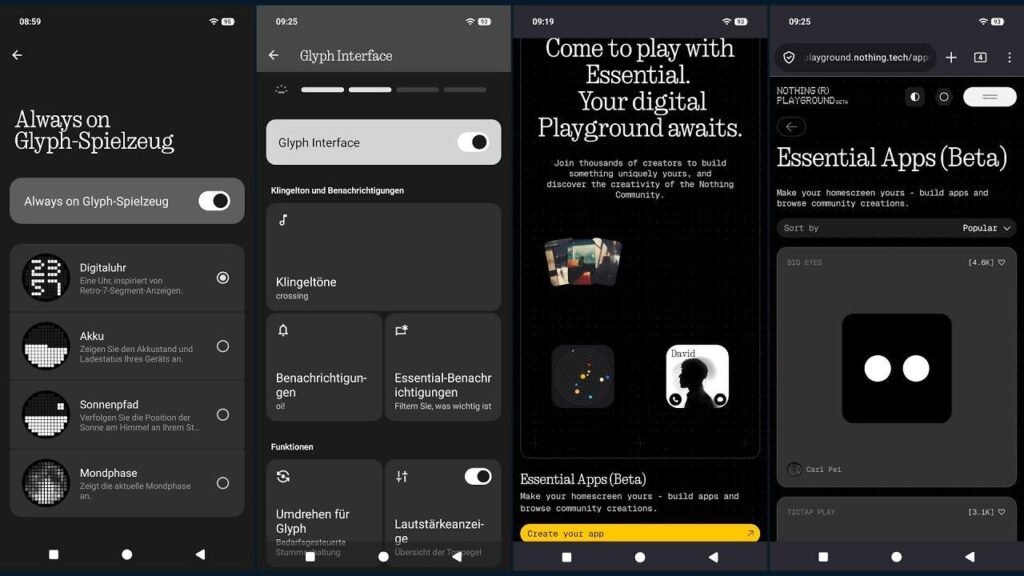
Perhaps the most unusual feature in Nothing OS 5.0 is the ability to create Essential Apps directly on the phone.
Nothing says users can describe what they want in natural language and then create an Essential App without writing code.
That could allow users to build simple personal tools for specific tasks rather than downloading a dedicated application for every need.
For example, someone could potentially create a small tracker, calculator or personal utility based on a description of what they want.
This is where the software update becomes particularly interesting from an AI perspective.
Instead of AI simply answering questions inside a chatbot, the technology is being used as an interface for creating software.
That is a much more ambitious idea.
AI Becomes a Tool for Creating Apps
The broader technology industry is increasingly moving toward natural-language software creation.
The idea is simple: instead of learning a programming language, users describe the result they want and software generates the underlying structure.
Nothing’s Essential Apps concept brings that philosophy directly to the smartphone.
The company says users can build these apps directly on their devices and place them on the homescreen.
The feature is currently presented within the company’s broader Essential ecosystem, so its practical capabilities and limitations will become clearer as users test the beta.
Truth Mode: this should not be described as a replacement for professional software development.
Generating a simple personal utility is very different from creating a secure, complex application that can handle sensitive information.
But the direction is important.
Smartphones could increasingly become environments where users don’t just install software — they create small pieces of software on demand.
Privacy Is Also Getting Attention
Nothing OS 5.0 includes several Android 17 privacy improvements.
Nothing says the update adds enhanced privacy indicators and updated permission controls, helping users understand when applications are accessing sensitive features such as the camera, microphone or location.
Android 17 itself also introduces more granular controls, including temporary access to precise location and the ability to share selected contacts rather than an entire address book.
These changes are increasingly important as smartphones become more dependent on AI.
AI-powered features often require access to information from across a device.
That creates a tension between convenience and privacy.
The more useful an assistant becomes, the more information it may need.
Operating-system-level controls therefore become an important part of deciding what applications and services are allowed to access.
Performance Is Another Focus
Nothing says OS 5.0 also improves performance, including app launches, scrolling, touch responsiveness and multitasking.
The company has also worked on memory management to reduce unnecessary application reloads.
These improvements may not generate the same attention as AI features or a new interface.
But they can be more important in daily use.
A phone that feels faster and reloads applications less frequently can appear significantly better even when its hardware has not changed.
Software optimization is therefore becoming an increasingly important differentiator among smartphone manufacturers.
Bluetooth Gets a Simpler Interface
Nothing is also redesigning Bluetooth controls inside Quick Settings.
The new interface is intended to make nearby devices easier to find and connect or disconnect with fewer steps.
This is another example of the company’s approach with OS 5.0.
The update is not built around one dramatic feature.
Instead, it combines dozens of smaller changes intended to make the phone feel more coherent.
Open Beta Begins August 26

The first major milestone arrives on August 26, when Nothing begins the Open Beta at 11:00 BST.
Beta software should not be treated as a finished product.
Users testing early releases may encounter bugs, incomplete features or changes before the final version is released.
That is particularly relevant for a major operating-system update that affects virtually every part of the phone.
Nothing is effectively using its community as part of the development process, allowing early adopters to test the software and provide feedback before the wider rollout.
Why Nothing OS 5.0 Matters
Nothing remains much smaller than Apple, Samsung and Google.
That makes its software strategy particularly interesting.
The company cannot realistically compete with the biggest smartphone manufacturers simply by offering more hardware.
Instead, it needs to create a distinctive experience.
Nothing OS 5.0 is clearly part of that strategy.
The combination of Android 17, Nothing’s visual design, Glyph hardware and natural-language app creation gives the company a software identity that is different from standard Android.
The challenge will be execution.
Unique ideas are useful only if people actually find them useful.
The Bottom Line
Nothing OS 5.0 is shaping up to be more than another Android update.
It combines Android 17, a redesigned interface, expanded Glyph functionality, stronger privacy controls and a new approach to creating simple applications with natural language.
The most interesting feature may ultimately be Essential Apps.
If Nothing can make software creation simple enough for ordinary smartphone users, it could turn the phone into something more flexible than a device filled with pre-installed applications.