SEO Title: Dolby Vision 2 Arrives on Hisense TVs: What You Need to Know
Slug: dolby-vision-2-hisense-tvs-hdr-format-war
Meta Description: Dolby Vision 2 has begun rolling out to select 2026 Hisense TVs, introducing new HDR technology, smarter picture processing and advanced motion features.
Category: Audio & Video
Tags: Dolby Vision 2, Hisense, HDR, TVs, Dolby Vision, Home Cinema, OLED, Mini LED, Streaming, Television Technology
The next chapter in the battle over television picture quality has officially begun.
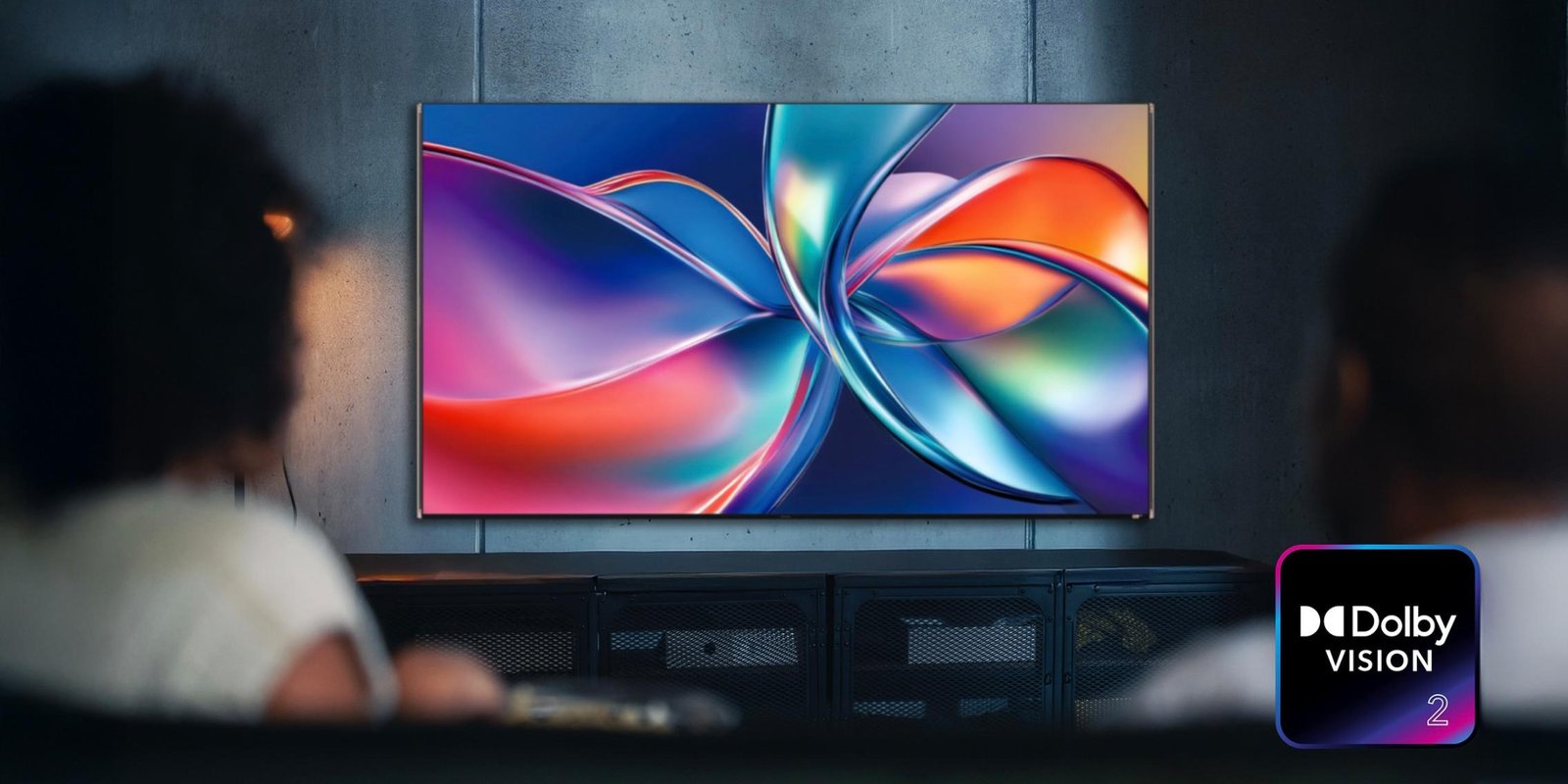
Dolby Vision 2, the company’s next-generation HDR technology, is now rolling out to selected 2026 Hisense televisions through firmware updates. Hisense is the first television manufacturer to bring the new format to consumers, turning what was previously a technology announcement into a feature that owners can actually use.
The arrival is important because HDR has become one of the defining technologies in modern television. High Dynamic Range determines how a TV handles brightness, contrast, colors and details across bright and dark parts of an image.
Dolby Vision has been one of the most widely adopted premium HDR formats. Now Dolby is attempting to take the technology further — while facing competition from alternatives such as HDR10+ Advanced.
The result could be another format battle in the television industry.
Hisense Gets There First
The first Dolby Vision 2-compatible televisions are selected 2026 Hisense models, including the UX, UR9, UR8 and U7 series, with regional differences in model names and availability. The update is being distributed through firmware and supports compatible televisions running Google TV or Hisense’s VIDAA platform.
The rollout is phased, meaning owners should not necessarily expect the update to arrive simultaneously in every country or on every compatible model.
This is an important distinction.
Dolby Vision 2 is not suddenly available on every television that supports the original Dolby Vision format. The new technology requires compatible hardware, and the initial rollout is deliberately limited.
That makes the current launch more of a first step than a mass-market transformation.
What Is Actually New?
Dolby Vision 2 introduces a redesigned picture-processing system and a feature called Content Intelligence.
The idea is to make the television more aware of how content was created and how it should ideally be displayed.
Instead of treating every Dolby Vision scene in roughly the same way, Dolby Vision 2 can use additional information to help the TV optimize elements such as brightness, contrast and color reproduction.
There is also an adjustable intensity control, giving viewers more influence over the strength of the HDR presentation.
For consumers, however, the most important question is simple:
Will movies and shows actually look better?
In some cases, the answer should be yes.
Dolby says the new image engine can improve the presentation of existing Dolby Vision content, meaning consumers do not necessarily have to wait for a completely new library of Dolby Vision 2 titles before seeing potential benefits.
But the biggest advantages will depend on content created specifically to take advantage of the new system.
And that ecosystem is still developing.
Dolby Vision 2 Max Takes Things Further
For higher-end televisions, Dolby Vision 2 introduces a more advanced tier called Dolby Vision 2 Max.
This adds features including Authentic Motion and Light Sense 2.
Authentic Motion is designed to give content creators more control over how motion is handled, with the goal of reducing unwanted judder and the artificial-looking “soap opera effect” associated with some traditional motion processing.
Light Sense 2 takes a different approach.
It uses information about the viewing environment to adjust the presentation according to ambient light. That could be useful because the same television can look dramatically different depending on whether it is being watched in a dark cinema-style room or a brightly lit living room.
A picture that looks perfect at night can sometimes appear too dark during the day.
Dolby Vision 2 is designed to address that problem more intelligently.
There Is One Major Limitation
This is where the hype needs to be controlled.
Not all Dolby Vision 2 features will work with all existing content.
Some of the technology can improve existing Dolby Vision material, but features that depend on new content metadata require cooperation from content creators and distributors.
Dolby has announced commitments from services including CANAL+, iQIYI and Peacock, but the full Dolby Vision 2 ecosystem is still developing.
That means buying a compatible television today does not suddenly give consumers access to a huge library of fully optimized Dolby Vision 2 movies and shows.
This is similar to many technology launches.
The hardware can arrive before the ecosystem is ready.
Dolby Is Also Looking at the Future
One of the more ambitious aspects of Dolby Vision 2 is that it is designed to support televisions capable of much higher brightness levels than today’s mainstream sets.
The format has been designed with displays capable of reaching up to 10,000 nits in mind, even though consumer televisions currently operate far below that level.
That may sound excessive today.
But it demonstrates where the industry believes television technology is heading.
As Mini LED, RGB Mini LED and other advanced display technologies become brighter and more sophisticated, HDR standards need to evolve alongside them.
Dolby Vision 2 is therefore not simply about making today’s TVs look better.
It is also an attempt to create a framework for the displays of tomorrow.
Samsung Has Its Own Answer
Dolby is not operating in an empty market.
Samsung has continued to promote HDR10+, and the company is developing HDR10+ Advanced as a competing technology.
That creates an increasingly interesting divide in the television industry.
Dolby Vision is a proprietary technology with broad support across many premium televisions and streaming services.
HDR10+, meanwhile, gives manufacturers another route for delivering advanced HDR without relying on Dolby’s ecosystem.
For consumers, the format battle can be confusing.
A television may have excellent hardware but still provide different HDR experiences depending on the streaming service, content and supported standards.
The real winner will ultimately be the technology that receives the broadest combination of TV manufacturer support and content availability.
What This Means for TV Buyers
If you already own a compatible 2026 Hisense television, Dolby Vision 2 is potentially one of the most interesting firmware updates the company has delivered.
But there is no reason for owners of older televisions to immediately replace their sets simply because Dolby Vision 2 exists.
The technology is still in its early stage.
For people shopping for a new premium television, however, Dolby Vision 2 support could become a useful consideration — particularly if they plan to keep the television for many years.
The more important question is whether other major manufacturers follow Hisense.
Some television brands are expected to adopt Dolby Vision 2, but widespread support will take time.
The Bigger Picture
Dolby Vision 2 marks an important shift in the television market.
For years, manufacturers competed primarily on hardware specifications: brighter panels, higher resolutions, faster refresh rates and better contrast.
Now software and content intelligence are becoming equally important.
A modern television is no longer simply a screen.
It is a computer, an image processor, a streaming platform and increasingly a system that can analyze the content it displays.
Dolby Vision 2 is built around that reality.
Truth Mode: it is too early to call Dolby Vision 2 a revolution. The technology is promising, but its long-term impact depends on hardware adoption and, most importantly, the amount of content created to exploit its new capabilities.
Still, one thing is clear.
The HDR battle is far from over.
And with Dolby Vision 2 now reaching real televisions, the next generation of TV picture quality has officially moved from the laboratory to the living room.