
Google has opened its SynthID Detector to users worldwide, providing a public tool for checking whether an image, video or audio file contains the invisible SynthID watermark used to identify AI-generated media. The service was previously tested with journalists, media professionals and researchers before being expanded to the general public.
The launch comes as synthetic images, videos and audio become increasingly difficult to distinguish from authentic material.
What is SynthID Detector?
SynthID Detector is a verification system developed by Google DeepMind.
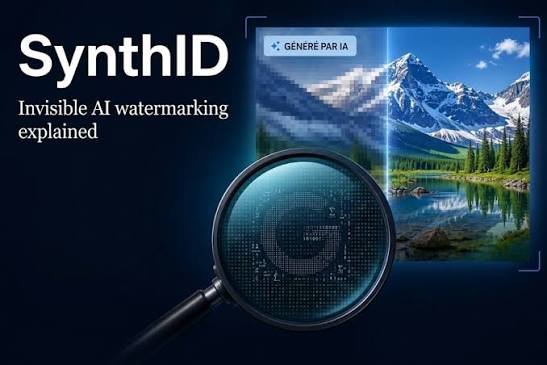
Rather than relying only on visual clues, the technology searches for an invisible digital watermark embedded in AI-generated content.
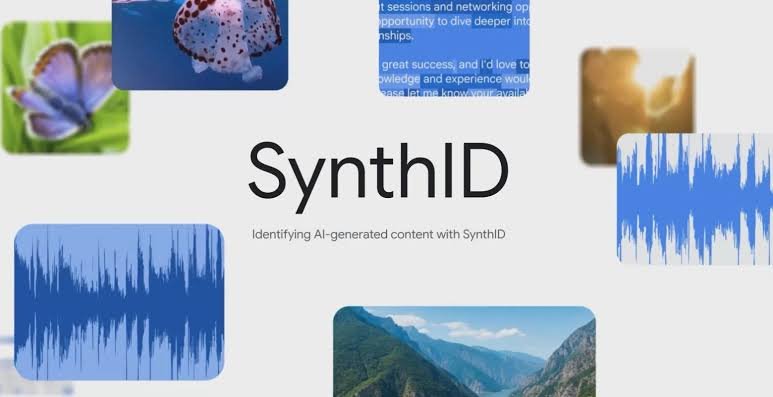
SynthID can be embedded into images, video and audio during generation. The watermark is designed to remain detectable after common modifications such as compression or editing.
It is not limited to Google content
One of the most significant changes is the expansion beyond Google’s own AI systems.
Google says the public detector can identify SynthID-related content from Google and participating partners including OpenAI, NVIDIA and Kakao.
Apple is expected to join the ecosystem soon.
Why this matters
AI-generated media is becoming increasingly common across social platforms, news websites and messaging services.
That creates a growing verification problem.
A fake image or video can reach millions of people before journalists or fact-checkers have time to establish its origin.
A watermark provides another layer of evidence about how a piece of media was created.
A major limitation
SynthID Detector is not a universal AI detector.
If the system does not find a SynthID watermark, that does not prove that the content was created by a human.
It simply means that the detector did not identify a supported SynthID watermark.
That distinction is critical when the technology is used for journalism or fact-checking.
What it means for users
For ordinary users, SynthID adds another verification step before sharing suspicious media.
A user can check an image, video or audio file and then combine the result with traditional verification:
- identify the original source;
- check the publication date;
- verify the location;
- compare the claim with reputable news organizations;
- examine the broader context.
SynthID should therefore be viewed as a verification signal rather than a final verdict.
Impact on journalism
The tool could become particularly useful for journalists and media organizations dealing with viral images and videos.
A quick watermark check can help establish whether a piece of media may have originated from a supported AI system.
However, a negative result should never be treated as proof of authenticity.
Professional verification still requires source checks, metadata analysis, geolocation and contextual investigation.
What comes next?
Google says Apple will be added to the ecosystem soon, while OpenAI, NVIDIA and Kakao are already listed as participating partners.
The larger question is whether more AI companies will adopt interoperable watermarking standards.
If they do, users could eventually have a much easier way to establish the provenance of synthetic media across the internet.
Google’s decision to make SynthID Detector public marks an important step toward making AI-generated media easier to verify.
It does not solve the deepfake problem, and it cannot identify every piece of AI-generated content.
But by expanding the system to partners such as OpenAI and NVIDIA, Google is moving toward a broader verification ecosystem.
For users, the key lesson is simple: SynthID can provide useful evidence about the origin of media, but it should never be the only verification method.