

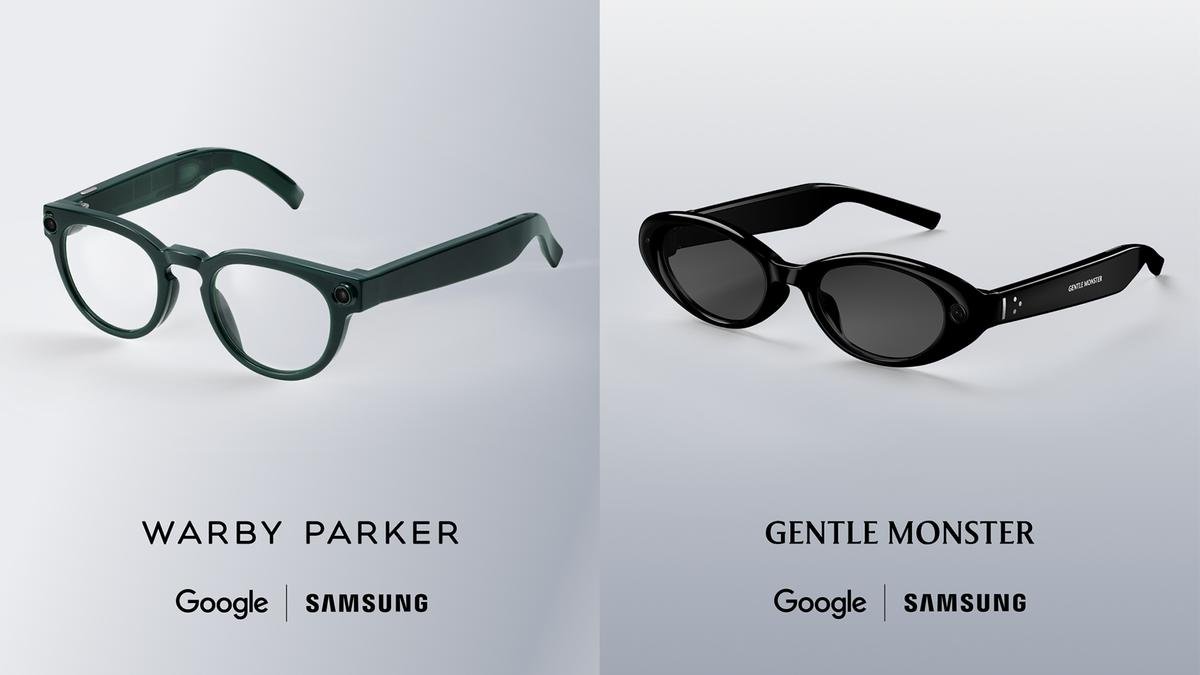
Google and Samsung are entering the growing AI smart glasses market with a new generation of intelligent eyewear powered by Gemini. Developed alongside Gentle Monster and Warby Parker, the glasses combine hands-free AI assistance, photography, real-time translation and navigation in a lightweight design.
Google and Samsung have officially introduced their new AI-powered smart glasses, marking another major step in the race to bring artificial intelligence beyond smartphones and into everyday wearable devices.
The new collection, branded as Intelligent Eyewear, was developed in collaboration with fashion eyewear companies Gentle Monster and Warby Parker. It integrates Google’s Gemini AI assistant, allowing users to interact with their surroundings, access information and perform everyday tasks using voice commands.
The announcement puts Google and Samsung in direct competition with Meta, whose Ray-Ban and Oakley smart glasses have already established a strong position in the emerging AI eyewear market.
Gemini Brings Artificial Intelligence Directly to Your Glasses

The main attraction of the new glasses is their integration with Google’s Gemini assistant.
Instead of reaching for a smartphone, users can activate Gemini through voice commands or by touching the frame.
The AI assistant can help users:
- Identify unfamiliar buildings, landmarks and objects.
- Translate conversations and written text in real time.
- Navigate unfamiliar locations using Google Maps.
- Make calls and respond to messages.
- Capture photos and videos.
- Summarize information from meetings and save notes.
- Manage reminders and everyday tasks.
The glasses also support Google Translate, including speech translation across more than 70 languages.
Google’s approach is designed to make AI assistance available naturally throughout the day, without requiring users to constantly interact with a smartphone screen.
12MP Camera, Lightweight Design and Up to Nine Hours of Battery Life
The new Intelligent Eyewear combines several hardware components inside traditional-looking glasses frames.
Key specifications include:
- Camera: 12MP HDR camera for photographs and video.
- Audio: Open-ear speakers and four microphones.
- Processor: Qualcomm Snapdragon AR1 Gen 1.
- Weight: Approximately 41 grams.
- Battery: Up to nine hours on a single charge.
- Charging case: Up to 72 hours of combined usage, according to Samsung.
The open-ear audio system allows users to listen to Gemini responses and make calls while remaining aware of surrounding sounds.
The glasses are designed to work with compatible Google Pixel, Samsung Galaxy and iPhone devices, although availability and supported features vary by market and smartphone.
Samsung Partners With Gentle Monster

Rather than positioning the glasses purely as another technology gadget, Samsung and Google are placing considerable emphasis on fashion and everyday comfort.
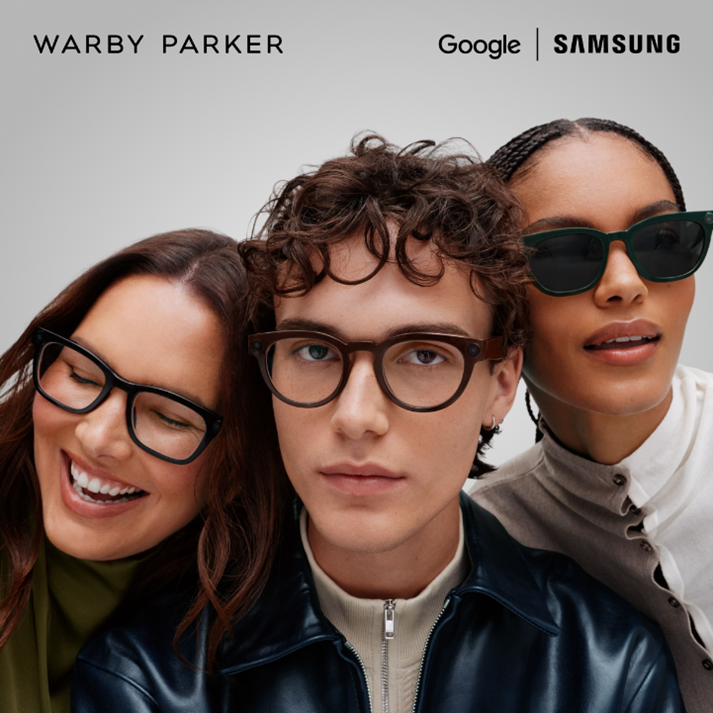
The collection includes 30 different designs developed with Gentle Monster and Warby Parker.
The two eyewear brands bring different design approaches, offering a range of frame styles, colours and lens options.
According to reported US pricing, Warby Parker models start at $395, while Gentle Monster models start at $449.
Pre-orders began in the United States on November 12, with the official launch scheduled for December 10, 2026, in the United States and South Korea.
Privacy Remains a Major Challenge for AI Smart Glasses
Despite their capabilities, smart glasses equipped with cameras raise important questions about privacy.
People around the wearer may be recorded without immediately realizing it, creating concerns about consent, surveillance and the handling of personal information.
Google says it has introduced several safeguards:
- A visible indicator light activates when recording begins.
- The recording indicator is designed to resist tampering.
- Bystanders’ faces are blurred before visual information is processed by Gemini.
- Captured visuals are not used to train Google’s AI models.
- Users can manage camera and microphone permissions.
However, privacy experts warn that technical safeguards alone may not eliminate concerns about people being recorded in public spaces.
Reuters has reported that privacy concerns are already influencing how some businesses and governments approach camera-equipped smart glasses.
Google and Samsung Want to Challenge Meta
Meta currently has a strong position in the smart glasses market through its Ray-Ban and Oakley partnerships.
According to research data cited by Reuters, Meta accounted for 81.3% of AI smart glasses shipments during the first half of 2026.
Google and Samsung are now attempting to challenge that position by combining Gemini’s AI capabilities with Samsung’s hardware expertise and established eyewear brands.
The competition is no longer just about building glasses with cameras and speakers. The real battle is about creating an AI assistant that understands the user’s surroundings and can provide useful help without interrupting everyday activities.
The Future of AI May Be Worn, Not Held
The introduction of Gemini-powered Intelligent Eyewear represents another important development in the evolution of personal computing.
Smartphones are still central to everyday digital life, but companies are increasingly exploring devices that allow users to access AI without looking at a screen.
For Google and Samsung, the challenge will be convincing consumers that AI glasses are more than an interesting experiment.
Their success will depend on everyday usefulness, battery performance, privacy protections, comfort and whether users are willing to wear an AI-powered device throughout the day.
One thing is becoming increasingly clear: the next major battle in artificial intelligence may not happen on smartphone screens, but directly in front of our eyes.


