By TheTechSpot Editorial Team
August 20, 2026
YOUR NEXT AMAZON PACKAGE COULD FLY
Amazon’s decade-long drone dream is finally getting serious
For more than a decade, Amazon has promised that packages could one day arrive at customers’ homes not by truck, but by air.
Now that futuristic idea is getting much closer to becoming an everyday reality.
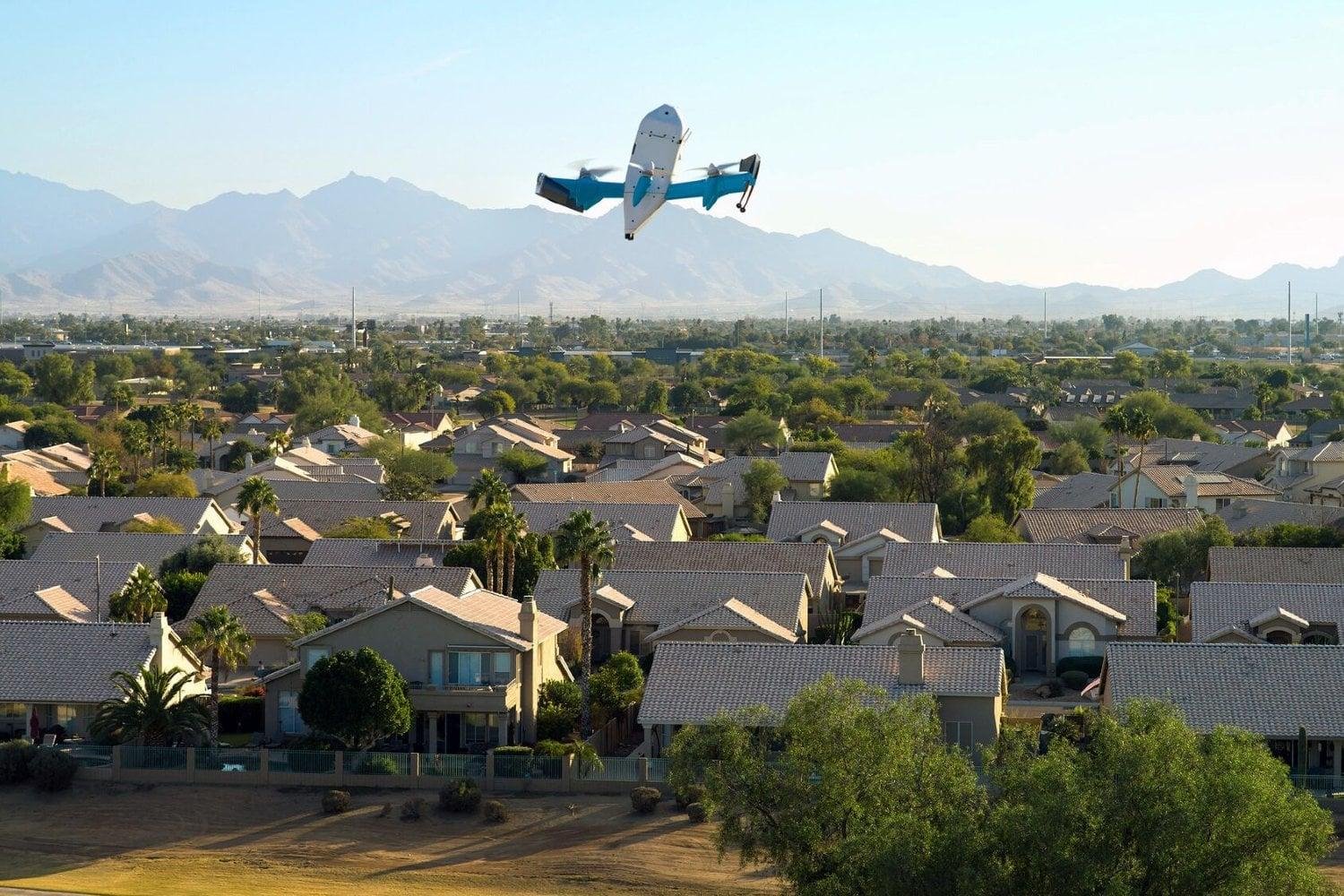
Amazon has announced plans to expand its Prime Air drone delivery service to approximately 500 U.S. cities and towns by the end of 2026, dramatically increasing the program from its current 11 operating locations.
The announcement represents a major escalation of Amazon’s long-running experiment with autonomous delivery.
And if the company succeeds, the familiar sound of a delivery truck stopping outside your home could eventually be replaced by something very different:
A drone hovering above your backyard.
From science fiction to your front door

Amazon founder Jeff Bezos first publicly demonstrated the company’s drone-delivery concept in 2013.
At the time, the idea sounded almost like science fiction.
Bezos predicted that Amazon could eventually deliver small packages by drone within four or five years.
That timeline proved far too optimistic.
Regulatory hurdles, safety requirements, technical challenges and the complexity of operating autonomous aircraft around populated areas slowed the project considerably.
More than a decade later, however, Amazon is finally preparing for a much larger rollout.
The company currently operates from 11 locations, including sites in Papillion, Nebraska, and Ruskin, Florida, with additional communities such as Syracuse, New York, and areas near Cleveland planned for expansion.
How Amazon’s drone delivery actually works
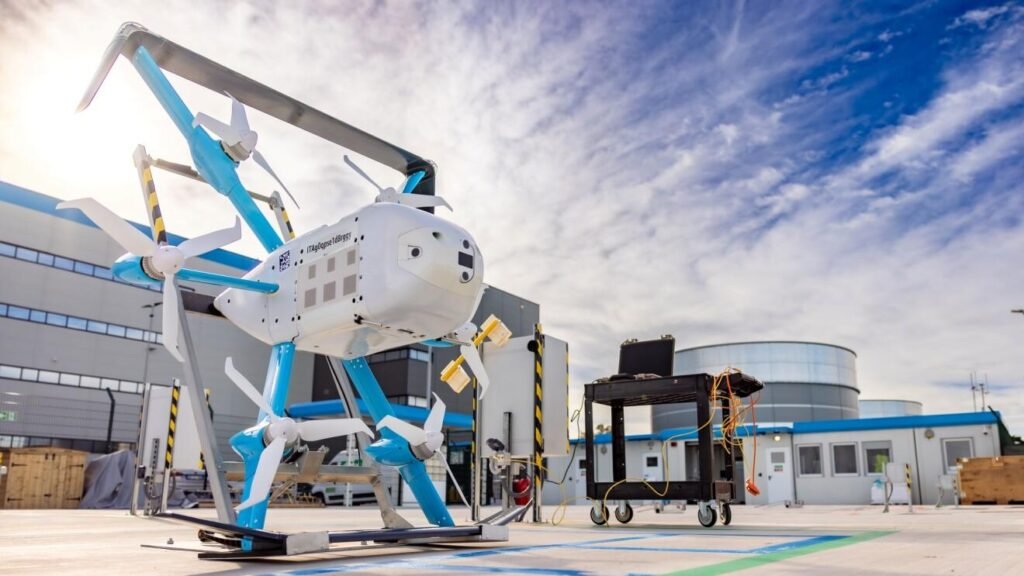
The latest generation of Amazon’s delivery drone is called the MK30.
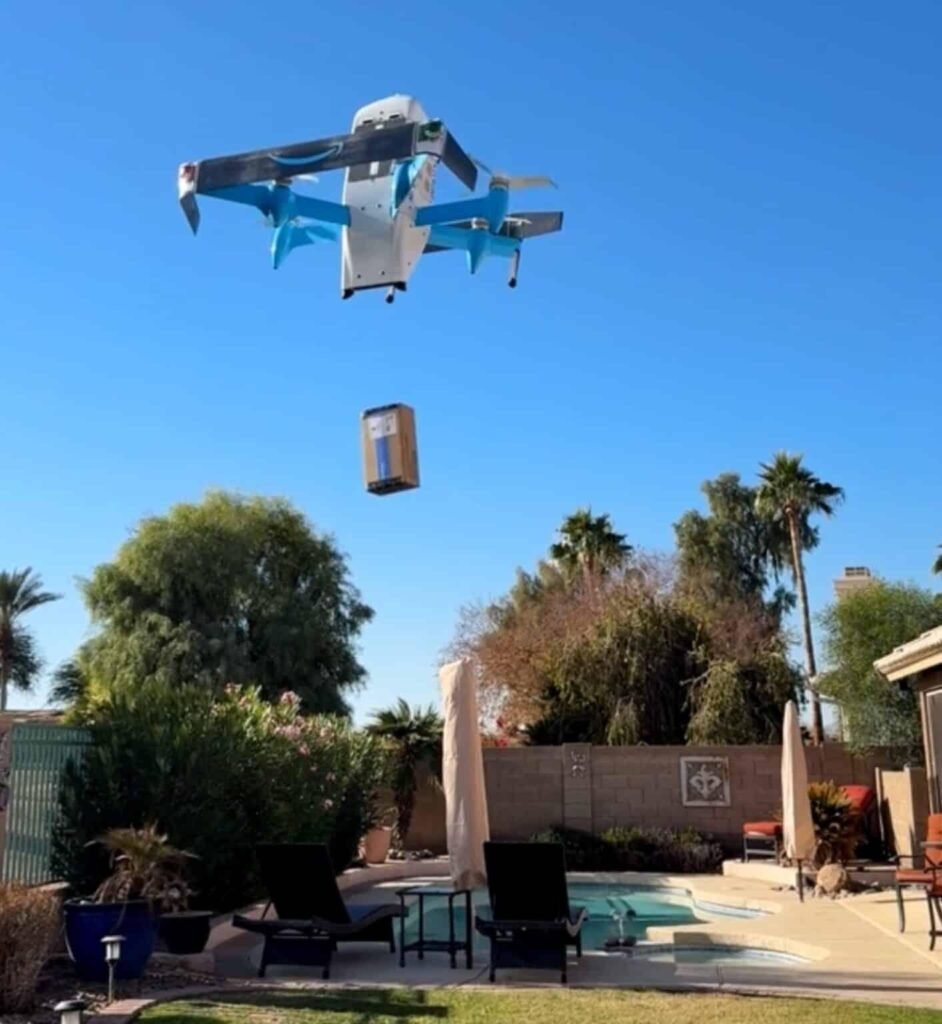
Unlike some earlier designs, the MK30 does not need to land at the customer’s property.
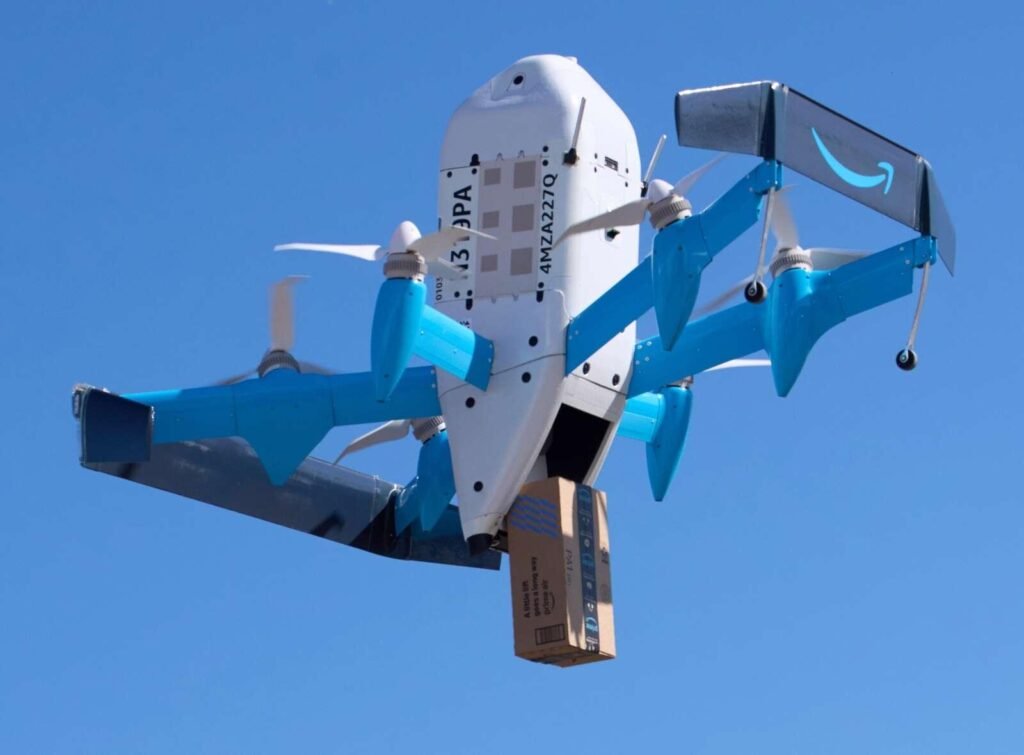
Instead, it approaches the delivery location, hovers several feet above the ground and releases the package.
That seemingly small change is extremely important.
Landing introduces additional risks.
The drone needs a suitable surface.
There could be people, pets, trees or other obstacles nearby.
By hovering and dropping the package, Amazon can potentially make deliveries faster and more flexible.
Your package could arrive without a delivery truck

Imagine ordering something from Amazon.
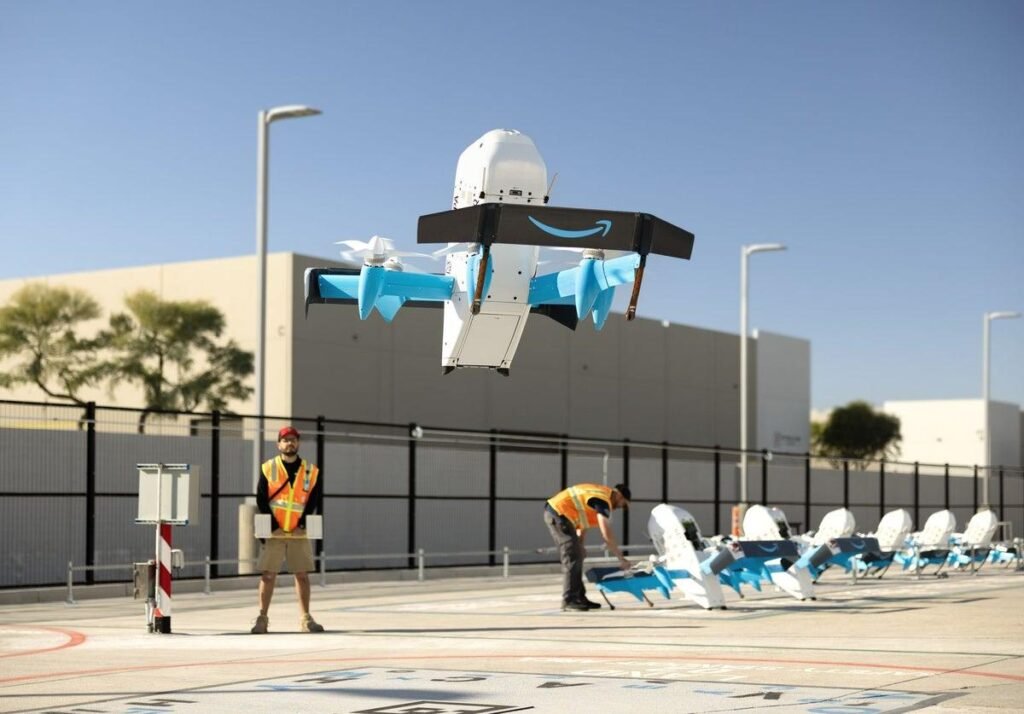
Instead of waiting for a van to arrive later that day, an autonomous aircraft could potentially leave a nearby distribution center and fly directly toward your home.
The drone reaches the destination.
It identifies the approved delivery location.
It hovers.
The package drops.
And the drone flies away.
The entire process could take only a few minutes.
That is the vision Amazon is trying to turn into a scalable commercial service.
How much does drone delivery cost?
Amazon says a drone delivery currently costs $4.99.
Prime members receive a $2 discount, while the fee is waived for orders of at least $50.
That pricing structure could become particularly interesting for urgent purchases.
Forgot an ingredient?
Need a small household item?
Need something quickly?
Instead of waiting for a traditional delivery route, customers could potentially pay a small additional fee to have the product delivered directly by drone.
Amazon isn’t trying to deliver everything by drone
There is an important limitation.
Drones cannot replace Amazon’s entire delivery network.
They have limits on:
- weight;
- package dimensions;
- flight distance;
- weather;
- battery capacity;
- delivery locations.
The technology therefore works best for relatively small items.
Amazon’s drone service is designed to complement its existing delivery network rather than replace delivery vans completely.
But even a relatively small percentage of packages could represent millions of deliveries.
One drone hub can cover multiple communities

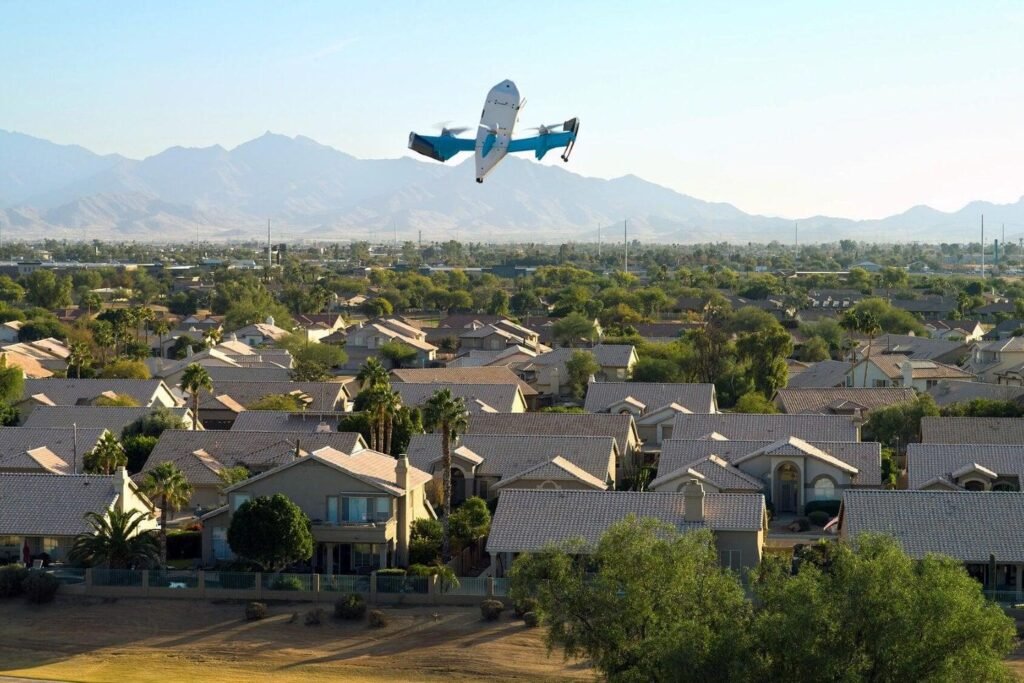
Amazon says a single drone delivery hub can serve communities within roughly a 7.5-mile radius.
That means Amazon does not necessarily need a separate facility in every town.
One strategically positioned hub can potentially serve several surrounding communities.
This could make the economics of drone delivery much more attractive.
The bigger the network becomes, the more Amazon can distribute the cost of infrastructure and technology.
But there is a problem: people can hear them
The technology may be futuristic.
The sound is not necessarily welcome.
Residents in some communities have raised concerns about drone noise.
Amazon executive Sam Bailey told local officials that drones would typically be audible for around 20 seconds during the descent and departure, at a noise level below that of a lawnmower.
But residents don’t necessarily see it that way.
For someone living underneath a frequently used flight route, hearing drones repeatedly throughout the day could become irritating.
And this raises a difficult question:
How much technological convenience should communities accept?
Privacy concerns are also growing
Another major concern is privacy.
Delivery drones need cameras and sensors to navigate safely.
That naturally raises questions about what the aircraft can see.
Amazon says its cameras are used for navigation, not for monitoring residents.
But as drones become more common, public concern about cameras flying over homes is likely to continue.
The issue becomes particularly sensitive when autonomous systems operate without a human pilot physically controlling the aircraft.
What about birds?
Wildlife is another concern.
Birds can interact with drones, potentially creating risks for both animals and aircraft.
Some residents have specifically raised questions about bird safety during local approval processes.
This highlights one of the biggest challenges facing autonomous delivery:
The real world is unpredictable.
A computer simulation can be perfect.
A real neighborhood is not.
There are birds.
Trees.
Power lines.
Children.
Pets.
Weather.
Construction equipment.
And thousands of other variables.
Amazon has already experienced accidents
Amazon’s drone program has not been completely free of problems.
Reuters reported that two drones collided with a crane in suburban Arizona last October.
The incident remains under investigation by the National Transportation Safety Board.
That incident demonstrates why regulators are cautious about allowing large-scale autonomous aircraft operations over populated areas.
A delivery truck accident is serious.
An aircraft falling from the sky creates a very different category of risk.
Amazon still needs local approval

Even though Amazon has received authorization from the Federal Aviation Administration to operate in most U.S. areas, local approvals are still necessary in many communities.
That can mean:
- city council meetings;
- planning hearings;
- public comments;
- zoning decisions;
- safety reviews.
Amazon’s expansion therefore depends not only on technology.
It also depends on whether local communities are willing to accept it.
Some cities are saying yes
In Nampa, Idaho, Amazon representatives faced questions about noise, safety and logistics during a public meeting.
Residents expressed concerns about the technology, including potential effects on birds.
But the local board ultimately voted unanimously to approve the rollout.
That may be an indication of what Amazon will encounter across the country.
Some communities will embrace the technology.
Others may demand restrictions.
And some may reject it altogether.
The bigger battle isn’t about drones
Amazon’s drone program is part of a much larger technological transformation.
The company is trying to automate the entire delivery process.
Think about the chain:
AI → warehouse robots → automated sorting → autonomous drones → automated delivery.
Each stage reduces the amount of human labor required.
The long-term objective is not simply to make deliveries faster.
It is to make the entire logistics network increasingly autonomous.
What happens to delivery drivers?
This is one of the most interesting questions.
Amazon currently relies on enormous numbers of delivery drivers and logistics workers.
If drones become capable of handling a larger percentage of small-package deliveries, some routes could become less necessary.
But that does not necessarily mean delivery drivers disappear.
Drones have limited capabilities.
Human drivers can carry large packages, deliver to complicated locations and handle multiple orders in one trip.
The more likely future may be a combination:
Humans + vans + robots + drones.
Weather could become a major obstacle

Drones work best under predictable conditions.
Heavy rain.
Strong winds.
Snow.
Extreme heat.
Poor visibility.
All can complicate autonomous flight.
That means even a highly sophisticated drone network will probably require traditional delivery systems as backup.
Amazon’s logistics network could therefore become more flexible rather than completely drone-based.
When conditions are ideal, drones handle small urgent deliveries.
When conditions are difficult, conventional delivery takes over.
AI is the invisible technology behind the drone
The drone itself is only one part of the system.
To operate safely, Amazon needs sophisticated software capable of:
- understanding the environment;
- detecting obstacles;
- planning routes;
- avoiding other aircraft;
- identifying safe delivery zones;
- responding to unexpected conditions.
That means Prime Air is also an AI project.
The aircraft may be flying autonomously, but the intelligence behind the system is what makes that possible.
Could this eventually come to Europe?
That is a much bigger question.
Europe has different aviation regulations, privacy rules and urban environments.
Dense cities could make drone delivery significantly more difficult.
But suburban and rural areas may be much easier.
If Amazon demonstrates that large-scale drone delivery can be safe and economically viable in the United States, other markets could eventually follow.
The future of online shopping may arrive from above
For years, Amazon competed on one simple promise:
Get your package quickly.
Same-day delivery became normal.
Then one-hour delivery became possible in selected locations.
Now Amazon wants to take the next step:
Delivery in minutes.
Drone technology could make that possible for certain products.
The technology is no longer a demonstration at a press conference.
It is becoming a real commercial service.
Amazon’s plan to reach approximately 500 U.S. communities by the end of 2026 could become one of the most important tests of autonomous delivery technology.
The company has spent more than a decade trying to make the idea work.
Now the experiment is becoming much bigger.
If consumers embrace it, Amazon could create a new standard for rapid delivery.
If communities reject the noise, safety or privacy concerns, expansion could slow dramatically.
Either way, something important is happening.
The delivery truck isn’t disappearing tomorrow.
But for the first time, the alternative is no longer just a concept.
Your next Amazon package might actually arrive from the sky.