




Artificial intelligence is moving further away from screens and deeper into the physical world.
One of the companies pushing that transition at industrial scale is Caterpillar.
The American heavy-equipment giant is using decades of experience in mining automation to bring similar technology into construction sites, quarries and other environments where machines must operate under difficult and sometimes dangerous conditions.
Caterpillar already operates a large ecosystem of autonomous and remotely controlled equipment.
Now the company wants to take that technology further by connecting machines, AI, data and human workers in real time.
From Mining to Construction
Caterpillar’s major push into autonomy began in mining, where machines operate across huge, hazardous environments that can be difficult for humans.
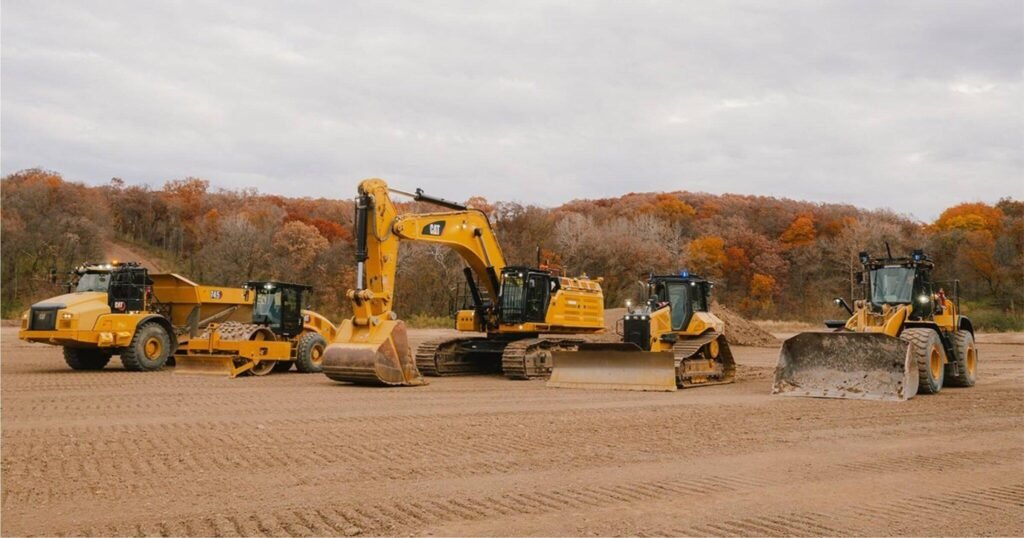
The company offers autonomous haul trucks, drilling equipment, underground loaders, dozers and remotely controlled construction machines.
Behind that equipment is a software infrastructure designed to monitor fleets, analyze terrain and manage machines from centralized operations centers.
That experience is now becoming the foundation for the next step.
Caterpillar wants to apply the same principles to more dynamic environments where machines must constantly adapt to terrain, changing conditions and people working nearby.
According to CTO Jaime Mineart, the biggest challenge is not building the technology.
It is integrating that technology into the way people actually work.
Machines Are Starting to Make Decisions
Caterpillar is not focusing only on remote control.
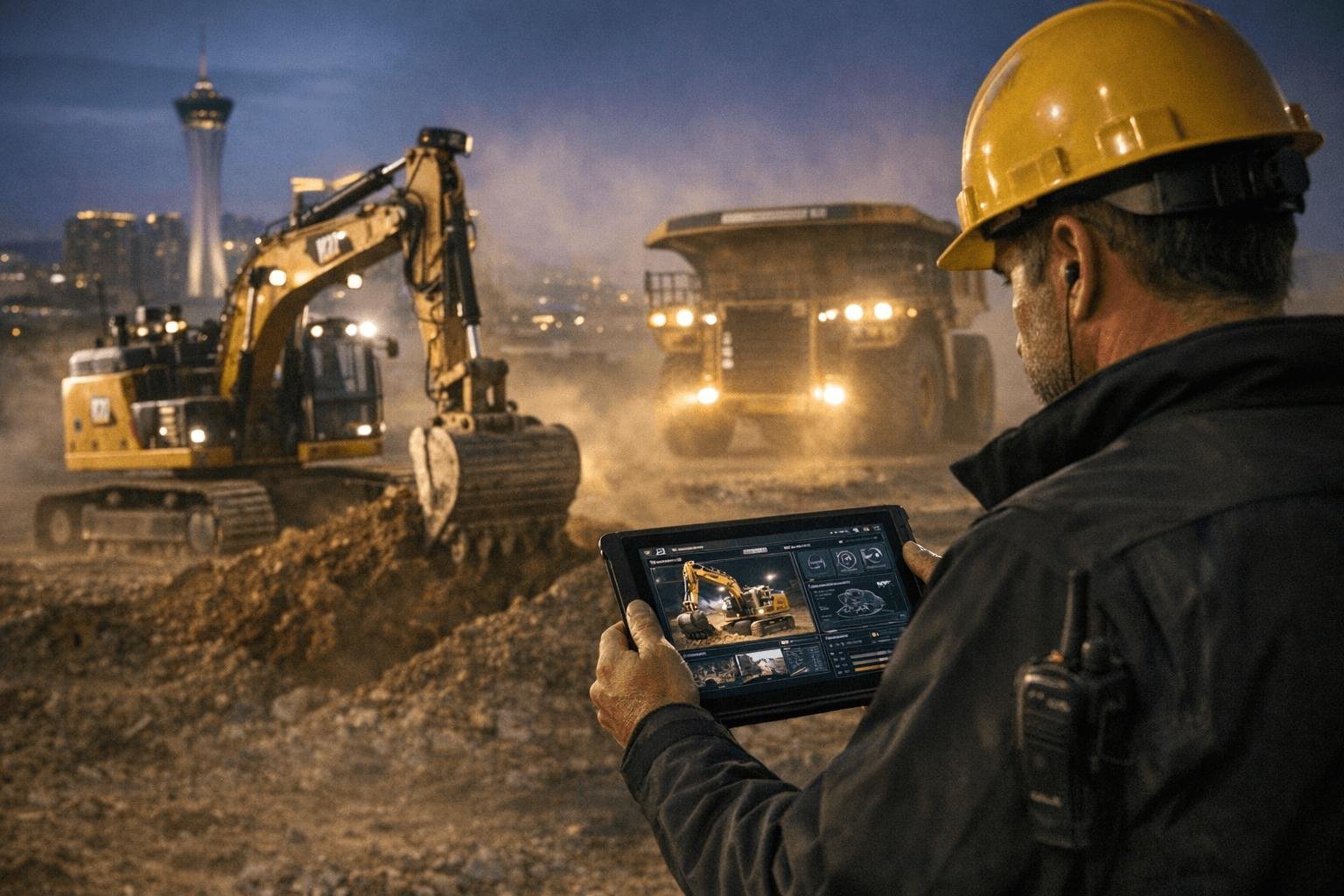
The company is also building AI systems designed to assist workers in real-world situations.
One example is the Cat AI Assistant.
The system allows technicians working next to a machine to use voice commands to access repair procedures, troubleshoot potential problems and identify parts they may need.
Instead of leaving the machine to search through manuals or technical documents, a technician can receive relevant information when it is needed.
This is one of the most practical examples of AI entering industrial work.
It is not simply a chatbot answering questions.
It is a system using machine data to help a human make a decision in the physical world.
1.6 Million Connected Assets

One of Caterpillar’s biggest advantages is the scale of its data.
The company says it has approximately 1.6 million connected assets around the world.
Those machines generate more than 16 petabytes of structured data.
That gives Caterpillar an enormous information base for understanding how heavy equipment behaves in real-world conditions.
The more machines connected to the system, the more data can be used to understand component wear, mechanical problems, fuel efficiency, productivity and operating conditions.
In theory, this could lead to machines that do not simply wait until something breaks.
They could warn operators before a failure occurs.
AI Is Creating a New Kind of Industrial Worker
This is where the story becomes even more interesting.
As machines become autonomous, people do not necessarily disappear from the process.
Their roles change.
An operator who once controlled a single machine could eventually monitor multiple machines from a centralized control room.
A technician could use AI to diagnose a problem before opening the engine compartment.
An engineer could use a digital model of a construction site to understand how the project is progressing.
Automation is therefore changing more than machines.
It is changing jobs.
And Caterpillar is preparing for that transition by investing heavily in its workforce.
$100 Million to Train Employees
Caterpillar plans to invest $100 million over the next five years to train employees in AI, autonomy and robotics.
The company has approximately 118,000 employees.
The goal is to prepare workers to operate alongside new technologies rather than simply be replaced by them.
That represents an important shift in how major industrial companies are approaching AI.
For years, the automation debate focused on whether machines would replace people.
Caterpillar is asking a different question:
How can smarter machines make people more productive?
Digital Twins Bring the Construction Site Into Software
Another important technology being used by Caterpillar is the digital twin.
A digital twin is a digital representation of a physical machine, factory or environment that can be used to analyze what is happening in the real world.
Caterpillar is using AI to scan environments and create digital models that can help analyze operations.
That could allow companies to identify problems without immediately interfering with physical processes.
In the future, an engineer could see on a screen how a machine is behaving at a construction site thousands of miles away.
They could analyze the data.
They could simulate a change.
And only after understanding the result could the change be introduced in the real world.
This is one of the ways AI, robotics, cloud computing and data analytics are converging.
AI Is Also Modernizing Old Software
Caterpillar is using AI for a less glamorous but equally important problem: legacy software.
The company is using AI agents to modernize older code, generate and test new software and identify defects earlier.
That matters because industrial machines can remain in service for decades.
The software supporting them can therefore become decades old as well.
Modernizing that software manually can be expensive and slow.
AI could dramatically accelerate the process.
But humans still remain responsible for the final decisions.
The Problem AI Alone Cannot Solve
Caterpillar acknowledges that physical autonomy is much more complex than deploying an AI model.
An autonomous machine must understand terrain.
It must recognize obstacles.
It must anticipate the movements of people and other vehicles.
It must respond to changing weather.
And above all, it must be safe.
A mistake in a chatbot may produce a wrong answer.
A mistake involving a multi-ton autonomous truck can cause a serious accident.
That is why industrial autonomy is developing more slowly than many software applications.
Safety is not an optional feature.
It is the first requirement.
AI Is Reshaping Caterpillar’s Business Too
Caterpillar’s AI investment is also connected to the broader AI infrastructure boom.
Data centers require enormous amounts of power.
That is increasing demand for Caterpillar’s power-generation equipment.
The company’s second-quarter revenue reached a record $20.5 billion, while its power-generation division saw sales jump 72% to $3.10 billion, according to TechCrunch.
That creates an interesting cycle.
AI requires data centers.
Data centers require power.
Power generation requires equipment.
And industrial machines themselves are becoming smarter through AI.
Caterpillar is positioned across several parts of that chain.
From Autonomous Trucks to Autonomous Construction Sites

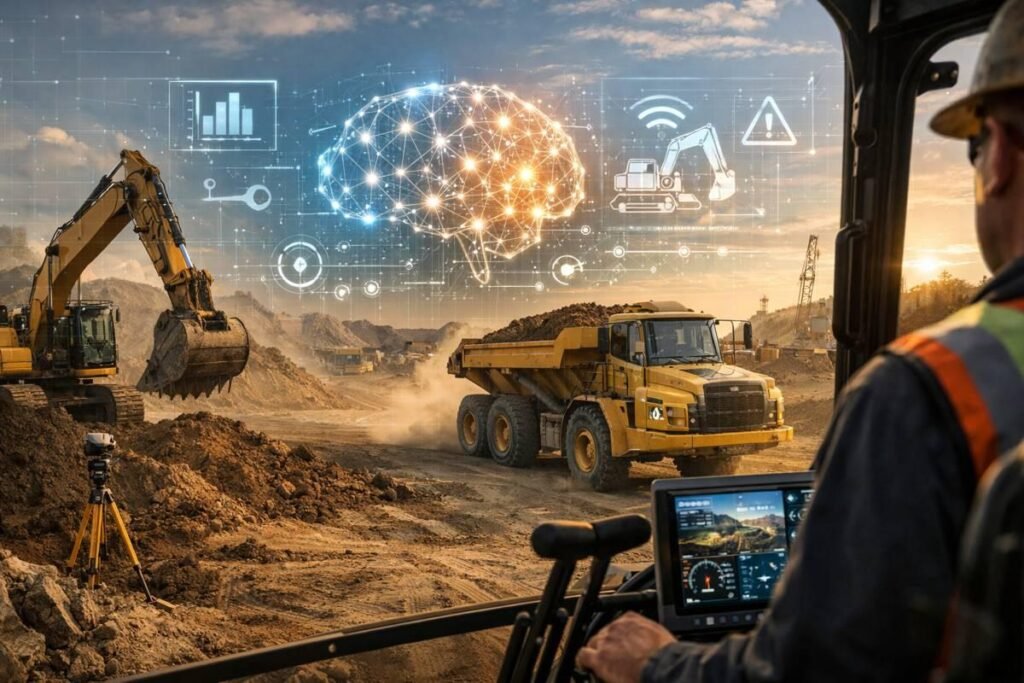
If Caterpillar’s strategy succeeds, future construction sites could look dramatically different.
Trucks could move themselves.
Dozers could perform tasks with minimal human intervention.
Drones could scan terrain.
AI could analyze project progress.
Digital twins could simulate changes.
Operators could monitor entire fleets from centralized control rooms.
Technicians could use AI to diagnose mechanical problems in real time.
This is no longer purely futuristic.
Parts of this system already exist.
The challenge is connecting them into a reliable system that works at massive scale.
The Next AI Race Will Not Be Only About Models
Caterpillar shows that the AI competition is no longer limited to companies such as OpenAI, Google, Microsoft and Anthropic.
It is spreading into industry.
Mining.
Factories.
Agriculture.
Construction.
Transportation.
In these sectors, AI is not measured by model parameters.
It is measured by how many tons a machine can move, how many hours it can operate without intervention and how safely it can work alongside humans.
That is a much more practical race.
And Caterpillar has a major advantage:
decades of real-world data.
In the AI era, that data may be almost as valuable as the model itself.
The Tech Spot Editorial Team