





Meta has agreed to one of the biggest settlements in the history of the social media industry, reaching a deal with a bipartisan group of 52 U.S. attorneys general that could cost the company approximately $18 billion over the next decade.
The agreement will also bring major changes to how teenagers use Facebook and Instagram, including daily screen-time limits, overnight restrictions, stronger age-verification systems and new controls designed to reduce the amount of time young users spend on the platforms.
The deal was announced on August 26 and remains subject to judicial approval. If it takes effect, most of its requirements will remain in place for years, potentially establishing a new standard for how major social platforms are expected to treat teenage users.
The financial figure is enormous, but the technology changes may ultimately be more important.
Meta is effectively agreeing to redesign parts of the Facebook and Instagram experience for millions of teenagers.
A $18 Billion Deal With Major Conditions


Meta says the agreement involves approximately $18 billion in payments, distributed over ten years.
However, the full amount is conditional.
About 70%, or roughly $12.7 billion, is guaranteed under the agreement. The remaining approximately $5.3 billion depends on TikTok and YouTube adopting comparable restrictions and making matching payments to the states.
That condition is one of the most interesting parts of the deal.
Meta is effectively arguing that restrictions on one platform are not enough.
Teenagers move between Instagram, Facebook, TikTok, YouTube and other services every day. If one platform limits usage while competitors continue operating without similar restrictions, users can simply move elsewhere.
Meta is therefore calling on TikTok and YouTube to adopt the same basic framework.
If they do, the restrictions imposed on Meta could become significantly stronger.
Facebook and Instagram Will Get a Two-Hour Limit
One of the biggest changes is a default two-hour daily usage limit for teenagers on Facebook and Instagram.
The limit is cumulative.
That means time spent on Facebook and Instagram will count toward the same two-hour total rather than giving teenagers two hours on each platform.
The limit also cannot simply be disabled by the teenager.
A parent must give permission for the restriction to be turned off.
Meta will also introduce regular reminders.
Teenagers will receive prompts after every 15 minutes of continuous use, along with additional notifications when their daily usage reaches 60 and 90 minutes.
The goal is to make users more conscious of how much time they are spending on the platforms.
But the agreement goes further than screen-time reminders.
Instagram and Facebook Will Shut Down at Night
Under the new rules, teenage accounts will automatically enter Night Mode between midnight and 6 a.m.
During those hours, teenagers will not be able to browse their Feed, Stories, Explore or Reels.
This is a significant change because it directly limits one of the most powerful engagement mechanisms on social media: continuous late-night scrolling.
Teenagers will still be able to communicate through direct messages because Meta says messaging is excluded from the Night Mode restrictions.
That distinction is important.
The goal is not to completely disconnect teenagers from their friends and family. Instead, Meta is attempting to limit passive consumption while preserving direct communication.
School Mode Will Silence Notifications
Facebook and Instagram will also introduce a School Mode between 8 a.m. and 3 p.m.
During that period, push notifications will be muted by default.
Direct messages and certain account security or safety notifications will remain available.
The change is designed to reduce interruptions during school hours and make social media less likely to compete with classroom activities.
Combined with the nighttime restrictions, the new system effectively creates periods during the day when Facebook and Instagram are designed to be less intrusive.
That represents a major change from the traditional social-media business model, where platforms generally compete for as much user attention as possible.
Likes Will Be Hidden
Another notable change involves social comparison.
Teenagers will no longer see the number of likes and reactions on posts by default, including their own posts and content posted by others.
Meta has also agreed to give teenagers more control over how content is presented.
Users will be able to choose a non-personalized feed that does not rely on Meta’s recommendation algorithms.
They will also be able to disable autoplay so videos and other content do not automatically continue playing.
These changes are potentially more significant than they appear.
Recommendation systems and autoplay are fundamental parts of modern social-media design.
They are built to keep users engaged.
Giving teenagers the ability to turn those mechanisms off represents a move toward a very different type of social-media experience.
The Biggest Challenge Could Be Age Verification


There is, however, a major problem.
All of these protections depend on Meta correctly identifying who is a teenager.
Meta says it will strengthen its age-assurance technology to detect accounts belonging to users under 13 and identify accounts that appear to belong to teenagers even when users provide an adult birthday.
The company has already been developing AI-powered systems for this purpose.
Meta says its technology can analyze contextual signals across profiles, including posts, comments, bios and captions. It has also described visual analysis systems designed to detect general visual clues that may indicate someone’s age.
Meta says that system is not facial recognition and does not identify individuals from photographs.
But age verification creates another problem: privacy.
The more aggressively technology companies try to determine someone’s age, the more information they may need to analyze.
That could include government identification, biometric information, photographs or behavioral signals.
Privacy experts have therefore questioned whether technologies designed to protect children could unintentionally create new privacy risks for everyone.
The settlement does not eliminate that debate.
It may actually make it more important.
Meta Denies Wrongdoing
Despite agreeing to the settlement, Meta has not admitted wrongdoing.
The states had accused the company of designing Facebook and Instagram to keep young users engaged, misleading the public about risks to children and violating laws concerning children’s personal information.
Meta has maintained that it has worked for years to improve protections for young users.
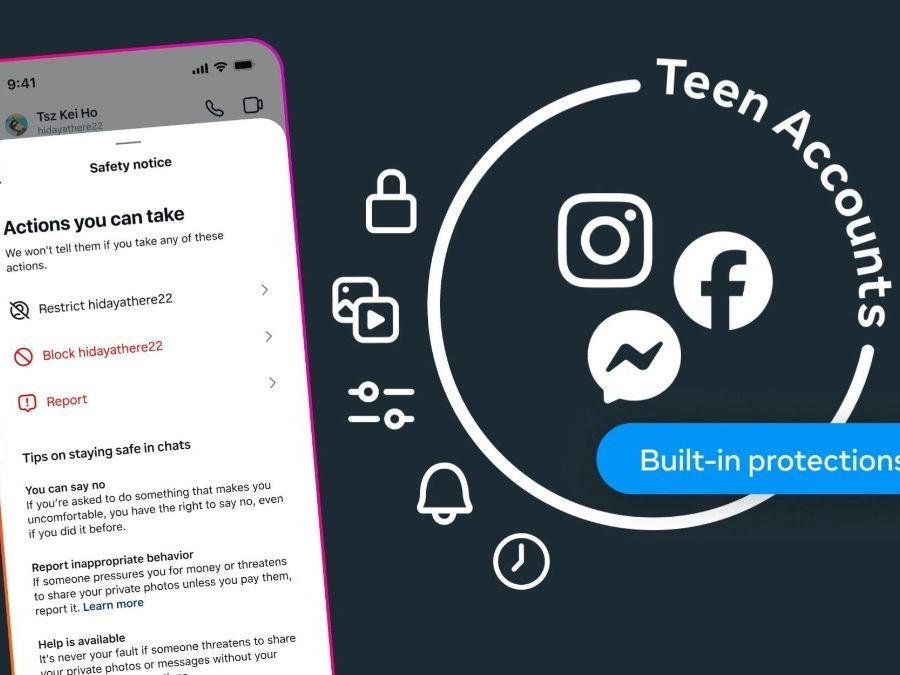
The company says its Teen Accounts, parental controls and content restrictions are already designed to provide safer experiences.
The new settlement builds on those systems while adding much stronger requirements.
For Meta, the agreement also avoids the uncertainty of continuing a major trial and potentially facing a much larger legal judgment.
This Could Change TikTok and YouTube Too
Perhaps the most important consequence of the deal is that it may not stop with Meta.
The agreement explicitly encourages TikTok and YouTube to adopt similar rules.
If both companies participate, the framework could become much more significant.
Instead of teenagers moving between platforms to escape restrictions, multiple major social networks could impose similar limits.
The financial structure creates an incentive as well.
The remaining approximately $5.3 billion of Meta’s settlement payment depends partly on competitors adopting comparable measures and making matching payments.
If TikTok and YouTube refuse, Meta’s restrictions could remain less aggressive.
If they agree, the system could become considerably stricter.
Meta says that if industry peers participate, the daily limit could eventually fall from two hours across Facebook and Instagram to one hour per app, while Night Mode could expand from midnight–6 a.m. to 10 p.m.–7 a.m.
That would represent an enormous change in the way teenagers interact with major social platforms.
A New Era for Social Media?
The settlement could mark a turning point for the technology industry.
For more than a decade, social-media companies have competed aggressively for attention.
Time spent on a platform has been one of the most important measurements of engagement.
Now, regulators are increasingly asking whether platforms should deliberately reduce that engagement for younger users.
Meta’s agreement suggests the answer may be yes.
The company is being pushed toward a model where social media for teenagers is more restricted, less addictive and more controlled by parents.
The bigger question is whether those changes will actually work.
Limiting screen time is relatively straightforward.
Changing the underlying recommendation systems is much harder.
Age verification is harder still.
And the most difficult question may be whether technology companies can make social media safer for teenagers without collecting even more sensitive information about their users.
The Bigger Battle Is Just Beginning
Meta’s $18 billion agreement could ultimately become more important for what it changes than for what it costs.
The financial payment will attract headlines.
But the real story is the possibility of a new social-media standard.
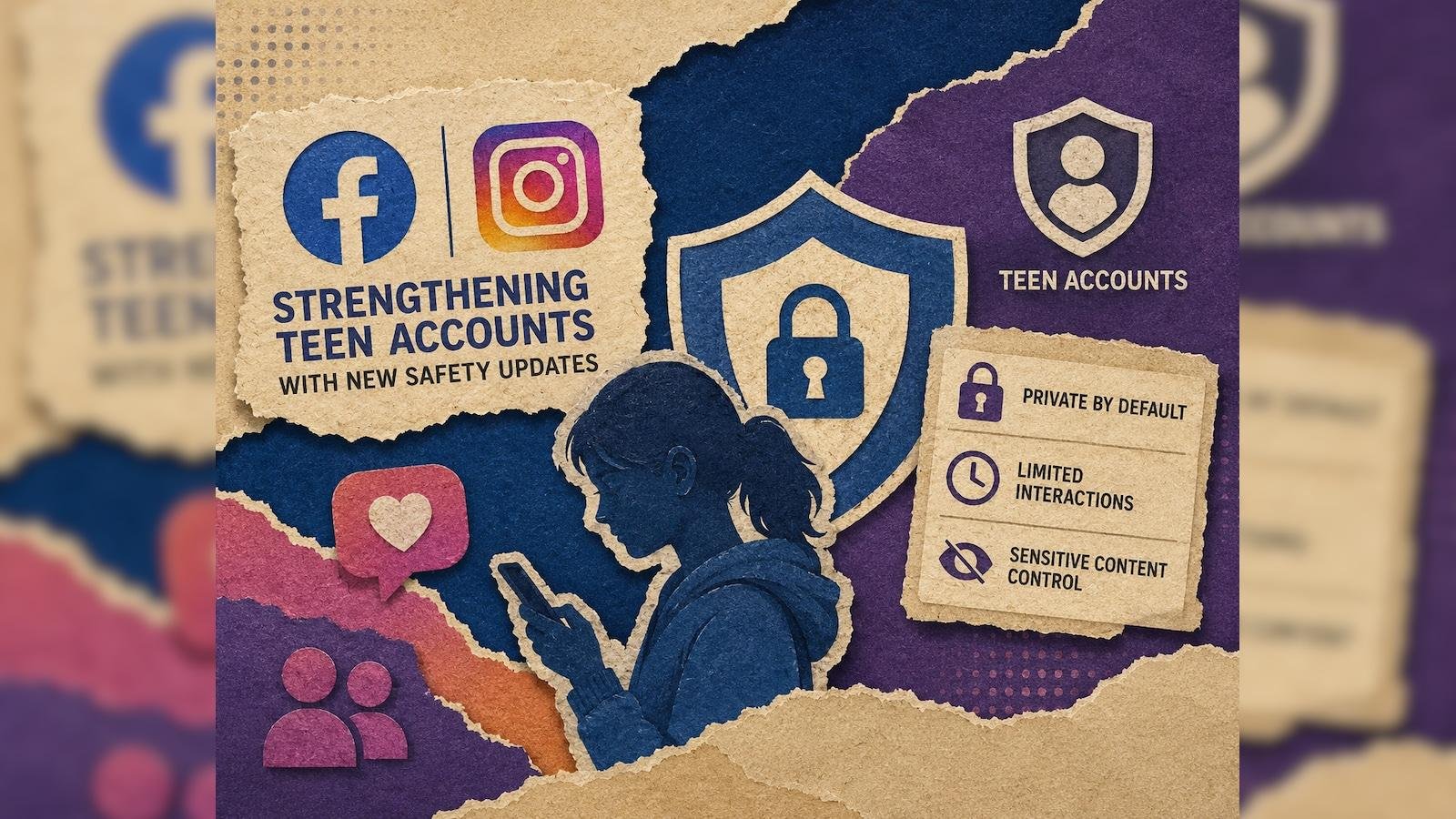
Two-hour limits, nighttime blocks, hidden likes, non-personalized feeds, stronger parental controls and AI-powered age assurance could become normal features for teenage accounts.
If TikTok and YouTube follow Meta’s lead, the impact could extend across much of the social-media industry.
And if they do not, the settlement could create a new battle over whether all major platforms should be required to follow the same rules.
Either way, the era in which social platforms could treat teenage engagement as simply another growth metric is coming under increasing pressure.
Meta has now agreed to put hard limits around that engagement.
The question is whether the rest of the internet will follow.
🔥 THE TECHSPO ANGLE
The biggest story isn’t the $18 billion. It’s the fact that one of the world’s largest social-media companies is being pushed to deliberately reduce engagement among teenage users.
That could fundamentally change how Facebook and Instagram are designed.
And if TikTok and YouTube join the framework, this may become the beginning of a much broader redesign of social media for young people.