






NVIDIA is preparing to change the way modern games look once again, but its new DLSS 5 technology is arriving with a cost that could trigger another major debate among PC gamers. The company has confirmed that DLSS 5 will officially launch on September 3, 2026, debuting in NBA 2K27 and introducing a new system called 3D-Guided Neural Rendering designed to add more realistic lighting, materials and visual detail through artificial intelligence.
The goal is ambitious. NVIDIA wants games to move closer to Hollywood-level visual realism without requiring GPUs to calculate every complex lighting effect, reflection and material response through traditional rendering techniques.
But DLSS 5 is entering the market surrounded by controversy. The debate is not only about how the technology looks. Early performance data suggests that the new neural rendering system can come with a substantial performance cost, with reports pointing to roughly a 50–60% hit from the neural component itself, depending on the workload and configuration.
That creates an unusual situation for a technology that carries the DLSS name. For years, DLSS has primarily been associated with improving performance. The latest version could make games look dramatically better, but it may also demand a significant amount of additional processing power to do it.
NVIDIA Is Bringing AI Deeper Into Game Graphics

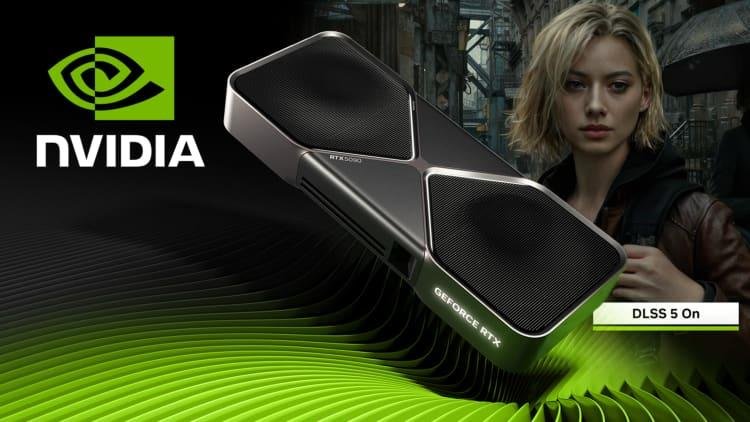
DLSS has changed considerably since its introduction in 2018. The original technology used machine learning to reconstruct higher-resolution images from lower-resolution inputs, allowing gamers to achieve higher frame rates while maintaining much of the visual quality of native rendering.
NVIDIA later added technologies such as Frame Generation and Ray Reconstruction. DLSS 5 takes another step forward by using AI not simply to reconstruct pixels, but to interpret and enhance the final appearance of a scene in real time.
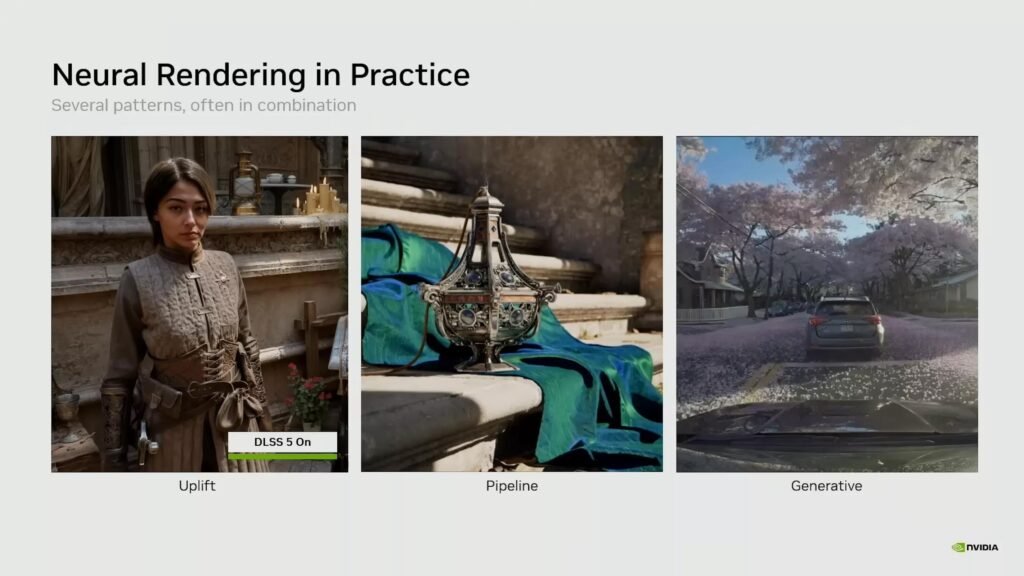
The system uses information from the game, including color and motion data, and feeds it into a neural rendering model designed to improve lighting and materials. NVIDIA calls the approach “3D-Guided Neural Rendering” and says it is intended to bring real-time graphics closer to cinematic photorealism.
That represents a significant shift in what DLSS is trying to accomplish.
The technology is no longer focused solely on making an existing image sharper or generating additional frames. AI is becoming an active part of the process that determines how the final scene appears on screen.
The Controversy Started Before the Official Launch




DLSS 5 is not entering the market quietly.
Before the official release, versions of the technology appeared through NBA 2K27, and modders managed to extract DLSS 5 components and experiment with them in other games. The results spread quickly online and divided the gaming community.
Some players praised the additional realism, particularly in lighting, materials and surface detail. Others criticized the way AI could change the appearance of characters and interfere with a game’s original artistic style. Early demonstrations attracted criticism because some faces and visual elements looked noticeably different from the original game designs.
That has raised a larger question that goes beyond NVIDIA:
Where does rendering technology end and AI-driven alteration of an artist’s work begin?
For game developers, that question matters. A modern game is not simply a collection of textures and lighting effects. Artists deliberately design characters, environments and atmospheres. If an AI system significantly changes the final result, developers have to decide whether the additional realism enhances their artistic direction or undermines it.
NVIDIA appears to recognize that concern.
The company says developers will have detailed control over how DLSS 5 is applied. The technology can be adjusted for intensity and selectively used on specific elements of a scene, giving artists more control over the final image. NVIDIA has also demonstrated different rendering models, including more natural and more cinematic approaches.
The Biggest Problem Could Be Performance
This is where DLSS 5 may face its toughest challenge.
For years, DLSS has been marketed primarily as a performance technology. Gamers turned it on to get more frames per second while retaining good image quality.
DLSS 5 complicates that equation.
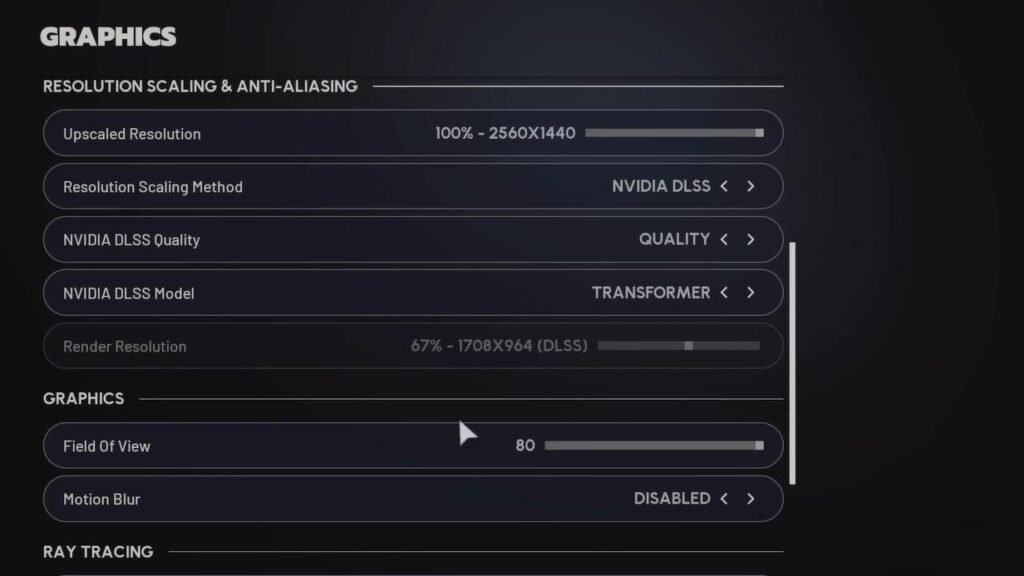
Early reports indicate that the new neural rendering component can consume a substantial amount of GPU and CPU resources. PC Gamer reports that NVIDIA’s current data points to a roughly 50–60% performance cost for the neural rendering component, although the final result depends on how it is combined with Super Resolution and Multi Frame Generation.
That also means some impressive FPS numbers need to be viewed carefully.
A game can display a very high frame rate when multiple AI-generated frames are being inserted between traditionally rendered frames. But those numbers do not necessarily represent the same level of underlying rendering performance.
The more important question is therefore not simply:
“How many FPS are displayed?”
It is:
“How much of the image is being rendered traditionally, and how much is being generated by AI?”
RTX 50 Series Gets DLSS 5 First
Hardware compatibility is another major limitation.
DLSS 5 will initially be available on GeForce RTX 50 Series graphics cards, including desktop and laptop GPUs, as well as through GeForce NOW. NVIDIA has not announced official launch support for RTX 40, RTX 30 or RTX 20 GPUs.
That immediately excludes a large portion of the PC gaming market.
From a technical perspective, the decision makes sense because DLSS 5 requires substantial AI processing capability. From a consumer perspective, however, it is more complicated.
A gamer who purchased an RTX 4070 or RTX 4080 may see another major NVIDIA technology arrive with support focused on the company’s newest generation of hardware.
The decision has already triggered debate among NVIDIA users, with many questioning why DLSS 5 is not being made available to older RTX generations.
Is This the Future of Gaming Graphics?
Despite the controversy, DLSS 5 could still represent an important step forward.
If NVIDIA and game developers can significantly reduce the cost of neural rendering, the technology could become far more compelling. Instead of calculating every complex lighting effect traditionally, GPUs could increasingly rely on AI to reconstruct or enhance parts of the visual scene that would otherwise require considerably more processing power.
That could become particularly valuable in games pursuing extreme realism.
But DLSS 5 currently has to answer two questions at the same time:
Does the additional visual quality justify the performance cost?
And:
Does it improve a game’s graphics without compromising the artistic direction created by its developers?
The answer will not necessarily be the same for every game.
NVIDIA says DLSS 5’s performance has improved roughly fivefold over the past six months, after early versions of the technology required dramatically more hardware power. That suggests there is still considerable room for optimization.
The September 3 launch will be the first major real-world test.
Until now, gamers have mainly seen demonstrations, leaked builds and community-made modifications. Now DLSS 5 will arrive in an actual commercial game, on officially supported hardware and with an implementation controlled by the developer.
That will show whether DLSS 5 is the beginning of a new AI-driven era for game graphics — or another impressive technology that demands more performance than most gamers are willing to sacrifice.
by The Tech Spot Editorial Team