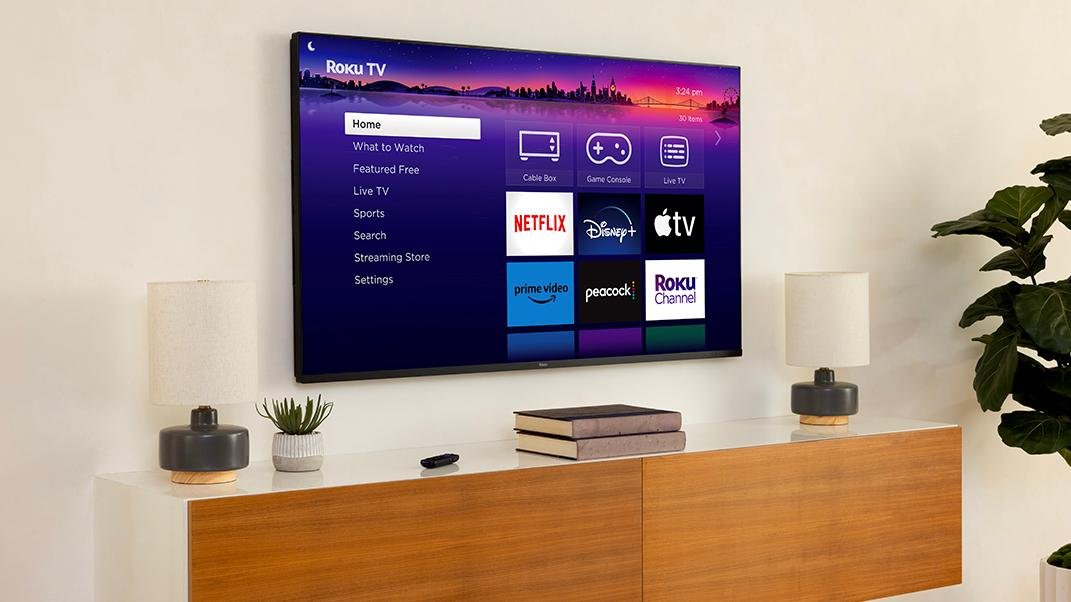
Roku makes its biggest move yet into TV hardware
Roku has spent years building its reputation around streaming software and affordable smart-TV experiences.
Now the company is moving deeper into hardware.
Roku has launched its first-ever OLED televisions, entering a market dominated by companies such as LG, Samsung and Sony.
The new lineup consists of the Roku Pro Series OLED and Roku Pro Series LX OLED, both built around 4K OLED panels and equipped with modern HDR and gaming features.
The most aggressive part of the launch, however, is the pricing.
The entry point is $999.99
The Roku Pro Series OLED comes in 55-inch and 65-inch sizes.
The 55-inch model is priced at $999.99, while the 65-inch version costs $1,199.99.
That puts Roku directly into a more accessible part of the OLED market.
The company is not trying to compete only at the premium end. Instead, Roku is targeting buyers who may have previously considered OLED televisions too expensive.
The panels use self-lit pixels, allowing individual pixels to switch off completely and deliver deep blacks and high contrast.
The TVs also support Dolby Vision, HDR10+ and HLG, while audio support includes Dolby Atmos.
120Hz and HDMI 2.1 target gamers
Gaming is another major part of Roku’s strategy.
The standard Pro Series OLED supports a 120Hz refresh rate, Variable Refresh Rate and AMD FreeSync Premium.
The TVs also feature four HDMI 2.1 ports, with one supporting eARC. Roku says the hardware is capable of 4K gaming at up to 120fps with compatible devices.
That matters because affordable OLED televisions are increasingly expected to offer more than cinematic picture quality. Console and PC gamers now look for high refresh rates, VRR and modern HDMI connectivity as standard features.
The LX version goes up to 144Hz

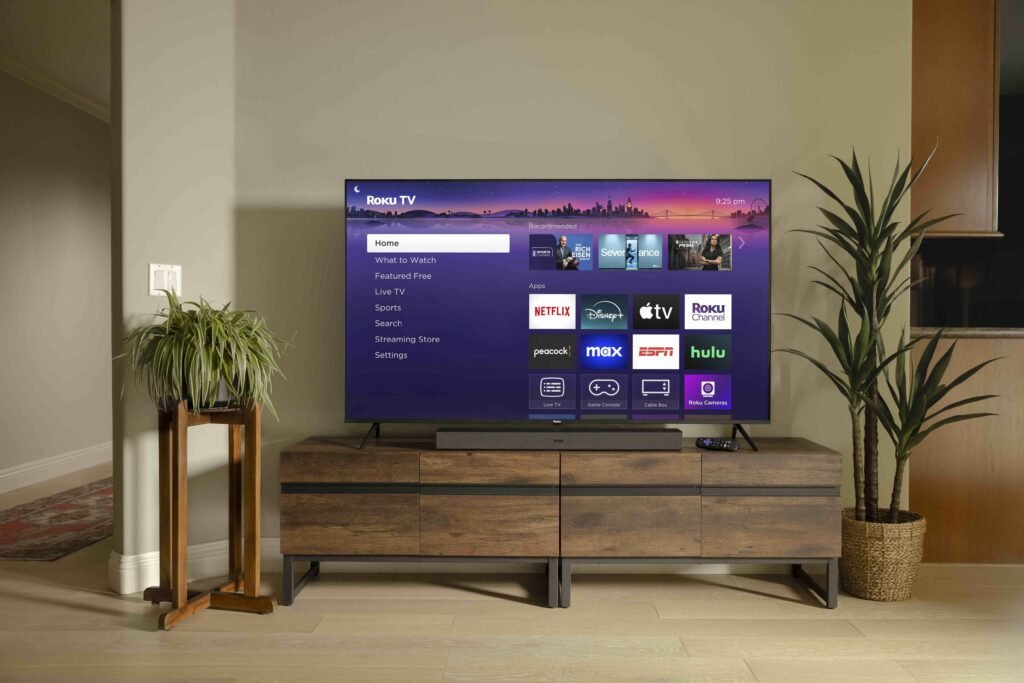
The more expensive Pro Series LX OLED pushes the specifications further.
It retains the 4K OLED panel but increases the refresh rate to up to 144Hz with VRR.
Roku also describes the LX as its brightest OLED television, with a wider color range and an advanced polarizer designed to reduce reflections.
That could make the LX more attractive in rooms where ambient light is difficult to control.
A more advanced remote
Roku has also upgraded the remote control on the LX model.
The Roku Voice Remote Pro includes backlit buttons, hands-free voice control, customizable shortcuts and a rechargeable battery that charges over USB-C.
Both ranges also include a feature that helps users find a misplaced remote.
Roku OS is part of the pitch
The OLED panels are only part of Roku’s strategy.
Both televisions run Roku OS, giving the company control over the entire smart-TV experience.
Roku says users get access to thousands of streaming channels and popular services including Netflix, Disney+, Max, Hulu and The Roku Channel.
That gives Roku an advantage it can leverage from its existing position in the streaming market.
Smart Picture Max brings automatic picture tuning
The new TVs also feature Roku Smart Picture Max, which automatically adjusts picture settings based on the content being displayed.
The system can optimize elements such as contrast, color and motion without requiring viewers to manually adjust the television every time they switch between movies, sports and games.
Connectivity is built for modern setups
The televisions include four HDMI 2.1 ports, USB-C, USB-A, Ethernet, antenna/cable connectivity and optical audio output.
The standard Pro Series uses Wi-Fi 5, while the LX models upgrade to Wi-Fi 6.
Both support Bluetooth and Dolby Atmos.
This makes the new Roku TVs more than simple streaming displays. They are designed to serve as the central screen for a broader home-entertainment setup.
Pricing and availability

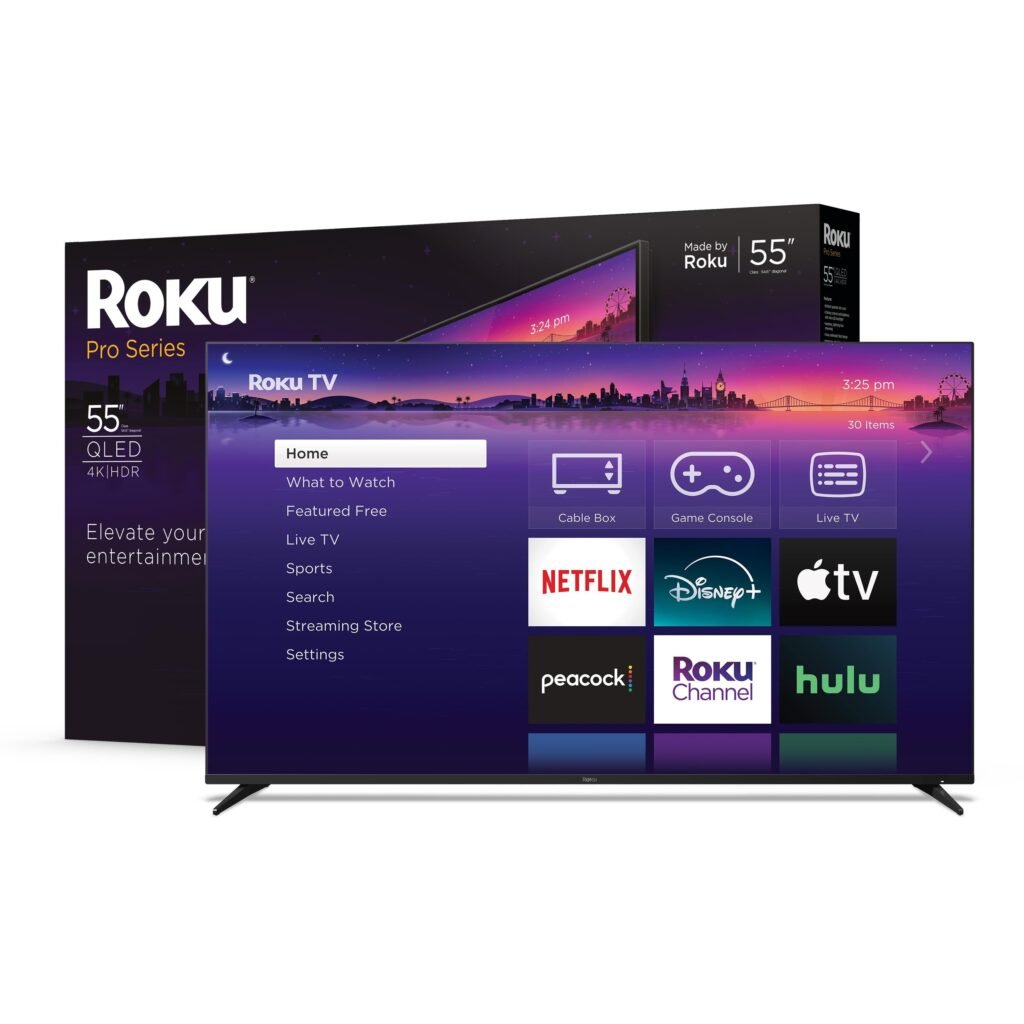
The Roku Pro Series OLED is already available in the US in 55-inch and 65-inch sizes.
Pricing starts at:
- 55-inch — $999.99
- 65-inch — $1,199.99
The Roku Pro Series LX OLED will be priced at:
- 55-inch — $1,299.99
- 65-inch — $1,599.99
The LX models are expected to launch in October 2026.
Roku has made the new televisions available through Amazon as its launch retail channel in the US.
A new challenge for Samsung and LG
Roku is unlikely to transform the OLED market overnight, but its pricing makes the move significant.
A 4K OLED 120Hz television for $999.99 puts pressure on competing brands to compete not only on picture quality but also on price.
The LX series goes further with 144Hz VRR, higher brightness and improved reflection handling.
If Roku can deliver picture processing and overall performance close enough to established OLED brands, its entry could increase pressure on prices across the mainstream OLED market.
The bigger trend may be even more important: OLED is gradually becoming less of a premium-only technology.
Roku has entered the OLED television market for the first time, launching the Roku Pro Series OLED and Pro Series LX OLED. The standard model features a 4K OLED panel at 120Hz and starts at $999.99, while the LX adds up to 144Hz VRR, higher brightness and improved reflection control, starting at $1,299.99. The standard series is already available in the US, while the LX models are expected in October.