
Artificial intelligence has just crossed another important line in professional media.
Billionaire investor Stanley Druckenmiller has acknowledged using AI tools to help write a widely discussed opinion article published by The Wall Street Journal.
The piece, titled “Let the Bond Market Speak,” criticized Treasury Secretary Scott Bessent’s approach to government bond buybacks and argued that attempts to suppress market signals could create larger problems. But the article quickly became news for another reason: how much AI was involved in producing it.
Druckenmiller did not deny using artificial intelligence.
Instead, he openly defended the decision.
He argued that using AI for writing is comparable to using a calculator for mathematics.
That response has triggered a much broader discussion about what authorship means in the age of generative AI.
AI Was More Than a Grammar Checker
AI is already widely used by journalists, writers and professionals.
It can help with research, summarization, translation, grammar, editing and data analysis.
But Druckenmiller’s case attracted attention because the technology played a more substantial role in the writing process.
Reports say Druckenmiller used multiple AI systems, including ChatGPT, Claude, Gemini and Perplexity, while working on the op-ed.
Druckenmiller has insisted that the underlying ideas were his own and that he rejected many suggestions produced by AI.
In other words, he sees AI as a writing tool rather than the author of his opinions.
That distinction is at the heart of the controversy.
Why the Story Went Viral

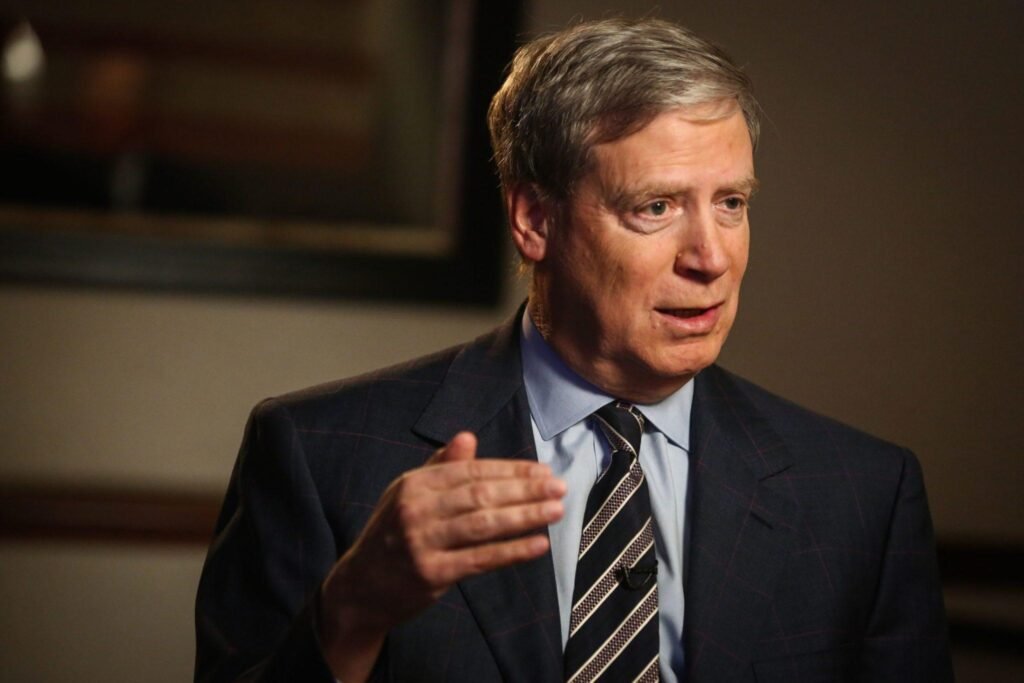
The controversy began shortly after the Wall Street Journal published the article.
Users on social media began questioning whether the language looked AI-generated.
AI-detection tools were used to analyze the article, with some users claiming the results suggested extremely high levels of AI involvement.
Instead of denying the allegations, Druckenmiller confirmed that he had used AI.
His response was unusually direct.
He said he was not embarrassed by using the technology and argued that AI simply allows him to overcome some of the limitations he has as a writer.
That attitude itself became part of the story.
While many public figures remain uncomfortable admitting that they use AI, Druckenmiller effectively argued that there is nothing unusual about it.
The Wall Street Journal Defended the Decision
The controversy became even more significant when the Wall Street Journal defended the publication of the article.
Paul Gigot, the newspaper’s editorial page editor, argued that the important question is whether the published opinion reflects the author’s genuine argument and whether the author has the credibility and experience to make that argument.
In his view, AI has become part of modern life and can be used for writing, research, grammar and editing.
That position could have major implications for the media industry.
If AI is treated as a normal writing assistant, the use of AI could become increasingly common in opinion journalism.
But there is still one major problem.
Transparency.
The Transparency Question

The biggest criticism surrounding the Druckenmiller story is not necessarily that he used AI.
It is that readers were not clearly told when the article was originally published.
The Washington Post reported that the Wall Street Journal did not disclose the use of AI in the original publication and did not add a disclosure after Druckenmiller confirmed that AI had helped him produce the piece.
That creates an important question for modern journalism:
Should readers be told when AI played a meaningful role in producing an opinion article?
Many critics believe the answer should be yes.
An opinion piece is not simply a collection of facts.
It represents someone’s judgment, personality and worldview.
If artificial intelligence significantly shapes how that argument is expressed, readers may reasonably want to know.
But What If the Ideas Are Human?
There is also a strong argument on the other side.
A person may have decades of knowledge and expertise but lack strong writing skills.
AI can help organize ideas, improve structure and make complicated arguments easier to understand.
That does not necessarily mean the underlying opinion belongs to the machine.
Druckenmiller has made exactly that argument.
He says the ideas expressed in the op-ed reflect his long-held views and that AI simply helped him communicate them more effectively.
In that sense, AI can be viewed as a digital editor or writing assistant.
The problem is that human editors and ghostwriters are generally part of a known editorial process.
AI can remain invisible.
Are AI Ghostwriters Becoming Normal?
For decades, politicians, executives, celebrities and business leaders have relied on professional writers to help produce speeches, articles and books.
That is not new.
What is new is the ability to access an extremely powerful writing assistant instantly.
AI can analyze documents, propose arguments, restructure paragraphs, rewrite text in different styles and produce multiple versions of an article in seconds.
For a busy executive or investor, that can be enormously valuable.
It could make professional communication dramatically faster.
But it also creates a new problem:
Who is actually speaking?
If a public figure gives AI a collection of ideas and the model turns them into a polished article, where does authorship begin and end?
Journalism Is Still Searching for the Rules
News organizations are still developing policies for AI-assisted work.
Some allow AI for translation.
Others allow it for research or summarization.
Some require disclosure.
Others have much less specific rules.
The situation becomes particularly complicated with outside contributors.
A staff journalist may be subject to strict internal standards.
A billionaire investor, academic or public intellectual submitting an opinion article may operate under a different set of expectations.
That creates the possibility of inconsistent standards within the same publication.
The Druckenmiller case has therefore become a test of how media organizations should handle AI-assisted opinion writing.
The Authorship Problem Is Bigger Than Journalism


Also Read: Anthropic Gives AI a Physical Body: Claude Can Now Control Robots, Microscopes and Lab Equipment
The most interesting question may not be:
“Did AI write this article?”
It may be:
“What does it mean to be an author when AI can participate in the writing process?”
Consider several possibilities.
A human writes the entire article and asks AI to correct grammar.
Another person writes the main ideas while AI creates the first draft.
Another gives AI a collection of notes and asks it to produce the entire article.
Someone else may ask AI to generate the argument itself and simply approve the final version.
All four scenarios involve AI.
But they represent very different levels of machine involvement.
The industry has not yet developed a universal standard for distinguishing between them.
This Could Become a Major Precedent
The Druckenmiller case could become more important over time.
If one of the world’s most prominent investors can use AI to help produce an opinion article for one of the world’s most influential newspapers, other high-profile writers may feel increasingly comfortable doing the same.
That could accelerate the normalization of AI-assisted writing.
But there is another possibility.
If readers begin to suspect that opinion articles are being generated by AI without disclosure, trust in publications could decline.
And trust is one of the most valuable assets any media organization has.
The Real Issue Is Not AI — It Is Trust
There is nothing inherently wrong with using AI as a tool.
A calculator does not make an economist less intelligent.
A spellchecker does not make someone less of an author.
And an AI assistant does not automatically eliminate human judgment.
The problem begins when readers cannot tell how much of the work was actually performed by a person.
That is why disclosure may become one of the most important issues in AI-powered media.
Readers may not demand that journalists stop using AI.
They may simply demand that publications tell them how AI was used.
A New Era of Human + AI Writing

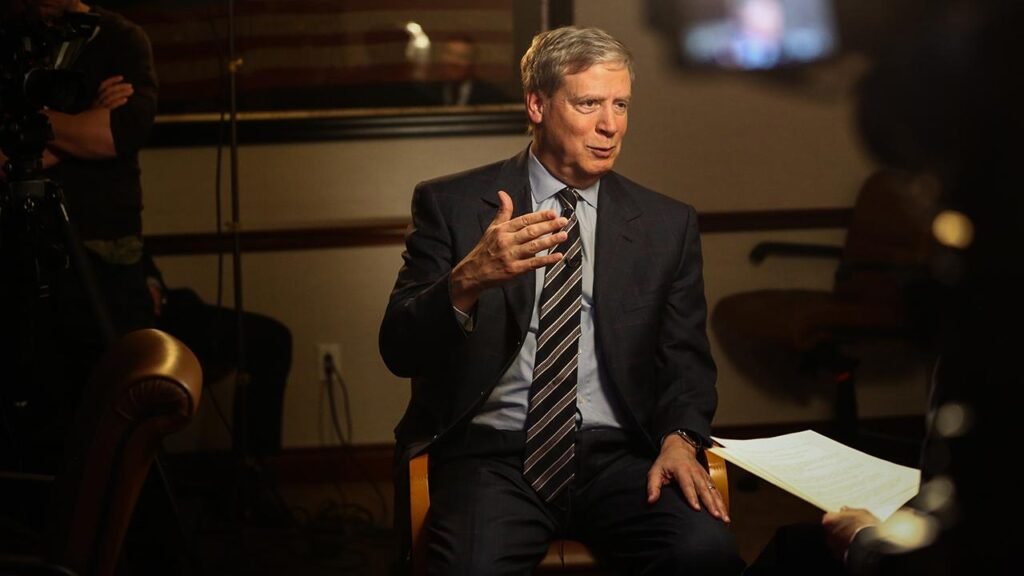
The future is unlikely to be purely human or purely machine.
It will probably be a combination.
Humans will provide experience, judgment, context and responsibility.
AI will provide speed, organization, analysis and language assistance.
That combination could produce better journalism.
But only if the relationship remains transparent.
The Druckenmiller controversy shows how quickly the boundary between human writing and machine-assisted writing is disappearing.
And it suggests that the next major question for the media industry may not be whether AI is allowed.
It may be:
How much AI is too much — and who gets to decide?
🔥 Why It Matters
The Druckenmiller story is bigger than one billionaire, one newspaper or one controversial op-ed.
It is an early test of how society will treat AI inside professions built around human creativity and judgment.
AI is already writing emails, reports, advertisements, software and articles.
Now it is increasingly being used by influential people to shape public debate.
That makes transparency more important than ever.
Perhaps the future is not:
Human vs. AI.
Perhaps it is:
Human + AI.
But if that is the future, readers deserve to know when the machine is part of the process.
AI can generate words.
It can improve structure.
It can make an argument sound more polished.
But one thing it cannot generate on its own is the thing every serious publication depends on:
trust.