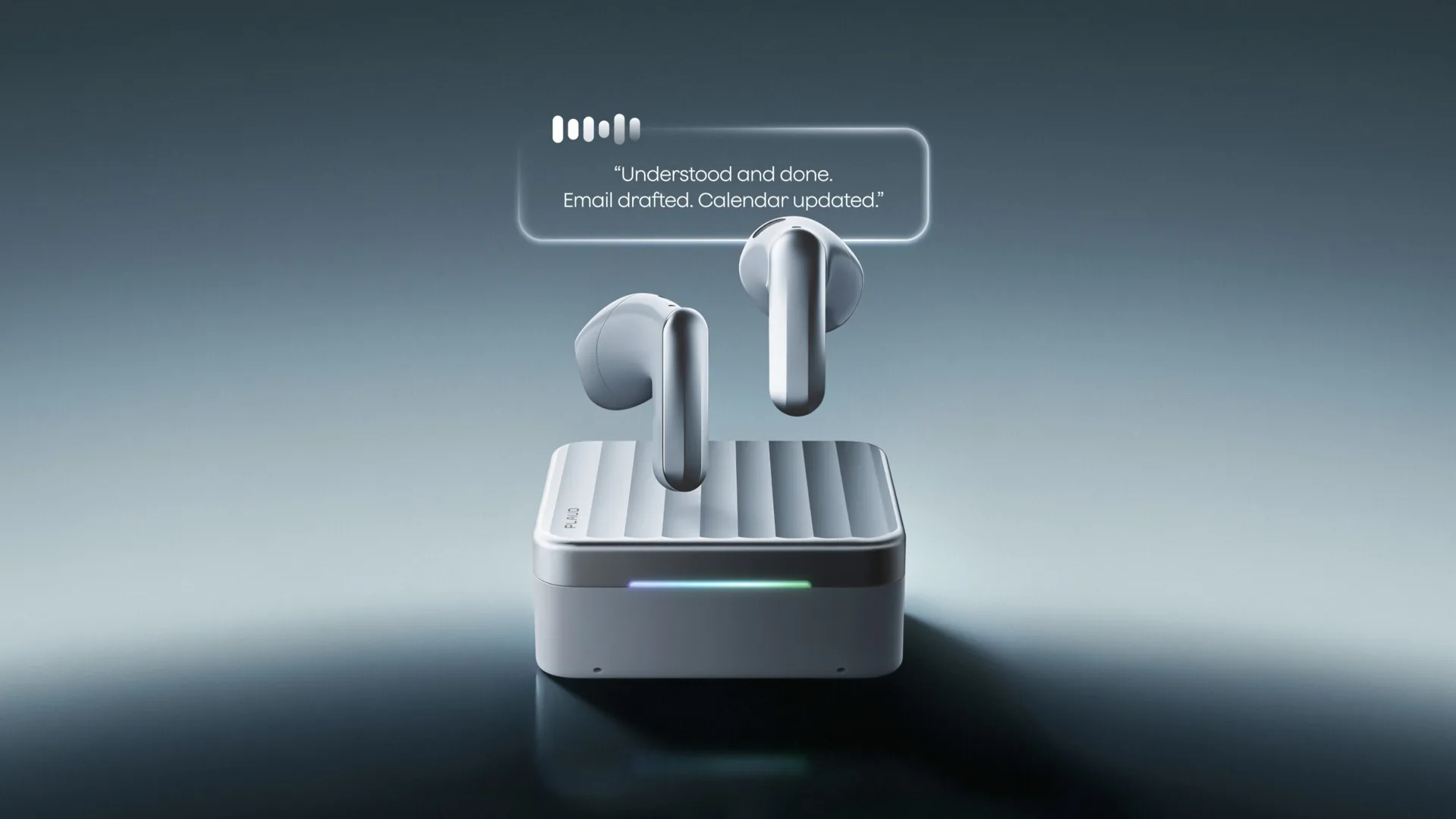
Wireless earbuds are taking on a new role. Plaud has introduced Plaud One, an AI-powered pair of earbuds with 4G connectivity through eSIM and the ability to record, transcribe and analyze conversations — while its AI agent can use that context to help complete tasks.
The Plaud One Explorer Edition costs $249.99 and is limited to just 2,000 units worldwide. The device is currently available for pre-order.
But the most interesting part of Plaud One is not its audio quality.
It is the company’s attempt to turn earbuds into a new interface for AI agents.
Earbuds That Don’t Always Need Your Phone
Plaud One comes with something rarely found in wireless earbuds:
an eSIM and 4G LTE connectivity.
That allows the device to remain connected even when the user’s smartphone is not nearby.
Plaud says the eSIM can work across more than 80 countries.
That matters because Plaud is not positioning the earbuds simply as another smartphone accessory.
The goal is to make them an independent access point to AI.
AI That Listens, Understands and Acts
This is where things get interesting.
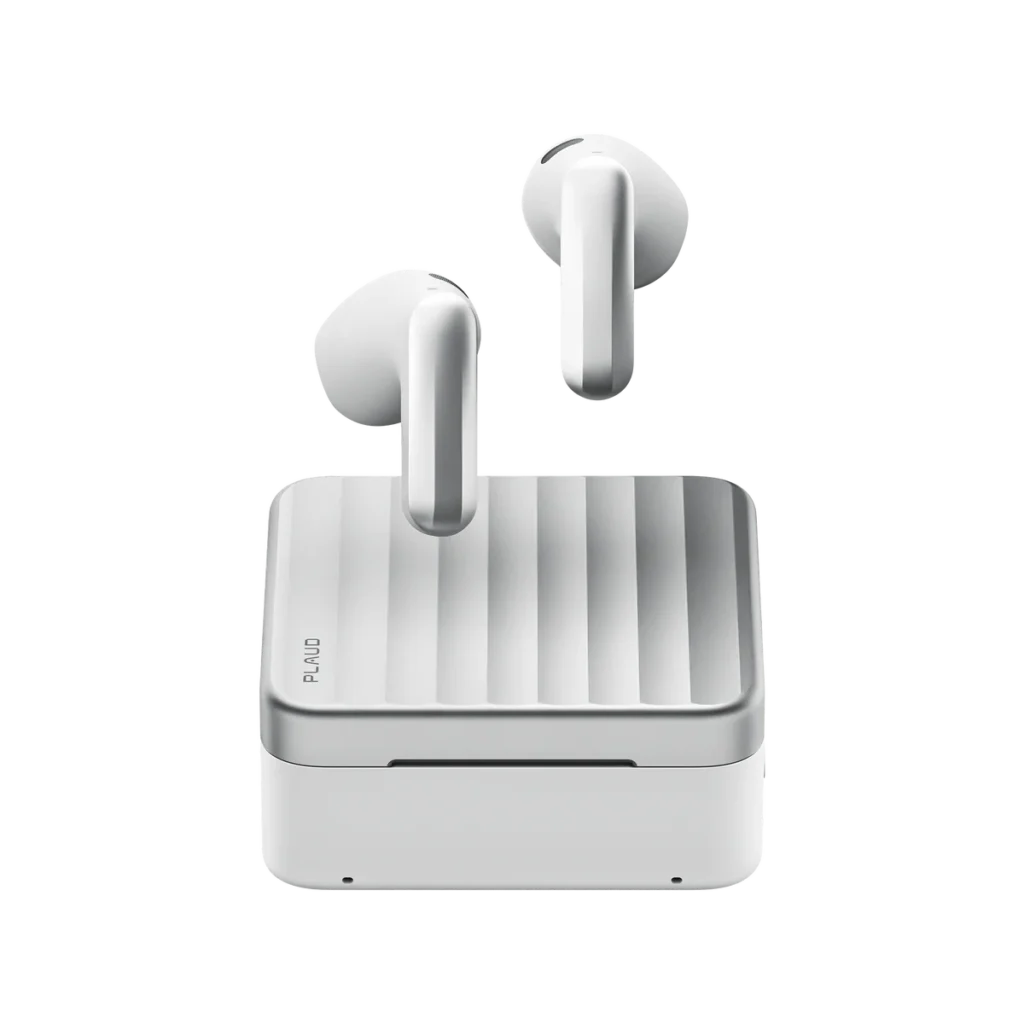
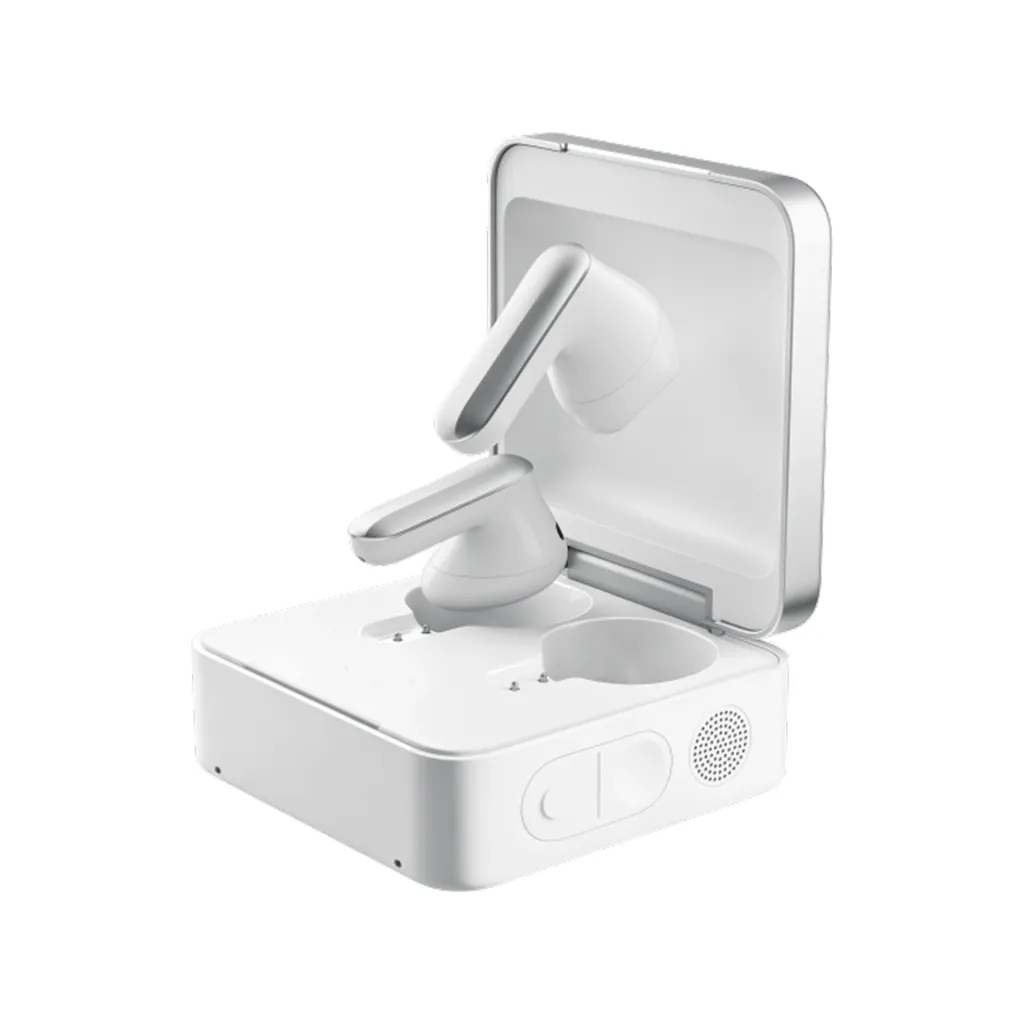
Plaud One can record in-person conversations, phone calls and online meetings. Each earbud contains three MEMS microphones and a VPU sensor, while the case contains four MEMS microphones and AI beamforming technology.
But recording is only the first step.
The captured information can be processed by Plaud Agent to generate summaries, documents and tasks.
The Tech Spot Editorial Team
For example:
A manager mentions during a meeting that a follow-up email needs to be sent to a client.
Instead of recreating the task from memory later, the system can identify the action and prepare a draft.
Another meeting could become a structured report.
A customer conversation could become a follow-up workflow.
The system can also connect with tools including Gmail, Google Calendar, Notion and Slack.
From AI That Answers to AI That Works
This is the bigger shift.
Most chatbots wait for users to type a request.
Plaud is pursuing a different model.
The AI gathers context from conversations and uses that context to help complete work.
In theory, that could reduce the amount of time people spend switching between applications.
Instead of ending a meeting and going through:
remember → write → summarize → open Gmail → draft email → open Calendar → schedule meeting,
part of that workflow could eventually happen automatically.
But There Is a Major Problem: Privacy
The more a device listens, the more important one question becomes:
Who is listening?
Plaud One is specifically designed to record conversations, putting it in a much more sensitive category than conventional earbuds.
In some countries, recording private conversations without the knowledge or consent of the people involved can be illegal.
That is particularly important in Europe.
The fact that the technology can record a conversation does not automatically mean the wearer has the legal right to do so.
Plaud One may be a powerful assistant, but the user remains responsible for how it is used.
They Are Still Earbuds
Despite their AI focus, Plaud One is not simply a voice recorder.
The earbuds include:
- Active Noise Cancellation up to 40 dB;
- Transparency Mode;
- 12 mm drivers;
- LDAC high-resolution audio;
- Bluetooth 5.4;
- multipoint connectivity for two devices;
- and physical controls on both the earbuds and charging case.
Battery life reaches up to 6 hours with ANC disabled and up to 36 hours with the charging case. For continuous recording, the earbuds can record for up to 6 hours, while the case can record for up to 25 hours.
Only 2,000 Units
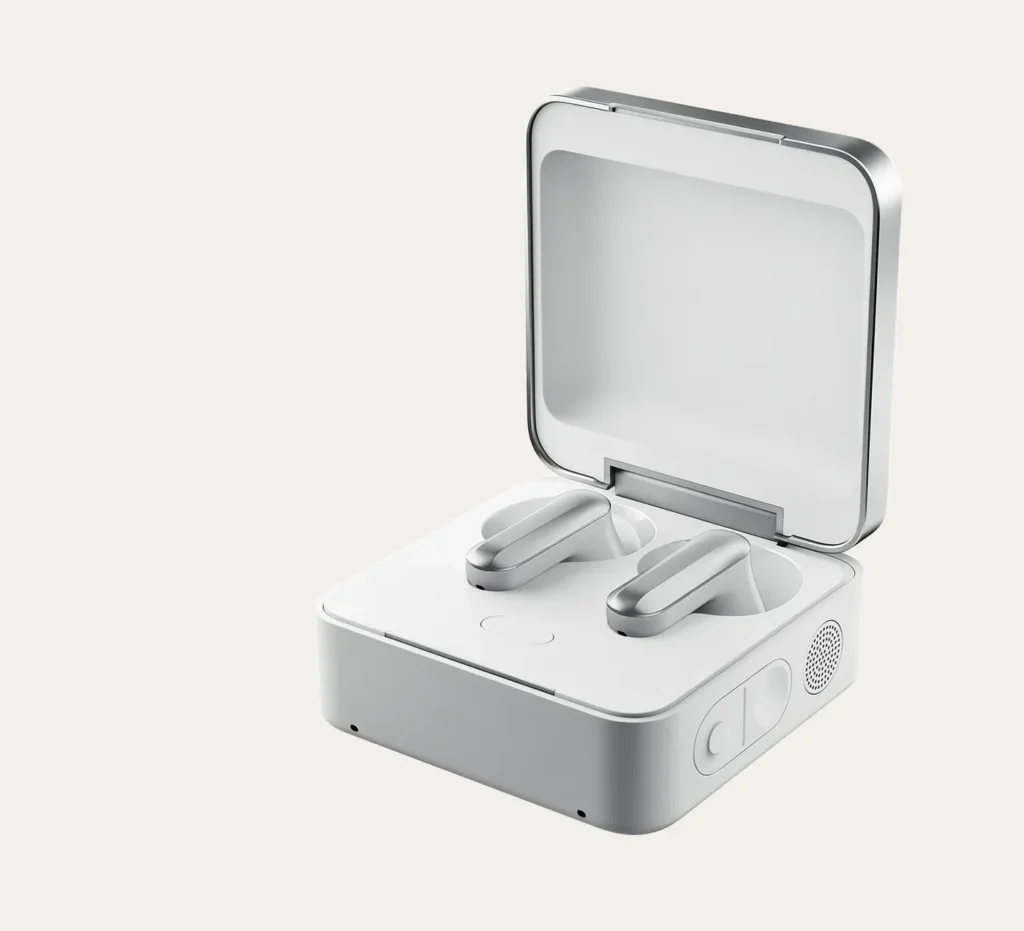
Plaud is not initially positioning the product as a mass-market device.
The Explorer Edition is limited to 2,000 units worldwide.
It costs $249.99 and includes $200 in Plaud credits for AI features.
That looks more like a real-world experiment than a conventional product launch.
The company wants to see how people use a device that is constantly available and capable of gathering context from everyday conversations.
Another Step Toward AI Wearables
Plaud One arrives as the technology industry experiments with new ways to move AI beyond the smartphone screen.
Smart glasses, pendants, small recording devices and now earbuds are all attempting to become direct interfaces for AI agents.
The difference is that Plaud is putting its technology into a device people already wear for hours every day.
TheTechSpot: Are Earbuds Becoming the New Computers?
Plaud One may be more than just another pair of smart earbuds.
It is an experiment in how humans could interact with AI in the future.
If the smartphone was the computer we put in our pockets, devices like Plaud One are attempting to take the next step:
a computer we carry without having to look at it.
But that evolution comes with a major trade-off.
The more AI knows about our conversations, meetings and daily lives, the more useful the assistant can become.
At the same time, the responsibility to protect privacy becomes much greater.
Plaud One is testing exactly that boundary.
The question is no longer whether AI can listen to us. The question is what it does after it listens