
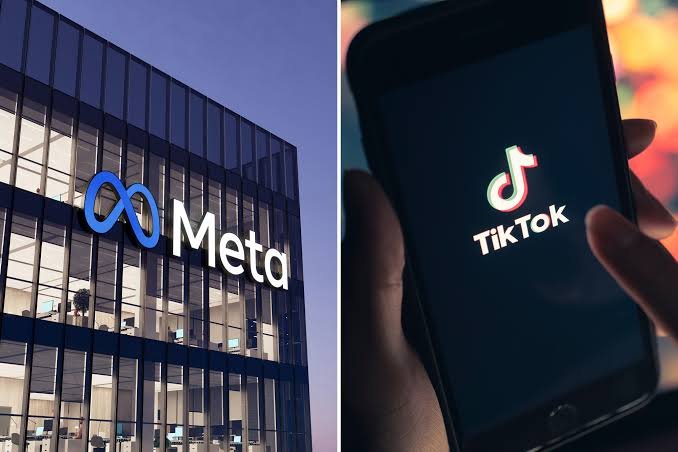
Meta has banned advertising by TikTok and its parent company, ByteDance, across its platforms in seven markets, including the United States, Canada and Japan. The immediate move escalates competition between two of the world’s biggest social media businesses for users’ attention, creators and advertising revenue.
What happened?

Meta, the parent company of Facebook and Instagram, announced on October 8 that it would ban advertisements from ByteDance, the Chinese company behind TikTok. Reuters reported that the restriction applies in seven markets: the United States, Canada, Egypt, Indonesia, Japan, Thailand and Vietnam.
The measure also extends to third-party advertisers running campaigns that link to TikTok or other ByteDance services in the affected markets. This could disrupt marketing campaigns that use Meta’s platforms to direct audiences toward competing apps.
Meta described the decision as standard business practice, saying it has no obligation to provide promotional services to a competitor seeking to draw users away from its platforms. ByteDance and TikTok had not publicly responded at the time of Reuters’ report.
Why does the move matter?
Meta and TikTok compete for the same digital resources: user attention, creator content and advertiser budgets. TikTok has built a strong position through short-form video and personalized recommendations, while Instagram Reels is one of Meta’s main products for competing in that format.
The advertising ban does not remove TikTok from the market, but it restricts one channel through which the company can promote its services to users on Meta’s platforms. This is particularly relevant for campaigns designed to acquire new users or drive audiences to other apps.
Meta, meanwhile, may seek to keep more advertising spending within its own ecosystem. The actual financial impact of the restriction has not been publicly quantified.
Where does the ban apply?
According to Reuters, the restriction covers advertising in seven countries:
- United States
- Canada
- Egypt
- Indonesia
- Japan
- Thailand
- Vietnam
The markets include substantial social media audiences, but the decision should not be interpreted as a global TikTok ban. It concerns Meta’s advertising services and campaigns directing users to ByteDance products in the specified countries.
What could it mean for advertisers and creators?
Advertisers may need to review campaigns that use Facebook and Instagram to promote TikTok or other ByteDance products. Brands and agencies operating across several countries will need to determine whether their campaigns fall under the new restriction.
Creators could experience indirect effects if brands change how they promote accounts or videos across platforms. However, the ban does not automatically prevent creators from publishing content that mentions TikTok, nor does it mean all links to TikTok will disappear from Meta’s apps.
The practical effect will depend on how Meta enforces the rules and what guidance it provides to advertisers and marketing partners.
Is the decision connected to youth safety?
The move comes as both Meta and TikTok face legal and political pressure over their effects on young users.
Reuters reported that Meta had previously reached an agreement with US states involving child-safety measures on Facebook and Instagram. TikTok, meanwhile, reached a settlement with Alabama in September that included commitments to improve usage restrictions and age verification.
However, there is no basis for presenting the advertising ban itself as a direct child-safety measure. Meta primarily framed the decision as a business choice involving a competitor. Youth-safety issues form part of the broader regulatory environment but are distinct from Meta’s stated rationale for the ban.
What does it mean for social media competition?

The decision shows that competition among platforms is not limited to algorithms, new features or user numbers. It can also extend to advertising infrastructure, audience distribution and the ability to promote rival services.
For Meta, the ban may protect its platforms from directly promoting a competitor. For TikTok, losing this advertising channel could limit some user-acquisition strategies in the affected markets, although the company can still compete through content, organic discovery and other marketing channels.
For the wider industry, the move raises questions about the boundary between ordinary commercial decisions and the control large platforms exert over digital distribution. Assessing the full impact will require more evidence about enforcement and outcomes.
What happens next?
Developments to watch include:
- TikTok and ByteDance’s response: Whether the companies publicly challenge the decision or seek changes.
- Enforcement: How existing campaigns and third-party advertisements will be handled.
- Advertiser reaction: Whether brands shift spending to other channels.
- Possible expansion: Whether Meta changes the list of affected markets or types of restricted ads.
- Competitive impact: Whether the decision measurably affects advertising costs or audience growth.
A clear public estimate of the ban’s financial impact has not yet been provided.
Meta’s ban on TikTok and ByteDance advertising is a significant development in the rivalry between major social media platforms. It does not prevent TikTok from operating in the affected markets, but it limits an advertising channel that could help attract audiences away from Facebook and Instagram.
For advertisers and creators, the key issue is how the restrictions are enforced and whether they change marketing strategies. For the industry, the move illustrates how major platforms can use control over their ecosystems to defend their competitive position.