Google is testing an idea that once sounded like science fiction
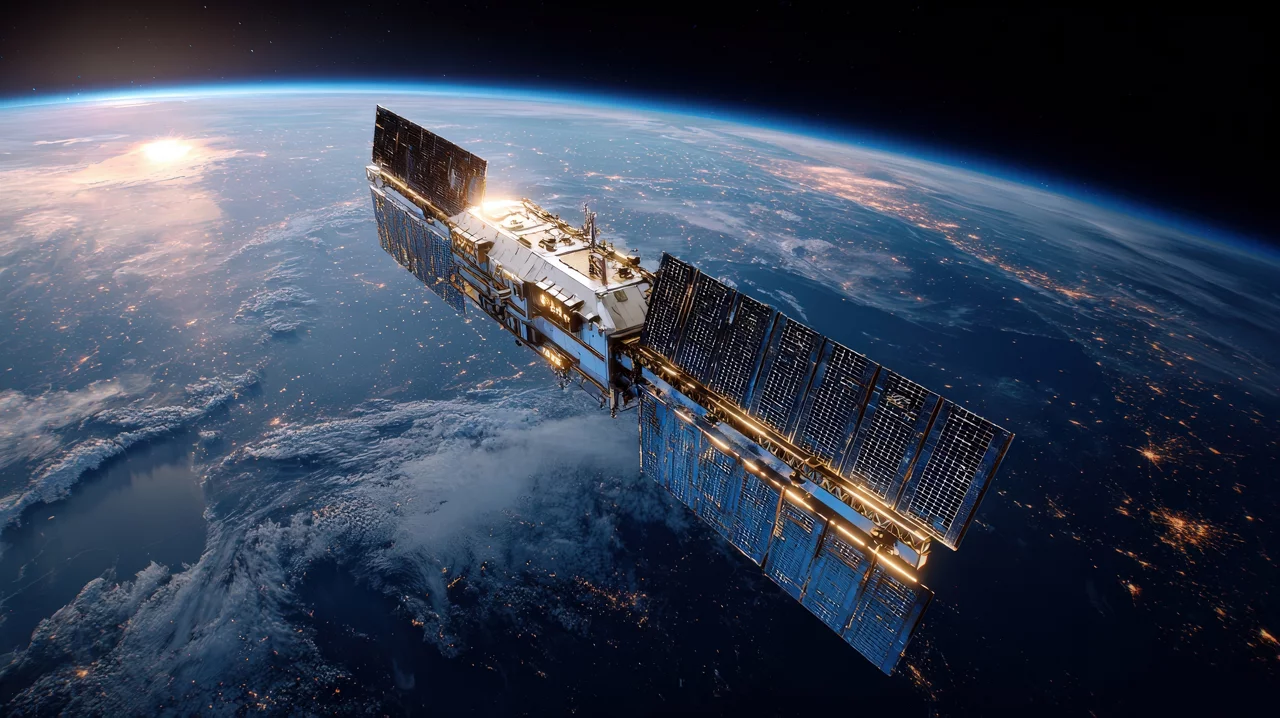
Google announced on September 24 that Project Suncatcher is entering its first real orbital testing phase.
The company plans to launch a prototype satellite carrying Tensor Processing Units (TPUs), Google’s custom processors designed for artificial intelligence workloads.
The goal of the first test is not to immediately build a “data center in space.”
The first question is much simpler:
Can AI chips operate reliably in orbit?
Google says the prototype will be exposed to radiation, extreme temperatures and the physical stresses associated with launch and space operations.
Why would Google put AI in space?
The main argument is energy.
AI data centers consume enormous amounts of electricity. On Earth, that requires power generation, electrical grids, large cooling systems and significant physical infrastructure.
In orbit, the energy environment is different.
Google says that in an appropriate orbit, solar panels can potentially generate up to eight times more solar power than on Earth, while maintaining almost continuous exposure to sunlight.
That creates a radical possibility:
Instead of continually expanding terrestrial power infrastructure for AI data centers, could some computing eventually move to a location with abundant solar energy?
That remains a research hypothesis, not a proven commercial solution.
From one satellite to an orbital data center
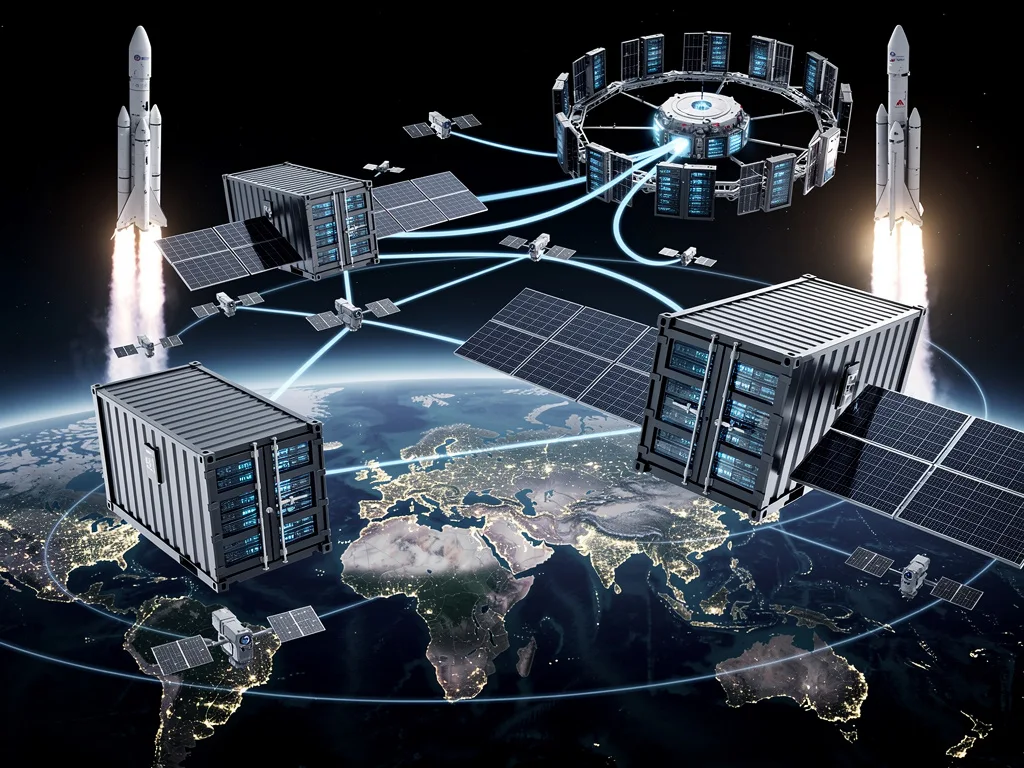
Suncatcher is much more ambitious than a single satellite.
In earlier research, Google described a future in which multiple satellites could carry TPUs and communicate through free-space optical laser links.
The satellites would effectively operate as a distributed computing system.
Google has modeled configurations involving many satellites flying relatively close together so that their interconnects could potentially provide very high bandwidth.
If such a system eventually scaled, it would be more than “a server in space.”
It would be an orbital computing infrastructure
Problem one: radiation
Computing hardware on Earth benefits from the atmosphere and Earth’s magnetic field.
In orbit, the environment is much harsher.
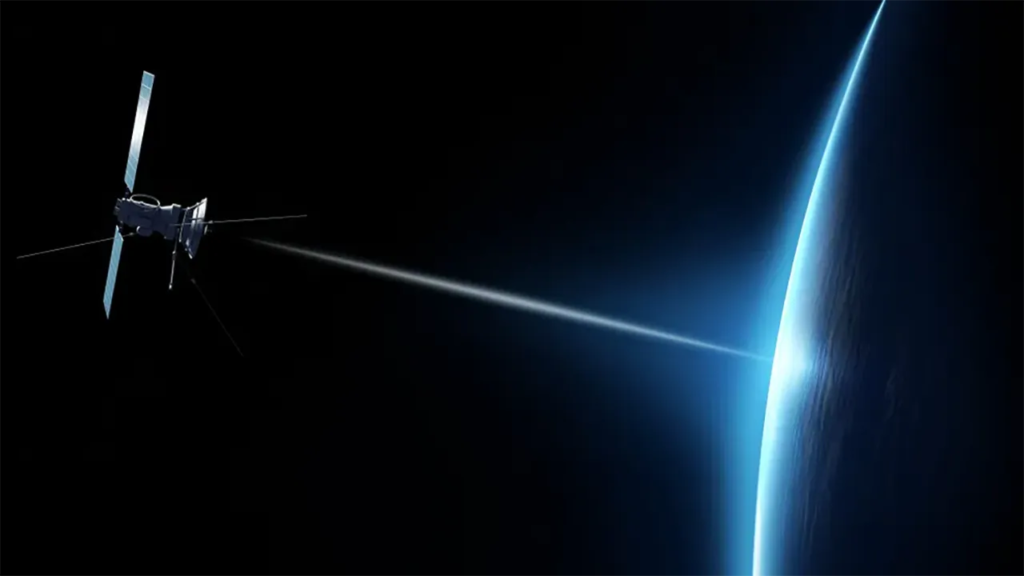
Cosmic radiation and solar particles can cause electronic errors, including bit flips — unintended changes in individual bits.
Google says it tested Trillium TPUs in a proton-beam facility at UC Davis.
According to the company, early results showed the chips could withstand a total ionizing radiation dose greater than what would be expected during a five-year space mission.
But laboratory radiation testing is not the same as operating hardware in orbit for years.
That is precisely why the orbital experiment matters.
Problem two: how do you cool a chip in a vacuum?
This may be one of the most interesting engineering challenges.
A terrestrial data center can use air or liquid cooling to remove heat.
Space does not provide air in the same way.
A powerful TPU therefore has to move its heat through radiators and related thermal systems.
Google says it is testing combinations of heat pipes and radiators to manage heat in vacuum. Those systems have already been tested in thermal-vacuum chambers and now need to be validated in real orbital conditions.
This is one of the fundamental differences between a terrestrial and orbital data center.
Problem three: connecting the satellites
Even if the chips work and can be cooled, another question remains:
How do dozens or hundreds of AI accelerators communicate in orbit?
Large AI models may require many accelerators to exchange data at very high speeds.
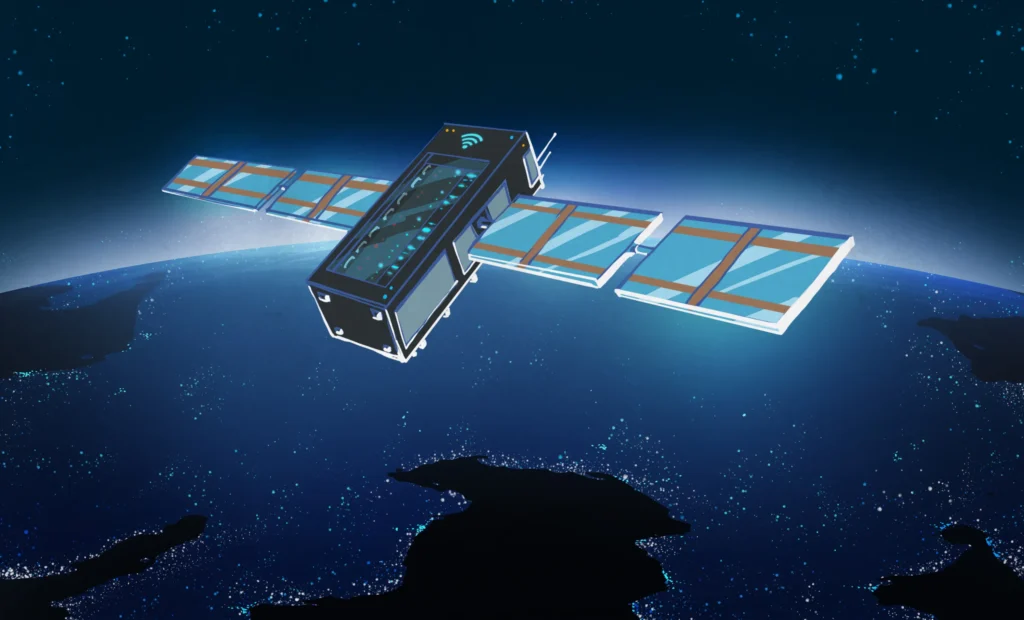
That is why Google is developing optical links between satellites.
The company’s concept uses lasers to provide very high-bandwidth connections between satellites that are constantly moving relative to one another.
Google plans to test this part of the system in a later phase, including a two-satellite mission planned for 2027.
Then comes the biggest question: economics
A technology can work technically without being economically competitive.
A satellite has to be:
- built;
- tested;
- launched;
- protected from radiation;
- cooled;
- connected;
- maintained in orbit;
- and eventually replaced.
Google has analyzed scenarios in which falling launch costs could make space-based computing more attractive over the next decade. But those are long-term projections, not current costs for an operational orbital data center.
That is why Suncatcher should currently be viewed as a research moonshot, not a commercial product.
What is Google actually testing now?
This is the key point.
Google is not saying it will move Gemini into an orbital data center next week.
The first experiment has a much narrower objective:
understand how real TPU hardware behaves in space.
The initial mission is being developed with Planet, with the prototype satellite scheduled to fly on a SpaceX rideshare mission.
Google wants real-world data on:
- radiation;
- temperature;
- vibration;
- TPU performance;
- system stability;
- and how the components behave during orbital operations.
What does this mean for AI?
The project connects directly to one of the biggest problems facing the AI industry:
Where will the energy and computing capacity for the next generation of AI come from?
Today, the answer is primarily:
data centers on Earth.
But AI demand is increasing, along with the need for:
- GPUs and TPUs;
- electricity;
- cooling;
- land;
- power grids;
- fiber networks;
- and capital.
Suncatcher is an attempt to think beyond that model.
TheTechSpot Analysis: Will we have data centers in space?
Not commercially anytime soon.
Today, there is an experiment.
But experiments like this matter because they test individual pieces of a system that could potentially exist a decade from now.
If Google can demonstrate that:
AI chips → work in orbit → can be cooled → communicate with other satellites → run AI workloads reliably → and eventually become economically competitive,
then orbital data centers move from a theoretical idea toward an engineering problem.
That could change how we think about AI infrastructure.
Not just:
AI in the cloud.
But potentially:
AI in the cloud + edge + orbit.
What happens next?
The first step is the orbital TPU test.
The next major milestone is 2027, when Google plans to test two satellites and their inter-satellite communication systems.
Only after those experiments will it become possible to assess whether the concept can scale into much larger orbital computing systems.
TheTechSpot Analysis: this is not yet an “AI data center in space.” It is the first serious test of whether the basic building blocks of that vision can work in the real orbital environment.
Editorial verification note: Technical information on TPUs, radiation, thermal management and the proposed future architecture is primarily based on Google’s published research and materials. These findings do not establish that orbital data centers will become commercially viable.