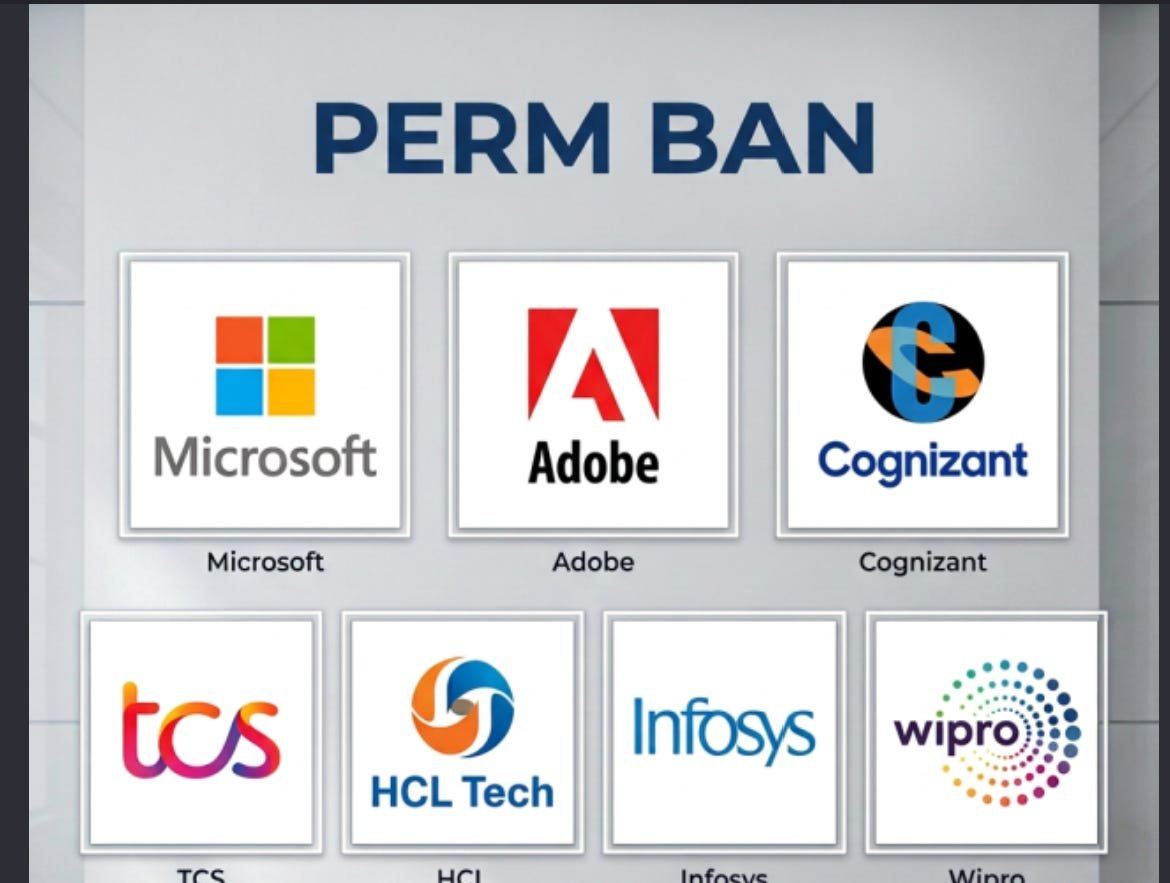
The Trump administration has suspended Microsoft, Adobe and several major technology companies from a US labor-certification program used by employers sponsoring foreign workers for permanent residency. Announced on October 8, 2026, the move adds uncertainty for international tech workers and comes amid a broader effort to tighten employment-based immigration rules.
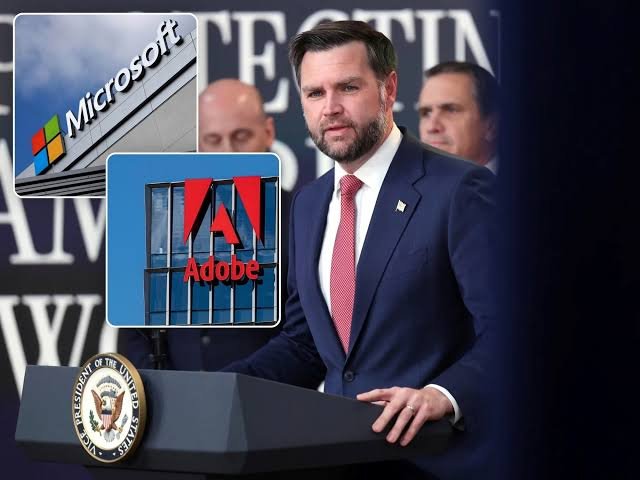
On October 8, the Trump administration announced that several companies would be suspended from the US Department of Labor’s Permanent Labor Certification program, known as PERM. Reuters and TechCrunch reported that the department would stop accepting new or pending labor-certification applications involving the affected companies.
The list includes Microsoft and Adobe, along with major technology services providers such as Cognizant, Infosys, Tata Consultancy Services, Wipro, HCL Technologies and Capgemini. The action is part of a wider effort to scrutinize employers’ use of US work-visa programs.
Vice President JD Vance accused companies of abusing the system and argued that foreign-worker programs should not disadvantage American employees. Those are the administration’s allegations, not independent proof that every affected company violated the law. The Washington Post reported that Vance did not present evidence for the claim that Microsoft had replaced laid-off American workers with foreign employees through the H-1B program.
What is PERM, and why does it matter?
PERM is a labor-certification process administered by the US Department of Labor. For many employment-based green card categories, an employer must complete this step to demonstrate that the relevant labor-market requirements for a position have been met.
PERM is not a green card itself, nor does it guarantee permanent residency. It is one stage in a broader immigration process that may involve additional steps.
For foreign professionals working in the United States on H-1B visas, employer sponsorship through PERM can be an important route toward permanent residency. The suspension may obstruct applications associated with affected companies, although the precise consequences depend on each case and subsequent official guidance.
Microsoft’s response
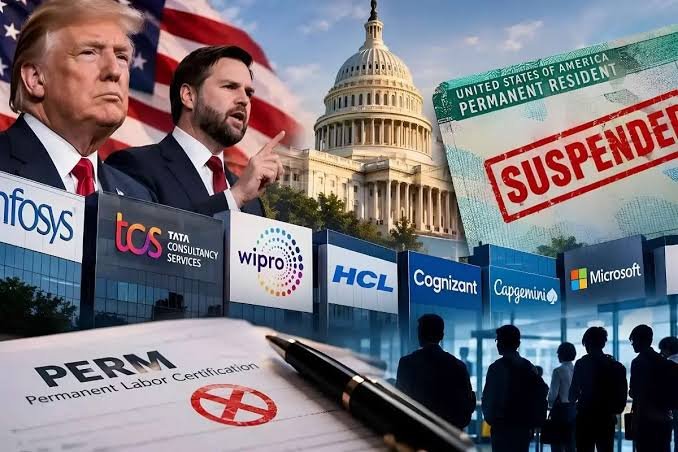
The administration criticized Microsoft for using employment visas while also cutting US jobs.
Microsoft said approximately 80% of its H-1B filings in the cited fiscal year involved extensions or changes of status for existing employees, rather than new hires. The company has also said it pays H-1B employees in line with applicable compensation practices. These are the company’s statements; the administration’s allegations and the legal basis for the suspension must be assessed separately.
What it means for international workers
The most immediate consequence may be uncertainty. Workers hoping to move from temporary employment status toward permanent residency could face delays or need to review lawful alternatives with qualified immigration counsel.
Immigration status can shape major career decisions, including whether a worker can remain in the United States, change employers or make long-term family plans. However, a PERM suspension does not automatically mean every existing H-1B visa has been canceled or that every affected worker must immediately leave the country. Individual cases require official guidance and qualified legal advice.
Implications for the technology industry


Technology companies compete globally for software engineers, AI researchers, cybersecurity specialists and cloud infrastructure experts. Uncertainty around long-term residency could make it harder to recruit and retain some international professionals.
The effects may vary by company. Reuters reported on October 9 that analysts did not expect a major immediate impact on leading Indian IT firms, partly because they have reduced their reliance on PERM. That does not rule out longer-term effects on employee confidence, workforce planning and compliance costs.
Universities are also under scrutiny
The administration also announced investigations into several US universities over the use of visas for exchange-program participants. Reuters and the Associated Press reported that prominent institutions, including Harvard and MIT, were among those under scrutiny.
The issue therefore extends beyond corporate hiring. Universities and research laboratories depend on international collaboration to attract students and researchers. An investigation, however, is not a finding that an institution has broken the law.
What happens next?
Key developments to watch include:
- Whether the Department of Labor issues additional guidance on suspended applications.
- Whether affected companies challenge the action through legal channels.
- Whether the scope of the suspension changes or expands.
- How employers adjust international recruitment, transfers and employee immigration plans.
Until further official clarification, it would be premature to assume that every application will receive the same outcome or that the measure will remain in place for a specific period.
The suspension of Microsoft, Adobe and other companies from PERM marks a significant development at the intersection of US immigration policy and the technology industry. Beyond the political debate over jobs, the decision affects how companies recruit international talent and how foreign workers plan their futures in the United States.
The final impact will depend on implementation, official guidance and any legal challenges. For now, the clearest consequence is greater uncertainty for workers and employers relying on this route to permanent residency.