


The partnership will connect Korean-designed AI processors to NVIDIA’s infrastructure platform, with SK Telecom planning to deploy the resulting systems in its AI data centres. Commercial deployment is targeted for 2028.
South Korea is taking another step towards building domestic AI infrastructure through a partnership involving NVIDIA, Korean semiconductor startup Rebellions and telecommunications operator SK Telecom.
Announced on 9 November, the collaboration will connect Rebellions’ next-generation Rebel R200 neural processing units to NVIDIA’s infrastructure platform through NVLink Fusion.
SK Telecom plans to deploy the resulting systems in its AI data centres and connect them with its own foundation models and public-facing AI services.
The initiative is supported by South Korea’s Ministry of Science and ICT and forms part of the country’s wider ambition to develop sovereign AI capabilities. NVIDIA Investor Relations+1
How the partnership is structured
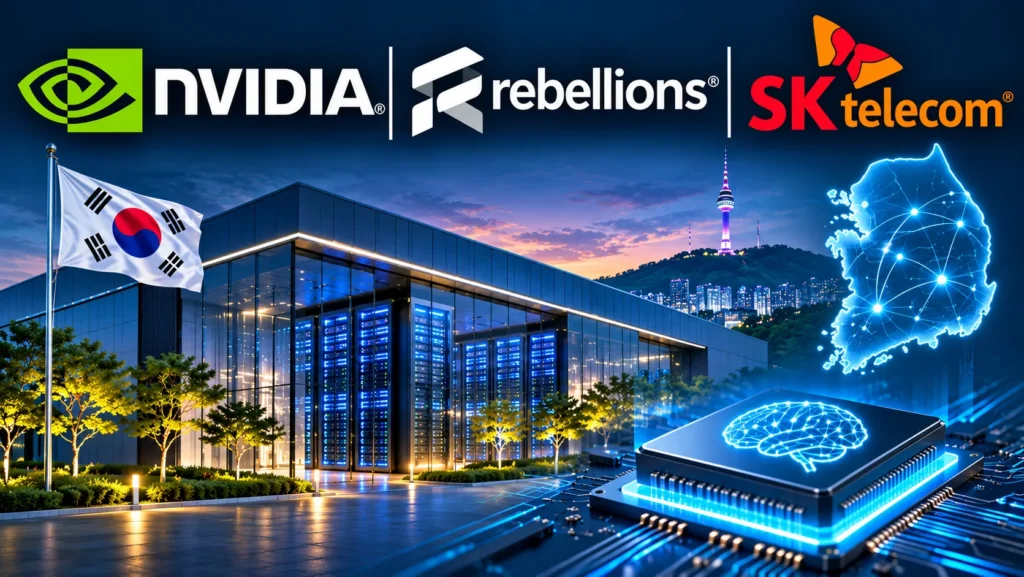
The three organisations bring different capabilities to the project.
NVIDIA provides NVLink Fusion connectivity and its MGX rack architecture.
Rebellions contributes its Korean-designed AI processors, including the next-generation R200 NPU.
SK Telecom provides AI data-centre operations, proprietary models and deployment capabilities.
The partnership is designed to combine these elements into rack-scale inference systems.
One of the most interesting aspects is the planned division of computing tasks between different processors.
The companies say they intend to use NVIDIA GPUs for the prefill stage of AI inference and Rebellions NPUs for the decode stage.
In simplified terms, prefill processes the initial input and prepares the model’s internal context, while decode generates the response token by token.
The objective is to allocate each stage to the processor architecture considered most suitable for it, potentially improving throughput and energy efficiency. NVIDIA Investor Relations+1
What makes this sovereign AI?
Sovereign AI generally refers to a country’s ability to develop, operate and control important parts of its AI infrastructure, including computing resources, models, data and services.
For South Korea, domestic semiconductor development is an important component of that strategy.
Rebellions’ participation provides an opportunity to integrate locally designed processors into a wider infrastructure ecosystem rather than relying exclusively on foreign accelerator suppliers.
SK Telecom also intends to connect the infrastructure to its proprietary A.X K2 model and public-facing services associated with the government’s AI for All initiative. NVIDIA Investor Relations+1
However, sovereign AI does not necessarily mean complete technological independence.
The proposed system still relies on NVIDIA connectivity technology and its broader infrastructure ecosystem. This makes the partnership a hybrid approach: domestic processor development combined with international hardware and systems technology.
Why the 2028 timeline matters
NVIDIA says Rebellions’ R200 systems are expected to be ready for deployment in 2028.
This means the announcement should be understood as a development and infrastructure partnership, not evidence that the final system is already operating commercially.
The intervening period will be important for processor development, system integration, software compatibility and real-world testing.
Independent Korean reporting has also highlighted the gap between announcing sovereign AI partnerships and producing systems that can compete effectively with the world’s leading AI infrastructure. NVIDIA Newsroom+2
The wider semiconductor implications
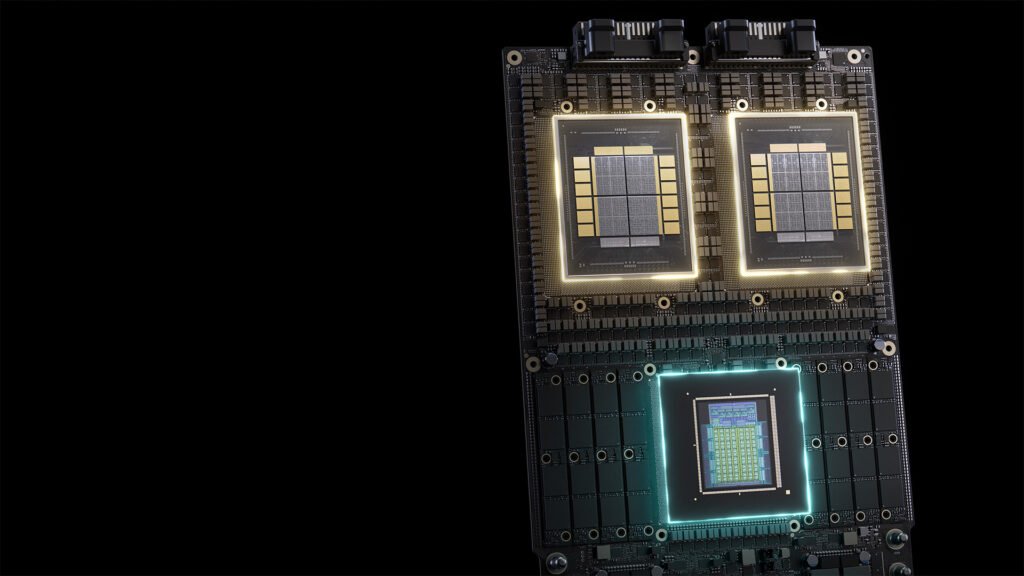
The collaboration highlights an important shift in the AI hardware market.
The future of AI infrastructure may not depend exclusively on one type of accelerator or a single manufacturer.
Different processors can potentially handle different stages of model execution, while networking and rack-level integration allow them to function as a coordinated system.
For Rebellions, integration with NVIDIA’s infrastructure could provide access to a broader hardware ecosystem and potential enterprise customers.
For NVIDIA, the partnership expands the reach of NVLink Fusion by connecting its infrastructure to a third-party processor developer.
For SK Telecom, it creates another route towards offering locally tailored AI services using a combination of domestic and international technologies.
What happens next?
The most important milestones will be:
- Development and validation of the Rebel R200 processor.
- Integration with NVLink Fusion and NVIDIA MGX systems.
- Testing of the planned GPU-prefill and NPU-decode architecture.
- Deployment preparation at SK Telecom’s AI data centres.
- Demonstration of real-world performance and energy efficiency.
The companies have not announced detailed commercial pricing or independent performance benchmarks for the proposed system.
TheTechSpot Take
This partnership is interesting because it shows that sovereign AI is becoming an infrastructure engineering challenge rather than simply a question of developing a domestic chatbot.
A country needs processors, networking, data centres, models, software and organisations capable of operating the complete system.
South Korea’s approach is pragmatic: develop domestic AI silicon while connecting it to established global infrastructure.
That can accelerate deployment, but it also creates dependencies that need to be understood.
The real test will not be the announcement or the partnership branding. It will be whether Rebellions’ processors can operate reliably at rack scale, deliver competitive inference performance and support commercially viable services.
The 2028 target leaves time for the technology to mature. Until then, this is a strategic commitment—not a completed sovereign AI system.


