

Alibaba has officially launched Qwen4-Max, its most advanced AI model to date. The new system features a 2.4 trillion-parameter architecture, native vision capabilities and a one-million-token context window, as the Chinese technology giant steps up competition with leading US AI developers.
Alibaba is making a major move in the global artificial intelligence race with the launch of Qwen4-Max, a new flagship model designed for complex professional, creative and research tasks.
Announced on November 16, 2026, Qwen4-Max represents the first major release in Alibaba’s new Qwen4 generation. The company says the model delivers stronger performance than its predecessor, Qwen3.8-Max, while using fewer tokens and reducing the cost of completing demanding tasks.
The launch comes as competition between Chinese and US AI companies intensifies, with developers increasingly focused on building more capable models while making them cheaper to operate.
A 2.4 trillion-parameter model built for complex tasks
One of the most notable specifications of Qwen4-Max is its scale.
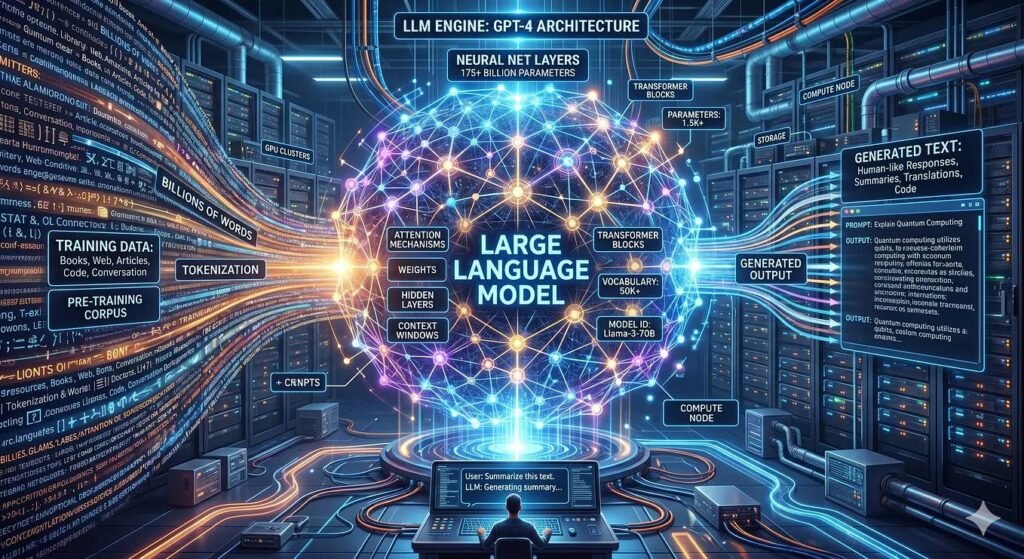
According to Alibaba, the model uses a sparse Mixture-of-Experts architecture with 2.4 trillion total parameters. However, it activates approximately 71 billion parameters for each token processed.
This design allows the system to use a very large model architecture without activating every parameter for every operation.
Qwen4-Max also includes native vision capabilities, allowing it to process images alongside text. Its one-million-token context window is another major feature, giving it the ability to work with extremely large amounts of information in a single interaction.
For businesses, this could be particularly useful when analysing long reports, technical documentation, research material, contracts and complex project files.
Alibaba claims a 60% reduction in task costs
Alibaba says Qwen4-Max outperforms Qwen3.8-Max on its internal Work360 benchmark, which evaluates performance across 721 specialised professional fields.
The company reports that the average cost per task dropped by approximately 60% compared with the previous model.
It also says Qwen4-Max uses around 35% fewer tokens in High-effort reasoning mode.
These improvements could make a meaningful difference for organisations using AI at scale. Processing fewer tokens can reduce API expenses, particularly for companies running large numbers of automated workflows.
However, Work360 is an Alibaba-developed benchmark, and the reported cost savings should be treated as company-provided results rather than independent confirmation of performance across every real-world workload.
Stronger coding and agent capabilities

Alibaba is positioning Qwen4-Max as more than a general-purpose chatbot.
The company highlights improvements in coding, agentic workflows, visual reasoning and workplace productivity.
AI agents are systems that can perform multi-step tasks with limited human intervention. They may search for information, interact with software, analyse documents and complete workflows based on user instructions.
A model with stronger agent capabilities could help companies automate repetitive office tasks, assist developers with software projects and support research teams working with large amounts of information.
Alibaba says Qwen4-Max has achieved strong results on several specialised evaluations, including coding and agent-focused benchmarks.
Independent testing will be important to determine how consistently those results translate into everyday use.
New cybersecurity safeguards built into the model
The launch also places considerable emphasis on AI safety.
According to Reuters, Alibaba says it has strengthened Qwen4-Max’s protections against cybercrime and dangerous uses of artificial intelligence.
The company says it filtered training material that could improve offensive hacking capabilities while retaining knowledge useful for defensive cybersecurity work, such as identifying and fixing software vulnerabilities.
Alibaba also introduced additional safeguards intended to reduce risks involving chemical, biological, radiological and nuclear threats.
The company reported that its internal testing found no evidence that the model could significantly help users carry out dangerous tasks. These are company-reported findings and have not been independently verified by Reuters.
The safety focus reflects growing pressure on AI developers to demonstrate that increasingly capable models can be deployed responsibly.
Qwen4-Max is available through Alibaba’s cloud platforms
Unlike some earlier Qwen releases, Qwen4-Max is not being launched as an open-weight model that developers can freely download and run on their own hardware.
Instead, it is available through Alibaba’s cloud ecosystem, including QwenCloud, QwenWork and QwenStudio.
The company says smaller open-weight models from the Qwen4 family will be released in the future, although it has not provided a complete release schedule.
This distinction matters for developers and businesses that prefer to run AI models locally or customise their weights.
For now, organisations wanting to use Qwen4-Max will need to access it through Alibaba’s supported services.
Alibaba is challenging the global AI market
The launch of Qwen4-Max comes at a time when Chinese technology companies are investing heavily in artificial intelligence.
Alibaba is competing with major international developers, including OpenAI, Anthropic and Google, while also facing strong domestic competition.
The latest model demonstrates how the industry is evolving beyond simple improvements in chatbot responses.
Longer context windows, native image processing, autonomous agents, coding performance and lower inference costs are becoming increasingly important measures of AI capability.
Qwen4-Max brings these features together in a single flagship release.
The next challenge for Alibaba will be demonstrating that the model’s performance claims hold up under independent testing and that its cloud-based approach can attract developers and businesses around the world.


