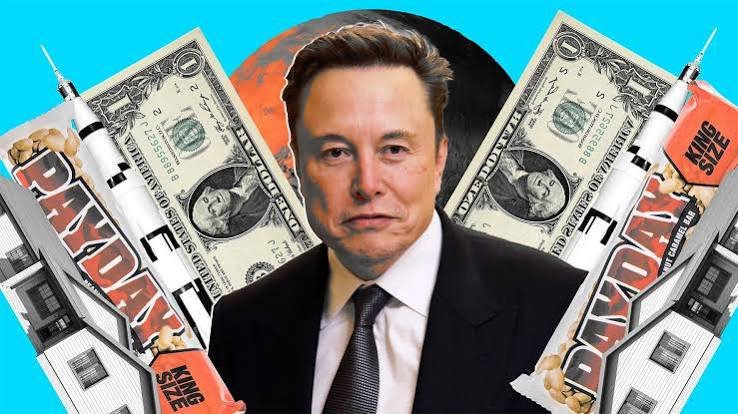
The milestone is historically significant because it surpasses the billionaire threshold by a factor of 1,000: a trillion dollars is 1,000 billion dollars. Several outlets, including Forbes, Bloomberg (as reported by others), Reuters, and The Washington Post, have described Musk as the world’s first trillionaire following the SpaceX IPO.
- The wealth is mostly on paper, tied to ownership stakes in companies such as SpaceX and Tesla.
The transition from billionaire to trillionaire status was swift. According to Bloomberg and Forbes indexes, Musk’s personal fortune would have topped $400 billion by 2024, but the decision to take his space company public proved to be the catalyst for this exponential rise. On Thursday, the initial IPO valuation placed SpaceX at close to $1.8 trillion, and on Friday morning, as soon as trading began in New York, the stock opened at $150, and the massive demand quickly pushed the company’s market capitalization to $2.2 trillion.
It’s worth noting that analysts predict that no other upcoming IPOs, including those of genetic artificial intelligence (GenAI) giants OpenAI and Anthropic, will generate valuations capable of bringing any other entrepreneur anywhere near Musk’s financial levels.
What is the real structure of Musk’s wealth?
Musk’s fortune is not made up of cash, but of high-value shares in his technology businesses. Furthermore, the liquidation of this capital is subject to strict regulatory restrictions, and he has pledged to donate half of his fortune.
The “trillionaire” designation is a book value, as his wealth is based on his ownership stakes in Tesla, SpaceX, xAI, Neuralink and Platform X. Retail investors buying SpaceX shares today are not expected to make huge profits immediately, as initial public offerings have already absorbed much of the goodwill, while insiders are subject to lock-up clauses for a specified period.
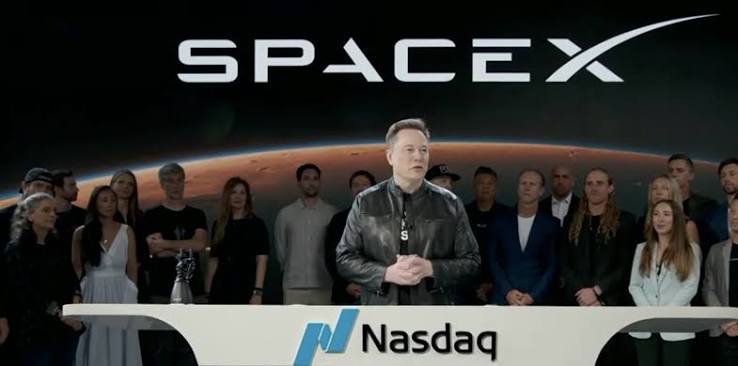
But the most important element to emerge from the IPO documents is SpaceX’s complete transformation from a launch company to a provider of data and energy infrastructure. According to filings with the U.S. Securities and Exchange Commission (SEC), artificial intelligence company Anthropic, a key competitor to OpenAI, has struck a $15 billion-a-year deal to gain access to SpaceX’s AI data centers. At the same time, it was revealed that SpaceX is spending $2.8 billion to purchase industrial gas turbines, which are intended to power Musk’s demanding data centers, creating an unprecedented vertically integrated chain from the cloud to space.
Reactions and geopolitical implications of his dominance
The concentration of this unprecedented wealth provoked immediate reactions. Activists demonstrated in Times Square against Musk’s influence, while SpaceX continues to maintain an absolute monopoly on space cargo launches, making it a crucial geopolitical factor.
The news of the IPO was accompanied by organized protests. In Times Square in New York, a group of activists erected a giant inflatable effigy of Musk more than 10 meters high. The protests have focused on its increasing involvement in US government decisions, its controversial management of the X platform, which has been accused of systematically tolerating hate speech, and its development of uncontrolled artificial intelligence models such as Grok. At the same time, there are environmental protests from local communities living near xAI’s huge data centers due to pollutants.
Equally problematic is the lack of meaningful competition in space. SpaceX is the only organization with the ability to launch reusable rockets (Falcon 9) at such a frequency, providing services to both commercial customers and government agencies such as NASA and the US Pentagon.
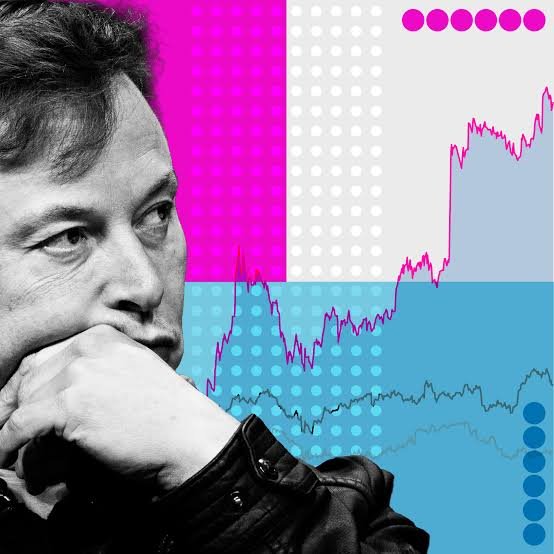
The trillion-dollar milestone is simply the accounting reflection of a much more substantial reality, namely that Elon Musk now controls the critical infrastructure of the next decade.
As the IPO documents reveal, SpaceX is no longer just about rockets. With billion-dollar contracts to lease processing power (data centers) to companies like Anthropic, it is acting as a backbone provider for artificial intelligence cloud computing.
Wall Street investors are not just buying shares of spacecraft at $150, they are investing in a monopolistic, fully vertically integrated system where one entity controls data (xAI), its distribution (Starlink), transportation (Tesla, SpaceX) and the public sphere (X).
Regulators in both Europe and the US are faced with an unprecedented phenomenon where a private individual manages resources larger than the GDP of dozens of developed countries.