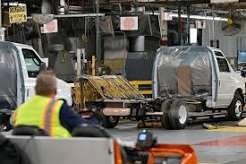
Ford has admitted to rehiring hundreds of human workers after its aggressive AI adoption strategy backfired.
The US automaker hired over 350 veteran engineers, referred to internally as “gray beards”, over the past three years in order to address mistakes made by automated systems.
The staff will lead quality reviews after the automation issues cost the company billions of dollars, Bloomberg reported, while some workers will also help improve and train the AI systems.
“We had been relying more and more on automated quality systems and not getting the desired results,” said Kumar Galhotra, Ford’s chief operating officer.
“We brought back technical specialists and they hunt for failure points before a part ever reaches the plant floor.”
Ford had been increasingly relying on AI-driven inspection systems to streamline production and address quality control issues, however the firm acknowledged that AI lacked the nuanced judgement when it came to complex problems.
After rehiring experienced engineers, Ford experienced a marked improvement in its quality standards.
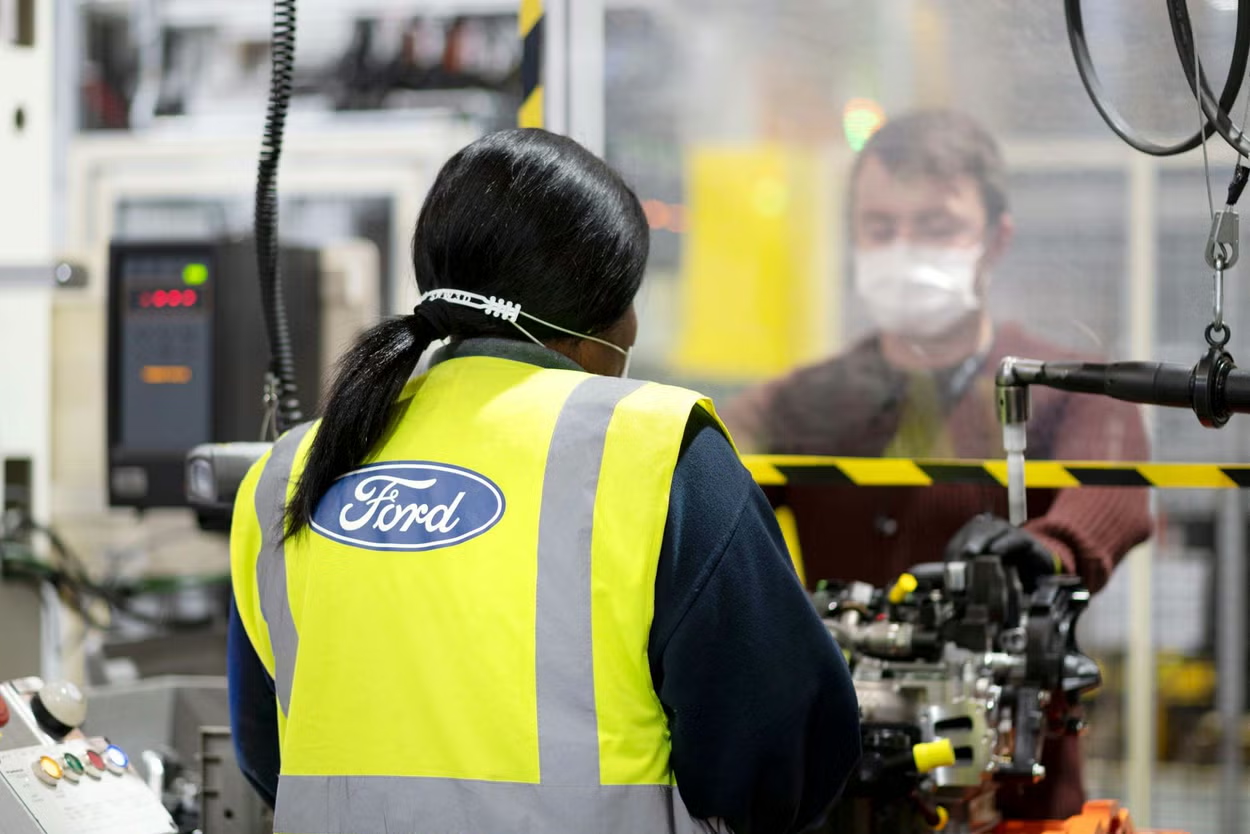
According to the latest J.D. Power Initial Quality Survey, an annual automotive benchmark that measures the quality of new vehicles, Ford ranked top among mainstream brands – the first time it has achieved that milestone in 16 years.
Ford continues to have quality issues with its older vehicles, and remains the most recalled automaker in the US, though executives blamed this on past issues involving automation, rather than the rehiring of humans.
The company said it would not abandon its use of AI, but plans to now use it in conjunction with human oversight and experience.
Artificial intelligence is a fantastic tool, but it’s only as good as the information you use to train it,” said Charles Poon, Ford’s vice president of vehicle hardware engineering.
“Over prior years, we didn’t pay as much attention as we should have to the experience of our most knowledgeable engineers that have been with us through many product cycles.
“Mistakenly, we thought that by just introducing artificial intelligence and ingesting the design requirements that we had, that that would produce a high-quality product.”
Ford executives said they have hired 350 veteran engineers — some of them were former employees, while others had been working at suppliers — after artificial intelligence and automated systems failed to deliver the desired quality level.
The Blind Spot: Missing Institutional Knowledge
According to Charles Poon, Ford’s Vice President of Vehicle Hardware Engineering, the mistake wasn’t necessarily that AI is fundamentally broken, but rather how Ford rolled it out.
The automaker cut thousands of white-collar positions over recent years. Crucially, many of their most seasoned engineers walked out the door before transferring their institutional knowledge into the data pipelines meant to train the AI.
“Mistakenly, we thought that by just introducing artificial intelligence and adjusting the design requirements that we had, that that would produce a high-quality product. Over prior years, we didn’t pay as much attention as we should have to the experience of our most knowledgeable engineers…” — Charles Poon, Ford VP of Vehicle Hardware Engineering
Without that human intuition baked into the software, the AI lacked the nuanced judgment required for complex engineering problems, ultimately letting serious failure points slip right through to the factory floor.
The “Gray Beard” Turnaround
The returning technical specialists were immediately put to work:
- Hunting for failure points before parts ever reach the manufacturing plants.
- Mentoring younger, junior staff to pass down unwritten engineering rules.
- Rebuilding data pipelines to ensure future AI tools are actually trained properly.
The human intervention paid off. Following the re-introduction of veteran oversight, Ford shot up to the No. 1 spot among mainstream brands in J.D. Power’s 2026 Initial Quality Study—a milestone the company hadn’t reached in 16 years.