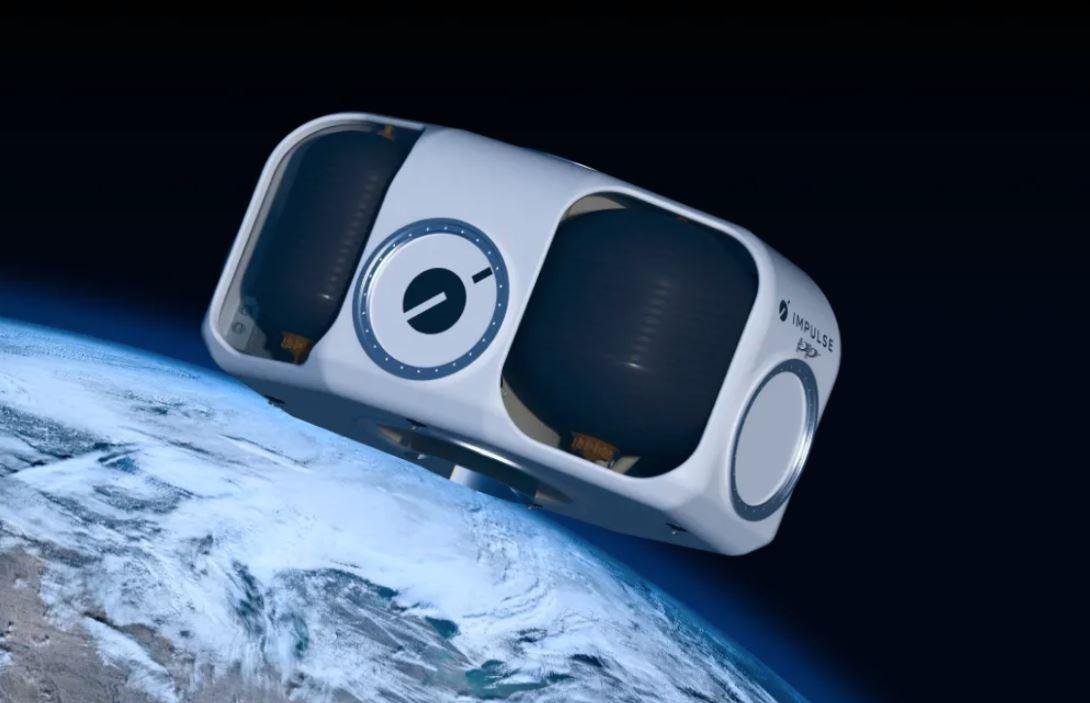
Impulse Space raises $808 million: the race to build transportation infrastructure in orbit enters a new phase
Space companies are moving beyond the launch
The private space industry is gradually moving beyond one central question:
How do we get a satellite into orbit?
The next question is increasingly:
How do we move that satellite once it is there?
That is the market Impulse Space is targeting.
The U.S. startup announced an additional $308 million extension to its Series D financing, bringing the round to $808 million. Reuters reports that the transaction values the company at approximately $5.4 billion.
Founded by former SpaceX propulsion chief Tom Mueller, Impulse Space develops spacecraft designed to transport satellites and other payloads between orbits.

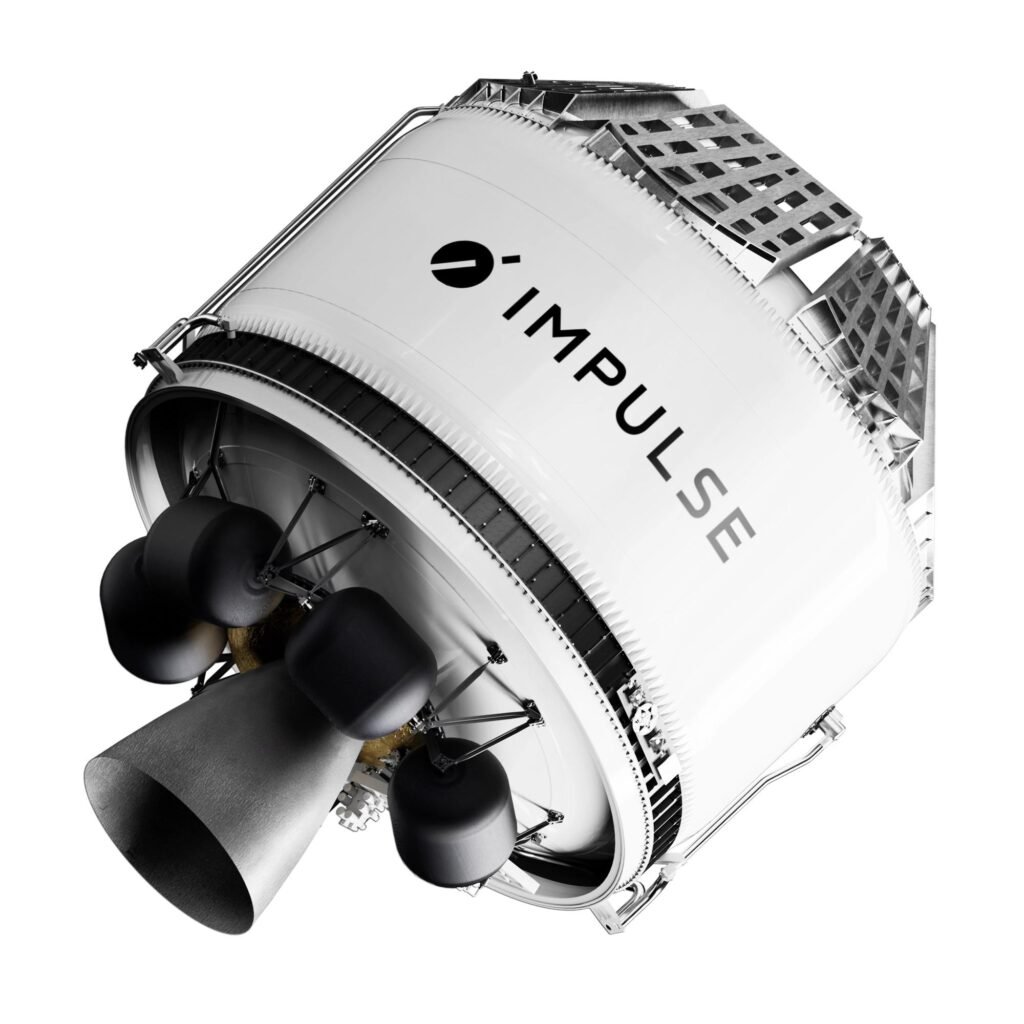
What is a space tug?
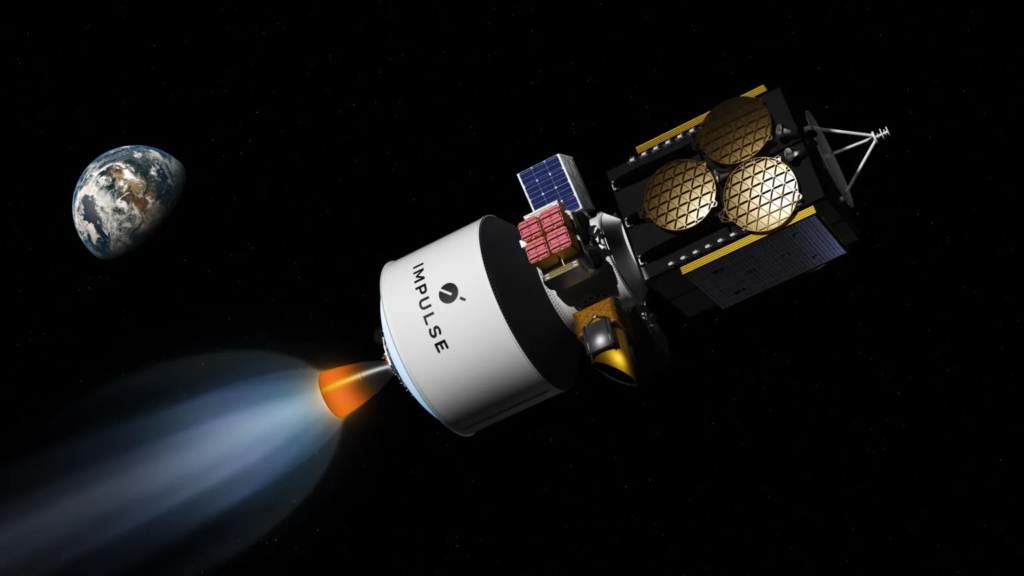
The key concept behind Impulse’s business is the orbital transfer vehicle, sometimes described as a space tug.
A launch vehicle can place a satellite into orbit, but that does not necessarily mean the satellite is exactly where it needs to be.
It may still need to:
- raise its orbit;
- change orbital inclination or altitude;
- transfer to another orbit;
- reach a precise operational position;
- maneuver around other spacecraft;
- potentially receive servicing or support.
A dedicated orbital vehicle can perform some of those tasks after launch.
Impulse Space describes its mission as enabling in-space mobility, with spacecraft such as Mira and Helios forming the foundation of that strategy.
Helios is the ambitious part
One of Impulse’s flagship products is Helios, a high-energy vehicle designed to move payloads from low Earth orbit toward higher-energy orbits.
Impulse says Helios is intended to transport mass from LEO to GEO, potentially making some satellite deployment architectures more direct.
That matters because satellite operators do not necessarily want every spacecraft to carry all the propulsion and maneuvering capability required for its entire journey.
A specialized orbital transfer vehicle could perform part of that work instead.

From rockets to an orbital transportation network
This is where the industry’s structure could begin to change.
The first major objective of commercial spaceflight was reducing the cost of launch.
Reusable rockets transformed that part of the market.
But once a payload reaches orbit, another logistical problem remains: moving it around in space.
If the space economy continues to expand, the architecture could begin to resemble terrestrial transportation:
Earth → orbit → orbital transfer → destination.
Impulse Space is trying to build part of that middle layer.
Demand is already building
The new capital is not being raised simply for laboratory research.
Reuters reports that Impulse has a growing backlog of commercial and government contracts. The company now has more than 600 employees and more than 180 open positions.
The company also says its Caravan 2 and Caravan 3 Helios rideshare missions, planned for 2028, are sold out, with additional dedicated flights booked.
That suggests investors are backing more than a technology concept. The company is building around a growing set of customers and missions.
Why investors are putting so much money into space
The broader answer is the expansion of space infrastructure.
Satellites support:
- communications;
- broadband connectivity;
- navigation;
- Earth observation;
- weather monitoring;
- security;
- scientific research;
- commercial services.
As the number of spacecraft grows, so does the need to maneuver and manage them.
Reuters also links the current financing environment to renewed investor enthusiasm for the space sector following SpaceX’s June IPO.
That does not guarantee that every space company will succeed. It does show, however, that private capital increasingly views space as an infrastructure market rather than purely an exploration business.
Mira provides another layer
Impulse is not relying entirely on Helios.
The company is also developing Mira, a smaller spacecraft intended to host, deploy and maneuver payloads in different orbits.
Impulse’s own materials describe Mira as an agile spacecraft designed for orbital maneuvering and payload operations.
The strategy therefore has two complementary elements:
Mira → flexible orbital maneuvering and payload operations
Helios → higher-energy orbital transfers
If both systems mature as planned, Impulse could eventually offer a broader range of orbital transportation services.
The challenge is not just technology
An $808 million Series D is a major financing event, but it does not eliminate execution risk.
Impulse now needs to demonstrate that it can:
- manufacture spacecraft at scale;
- deliver contracted missions;
- operate those missions successfully;
- control production costs;
- turn contracts into recurring revenue;
- maintain technological momentum.
Company executives told Reuters that the additional capital will help accelerate hiring and manufacturing ahead of expected customer demand.
The next challenge therefore is not simply building the technology.
It is building a repeatable business around it.
What could this change for the space industry?
If orbital transportation becomes a normal commercial service, satellite missions could be designed differently.
A satellite would not necessarily have to be optimized for every stage of its journey.
A launch company could place it into an initial orbit.
An orbital transportation company could then move it to its final destination.
Another provider could potentially offer servicing or refueling.
That creates a more specialized space supply chain.
Instead of one company controlling every part of a mission, the industry could develop separate businesses for launch, orbital transportation, communications, servicing and satellite operations.
What happens next?
Impulse now has to move from a capital-raising phase into an execution phase.
With more than 600 employees, over 180 open positions and a growing mission backlog, manufacturing and mission delivery will become just as important as technology development.
The company’s Helios missions planned for 2028 will be especially important in determining whether today’s demand can become a sustainable operating business.
If that happens, orbital transportation could become a distinct sector of the space economy.
Impulse Space has raised another $308 million, taking its Series D financing to $808 million and its reported valuation to roughly $5.4 billion.
But the bigger story is not simply the amount of money raised.
It is the infrastructure concept behind the company: transportation in space as a service.
If rockets are becoming the vehicles that take payloads into orbit, companies such as Impulse Space want to build the vehicles that move those payloads from one orbit to another.
The next test is whether that concept can become a repeatable, scalable and economically sustainable industry.