From autonomous-vehicle startup to public company
The autonomous-driving industry is entering a new phase.
May Mobility, a U.S. company developing autonomous vehicle technology for passenger transportation and robotaxi services, has agreed to combine with ACP Holdings Acquisition Corp., a special purpose acquisition company, in a transaction implying an enterprise value of approximately $1.4 billion.
If the transaction closes as planned, the combined company is expected to trade on Nasdaq under the ticker MAY.
The transaction could provide May Mobility with up to $337 million in gross proceeds, including a fully committed $120 million PIPE investment.

What is May Mobility?
Founded in 2017, May Mobility focuses on autonomous vehicle technology for commercial passenger transportation.
Its strategy differs from companies that aim to own and operate enormous robotaxi fleets themselves.
May Mobility describes its model as Autonomy-as-a-Service (AaaS).
The concept is to work with partners that handle parts of the vehicle and mobility operation while May Mobility provides autonomous-driving technology, software and related support.
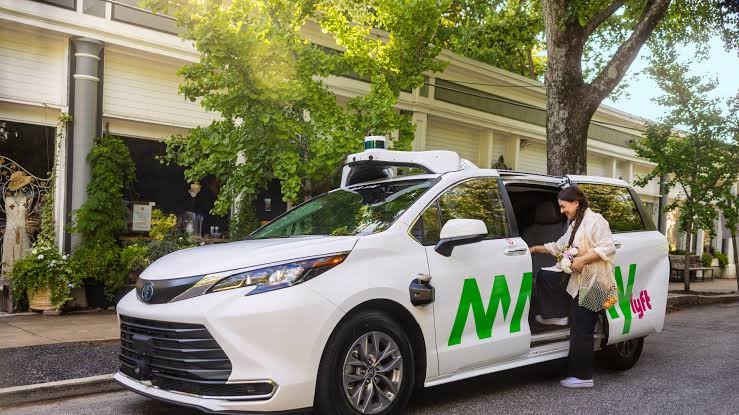
The company says it has partnerships involving Toyota, Lyft, Uber and Grab, among others.
More than 550,000 autonomous rides
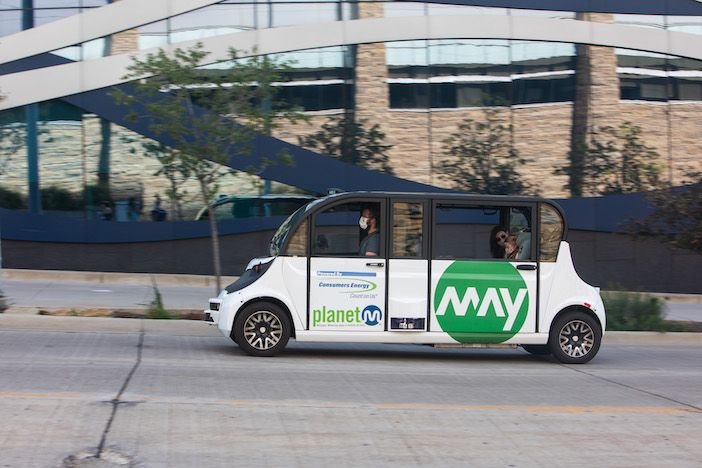
According to May Mobility, its commercial deployments have completed more than:
- 550,000 autonomous rides
- approximately 1.1 million miles
- operations in the United States and Japan
- partnerships with major mobility and ride-hailing companies.
These figures come from company materials associated with the transaction.
That distinction matters because the industry’s central question is changing.
It is no longer simply:
“Can a vehicle drive itself?”
The bigger question is:
“Can autonomous driving become a scalable business?”
How does May Mobility’s technology work?
One of the company’s core technologies is its Multi-Policy Decision Making (MPDM) system.
May Mobility describes MPDM as a real-time AI approach that evaluates road situations and selects appropriate driving actions.
The company says its vehicles can generate relevant training examples from their current environment rather than relying exclusively on large volumes of previously collected training data.
That is intended to help the system adapt when deployed in new environments.
However, these descriptions come from the company itself. They should not automatically be interpreted as independent evidence that the system is safer or better than competing autonomous-driving technologies.

Why use a SPAC?
May Mobility is not taking the traditional direct-IPO route.
Instead, it is combining with a SPAC, or Special Purpose Acquisition Company.
A SPAC is created to raise capital publicly and later merge with or acquire a private company, providing an alternative path to the public markets.
In this case, the partner is ACP Holdings Acquisition Corp.
The proposed transaction implies an enterprise value of approximately $1.4 billion, while gross proceeds could reach up to $337 million depending in part on shareholder redemptions.
If completed, the combined company is expected to trade on Nasdaq under the symbol MAY.
Where will the new capital go?
According to May Mobility, the proceeds are expected to support four main areas.
1. Research and development
The company wants to expand the operational domain in which its vehicles can operate without a safety driver.
2. Manufacturing and supply chain
May Mobility plans to invest in supply-chain improvements and reduce component costs.
3. New deployments
The company expects to expand into additional U.S. and international markets.
4. Working capital
Part of the capital will support general corporate operations.
The challenge AI alone cannot solve
Robotaxis face challenges that go beyond algorithms.
A company may have sophisticated autonomous-driving software, but large-scale operation also requires:
- vehicles
- sensors
- maintenance
- insurance
- infrastructure
- remote support
- regulatory approvals
- fleet management
- procedures for situations where the vehicle cannot continue autonomously.
That is one reason May Mobility’s business model is notable.
Instead of necessarily building the entire robotaxi economy itself, the company is attempting to provide autonomy technology as a service.
Asset-light versus fleet-heavy strategies
May Mobility describes its approach as “asset-light” and “partnership-first.”
In practice, that means the company aims to limit how much capital it has directly tied up in fleet ownership while focusing on autonomous technology and partnerships.
TechCrunch reported that May Mobility’s model can generate revenue through fixed fees or per-trip licensing arrangements while partners handle other parts of fleet operations.

But $1.4 billion does not mean $1.4 billion in profits
This distinction is essential.
May Mobility reported approximately $10 million in revenue in 2025, while its cash burn was around $93 million.
The proposed $1.4 billion figure therefore represents the implied enterprise valuation in the transaction, not accumulated profit.
That makes the Nasdaq listing an important test of the economics of autonomous ride-hailing.
The competition is not only technological
May Mobility is entering a market where other companies have already invested heavily.
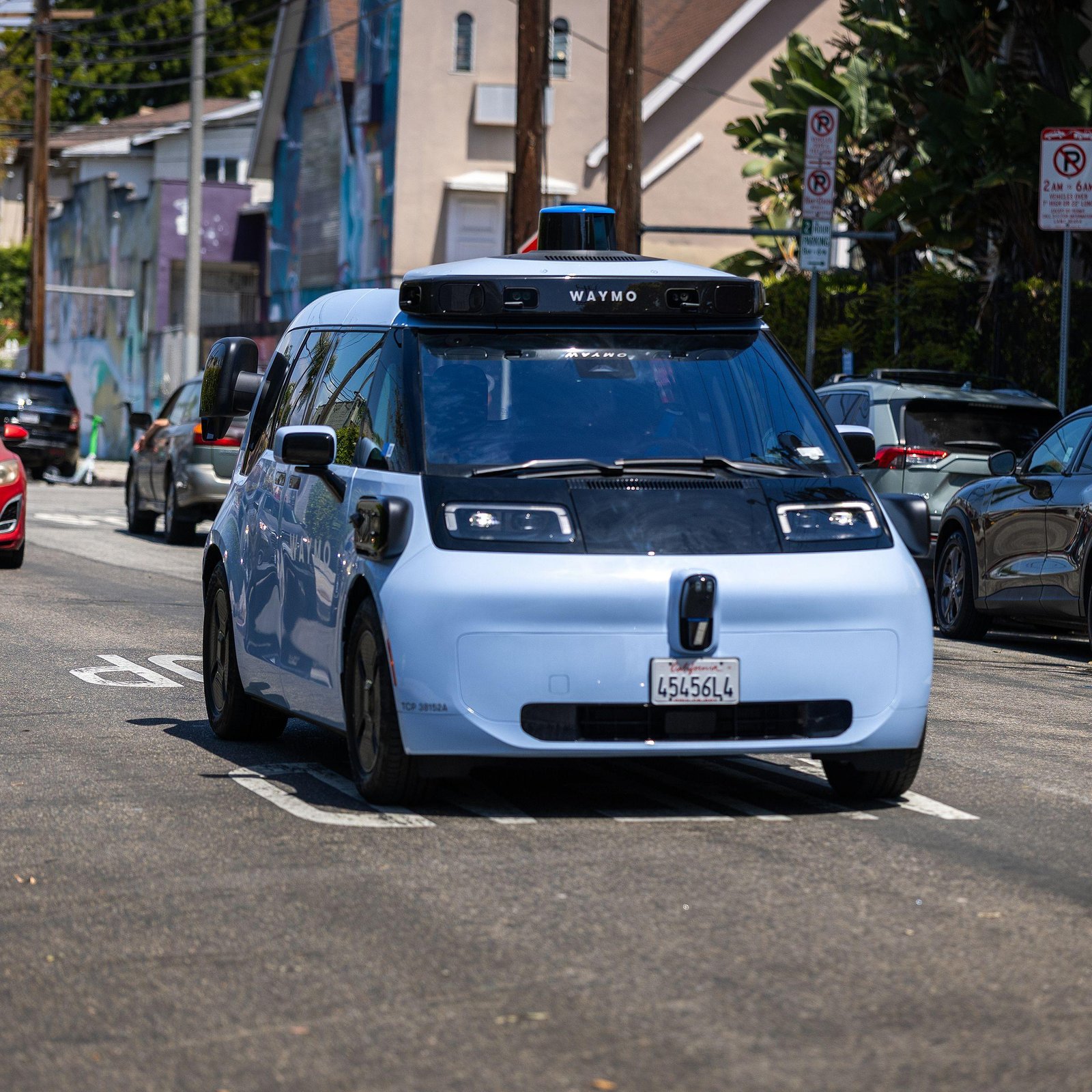
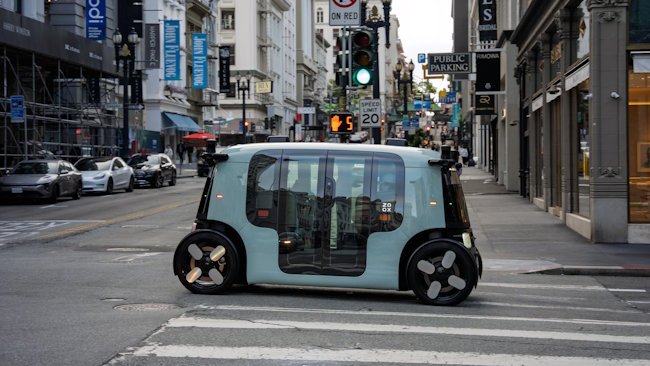
Waymo is expanding autonomous ride-hailing into additional U.S. markets, while companies including Tesla and Zoox are pursuing different approaches to autonomous transportation.
For May Mobility, therefore, the question is not simply whether an autonomous vehicle can drive without a human.
The bigger question is whether its business model can work across multiple cities and with different mobility partners.
From demonstration to scale
The autonomous-driving industry has spent years demonstrating that vehicles can operate without human drivers in defined environments.
The next challenge is scale.
A system that works in one city is one problem.
A system that can operate across dozens of cities while keeping costs, safety operations and infrastructure under control is a much larger one.
That is where May Mobility’s software and partnership strategy could become commercially important.
What does this mean for passengers?
If autonomous ride-hailing continues to expand, users may eventually see changes in how they access urban transportation.
Instead of a ride-hailing app always dispatching a human-driven car, some trips could be served by autonomous vehicles.
Potential changes include:
- how rides are ordered;
- operating costs;
- fleet utilization;
- demand for human drivers in certain segments;
- urban traffic management;
- cooperation between automakers and mobility platforms.
The speed of that transition will depend on safety, regulation, cost and public adoption.
What happens next?
The May Mobility transaction still needs to close.
According to the company, closing is expected by the end of 2026, subject to customary conditions including shareholder approvals and Nasdaq listing approval.
If completed, May Mobility will have additional capital for:
- technology development;
- operational expansion;
- manufacturing and supply-chain improvements;
- new deployments;
- increasing driver-out capabilities.
The company also has expansion plans involving Uber in Arlington, Texas, and has begun operations in Japan.
The $1.4 billion May Mobility transaction is more than a startup listing story.
It shows how autonomous vehicles are moving from demonstrations and research toward a phase where investors and operators must also evaluate the business model.
May Mobility is pursuing a partnership-led strategy centered on software and Autonomy-as-a-Service.
Its future will depend on several factors: real-world performance, scalability, operating costs, regulatory approval and customer adoption.
Robotaxis are no longer only a technology experiment. They are becoming a business test as well.